
Hoyt Altus Review
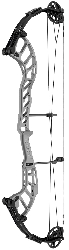

from $450
Pros
- No hand shock on the line - the 13-inch hybrid limbs and StealthShot string stop kill the in-hand buzz earlier Hoyt target bows carried, leaving a clean riser through the shot
- Dead-stable, forgiving hold - the long 38-inch platform settles the pin and stays solid through release, rewarding aim over fighting the bow steady at distance
- Two cams on one platform - pick the forgiving DCX or the firm-walled SVX without changing the riser, limbs, or grip you have already learned
- Low-torque competition grip - the thin machined-in grip indexes the hand the same way every shot and takes a lot of torque out, keeping the pin on point
- Flagship-grade rigidity at a more accessible price - the dual-bridge aluminum riser holds rigid with minimal flex, bringing Invicta-class stability below the shoot-through flagship
Cons
- The DCX valley is very short and its back wall soft - relax at full draw and it creeps forward, so stay engaged and pull through; shooters who want a rock-solid wall can choose the SVX cam instead, which is built firm
- Draw length is set by cam size with no overlap between sizes - worth getting fitted if your draw falls between two cams, and the SVX's interchangeable half-inch modules give finer in-between steps than the DCX's three cams
Video
content from YouTube
Editors' review
Hoyt's old target bows used to buzz in the hand, and the Altus is the one that stopped. The first thing shooters notice drawing it is what they do not feel: the hand shock that lived in past Hoyt target risers is gone, killed by a new 13-inch hybrid limb and a riser that sits dead through the shot. Introduced late in 2020 for the 2021 target and 3D season, the Altus is a premium target, field, and 3D competition bow in the 38-inch class, built to put a serious freestyle shooter on the line with a scope and a long stabilizer. What makes it unusual is where Hoyt placed it: it carries the same DCX and SVX cams and the same hybrid-limb engineering as the flagship Invicta, but rides a simpler dual-bridge aluminum riser instead of the shoot-through cage - tournament stability at a more accessible price. And like the bows above it, the real buying decision is the cam: the round, forgiving DCX rated 322 fps with a selectable 65 or 75 percent let-off (the percentage of peak weight the holding weight drops to at full draw), or the firmer, faster SVX at 328 fps with a fixed 65 percent wall. One is the easiest draw on the line; the other is the pull-through speed pick. The Altus lets the archer decide which competitor they are without leaving the platform.
Finish
The Altus lives in Hoyt's target-color palette, which is exactly where a spot or 3D shooter wants to make a bow their own. It ships in five target colors, and the bright blue is the one that catches eyes in person - a saturated, stand-out tone rather than the muted earth colors of the hunting line. This configuration wears a painted target finish across the riser rather than the anodized colors of some earlier Hoyt target bows, so a buyer who specifically wants a matched-blue sight and stabilizer set should plan their accessory colors around it, since the factory bow ships with black hardware. The custom strings are a neutral gray rather than dyed to match the riser, a choice that has become common across the industry. None of this touches how the bow shoots - it is about the look a competitor wants under stadium lights or on a sunny field course - but the five-color range covers the bright, visible palette most target archers reach for, and the painted coatings hold up to a bow that gets handled hard across long seasons.Riser
The defining structural choice on the Altus is its riser, and it is a deliberate departure from Hoyt's flagship target bows. Rather than the TEC shoot-through cage that routes the stabilizer and cables through a central bridge on the Invicta and Prevail, the Altus uses a single rigid aluminum riser stiffened by two milled tunnels - a "bridge" near the top pocket and another near the bottom. Hoyt's aim was to replicate the rigidity of the shoot-through design at a lower cost, and on the line it largely does: the riser feels solid and sturdy at full draw, holds steady, and passes minimal vibration into the hand. A dovetail machined directly into the riser accepts QAD's Integrate rests - QAD released an Integrate with a launcher blade in a Hoyt edition tuned for this riser - which lock the rest to the riser so it cannot bend up or down, though a conventional bolt-on rest still mounts the standard way. The stabilizer bushings include a locking side-rod mount, two holes front and rear, that pins a long rod or back bar firmly so it will not shift as the shooter tunes balance. This is where the Altus shows its price position honestly: it skips the flagship's roller cable guard for a simpler straight guard and uses standard limb pockets rather than the locking pockets of the bows above it. Those are the deletions that buy the lower price, and they sit on a riser that still holds like a target bow should.Grip
The Altus carries a grip machined directly into the riser - not a bolt-on plate system, and notably not the adjustable grip of the flagship Invicta. It is a zero-degree grip with a clean taper: thin at the top, flattening and widening toward the bottom, with square edges that are rounded just enough to be comfortable. That narrow, flat profile is the point. A thin grip gives the hand a small, repeatable contact patch that indexes the same way shot after shot and pulls a lot of torque out of the bow, which on a target rig is worth real points across a long round. Shooters describe it as sitting consistently in the palm and landing somewhere between a PSE and an Elite grip in feel - narrower than the older rounded Hoyt hunting grips, more squared than a Bowtech. A competitor coming off another brand tends to settle into it quickly. It is a fixed shape, so an archer who wants to dial wrist angle in degrees will not find that adjustment here - that capability lives on the Invicta - but for most shooters the machined grip is a precise, low-torque contact point that simply works on the line.Limbs
The Altus runs Hoyt's 13-inch hybrid limbs, now in their second generation after debuting on the Invicta, and they are the quiet hero of the bow. The geometry starts vertical at the pocket in the tradition of Hoyt's steep-angle target limbs, then flattens toward parallel at the tip like a hunting limb - Hoyt's attempt at the best of both worlds. The payoff is concrete: a smoother draw, better vibration control, and a touch more speed than the old vertical target limbs delivered, and crucially this is the limb that finally cancels the hand shock past Hoyt target bows were known for. Draw weight spans 30 to 70 pounds, with peak-weight options at 40, 50, 55, 60, and 70 pounds, broad enough to cover a developing junior at the bottom and a full-power field setup at the top - and on a target bow it is the holding weight, not the peak, that an archer manages across a long line session, so the freedom to drop into a lighter setup matters. The limbs seat in standard pockets rather than the locking pockets of the flagship, a cost choice, but the hybrid profile and the top-and-bottom limb shocks are doing the real work of keeping the riser dead in the hand.Eccentric System
The Altus ships in two genuinely different cam systems on one chassis, and choosing between them is the real buying decision. The DCX is the round, forgiving cam: rated 322 fps IBO (the industry-standard chronograph rating at a fixed setup), it covers 24.5 to 30 inches across three cam sizes, with draw length adjustable within each cam rather than by swapping modules, and it offers a selectable 65 or 75 percent let-off. Hoyt prints the module letters right on the limb - A is 28.5 inches, B is 29 - a small touch that makes setup unambiguous. The SVX is the oblong performance cam: rated a faster 328 fps, it spans 24 to 31 inches across five base cam sizes plus interchangeable half-inch modules, runs a fixed 65 percent let-off, and delivers a harder back wall for a shooter who wants the bow ready to go at full draw and likes to pull hard through the shot. Both are hybrid cams - a yoke up top, a single cam below - tuned with Hoyt's familiar yoke system, and that tuning is genuinely simple: a left tear comes out by twisting up one side of the cable and untwisting the other, taking the bow to a clean bullet hole in a press in minutes. Real chronograph numbers put the speed in its honest context: the DCX read 272 fps with a heavy 390-grain arrow and 293 fps with a 327-grain shaft, both at 60 pounds and a 29-inch draw, while the SVX read 263 fps with a 400-grain arrow at 55 pounds - far below the IBO figures because those are heavy arrows at sub-maximum weight, not the 30-inch, 70-pound, 350-grain IBO setup most target shooters never replicate. Having pulled both, the difference I feel is character, not raw speed: the DCX draws easier and forgives, the SVX holds firmer and runs a little quicker.Draw Cycle/Shootability
Drawing the DCX myself, what strikes me is how little the 60 pounds feels in the hand - it comes back easily, with no harsh front-end hump, then eases toward the back. The trade on the DCX is the valley: it is very short, almost flat, so relax at full draw and the bow wants to pull forward on you, and the back wall is soft enough that a shooter can rock against it. That is by design - it is the easy, forgiving cam - and the answer is to stay actively engaged and pull through the shot, which is how a target archer should be shooting anyway; a shooter who wants a rock-solid wall out of the gate is the natural SVX buyer, where the oblong cam stops firmer and rewards pulling hard through. Where the Altus earns its keep is the hold. The long 38-inch axle-to-axle and the high brace settle the pin and slow the float, and shooters report it holds remarkably still at 18 meters balanced with a 12-inch rear bar and a 30-inch long rod, solid all the way through the shot so the attention goes to aiming rather than steadying the bow. The let-off is well judged - one shooter who found older Hoyts wanted to pull his shoulder forward at full draw noted the Altus has enough valley behind 65 percent that it does not fight him. Post-shot the riser sits quiet with minimal vibration, though as a light 4.6-pound target frame it carries a little forward momentum on release that a long rod and back bar settle; at 98.7 dB it is no louder than a typical hunting bow. It works equally well with a hinge or a thumb trigger, which is exactly what a competitor wants from a do-everything target rig.Usage Scenarios
The Altus is built first for the competitive freestyle, field, and 3D archer who lives on the shooting line and runs a scope and a long stabilizer. On the indoor Vegas spot, the long axle-to-axle and high brace let the pin settle and reward a clean execution with a tight group, and the DCX's selectable 75 percent let-off makes a full round of staying at anchor far less tiring. On a field course, the slow float and stable hold pay off across a long day of shots at varied distances and angles. On a 3D range it is especially at home - the speed and the 38-inch axle-to-axle hold rock-steady on a twelve-ring at unknown distance, and at 4.6 pounds the mass is doing forgiveness work rather than weighing the archer down across a course. The 30-to-70-pound range lets a junior or a recovering shoulder drop into a lighter setup without leaving the platform, and the cam choice tailors the bow to the shooter: DCX for the archer who wants the smoothest, most adjustable, most forgiving draw, SVX for the one who wants a firmer wall and a touch more speed for the 3D twelve at distance. What it is not is a compact hunting bow - a 38-inch target frame is the opposite of a treestand carbine - but for the archer who competes on the line, that long, steady hold is the whole point.Versions
The Altus came in one model year, 2021, and the meaningful version choice is the cam, because the DCX and SVX are the same bow underneath - the same dual-bridge aluminum riser, the same 13-inch hybrid limbs, the same machined grip, the same 30-to-70-pound range, at 4.6 pounds - differing only in the eccentric. The DCX cam version is the forgiving pick: a 38-inch axle-to-axle, 7.125-inch brace, 322 fps IBO, draw 24.5 to 30 inches across three adjustable cams, and a selectable 65 or 75 percent let-off - the bow for an archer who prioritizes the easiest, most adjustable draw and the option of a deeper hold. The SVX cam version is the firmer, faster pick: a 38.25-inch axle-to-axle, a lower 6.875-inch brace, 328 fps IBO, a wider 24-to-31-inch draw across five base cams plus half-inch modules, and a fixed 65 percent let-off - the bow for the shooter who wants a rock-solid wall and a little more speed. At roughly $1,599 at its 2021 launch it sat a step under Hoyt's flagship Invicta, and that gap is honest about what it gives up to get there: the Altus simplifies the cable guard, uses a fixed machined grip rather than the Invicta's adjustable grip, and runs standard rather than locking limb pockets. A competitor who wants those flagship extras steps up to the Invicta; one who wants the same cams and the same target stability for less stays right here. This configuration ran for 2021 only - the line later evolved into the shorter Altus FX for 2022 and a major HBT-cam refresh for 2023, both separate bows from this original Altus.Hoyt Altus vs Elite Echelon 39, Bowtech Specialist
| Bow | Hoyt Altus | Elite Echelon 39 | Bowtech Specialist |
| Version | 2021 DCX | 2018 | 2014 |
| Picture |  |  |  |
| Brace Height | 7.125 " | 7.125 " | 7.5 " |
| AtA Length | 38 " | 38.75 " | 37.5 " |
| Draw Length | 24.5 " - 30 " | 27.5 " - 32 " | 26 " - 30.5 " |
| Draw Weight | 30 lbs - 70 lbs | 40 lbs - 70 lbs | 50 lbs - 60 lbs |
| IBO Speed | 322 fps | 301 fps - 346 fps | 330 fps |
| Weight | 4.6 lbs | 4.7 lbs | 4.1 lbs |
| Let-Off | 65% or 75% | 75% - 90% | 65%, 75% |
| Where to buy Best prices online |
| ||
| compare more bows | |||
For an Altus shopper the real cross-shops are the other long freestyle-target flagships an archer would weigh on the line. The Elite Echelon 39 is the closest match - a long 38.75-inch axle-to-axle target bow with the same 7.125-inch brace as the Altus DCX, a broad 301 to 346 fps IBO window across its draw, and Elite's signature wide 75 to 90 percent let-off range, at 4.7 pounds. It is the pick for a shooter who wants Elite's draw feel and a higher let-off ceiling for the easiest possible hold, where the Altus answers with the DCX-versus-SVX cam choice and a firmer 65 percent wall on the SVX for an archer who prefers to pull through. The Bowtech Specialist comes at the same need from a more compact direction: a 37.5-inch axle-to-axle, 7.5-inch brace, 330 fps IBO binary-cam bow at a lighter 4.1 pounds, with a draw topping out near 30.5 inches and a 65 or 75 percent let-off. It suits a freestyle shooter who wants a shorter, lighter target frame and a high IBO, while the Altus trades that compactness for the longer, steadier hold its extra axle-to-axle delivers and an SVX draw that reaches 31 inches for taller archers. The decision comes down to priorities: the Hoyt Altus for the archer who wants two cam personalities and flagship target stability at a more accessible price; the Elite Echelon 39 for the shooter who prioritizes Elite's draw and a higher let-off ceiling; the Bowtech Specialist for the one who wants a shorter, lighter, fast freestyle frame.