
Hoyt Torrex XT Review
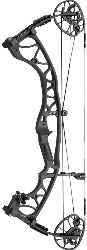

from $799.99
Pros
- Roller cable guard and Shock Pods dampers give a smoother, quieter shot than the standard Torrex
- About 9 fps faster than the base Torrex (336 IBO) from the tighter 6-inch brace, with the same flagship X-Act grip and Cam & 1/2
- Clean, easy draw into a firm cable-stop back wall - flagship feel at a value price
- Light 4.0-pound bare weight with tool-only draw-length changes that need no bow press
- Sold in Hoyt's full standard hunting color book, where the base Torrex is limited to two finishes
Cons
- The slick plastic X-Act grip surface divides owners - a few dollars of grip tape gives a surer hold for cold or wet hands
- Short valley asks you to stay on the back wall, so shooters prone to creeping forward should settle in deliberately
Video
content from YouTube
Editors' review
The Torrex XT answers a simple question the standard Torrex leaves open: what if you want the speed too? Hoyt's value hunting bow comes in two flavors, and the XT is the quick one - it shaves the brace height from 7 inches to 6, which buys 9 fps on the chronograph rating, and then it adds the two upgrades the base bow goes without: a roller cable guard and Shock Pods limb dampers. The result is a sub-$800 bow that is both faster and smoother than its cheaper sibling, while keeping everything that made the Torrex punch above its price - the RX-1 X-Act grip, the Cam & 1/2 system, the cast Tec-Lite riser. It is 0.2 pounds heavier than the standard, the trade for a riser Hoyt beefed up to handle the extra energy. This is the Torrex for the shooter who has decided they want performance, not just a bargain - the hunter who would rather have the speed and the refined shot than the last sliver of forgiveness, and who still refuses to spend flagship money to get there.
Finish
Here the XT pulls ahead of the base Torrex in a way buyers notice on the rack: where the standard model is offered in just two finishes, the Torrex XT is part of Hoyt's standard hunting color lineup, the same book the company offers on bows like the RX-5, Ventum, and Eclipse. That means the XT buyer chooses from the broader spread of camo and blackout patterns rather than the base Torrex's pair of options. The lone exception in the catalog is Kuiu Verde 2.0, which Hoyt did not extend to the Torrex XT, but everything else in the standard rotation is on the table, including the special-edition routes. The finish itself is the same durable dip-and-coat process used across Hoyt's hunting line, so the broader palette does not come at the cost of coating toughness. For a value bow, getting the real color book instead of a token two-finish list is a genuine perk.Riser
The XT rides the same cast Tec-Lite riser philosophy as the standard Torrex - molten aluminum cast into a mold rather than machined from billet - but Hoyt beefed it up. The XT riser carries a touch more material, which is why the bow weighs 4.0 pounds to the standard's 3.8 despite being shorter at 30 inches axle-to-axle; the extra metal is there to handle the higher energy the shorter-brace setup stores and releases. The big functional difference off the riser is the cable guard: where the base Torrex routes its cables over a conventional solid rod, the XT uses a roller cable guard, which lets the cables roll rather than slide as the bow is drawn. That single change reduces friction and cable wear and is a meaningful contributor to the XT's smoother, quieter draw and shot. The reflex back-bridge geometry and the clean StealthShot string-stop mounting carry over unchanged. As with the standard bow, the cast riser stays quiet and creak-free under a press - the casting is done right, and the value pricing shows up in the process, not in the rigidity.Grip
The grip is the part Hoyt was right not to touch, and the XT inherits it untouched: the X-Act grip from the Carbon RX-1, thin through the throat with a flat back that drops the hand into the same low-torque, repeatable position every draw. On a faster bow that detail matters even more - a quick bow punishes an inconsistent hand, and the X-Act's shape makes a clean hand position the path of least resistance. In my experience the flat back is what does the work, keeping the bow from rolling in the hand under the slightly stiffer pull of the 6-inch brace. The surface is the same molded plastic as the standard Torrex, and it splits opinion the same way - some shooters like the clean, slick feel that lets them re-seat the hand at full draw, others want more tack for cold or wet conditions. It is a known, cheap fix: grip tape or a slip-on wrap adds whatever bite a shooter wants. The shape, which is the part you cannot change with an accessory, is excellent.Limbs
The XT runs the same wide, stout split limbs as the standard Torrex, seated in the molded polymer pockets that are Hoyt's signature cost lever on this platform - no aluminum liner, just high-density plastic. The honest read on those pockets is the same here as on the base bow: they look like a compromise and they are not one, because Hoyt's limb engineering is the company's most proven asset and the pockets have held up in hard use. Where the XT limbs do something the base bow's do not is at the tips, where Hoyt fits Shock Pods dampers - small rubber dampers that absorb residual limb vibration after the shot, which is part of why the XT shoots a hair quieter and deader than the standard. The peak-weight menu is the full Torrex spread - 30-40, 40-50, 50-60, 55-65, and 60-70 pounds - so a buyer orders the weight they actually draw rather than detuning a heavier bow. Draw-weight changes are a no-press Allen-wrench job across the bolt range, and the split-limb design stores energy efficiently enough to feed the XT's faster cam without feeling harsh.Eccentric System
The XT uses the same Cam & 1/2 system as the standard Torrex - top and bottom cams linked by control cables to fire and sync as a unit, for a consistent platform that draws easier than a single hard cam - but the surrounding geometry is tuned for speed. The published IBO speed (the industry chronograph rating at a fixed 30-inch, 70-pound, 350-grain setup) is 336 fps, 9 fps over the standard Torrex's 327, and the gain comes almost entirely from the inch of brace height the XT gives up. There is no XT-specific chronograph data in circulation, but the platform is a known quantity: with real hunting-weight arrows at 70 pounds the Torrex cam chronographs in the high 260s to low 290s fps, and the XT's shorter brace places it at the quick end of that band rather than rewriting it. Let-off is 80 percent (the share of peak weight the cams shed at full draw), so a 70-pound XT holds around 14 pounds in the hand - the same easy hold as the standard bow despite the extra speed. Draw length runs 25.5 to 30 inches on the standard number-three cam, a half-inch shorter at the bottom than the base Torrex, with a number-two cam available down to 24 inches; the roller cable guard keeps the whole cycle running with less friction than the base bow's solid rod.Draw Cycle/Shootability
Pulling a 70-pound Torrex XT myself, I felt the front end build with a defined hump to break before the cams roll over the top - a touch firmer than the standard bow, which is the 6-inch brace making itself known - and then it settles into a valley that is, like the base Torrex, on the short side. The bow wants a shooter engaged against the back wall, so creeping forward is the one habit to mind; the reward for staying put is a firm, repeatable cable-stop wall that settles the pin cleanly. Where the XT separates from the standard is everything after the shot breaks: the roller cable guard and the Shock Pods dampers together make for one of the smoother, quieter cycles you will find in the budget class, and the bow comes back to hand with very little torque. Shot noise is low and post-shot vibration is minimal - the XT shaves a little more residual buzz than the base bow thanks to those tip dampers. At 4.0 pounds it is still light in hand, and a modest front stabilizer steadies the float for the slightly more demanding hold a faster, shorter-brace bow asks for. Like the whole Torrex line, it smooths out as the system breaks in over the first few hundred shots.Usage Scenarios
The Torrex XT is the value Torrex aimed at the shooter who puts performance first. With a 336 IBO rating and the Torrex cam's proven real-world output, it has the speed and the 74-plus foot-pounds of energy class for confident pass-throughs on whitetail, hogs, and antelope, with the headroom a western hunter wants for the occasional longer poke or a step up to elk inside a sensible range. Picture the hunter who shot a buddy's flagship, fell for the flat, fast trajectory, and wants as much of that feeling as a sub-$800 budget allows - the XT is the bow that scratches the itch. The shorter 6-inch brace and quicker cam reward a shooter with a settled, repeatable form, which makes the XT a better fit for someone past their first season than for a complete novice who would be better served by the more forgiving standard Torrex. It still covers backyard practice, 3D club nights, and treestand and ground-blind hunting, and the roller guard and dampers make it pleasant to shoot all afternoon. It is not a dedicated target rig - the cast riser concedes the last bit of consistency a spot shooter chases - but as a fast, refined hunting bow on a budget, it delivers.Versions
The Torrex XT is sold primarily as a bow-only configuration at a $749 launch MSRP (2020-2021), with retailers assembling complete ready-to-hunt packages that ran between $899 and $999 depending on the accessory kit and any special-edition color up-charge. It sits in the middle of the three-bow Torrex family, and each sibling has its own review. Below it, the standard Hoyt Torrex trades the roller guard and Shock Pods for a conventional cable guard and a longer 7-inch brace, runs 0.2 pounds lighter, and starts at $599 bow-only - the more forgiving, lowest-cost way into the platform. Above and beside it, the Torrex XT LD takes the XT's roller guard and dampers but runs a longer 7-inch brace, and fits a long-draw module that shifts the draw window to 30-31 inches for taller shooters. A buyer choosing the XT over its siblings is choosing speed and a refined shot over the base bow's forgiveness and price, while staying within a standard 25.5-to-30-inch draw range.Hoyt Torrex XT vs PSE Stinger Max, Diamond Infinite Edge Pro
| Bow | Hoyt Torrex XT | PSE Stinger MAX | Diamond Infinite Edge Pro |
| Version | 2021 | 2021 | 2026 Legacy |
| Picture |  |  |  |
| Brace Height | 6 " | 7 " | 7 " |
| AtA Length | 30 " | 30 " | 31 " |
| Draw Length | 25.5 " - 30 " | 21.5 " - 30 " | 13 " - 31 " |
| Draw Weight | 30 lbs - 70 lbs | 45 lbs - 70 lbs | 5 lbs - 65 lbs |
| IBO Speed | 336 fps | 304 fps - 312 fps | 300 fps |
| Weight | 4.0 lbs | 3.8 lbs | 3.3 lbs |
| Let-Off | 80% | 80% | 80% |
| Where to buy Best prices online | |||
| compare more bows | |||
Against the cross-brand value field, the Torrex XT sells speed and shot quality where its rivals sell adjustability. The PSE Stinger MAX, which launched around $449 as a ready-to-hunt package, is the budget-king alternative: it undercuts the XT's $749 bow-only price by a wide margin and offers a more forgiving 7-inch brace and a broad 21.5-to-30-inch draw range, but it gives up real speed, rating 304-312 fps to the XT's 336, and its build reads a clear step below the Hoyt. The Diamond Infinite Edge Pro, around $549 as an RTH package, is the ultimate one-bow-for-everyone - a 13-to-31-inch draw range and a 5-to-70-pound weight span let it fit a small child or a long-draw adult on the same riser - but it is built for range and reach, not speed, topping out at 310 fps with a longer, more relaxed 31-inch axle-to-axle frame. The XT is the fastest of the three and the most refined to shoot, with the roller guard and Shock Pods the others lack, but it is also the priciest and asks for the most settled form. The decision comes down to priorities: the PSE Stinger Max for the buyer who wants the lowest price and widest fit, the Diamond Infinite Edge Pro for the household that needs one bow to span every shooter, and the Torrex XT for the performance-minded hunter who wants flagship feel and budget-class speed in one package.