
Hoyt Ventum 30 Review
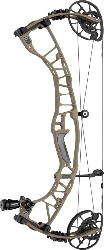

from $714.99
Pros
- Settles to less hand shock than its own carbon twin the RX-5 - owners who shot both came away surprised, since aluminum usually buzzes more than carbon, not less
- Smooth draw that builds and rolls into the wall without a hard dump or the old Hoyt habit of creeping forward at full draw
- Genuinely solid, defined back wall from the all-new HBX binary cam - it stops where you pull to and stays there
- Quiet shot signature - owners rank it among the quietest bows of Hoyt's 2021 line, dead in the hand right after release
- Let-off switches between 80% and 85% with one screw on each cam, so the same bow stays legal in Western states that cap it at 80%
Cons
- A touch heavier than the carbon RX-5 twin at 4.6 pounds - backcountry hunters counting ounces on long packs may prefer carbon, though on a treestand hold the extra mass steadies the bow
- Bare aluminum riser chills faster than the carbon RX-5 on late-season sits - a grip wrap or gloves handles it, and it is the trade for paying several hundred dollars less
Video
content from YouTube
Editors' review
Aluminum is supposed to buzz more than carbon - that is the whole reason carbon flagships cost what they do. The Ventum 30 quietly breaks that rule. Owners who shot it back to back against its carbon twin, the REDWRX Carbon RX-5, kept reporting the same surprise: the aluminum bow settled deader in the hand than the carbon one, and more than one walked away preferring it. That is the story of the Ventum 30 - Hoyt's 2021 aluminum flagship is the same bow as the carbon RX-5 underneath, the same all-new HBX cam, the same In-Line accessory system, the same XACT grip and hunting finishes, built around a machined aluminum riser instead of a hollow carbon tube and priced a third lower. The headline change for 2021 sits in the cam: the HBX is the first clean-sheet eccentric Hoyt had fielded since the cam-and-a-half era, a binary design that finally gave these bows the one thing earlier Hoyts lacked - a firm, defined back wall that no longer pulls forward on you at full draw. Wrap that engine in a 30-inch axle-to-axle frame (the distance between the two cam axles, the measure of how compact the bow is), add a Short Stop stabilizer in the box, and you have the compact aluminum hunter for the archer who wants the carbon-flagship shooting experience without the carbon-flagship invoice.
Finish
The Ventum 30 launched in Hoyt's 2021 hunting palette, the same slate offered on the carbon RX-5: a solid Black Out alongside Realtree Edge, Kuiu Verde 2.0, and Gore OptiFade in both Elevated II and Subalpine - a spread aimed squarely at the Western and open-country hunter. Hoyt also offered Signature Series treatments for buyers who follow those names, a Bone Collector build carrying Michael Waddell's graphics and a Keep Hammering build with Cameron Hanes' branding, and string makers cut custom color sets for the bow down to options like Ice Blue. The coating is the same durable textured finish across the range, only the pattern changing, and it held up clean in hands-on use. Black Out is the timeless pick for the hunter who plans to hang their own accessories and wants the riser to vanish behind them, while the OptiFade and Kuiu builds target the spot-and-stalk hunter glassing open terrain. That breadth of patterns runs wider than most aluminum hunting bows of the era carried, and because the riser is aluminum rather than carbon, the finish wraps a solid surface that takes the pattern crisply.Riser
The Ventum 30 is built on a machined aluminum riser, and for 2021 Hoyt made it beefier and a touch wider than the bows it replaced, adding internal bridging high and low to stiffen the structure and kill vibration at the source. The cutout pattern carries a couple of extra windows specific to the aluminum bows, part of a weight-reduction process that keeps a 30-inch aluminum hunter down to 4.6 pounds, and the front faces were machined flat on purpose so that sensor-style accessories and sight sweet-spots mount cleanly where older Hoyt risers had dimples and divots. The real practical upgrade over the prior generation is the In-Line accessory system. A Picatinny rail - the same accessory mounting standard used on AR-platform firearms - threads directly into the front of the aluminum riser, so the sight bolts on in-line and front-of-center with no adapter bracket; in my experience that in-line mounting is the kind of detail you stop noticing because it simply makes the sight sit where it should. A QAD Integrate dovetail on the back docks a compatible rest tight and rigid to the riser, an optimized low stabilizer location drops the center of gravity, and an SL sidebar mount positioned for Western hunters lets you run a back bar low. A new one-piece roller cable guard with two string channels replaces the old twin-wheel setup, shaving a little more weight.Grip
The Ventum 30 wears Hoyt's XACT grip, the same fixed, direct-to-riser grip fitted to the carbon RX-5, and it is the grip Hoyt settled back on after some shooters cooled on the adjustable side-plate unit of years past - they described that adjustable grip as added weight they never really used. The payoff is a clean, repeatable hand position: the profile fills the palm and centers pressure in the meat of the hand, and on a hunting bow that direct-to-riser link is the more consistent choice than a grip that can shift. There is no left-right windage adjustment as on Hoyt's target side-plate grips, but for the field that is the right call. The grip is comfortable enough through a long sit that most owners leave it exactly as it ships; the ones who like a slimmer feel pull the side panels and shoot the bare riser shelf, a tweak the XACT design accommodates without tools. Because the Ventum is a touch heavier than the carbon twin, palm torque shows up less here than on the lighter RX-5, which is a quiet point in the aluminum bow's favor for a shooter still grooving their hand position.Limbs
The Ventum 30 runs Hoyt's split, past-parallel limbs in machined pockets - the proven interface behind the brand's flagship hunters and a big reason these bows tune predictably and hold tune across seasons. Past-parallel geometry angles the limb tips away from each other at the shot so their recoil forces largely cancel, part of why the bow finishes quiet and dead. For 2021 Hoyt stiffened the limb pockets with internal spacers, having found that a 70-pound bow dialed down to the low 60s let the limbs shift just enough to introduce vibration; the more rigid pocket holds them put and keeps the shot clean across the draw-weight range. Draw weight spans the full hunting spread in 30-40, 40-50, 50-60, 55-65, 60-70, and 70-80 pound modules, so a smaller-framed or short-draw hunter can sit at the bottom while a backcountry hunter chasing kinetic energy runs the 80-pound top end - and owners note these limbs usually peak a hair above their rated weight, so a 60-70 module often crests nearer 72. One platform fits most of the hunting world, and Hoyt's limited lifetime warranty covers the limbs, pockets, and cams to the original owner.Eccentric System
The HBX Cam is the headline of the Ventum 30 and the first clean-sheet engine Hoyt had built since the cam-and-a-half system that ran its hunting line for years. It is a Tri-Track cam - three string tracks - on a binary platform, which means the top split yoke is gone entirely, replaced by a main string and two control cables that keep the two identical cams in time. That change matters in the field: with no outboard yoke to stretch, a little string creep nudges timing rather than throwing off cam lean and left-right tear, so a tuned Ventum stays tuned longer, and tuning itself is done by swapping spacer shims to shift the cam - Mathews-style - instead of twisting yokes, with deep cam grooves that make seating the string in a press straightforward. One cam size covers the lineup through two non-overlapping modules across the 25-to-30 inch draw range, with no speed penalty at any setting. The cam carries a 342 fps IBO rating (IBO being the industry-standard chronograph rating taken at 30 inches, 70 pounds, and a 350-grain arrow), and real hunting-arrow numbers track sensibly below it: at a 27-inch draw and about 70 pounds, a 440-grain shaft ran 271 fps and a heavier 455-grain 265 fps, while a lighter 430-grain arrow at 28.5 inches and 67 pounds clocked 284 to 286 fps - right on the same curve the carbon RX-5 posts, since the two share this exact cam. Let-off is shooter-selectable between 80% and 85% (let-off being the share of peak weight your holding weight drops to at full draw) by sliding a draw stop in or out of each module - a one-screw change, no module swap, that lets a Western hunter drop to the 80% many states require without buying new mods. What I keep coming back to with this cam is the back wall it delivers: solid and defined with no give at either let-off setting, where earlier Hoyts met the wall with a faint softness and a tendency to creep forward.Draw Cycle/Shootability
Drawing the Ventum 30 back on a cold, still morning, the first thing I noticed is what the bow does not do: it does not hump hard, and it does not dump over the top. The front end builds smoothly through the first several inches, eases over the peak, and rolls into the wall rather than falling off it, so you can point the bow at the lane and pull straight back without a fight - exactly what you want when a buck takes its time stepping out. Then it hits that defined back wall and simply stays there; one shop that shoots every new Hoyt called this the trait that separates these bows from the Hoyts that came before, which had a habit of tugging forward once you settled in. The valley is deep enough to hold without the bow creeping, a touch deeper at 85% let-off than at 80%, so a Western hunter forced to the lower setting trades a sliver of that valley for legality. Where the Ventum genuinely surprises is post-shot. Aluminum bows are supposed to ring more than carbon, yet owners who shot the Ventum 30 against the carbon RX-5 came away convinced the aluminum bow settled deader in the hand - one called it the first aluminum Hoyt he had ever shot with zero hand shock, and another simply liked it better than the carbon. The shot is quiet too, among the quietest of the 2021 line, with the redesigned dampers and the included Short Stop stabilizer doing their work and the bow settling to a single soft thump. Get the draw-length module dialed at a shop and this is a bow you can hold comfortably through a long, cold sit.Usage Scenarios
The Ventum 30 is built for the serious bowhunter who wants flagship feel without flagship spend, and its compact 30-inch frame is the through-line. Picture a Western elk hunter packing into high country: the 80-pound top module drives a 500-grain shaft with enough kinetic energy to reach the far lung at the end of a long stalk, and the one-screw drop to 80% let-off keeps the bow legal in the states that cap it there. Drop into a tight whitetail treestand and the short axle-to-axle threads the lane between branches a 34-inch bow would fight, while the solid back wall and quick-settling, quiet shot keep a close deer from jumping the string from 20 feet up. For the spot-and-stalk mule deer hunter ranging across a canyon, the flat speed of a mid-weight arrow tightens pin gaps and the In-Line balance holds the sight steady at full draw. The 30-to-80 pound draw-weight span and 25-to-30 inch draw range let one platform fit a smaller-framed hunter at 50 pounds or a powerlifter at 80. It can moonlight as a 3D bow for shooters who like a fast arrow and a firm wall, though a target archer who wants a longer riser and a deeper parking valley will be happier on a dedicated target platform - and a hunter who needs 31 inches of draw, or simply wants a longer, steadier-aiming bar, should look to the longer Ventum 33 built on this same engine.Versions
The Ventum 30 is the compact, standard 30-inch, 6 1/8-inch-brace model, and it was a single-year flagship: it debuted for 2021 at a $1,199 launch MSRP and was replaced by the Ventum Pro 30 for 2022. There are no package SKUs to choose between - buyers configure the bow through peak draw weight (30-40, 40-50, 50-60, 55-65, 60-70, or 70-80 pounds), draw-length module, hand, and finish, and every Ventum ships with the Short Stop 2.25-inch stabilizer in the box. The real decisions sit outside the SKU sheet. First, aluminum versus carbon: the Ventum 30 and the REDWRX Carbon RX-5 are the same bow - same 342 fps cam, same In-Line system, same XACT grip and finishes - separated only by riser material, two-tenths of a pound, and about $500, with the carbon adding cold-weather warmth in the hand and the aluminum, by several owners' accounts, settling at least as dead. Second, length: the longer Ventum 33 puts this same engine in a 33-inch frame with a taller brace and a draw range that reaches 31 inches, for the hunter who wants more forgiveness and a steadier hold. The Ventum 30 is the compact, lighter-aiming, faster one of that pair.Hoyt Ventum 30 vs Hoyt REDWRX Carbon RX-5, Mathews VXR 28
| Bow | Hoyt Ventum 30 | Hoyt REDWRX Carbon RX-5 | Mathews VXR 28 |
| Version | 2021 | 2021 | 2021 |
| Picture |  |  |  |
| Brace Height | 6.125 " | 6.25 " | 6 " |
| AtA Length | 30 " | 30 " | 28 " |
| Draw Length | 25 " - 30 " | 25 " - 30 " | 25.5 " - 30 " |
| Draw Weight | 30 lbs - 80 lbs | 30 lbs - 80 lbs | 50 lbs - 75 lbs |
| IBO Speed | 342 fps | 342 fps | 344 fps |
| Weight | 4.6 lbs | 4.4 lbs | 4.44 lbs |
| Let-Off | 80% or 85% | 80% or 85% | 80% or 85% |
| Where to buy Best prices online | |||
| compare more bows | |||
A Ventum 30 buyer is really cross-shopping two bows. The first is its own carbon twin, the Hoyt REDWRX Carbon RX-5: identical on paper through the 30-inch axle-to-axle, the 342 fps IBO, the HBX cam, the XACT grip, and the 30-to-80 pound draw range, separated only by the RX-5's hollow-carbon riser, its slightly slimmer 6 1/4-inch brace, its 4.4-pound mass, and its $1,699 launch price - roughly $500 over the aluminum Ventum. What the carbon buys is warmth in cold hands and two-tenths of a pound; what it does not clearly buy is a deader shot, since owners shooting both back to back gave the aluminum Ventum the edge on hand shock. The cross-brand rival is the Mathews VXR 28, a 28-inch, 6-inch-brace, 344 fps aluminum compact at 4.44 pounds with the same 80/85% let-off but a narrower 50-to-75 pound draw-weight range, launched at $1,099 - about a hundred under the Ventum. The Mathews answers with its renowned dead-in-hand silence and a slightly shorter, quicker-handling frame; the Ventum counters with a wider 30-pound draw-weight floor, the In-Line accessory system, and a back wall owners rate among the firmest in the class. The decision comes down to priorities: the Hoyt Ventum 30 for the hunter who wants the carbon-flagship shooting experience in aluminum for a third less, the Hoyt REDWRX Carbon RX-5 for the buyer who wants the warmth and feathered weight of carbon and will pay for it, and the Mathews VXR 28 for the shooter who prizes Mathews silence and a more compact frame over the Hoyt's draw-weight range.