
Hoyt Ventum 33 Review
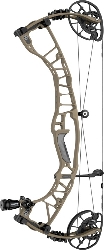

from $650
Pros
- Longer 33-inch frame with a taller 6 3/8-inch brace height holds rock-steady at full draw - owners describe it as a bow that aims itself
- Settles dead in the hand after the shot - Hoyt engineered the vibration out of the aluminum, so the old aluminum "thump" is simply gone
- Genuinely solid, defined back wall from the HBX binary cam - a clear step up from the older RX-series walls
- Smooth draw for a 334 fps bow - owners rank the draw cycle among the best of Hoyt's 2021 line
- Let-off switches between 80% and 85% with one screw on each cam, keeping the bow legal in Western states that cap it at 80%
Cons
- The long riser balances best with a full-length front stabilizer, not the little Short Stop alone - owners who hang a standard hunting bar say it then settles beautifully
- Heaviest of the Ventum pair, reading a little over the 4.7-pound spec once fully dressed - steadying on a treestand hold, but backcountry hunters counting ounces should factor it in
Video
content from YouTube
Editors' review
Hoyt built two aluminum flagships for 2021, and the Ventum 33 is the one for the hunter who would rather hold steady than hold light. Where the compact Ventum 30 chases a quick, carbon-like handling feel, the Ventum 33 stretches the same engine across a longer 33-inch axle-to-axle frame (the distance between the two cam axles) and pairs it with a taller brace height - and the result is a bow owners kept calling the best Hoyt they had shot in years. Part of that reception is the all-new HBX cam, the first clean-sheet eccentric Hoyt had fielded since the cam-and-a-half era, which finally gave these bows a firm, defined back wall instead of the soft, creep-forward feel of the older RX series. Part of it is what Hoyt did to the aluminum riser: beefed it up, bridged it, and tuned the dampers until the shot settled as dead as the carbon bows beside it on the rack. And part of it is simple geometry - a long riser and a generous brace forgive the small errors that a short, fast bow punishes, so the Ventum 33 sits and aims like a bow that wants to stay on target. Add the In-Line accessory system, the included Short Stop stabilizer, and a price a third under the carbon equivalent, and you have the aluminum long-range hunter for the archer who values a steady hold over a featherweight bar.
Finish
The Ventum 33 shares the 2021 Ventum and RX-5 hunting palette: a solid Black Out alongside Realtree Edge, Kuiu Verde 2.0, and Gore OptiFade in both Elevated II and Subalpine - a slate built for the Western and open-country hunter who lives in glassing terrain. Hoyt also offered Signature Series treatments, and the Ventum 33 turns up in the Bone Collector build carrying Michael Waddell's graphics as well as the Cameron Hanes Keep Hammering build, for buyers who follow those names. The coating is the same durable textured finish across the range, only the pattern changing, and on the aluminum riser it wraps a solid surface that takes the camo crisply. Black Out is the disappear-behind-your-accessories pick for the hunter hanging their own sight and quiver, while the OptiFade and Kuiu patterns target the spot-and-stalk hunter who needs to break up against open ground. For a long-axle hunting bow the breadth of available patterns is wide, and the larger riser real estate of the 33 simply gives the finish more canvas to show on.Riser
The Ventum 33 is built on a long, machined aluminum riser, and for 2021 Hoyt made the platform beefier and a touch wider, adding internal bridging high and low to stiffen it and kill vibration before it reaches the hand. The longer riser is the structural heart of the bow's forgiveness - more material between the grip and the limb pockets means a steadier platform at full draw - and Hoyt machined the front faces flat so that sensor-style accessories and sight sweet-spots mount cleanly. The In-Line accessory system is the real upgrade over the prior generation: a Picatinny rail - the same accessory mounting standard used on AR-platform firearms - threads directly into the front of the aluminum riser so the sight bolts on in-line and front-of-center with no adapter bracket, a QAD Integrate dovetail on the back docks a compatible rest tight and rigid, and a low SL sidebar mount positioned for Western hunters lets you run a back bar down where it lowers the center of gravity. A new one-piece roller cable guard with two string channels replaces the old twin-wheel design. In my experience the long riser is the part of this bow you feel most at full draw - it is what makes the sight pin hang where you put it instead of drifting - and it is the reason a steadier-aiming hunter gravitates to the 33 over the 30.Grip
The Ventum 33 wears Hoyt's XACT grip, the same fixed, direct-to-riser grip fitted across the 2021 line after Hoyt stepped back from the adjustable side-plate unit some shooters had cooled on - they found that adjustable grip added weight they never really used. The profile fills the palm and centers pressure in its meat, and on a hunting bow that fixed, direct link is the more repeatable choice than a grip that can shift under torque. There is no left-right windage adjustment as on Hoyt's target grips, but for the field the consistency is worth more than the adjustability. The grip is comfortable enough through a long sit that most owners leave it as it ships; the few who want a slimmer feel pull the side panels and shoot the bare shelf, which the XACT design allows without tools. On the longer, slightly heavier 33 the grip plays into the bow's steady character - the extra mass and the long riser both work against hand torque, so a clean hand position is easier to repeat shot after shot.Limbs
The Ventum 33 runs Hoyt's split, past-parallel limbs in machined pockets - the proven flagship interface that lets these bows tune predictably and hold tune across seasons. Past-parallel geometry angles the limb tips away from each other at the shot so their recoil forces largely cancel, part of why the bow finishes dead and quiet. For 2021 Hoyt stiffened the limb pockets with internal spacers, having found that a 70-pound bow backed into the low 60s let the limbs shift just enough to introduce vibration; the more rigid pocket holds them put and keeps the shot clean across the draw-weight range. Draw weight spans the full hunting spread in 30-40, 40-50, 50-60, 55-65, 60-70, and 70-80 pound modules, with most buyers landing in the popular 40-to-80 band, so a smaller-framed hunter can sit low while a backcountry hunter chasing kinetic energy runs the 80-pound top end - and the smooth HBX cam makes the heavier modules easier to pull than Hoyt's older systems did, so shooters often run a touch more weight here than they would have before. Hoyt's limited lifetime warranty covers the limbs, pockets, and cams to the original owner.Eccentric System
The HBX Cam is the engine the Ventum 33 shares with the Ventum 30 - only the modules and the riser geometry differ between them. It is a Tri-Track cam - three string tracks - on a binary platform, which retires the top split yoke entirely in favor of a main string and two control cables that keep the two identical cams in time. The practical payoff is tune stability: with no outboard yoke to stretch, a little string creep nudges timing rather than throwing off cam lean and left-right tear, and tuning is done by swapping spacer shims to shift the cam, Mathews-style, instead of twisting yokes. One cam size covers the bow through two non-overlapping modules - a 26-to-29 inch short module and a 29.5-to-31 inch long module - so the 33 reaches a full 31 inches of draw that the compact 30 cannot, which is part of why a longer-draw hunter chooses this frame. The cam carries a 334 fps IBO rating (IBO being the industry-standard chronograph rating at 30 inches, 70 pounds, and a 350-grain arrow), a touch under the 30's 342 because the longer, taller-brace geometry trades a little speed for forgiveness. Real hunting-arrow numbers track sensibly below the rating: at a 27-inch draw and about 70 pounds, a 440-grain shaft ran 265 fps and a 455-grain 261 fps - roughly four to six feet per second behind the Ventum 30 on the identical setup, exactly the gap the IBO numbers predict. Let-off is shooter-selectable between 80% and 85% (let-off being the share of peak weight your holding weight drops to at full draw) by sliding a draw stop in each module - a one-screw change that drops the bow to the 80% many Western states require without buying new mods. The back wall the cam delivers is the trait owners single out: a solid, defined stop you pull through into, a clear move up from the softer walls of the older RX-series Hoyts.Draw Cycle/Shootability
Settling into the Ventum 33 at full draw, what I notice first is how planted it sits - the long riser and the generous brace make the pin hang where you put it, the quiet advantage a 33-inch bow holds over a short, twitchy one. The draw builds through the front end and rolls over the top into the wall; most owners call it smooth, among the best of the 2021 line, though one honest voice noted the transition isn't flawless all the way through, so it's worth pulling one at a shop to feel where the cam rolls over for you. Then it hits that defined back wall - a solid stop you can lean into through the shot, which more than one owner flagged as a real step up from the older RX-series feel. The valley holds without the bow creeping forward, a touch deeper at 85% let-off than at 80%. Post-shot is where the aluminum Ventum quietly impresses: Hoyt tuned the dampers until the kick that older aluminum Hoyts left in the hand is simply gone, and owners who shot it described a dead, settled bow that surprised them for an aluminum riser. It is honest to say it is not whisper-silent - one owner wanted a hair more quiet - and the long riser rewards a full-length front stabilizer, calming completely once you hang a proper hunting bar where the little Short Stop leaves a bit on the table. Dial the module, hang a bar you like, and the Ventum 33 becomes the kind of bow you can hold on a far pin for a long count without it wandering.Usage Scenarios
The Ventum 33 is built for the hunter who values a steady hold and a longer draw, and the long frame is the through-line. Picture a Western mule deer hunter pinned down across a canyon, holding a top pin on a buck bedded at distance: the long axle-to-axle and tall brace settle the sight and forgive the small tremors a short bow magnifies, and the 31-inch long module fits a taller-draw shooter the compact 30 leaves out. For the elk hunter packing into high country, the 80-pound top module drives a heavy shaft with the kinetic energy to reach the far lung at the end of a stalk, and the one-screw drop to 80% let-off keeps the rig legal where states cap it. It works a treestand too - the dead, quiet shot keeps a close whitetail from jumping the string - though a hunter in a very tight blind may find the compact Ventum 30 threads branches the 33 has to work around. The 30-to-80 pound draw range and 26-to-31 inch draw span fit most adult hunters, and the bow doubles capably as a 3D rig for shooters who like a forgiving long-axle aim with a fast, firm-walled cam. A target archer wanting a dedicated long riser and a deeper parking valley will still be happier on a purpose-built target bow, but for a hunter who wants one steady, forgiving bow for open country, the 33 is the natural pick of the Ventum pair.Versions
The Ventum 33 is the long, 33 1/8-inch, 6 3/8-inch-brace member of the Ventum line, and it was a single-year flagship: it debuted for 2021 at a $1,199 launch MSRP and was replaced by the Ventum Pro 33 for 2022. There are no package SKUs to weigh - buyers configure the bow through peak draw weight (30-40, 40-50, 50-60, 55-65, 60-70, or 70-80 pounds), draw-length module, hand, and finish, and every Ventum ships with the Short Stop 2.25-inch stabilizer in the box. The decisions sit outside the SKU sheet. First, length: the Ventum 33 and the compact Ventum 30 share the same HBX engine, In-Line system, XACT grip, and finishes - the 33 trades eight feet-per-second and a little weight for a longer, more forgiving frame and a draw that reaches 31 inches, while the 30 is the lighter, quicker-handling, slightly faster one. Second, material: the carbon REDWRX Carbon RX-5 Ultra is the long bow's carbon counterpart, a 34-inch, 7-inch-brace, 334 fps carbon rig that adds cold-weather warmth and shaves a tenth of a pound for about $500 more. The Ventum 33 is the aluminum way to get the long, steady-aiming hold without the carbon premium.Hoyt Ventum 33 vs Hoyt REDWRX Carbon RX-5 Ultra, PSE EVO NXT 33
| Bow | Hoyt Ventum 33 | Hoyt REDWRX Carbon RX-5 Ultra | PSE EVO NXT 33 |
| Version | 2021 | 2021 | 2020 |
| Picture |  |  |  |
| Brace Height | 6.375 " | 7 " | 7 " |
| AtA Length | 33.125 " | 34 " | 33 " |
| Draw Length | 26 " - 31 " | 27 " - 32 " | 26.5 " - 32 " |
| Draw Weight | 30 lbs - 80 lbs | 30 lbs - 80 lbs | 40 lbs - 80 lbs |
| IBO Speed | 334 fps | 334 fps | 314 fps - 322 fps |
| Weight | 4.7 lbs | 4.6 lbs | 4.5 lbs |
| Let-Off | 80% or 85% | 80% or 85% | 80% - 90% |
| Where to buy Best prices online | |||
| compare more bows | |||
A Ventum 33 buyer is cross-shopping the long-axle hunting class, and two bows come up first. The carbon sibling is the Hoyt REDWRX Carbon RX-5 Ultra: the same 334 fps HBX platform in a slightly longer 34-inch axle-to-axle frame with a 7-inch brace, built on a hollow-carbon riser at 4.6 pounds and $1,699 - roughly $500 over the aluminum Ventum. What the carbon adds is warmth in cold hands and a sliver of weight savings; what it does not add is a different shooting engine, since the cam, the grip, and the In-Line system are shared, and owners give the aluminum Ventum line full marks for a dead, settled shot. The cross-brand rival is the PSE EVO NXT 33, a 33-inch, 7-inch-brace bow with a 26.5-to-32 inch draw range, 40-to-80 pound draw weight, 4.5 pounds of mass, and PSE's Evolve cam whose let-off adjusts across an unusually wide 80-to-90% band, launched at $1,099. The PSE trades top-end speed - 314 to 322 fps IBO against the Ventum's 334 - for the highest-let-off hold of the three and a roomy brace that flatters form, and it reaches a half-inch longer draw. The decision comes down to priorities: the Hoyt Ventum 33 for the hunter who wants a forgiving, dead-shooting long-axle aluminum bow with a firm wall at a sensible price, the Hoyt REDWRX Carbon RX-5 Ultra for the buyer who wants that same long frame in warm, light carbon and will pay for it, and the PSE EVO NXT 33 for the shooter who prizes a high-let-off hold and the longest draw over outright speed.