
Hoyt Trykon Sport Review
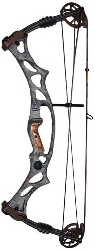

from $750
Pros
- Real 20-50 lb draw-weight range on a compact adult-capable frame, not a capped youth toy
- Short 23-inch draw floor fits smaller-framed and shorter-draw shooters most hunting bows exclude
- Light 3.2 lb mass and 30-inch axle-to-axle make it easy to hold and maneuver in a ground blind
- ZR12 three-quarter-inch split limbs add lateral and torsional stability for a steady low-poundage draw
- Growable value platform on the used market today, often at a fraction of a new short-draw bow
Cons
- 75% let-off holds more weight at full draw than a modern 80-85% bow, so the valley stays shorter and rewards staying engaged on the back wall rather than relaxing into it
- Short-draw 2007-2008 buyers should confirm they are getting the faster 2009+ Cam and 1/2 Plus version if speed matters, since the two configs share a name but differ by 25 fps
Video
content from YouTube
Editors' review
Hoyt built the Trykon Sport by shrinking a full-size hunting bow instead of stretching a youth bow upward, and that decision is the whole story. Where most short-draw and low-poundage rigs of the era were kid bows with an adult sticker, the Sport is a real Trykon scaled down: a machined Hoyt riser, genuine ZR12 split limbs, and a 30-inch axle-to-axle frame that happens to draw down to 23 inches and 20 pounds. That opens it to the shooter conventional hunting bows leave out, the smaller-framed adult woman who wants an honest 50-pound hunting setup without a youth cap, or the household passing one bow between a growing teenager and a shorter-draw parent. In 2009 Hoyt gave it a mid-life upgrade from the standard Cam and 1/2 to the faster Cam and 1/2 Plus, which is why a used Sport can wear one of two speed ratings under the same name. This is a bow bought today off the used market, so the question is not what it cost new but who it still fits.
Finish
The Trykon Sport shipped in the full Hoyt palette of its era rather than a single camo option. The hunting default is Realtree APG HD, the woodland pattern Hoyt ran across the 2008 lineup. Beyond camo, the Sport was available in high-polish anodized target colors, Inferno, Jade, Red Ember, Blue, and Jet Black, and in a run of target paint finishes including White, Light Blue, Pink, Blue, Black, and Yellow. That breadth matters for this specific bow, because the Pink and the lighter anodized options map directly to the smaller-framed and younger shooters the Sport was built to reach, a group the rest of the hunting market often ignored. Every target-finish bow also left the factory with a matching-color Fuse custom string, a small detail that signals Hoyt treated the Sport as a real member of the line rather than a stripped entry model. On the used market today the camo bodies dominate listings, with the anodized target colors scarcer and worth grabbing if the color is the draw.Riser
The Sport uses a machined aluminum riser, the same construction philosophy as the larger Trykon rather than the cast or entry-grade approach a budget short-draw bow would take. It carries a standard Berger-hole rest mount and conventional cable guard hardware, with a 7.5-inch guard bar and a #29 limb pocket keeping the geometry tight to the compact frame. Nothing here is exotic by modern standards, and that is the point: this is proven late-2000s Hoyt hardware, the kind that has held tune on tens of thousands of bows across the lineup. The riser geometry pulls the 30-inch axle-to-axle length into a package light enough to carry all day, which is where the 3.2-pound mass weight comes from. For the buyer I picture here, someone who values maneuverability in a treestand or ground blind over the dead-hold mass of a target rig, I read the lighter riser as a feature, not a compromise.Grip
The Trykon Sport wears the era-standard Hoyt grip, a moderate profile that suits the smaller and mid-size hands this bow is aimed at rather than forcing a large flagship grip onto a short-draw shooter. It is a comfortable, low-drama hand position, and because it is standard Hoyt geometry, aftermarket and replacement grips from the period are straightforward to find if a buyer wants to narrow or reshape it. For a shooter transitioning up from a youth bow or moving from a borrowed rig to a first bow of their own, the familiar hand feel shortens the adjustment. Grip is one place where scaling a full-size bow down pays off directly, since the frame stays proportioned for the person drawing it.Limbs
The heart of the Sport is its ZR12 limb set, a three-quarter-inch split-limb design. Hoyt's own material describes the three-quarter-inch split limb as providing much more lateral and torsional stability than a traditional 1.5-inch solid limb, and on a low-poundage bow that stability is what keeps a light draw feeling planted rather than twitchy. The limbs cover a 20 to 50 pound draw-weight range, sold in module bands of roughly 30-40 and 40-50 pounds with about 10 pounds of down-adjustment from peak in each. That range is the Sport's defining trait: it starts light enough for a new or smaller-framed shooter and climbs to a legitimate 50-pound hunting weight, which clears the ethical threshold for whitetail and similar game at sensible ranges. Draw-weight changes are made at the limb bolts within a module's range; moving between the low and high bands is a module change. The split-limb design has a long, reliable track record across Hoyt's late-2000s bows, so durability is a settled question rather than an open one.Eccentric System
The cam is where the Sport's two lives diverge. From 2007 to 2008 it ran Hoyt's standard Cam and 1/2, a hybrid system rated at 265 fps IBO. For 2009 Hoyt upgraded it to the Cam and 1/2 Plus, lifting the rated speed to 290 fps and adding a half-inch of axle-to-axle length. Both numbers are honest for what they are: Hoyt rates the Sport's IBO at 50 pounds and a 28-inch draw, not the industry-standard 70 pounds and 30 inches, because this is a 20 to 50 pound short-draw platform and rating it at a flagship setup it cannot reach would be meaningless. Read against its own 50-pound, 28-inch reference, 290 fps is a respectable number for a compact low-poundage hunter. Draw length is set by numbered base cams, so moving a shooter across the 23 to 28.5 inch band is a cam-and-module operation rather than a rotating-module twist. Let-off is 75%, which by modern 80-to-85% standards holds more weight at full draw. In practice that means a shorter valley and a shooter who needs to stay driving into the back wall rather than settling loose behind it. No independent chronograph data exists for the Sport specifically, so the speed figures here are the catalog ratings, stated as such, not a measured reading.Draw Cycle/Shootability
Judged against its purpose, the Sport draws the way a low-poundage compact bow should. The 75% let-off gives it a defined, slightly firmer hold than a modern high-let-off bow, and the ZR12 split limbs keep the light draw feeling controlled through the stroke rather than loose or springy. The 6.5-inch brace height is short for a bow at this poundage, which trades a sliver of forgiveness for the speed the small frame needs, so a clean, consistent grip and release matter more here than on a longer-brace target bow. At 3.2 pounds the bow is genuinely light in the hand, and light bows can move more at the shot, but the flip side is a rig a smaller shooter can hold steady on target through a long sit without fatigue. It is worth remembering that the harsher draw-cycle reputation attached to the original Zephyr-cam Trykon does not carry over to the Sport, which uses the entirely different Cam and 1/2 and Cam and 1/2 Plus systems. There is no independent hands-on shooting data specific to the Sport, so to me this reads as a compact, honest, mid-2000s hunter rather than a soft-drawing modern flagship, and buyers stepping down from a flagship-quiet rig should shoot one in person to set their expectations.Usage Scenarios
Picture a smaller-framed woman who has been shooting a borrowed youth bow and keeps hitting its ceiling. She sets the Sport at 45 pounds and a 24-inch draw, weights that fall right in its wheelhouse, and finally has a bow proportioned to her that still makes ethical whitetail energy. That is the buyer this bow was built for. It also fits the household that wants one bow to grow with a teenager: start lower in the range for backyard practice, climb toward 50 pounds as the shooter matures, and hand it off or trade up only when draw length outruns the 28.5-inch cap. As a hunting rig it is at home in a ground blind or treestand where its light 3.2-pound mass and 30-inch length are easy to maneuver, and it is a sensible setup for whitetail, hogs, and similar game inside moderate ranges. What it is not is a long-draw or high-poundage bow: adults needing past 28.5 inches of draw or a 60-plus-pound hunting weight are simply outside its design, and that is a fit boundary, not a flaw. A shooter who wants to stay in the Hoyt family but needs a little more headroom should look at the Hoyt Kobalt, the other small Hoyt of the era, which runs a faster Z3 cam on a 28-inch frame and reaches 60 pounds; the Sport counters with a lower brace, a lighter draw floor down to 20 pounds, and a shorter 23-inch draw for the smallest-framed shooters.Versions
The Trykon Sport was a single-package bare bow, but it exists in two meaningfully different configurations across its 2007-2010 run, and a used buyer needs to know which one they are looking at. The 2007-2008 version uses Hoyt's standard Cam and 1/2, rated 265 fps IBO, on a 29.5-inch axle-to-axle frame. The 2009-2010 version, the mid-life upgrade Hoyt introduced as new for 2009, swaps in the Cam and 1/2 Plus, raising the rated speed to 290 fps and stretching the frame to 30 inches, while brace height, 75% let-off, the ZR12 limbs, the 20-50 pound range, and the 3.2-pound mass stay the same. For a buyer who cares about speed, the 25 fps gap between the two is the deciding difference; for a buyer who cares mainly about fit and forgiveness at short draw, either version does the job. Because both wear the same Trykon Sport name, confirm the cam family before buying used: a Cam and 1/2 Plus on the limb sticker or the extra half-inch of axle-to-axle length identifies the faster later config. No launch MSRP was ever printed in Hoyt's catalogs for this model; period bare-bow street pricing ran around $300, and today the Sport is a used-market bow typically found in the $200-300 range depending on condition and config.Hoyt Trykon Sport vs Diamond Razor Edge, Bear Truth
| Bow | Hoyt Trykon Sport | Diamond Razor Edge | Bear Truth |
| Version | 2010 | 2012 | 2007 |
| Picture | 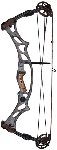 |  |  |
| Brace Height | 6.5 " | 7 " | 7 " |
| AtA Length | 30 " | 31 " | 33 " |
| Draw Length | 23 " - 28.5 " | 19 " - 29 " | 23 " - 30 " |
| Draw Weight | 20 lbs - 50 lbs | 15 lbs - 60 lbs | 50 lbs - 70 lbs |
| IBO Speed | 290 fps | 308 fps | 310 fps - 314 fps |
| Weight | 3.2 lbs | 3.8 lbs | 4.2 lbs |
| Let-Off | 75% | 75% | 80% |
| Where to buy Best prices online | |||
| compare more bows | |||
Against its natural cross-shops, the Trykon Sport stakes out the short-draw hunting-frame middle. The Diamond Razor Edge is the era's ultimate grow-with-you bow, spanning a huge 19 to 29 inch draw length and a 15 to 60 pound weight range in a single 31-inch package, and it undercuts almost everything on the used market at roughly $70 to $160. If the goal is the widest possible adjustment for a young shooter who will change dramatically over several years, the Razor Edge wins that on range alone. The Bear Truth comes at the question from the other side: a 2007 single-cam hunter with a smooth draw and a solid back wall, a 33-inch axle-to-axle frame, and a 50 to 70 pound range, typically $199 to $229 used. The Truth is the pick for a buyer who is already at adult hunting poundage and wants a longer, more forgiving frame. The Sport lives between them, more purpose-built as a hunting bow than the ultra-adjustable Razor Edge, more compact and lighter-drawing than the full-size Truth. The decision comes down to priorities: the Razor Edge for the widest growth range and lowest price, the Bear Truth for a longer forgiving frame at full hunting weight, and the Trykon Sport for the shooter who specifically wants a light, compact, real-Hoyt hunting bow that starts at a 23-inch draw and 20 pounds.