
Hoyt Carbon RX-10 Ultra Review
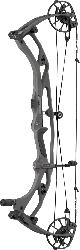

from $2750
Pros
- Very forgiving valley and a long, comfortable hold - settles and stays put for the extended aim
- The XTS system corrects left/right and high/low paper tears with an Allen key, no press for micro-tuning
- Dead in the hand - no post-shot vibration or hand shock even bare-bow, and a subtler shot report than the RX-9
- Light for its size at 4.5 lb, unusual for a 33.5-inch axle-to-axle carbon bow
- Holds tune well over time, in line with the long-tune-life reputation of Hoyt's carbon Ultra line
Cons
- The draw is firm and a touch stiff with a slight stack near the wall - shooters coming off a butter-smooth cam may want to draw one first, or drop to 75% let-off for an easier cycle
- Flagship carbon pricing - buyers who want this hold and geometry for less should weigh the aluminum-riser field
Video
content from YouTube
Editors' review
Longer bows are steadier bows, and the Carbon RX-10 Ultra is Hoyt betting a hunter will trade three inches of axle-to-axle for a calmer pin. It stretches the 2026 carbon flagship to 33 1/2 inches axle-to-axle (the distance between the two cam axles - the longer that span, the steadier the bow hangs on target), where the standard RX-10 sits at 30 1/2. What actually changed for 2026 isn't the geometry, though - owners of the outgoing Carbon RX-9 Ultra will recognize this riser almost line for line. The real news is XTS, Hoyt's first press-free tuning system, and it lands on a platform built to be aimed rather than snap-shot. The core of this bow is simple: it is the carbon Ultra for the hunter who already knows a longer, more forgiving bow shoots better for them - western glassing hunters, long-range-leaning shooters, and anyone who leans target in the off-season. If that's not you, the shorter standard RX-10 is the same bow in a more compact package.
Finish
The RX-10 Ultra ships in 11 finishes, and two are new for 2026: Sandstorm and Georgia Clay, the latter a reddish clay tone that reads differently in person than on a screen. The carryover palette covers the usual hunting ground - Mossy Oak Bottomland, Realtree APX, KUIU Verde 2.0, Sitka Gore Optifade Subalpine - plus solid Blackout and the branded Bone Collector and Keep Hammering blackout treatments and the America 250 pattern. Bottomland in particular looks the part on a carbon riser, and it stays a perennial-seller among Hoyt hunters. Every finish is one price; Hoyt does not charge a camo upcharge across the line, so the color choice is purely taste, not budget. The dip coatings are the same durable treatment used across the carbon range, so hard field use won't strip them early.Riser
The riser is Hoyt's carbon REDWRX platform - a hollow carbon-tube construction rather than a milled aluminum bar, which is where the 4.5-lb overall weight comes from on a bow this long. Hoyt does not print mass weight in its on-page spec table, but hands-on measurements put it at 4.5 lb, and for a 33 1/2-inch axle-to-axle bow that is on the light side of the category. The accessory ecosystem is the In-Line Accessory System: a Picatinny rail up front for pic-mount sights (the same rail standard used on AR-platform optics), an Integrate dovetail at the rear for drop-in rests like QAD and Hamskea, and in-line quiver mounting. If you'd rather torque-tune off the side, the dovetails still take a standard bar-mounted sight and rest, so the integration is an option, not a lock-in. The headline riser-adjacent change is at the limb pockets - see the tuning discussion below.Grip
The grip is Hoyt's carbon-series grip, carried over unchanged, and it remains one of the quieter strengths of the platform. It's a relatively thin, low-torque profile that puts the hand into a repeatable position without forcing a hard cant. Across the 2026 carbon line owners consistently single out the grip as a highlight - it fills the palm cleanly and doesn't push the shot around. On a forgiveness-first bow like the Ultra that matters more than usual: a long axle-to-axle only pays off if the hand isn't introducing torque the geometry then has to fight. Nothing here is new for 2026, and nothing needed to be.Limbs
Split limbs ride in the pockets that now carry the XTS hardware, and the draw-weight range runs 40 to 80 pounds, with a 65-to-75 module option for shooters who want to peak at 75 with the bolts run in. That range covers essentially every adult hunting setup, and the top end stores enough energy to keep heavy hunting arrows moving - even a 545-grain FMJ-class shaft clears the high 240s off this bow at a 28-inch draw. The limb geometry is carried from the RX-9 Ultra generation, a design with a long, uneventful reliability record across Hoyt's carbon line. What's genuinely new is that the limb pockets are now the tuning interface, not just structure.Eccentric System
The cam is Hoyt's HBX Gen 4, the same binary-style system Hoyt has run for two years, and it drives a 340-fps IBO rating (the industry-standard chronograph number at a fixed 30-inch, 350-grain, 70-pound setup). Real-world chronograph numbers track close to that mark: at 70 pounds, 30 inches, and a 350-grain arrow the Ultra runs about 324 fps, and it holds up under a hunting-weight shaft, landing near 292 fps with a 440-grain arrow at the same setup. The ladder is consistent - figure roughly 10 fps lost for every inch you come down in draw length, so a 28-inch shooter still sees the low 300s with a light arrow. Draw length spans 26 to 31 inches and adjusts in quarter-inch steps, but the smart part is the module design: each module locks you into a one-inch window and keeps the cam at peak efficiency across it, so shorter-draw shooters no longer bleed speed the way they did on older single-window cams. Let-off is selectable at 75, 80, or 85 percent - the percentage of peak weight the holding weight drops to at full draw - and the back-wall shoes flip top-to-bottom for a hard or extra-hard wall. Run at 85 percent, the hold is light enough to sit on a target for a long time, which is exactly what this geometry is asking for.Draw Cycle/Shootability
This is a firm, honest draw rather than a soft one. Drawing it at 70 pounds, the cam is a touch stiff and stacks slightly as it approaches the wall - it wants you to get into it, not sneak up on it - and it then rolls over into a defined, very forgiving valley. In my experience that combination reads as "consistent" more than "effortless": the bow eases into the valley instead of collapsing into it, and the back wall is genuinely firm, a wall and not a slope. If you want an easier ramp, dropping to 75 percent let-off softens the whole cycle. Where the Ultra earns its keep is after the aim: the valley is deep and forgiving enough that holding on target for a long count is comfortable, and the shot itself is dead - bare-bow, there is essentially no post-shot vibration and no hand shock, and adding a stabilizer only settles it further. The shot report changed for 2026 too; the old carbon "pop" is gone in favor of a subtler, quieter signature that many Hoyt shooters actually prefer. It is not the smoothest-drawing bow in the 2026 field, and it doesn't pretend to be - it trades a little draw-cycle sweetness for a hold and a shot that reward patience.Usage Scenarios
Picture a September elk hunter glassing a far basin, ranging a bull at 60 yards across a canyon: the long axle-to-axle and forgiving valley let the pin settle and stay settled through a slow, deliberate release - this is the bow's home. It's built for the western hunter, the whitetail shooter who takes longer poke shots from a field edge, and the hunter who shoots 3D or spots targets in the off-season and wants one bow that does both. The 26-to-31-inch draw range covers most average-to-tall adult shooters; shorter-draw hunters are better served by the RX-10 SD, and shooters past 31 inches by the RX-10 Ultra LD. It is not the bow for the tight-quarters treestand hunter who values a compact 30-inch package over hold - that hunter should take the standard RX-10. But for someone whose priority is a steady pin and a long, comfortable aim, the 33 1/2-inch platform is a genuine do-all hunting bow.Versions
The RX-10 Ultra is sold as a single bow-only SKU at $2,199 launch MSRP, with the finish chosen at no upcharge. It sits inside a four-bow 2026 carbon family, and the choice between them is geometry and draw length, not features - all four share the HBX Gen 4 cam, the XTS tuning system, the carbon riser, and the finish palette. The standard Carbon RX-10 ($2,149) is the 30 1/2-inch do-everything version for most hunters; the Carbon RX-10 SD ($2,149) drops to a 23-to-27-inch draw and a 30-pound floor for short-draw and smaller-framed shooters; and the Carbon RX-10 Ultra LD ($2,199) pushes the draw window to 31 1/4-to-33 inches for the tallest shooters, at the family's fastest 355-fps rating. The Ultra's $2,199 is a modest $50 step up over the standard and SD - the premium is for the longer, more forgiving geometry, not a different bow.Hoyt Carbon RX-10 Ultra vs Mathews Phase4 33, PSE Mach 34
| Bow | Hoyt Carbon RX-10 Ultra | Mathews Phase4 33 | PSE Mach 34 |
| Version | 2026 | 2024 | 2024 EC2 |
| Picture |  | 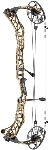 |  |
| Brace Height | 6.375 " | 6.5 " | 7.25 " |
| AtA Length | 33.5 " | 33 " | 34 " |
| Draw Length | 26 " - 31 " | 27 " - 31.5 " | 26.5 " - 32 " |
| Draw Weight | 40 lbs - 80 lbs | 50 lbs - 75 lbs | 40 lbs - 80 lbs |
| IBO Speed | 340 fps | 336 fps | 330 fps |
| Weight | 4.5 lbs | 4.68 lbs | 3.65 lbs |
| Let-Off | 85% | 80% or 85% | 80% - 90% |
| Where to buy Best prices online |
| ||
| compare more bows | |||
At 33 1/2 inches, the Carbon RX-10 Ultra plays in the long-axle, forgiveness-first hunting class, and its two closest cross-brand rivals are the Mathews Phase4 33 and the PSE Mach 34. The Mathews Phase4 33 (33-inch axle-to-axle, 336 fps IBO, $1,299 launch) is the quiet specialist - its eight-limb damping system makes it one of the hushed bows in the category, and its aluminum riser sits nearly $900 under the Hoyt. The PSE Mach 34 (34-inch axle-to-axle, 330 fps IBO, roughly $1,299 to $1,400) goes the other way on brace height, running a tall 7 1/4-inch brace that leans hard into forgiveness at some cost to raw speed. Against both, the Hoyt's arguments are its carbon riser and 4.5-lb weight - lighter to carry all day than the aluminum pair - its 340-fps rating at the top of this group, and the new XTS press-free tuning. Where the Mathews Phase4 33 wins is silence and price; where the PSE Mach 34 wins is a taller brace and a friendlier ticket. The decision comes down to priorities: the Hoyt Carbon RX-10 Ultra for the shooter who wants a light carbon riser, the longest speed, and at-home tuning; the Mathews Phase4 33 for the hunter who ranks a silent shot and a lower price first; the PSE Mach 34 for the shooter chasing maximum brace-height forgiveness on a value budget.