
Hoyt Alpha AX-90 Review
Pros
- Reaches a true 90-pound peak for maximum kinetic energy, backed by reinforced steel limb hardware built to pass Hoyt's 1,500 dry-fire test at full weight
- A heavy 465-grain arrow clocked 316 fps in hands-on testing, roughly 103 ft-lb of kinetic energy for deep penetration on the biggest game
- Even at 90 pounds the draw never dumps harshly, rolling clean over the peak into a solid back wall and a usable valley
- Dead, silent shot with zero post-shot vibration and a rock-solid hold, the Hoyt shot signature carried intact to extreme poundage
- Gives up nothing on features, with the full press-free XTS tuning system and In-Line accessory integration from the Alpha AX-3
Cons
- The draw stacks hard from the first inch and tires you quickly, so it is no cold-weather or all-day-3D bow; warm up and shoot one in person before committing
- At a 90-pound peak the spine requirements turn very stiff and arrow choices narrow, so factor in a heavy stiff-spine build and a pro-shop spine check
Video
content from YouTube
Editors' review
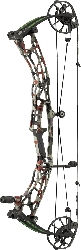
Most bows want to sell you on who they are for. This one ships with a notice from Hoyt telling most buyers to walk away. The Alpha AX-90, Hoyt's 2026 Beast, is the Alpha AX-3 aluminum chassis reinforced to shoot an 80-to-90-pound peak draw, built at the request of Cameron Hanes and Josh Bowmar for hunters chasing maximum kinetic energy. It keeps the whole 2026 Alpha AX toolkit, the HBX Gen 4 cam, the press-free XTS tuning system, the bridged Tec riser and In-Line accessory mounts, then upgrades the limb hardware to reinforced steel so the platform survives Hoyt's 1,500 dry-fire test at 90 pounds. The payoff is a 347 fps IBO rating (the industry-standard chronograph number at a fixed 30-inch, 70-pound, 350-grain setup, here quoted at the bow's higher peak) and the kind of arrow energy that flattens penetration debates. The catch is the buyer: this is a small, trained audience, and Hoyt says so on the product page. The sections below explain what the 90-pound peak buys, and what it costs.
Finish
Hoyt offers the AX-90 in a smaller palette than the standard AX-3 line, listing five solid colors and four camo patterns for the riser. The solids draw from the family look with options such as America 250, Georgia Clay, Sandstorm, Blackout and Tombstone, while the camo side covers Realtree APX, Mossy Oak Bottomland, KUIU Verde 2.0 and Sitka Gore Optifade Subalpine for treestand timber through open western country. Where the AX-90 differs is the limbs: rather than a broad signature-series spread, the bow is built around two named editions, the Cameron Hanes Keep Hammering set and the Josh Bowmar Beast set, and those are the only two limb treatments it ships in. Hoyt's finishes have a long record of shrugging off brush, weather and quiver rub, which matters more on a bow destined for hard backcountry and big-game trips than the exact pattern does. For most buyers the edition choice is really a nod to which collaborator's philosophy they follow; the camo or solid underneath is the practical call for the terrain they hunt.Riser
The AX-90 is built on Hoyt's bridged Tec aluminum riser, the same stiff platform that anchors the Alpha AX-3, and that rigidity is exactly what a 90-pound bow needs to stay planted through a violent energy release. In the hand it holds rock solid, and the string angle sits where a Hoyt shooter expects it, so the riser never feels like it is fighting the extreme poundage loaded into the limbs. The In-Line accessory system carries over untouched: a Picatinny front sight mount is machined directly into the riser (Hoyt originated the pic-rail bow mount), an IMS dovetail handles the rest, and dual stabilizer bushings and low-profile quiver mounts pull every accessory tight to the centerline. Drawing my rig in close on this riser, the whole setup balances like one mass rather than a heavy bow with weight hung off it, which helps steady the hold when your muscles are already busy managing 90 pounds. Nothing about the riser was softened to make the bow easier; Hoyt kept the platform stiff and put the reinforcement where the energy actually loads, in the limb pockets.Grip
Hoyt carried over its Vital Point grip on the AX-90, and on a bow this demanding a grip that does not fight you is not a luxury but a requirement. The profile is a low-to-mid wrist shape that fills the hand and finds a repeatable, low-torque position without the sharp edges that punish a cold-weather hold. In my experience the grip is the quiet reason the shot stays clean at extreme weight: when every ounce of your attention is on pulling and holding 90 pounds, a hand position that settles on its own is doing real work. The grip is interchangeable for shooters who want a different fill or a side-plate setup, so hand-size outliers are not stuck with the stock shape. It is one of the few parts of this bow nobody argues about, and it arrives feeling right straight out of the box.Limbs
The limbs are where the AX-90 stops being an AX-3. To hold an 80-to-90-pound peak and survive Hoyt's 1,500 dry-fire test at full weight, Hoyt fitted heavier-poundage limb sets and, critically, reinforced steel limb bolts and pocket dowels rather than the standard hardware. The limb pockets even look a little different for it. That reinforcement is the whole engineering story of this bow: the same cam and riser as the AX-3, but a load path built to shrug off the extra stored energy without flinching. Josh Bowmar's long draw length made this harder still, because a long draw at 90 pounds produces energy the engineers had not designed for on the standard chassis, which is part of why the durability sign-off took extra time. Buyers configure the peak by choosing 80, 85 or 90 pounds and can turn a 90-pound bow down toward 80 if they want the headroom without living at the top. Hoyt's limb-and-pocket design has a strong reliability record across the RX and AX lines, and the AX-90 is the version built to take the punishment of the poundage it advertises.Eccentric System
The AX-90 runs the HBX Gen 4 cam, the same four-track design as the rest of the 2026 Alpha AX line, which means the extreme poundage is being moved by a cam tuned for a normal-weight bow, and that is exactly why the draw feels the way it does. Draw length adjusts in one-inch steps through the module system across the 26-to-31-inch range, and the cam keeps the three self-adjustable let-off settings at 75, 80 and 85 percent (let-off is the percentage of peak weight the holding weight drops to at full draw), plus rotating draw stops for a hard or extra-hard back wall. On speed, the 347 fps IBO rating tells you the ceiling, but the real-world number is more instructive: a 465-grain arrow at 28.5 inches on a sample pulling 93.5 pounds chronographed 316 fps across a three-shot group, which works out to about 103 ft-lb of kinetic energy. That is the entire point of the bow, energy on target, not headline speed, and it is a genuinely heavy hit with a heavy arrow. The cam pairs to the same press-free XTS tuning system as the AX-3, so nock tears get corrected at the limb pocket rather than by chasing the cams, and left-right and up-down tears both come out without a bow press. One honest note the cam forces: at a 90-pound peak with a longer draw, the arrow spine you need turns very stiff and the shelf of arrows that will tune drops off, so arrow selection becomes part of the buying decision rather than an afterthought.Draw Cycle/Shootability
Drawing the AX-90 the first thing you notice is that it stacks right from the start; there is nothing gradual about the front end, and it is stiff from the moment the cam breaks over. Pulling a sample set at 93.5 pounds first thing in the morning, I felt it make a genuine 80-pound draw feel almost trivial by comparison, and letting it back down is its own small chore because there is simply so much weight to hold onto. And yet the surprise is that the cycle is not unpleasant once you are through it: it does not dump harshly, it rolls clean over the peak, and it settles into a valley that is a touch short but not punishing, with a hold that is rock solid at full draw. The shot itself is pure Hoyt, dead in the hand, no felt hand shock, and quiet with zero post-shot vibration even with this much energy leaving the string. The honest characteristic is fatigue: you are all-in mentally on every single draw, you warm up before you shoot, and you will not run 50 targets through it in an afternoon. This is not a bow you shoot a lot; it is a bow you train for and then execute cleanly when it matters, and shooting one in person before you buy is the right move so you know your shoulder is ready for it.Usage Scenarios
This is a specialist's bow, and the specialist is easy to name. Picture the short-to-mid-draw hunter who wants to wring every bit of speed and energy out of a heavy arrow, or the western and big-game hunter loading a stout arrow for maximum penetration on elk-sized and larger animals. It is a natural fit for a plains-game or dangerous-game trip to Africa, where energy and penetration on heavy-boned animals outrank every other consideration and a bow you have trained hard with is worth the effort. What it is not is a range toy or a competition bow: Hoyt itself steers doubtful buyers toward the Alpha AX-3, the Carbon RX-10 or the Enduro, and a whitetail hunter taking 30-yard shots simply does not need this much bow. The buyer who fits is the one who already pulls 80 pounds comfortably and wants the next tier of energy, trains year-round, and is honest with themselves about being able to draw 90 pounds under cold, tired, real-hunt conditions. For that hunter the AX-90 is a purpose-built tool; for everyone else, the family's other bows deliver the Hoyt experience without the shoulder tax.Versions
The Alpha AX-90 is sold as a single bow-only model at a $1,749 launch MSRP, configured by the buyer rather than split into package SKUs. Draw weight is set by choosing an 80, 85 or 90-pound peak, draw length by the one-inch modules across 26 to 31 inches, and let-off self-adjusts among 75, 80 and 85 percent. The one either-or choice unique to this bow is the limb edition: the Cameron Hanes Keep Hammering set or the Josh Bowmar Beast set, the only two limb treatments offered, over a riser finish chosen from the five-solid, four-camo palette. Within the wider family, the in-house step-down is the Alpha AX-3 33 ($1,599), which shares this exact chassis, cam and tuning system but tops out at an 80-pound peak on standard hardware, making it the bow for the hunter who wants the Alpha AX platform without the 90-pound commitment.Hoyt Alpha AX-90 vs PSE Mach 30 DS, Mathews Phase4 33
| Bow | Hoyt Alpha AX-90 | PSE Mach 30 DS | Mathews Phase4 33 |
| Version | 2026 | 2026 FDS | 2024 |
| Picture | 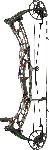 | 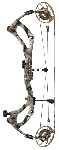 | 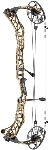 |
| Brace Height | 6.5 " | 5.875 " | 6.5 " |
| AtA Length | 32.5625 " | 30 " | 33 " |
| Draw Length | 26 " - 31 " | 24.5 " - 30 " | 27 " - 31.5 " |
| Draw Weight | 80 lbs - 90 lbs | 40 lbs - 80 lbs | 50 lbs - 75 lbs |
| IBO Speed | 347 fps | 348 fps | 336 fps |
| Weight | 4.75 lbs | 3.6 lbs | 4.68 lbs |
| Let-Off | 85% | 70% - 85% | 80% or 85% |
| Where to buy Best prices online |
|
| |
| compare more bows | |||
The AX-90's defining number is one its rivals do not print: a 90-pound peak. Line it up against the burliest premium flagships from other brands and the gap is the whole story. The PSE Mach 30 DS is the closest cross-shop on price and attitude, an aggressive carbon speed flagship at about $1,799 launch MSRP with a 348 fps IBO and a short 5.875-inch brace, but it caps at 80 pounds, ten short of the Hoyt, so it is the pick for the buyer who wants maximum speed and energy but tops out at a still-serious 80. The Mathews Phase4 33 is the mainstream aluminum flagship most hunters actually buy, a quiet, heavily damped 33-inch bow at $1,299 launch MSRP with a 336 fps IBO, but it stops at 75 pounds and is built for silence and forgiveness rather than raw poundage. Neither reaches where the AX-90 lives, which is precisely the point: if 90 pounds and maximum kinetic energy are the requirement, the Hoyt stands nearly alone, and the higher $1,749 price buys reinforced hardware and durability testing the others were never asked to pass. The decision comes down to priorities: the Alpha AX-90 for the trained hunter who genuinely needs 90 pounds of energy, the PSE Mach 30 DS for the speed-first buyer content at 80, and the Mathews Phase4 33 for the hunter who values a quiet, forgiving shot over headroom.