
Hoyt Vantage Elite Review
Pros
- Holds dead still at full aim, with owners comparing it to shooting off a bench rest thanks to the long axle-to-axle and stiff riser
- Stiff Shoot-Through riser cuts hand torque and stays consistent even when hand placement isn't perfect
- Easy to tune and set up, with owners calling it one of the simplest target rigs they have dialed in
- Spiral X cam builds a rock-solid back wall and a crisp, repeatable shot for score shooters
- Forgiving across a wide range of body types, draw lengths, and poundages, not just one build
Cons
- The Spiral X is picky about exact draw length and timing, so buyers should have a shop set it precisely and roll the cams slightly long to tame it
- Short valley punishes creeping forward, a genuine target trait that rewards disciplined form rather than a flaw to fix
- Cam and a half Plus wall can feel soft if the cams drift out of time, which a routine timing sync restores
Video
content from YouTube
Editors' review
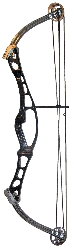
Hoyt built the Vantage Elite for one job: putting arrows in the X-ring under tournament pressure. Launched as the flagship of the 2009 target line, it is defined by a single structural idea that separates it from every other Vantage of its year, the Shoot-Through Technology riser paired with a longer, more stable riser body. That combination is what target shooters actually feel at full draw, and it is the reason owners kept coming back to the same phrase, that aiming it is like shooting off a bench rest. The bow runs premium XT 2000 limbs on a 41-inch axle-to-axle frame, and buyers pick between two cam systems with genuinely different personalities. This is not a hunting bow adapted for the range; it is a purpose-built spot, field, and FITA competition tool from the era when Hoyt owned a large share of the podium. If you shoot paper or foam for score and value a still sight picture over speed, this is a machine worth understanding.
Finish
The Vantage Elite ships in Hoyt's target-oriented palette rather than hunting camo, which suits a bow that lives on an indoor line or a field course. Documented color options include Blue Fusion, Red Fusion, Orange, Cobalt Blue, Jet Black, and Pearl White, the kind of bold anodized tones competition archers use to stand out at a shoot. Beyond the standard anodized colors, Hoyt offered custom paint finishes on this platform, so a shooter could order a look tuned to a club or sponsor identity. The anodizing is durable and holds up to years of range handling, bow-stand contact, and travel to tournaments. For a target bow the finish job is less about concealment and more about pride of ownership and easy identification on a crowded shooting line, and the Vantage Elite delivers on that. Solid tones dominate the lineup, which is exactly what most spot and field archers prefer.Riser
The riser is the whole story of this bow. Where the sister Vantage Pro uses a standard long riser with a machined-aluminum integrated grip, the Elite is built on Hoyt's Shoot-Through Technology riser, a stiffer geometry that routes the cable system to reduce string torque and cam lean. Paired with a longer, more stable riser body, it is a TEC design engineered specifically to hold steady at full draw. In practice, owners consistently rate the Elite as more accurate and more forgiving than the flex-ier Pro riser, and describe noticeably less hand torque under load. That stiffness is what produces the bench-rest sight picture people talk about, because the riser is not fighting small inconsistencies in the shooter's grip. Drawing and aiming it myself, the standout is how little the pin wanders once you settle, a trait that flatters shooters whose hand placement is not machine-perfect from shot to shot. The 41-inch axle-to-axle length extends the string angle and adds to that inherent stability. It is a riser designed to win on paper, and it shows.Grip
The Vantage Elite carries a Hoyt target grip profile geared toward a low-torque, repeatable hand position, the priority for any bow shot for score. Unlike the Vantage Pro, whose defining hardware is a machined-aluminum integrated grip, the Elite's identity lives in its riser rather than its grip, but the hand feel still supports the same goal of consistency. A narrow, neutral grip lets a target archer index the same spot every draw, which matters enormously across a 60-arrow round where tiny hand-placement changes multiply into lost points. Owners rarely single the grip out as a problem, which for a competition bow is a compliment, because a grip that draws no attention is a grip that is doing its job. Shooters who prefer a particular feel can adjust or wrap the grip as they would on any Hoyt of this era. The result is a hand interface that gets out of the way and lets the riser do the stabilizing.Limbs
The Elite runs Hoyt's premium XT 2000 limbs, a five-layer laminated split-limb design that was the forgiving, higher-brace limb set of the Vantage era, the same limbs that made the Vantage X8 more forgiving than its X7 sibling. These limbs anchor the 41-inch axle-to-axle geometry and the 8-inch brace height on the Cam and a half Plus configuration, a combination tuned for stability rather than raw speed. Draw weight covered 40 to 80 pounds at launch in 2009, and in 2010 the range shifted to 30 to 70 pounds as Hoyt added a 30 to 40 pound option and no longer catalogued the 70 to 80 pound top, opening the bow to lighter-poundage target archers, including many indoor and youth-transition shooters who never need heavy weight. The split-limb layout keeps mass balanced and vibration low, and this limb family had a strong reliability record across Hoyt's target and hunting lines. Because the limbs pair with two different cam systems, the same limb set delivers either a smoother or a faster feel depending on the buyer's choice. For a bow that stores energy for a long, forgiving shot rather than a flat hunting trajectory, the XT 2000 is well matched.Eccentric System
Buyers chose between two cam systems that give the Vantage Elite two distinct personalities on the same chassis. The Cam and a half Plus Performance System is the smoother, more comfortable option, rated at 301 fps IBO (the industry-standard chronograph rating at a fixed 30-inch, 70-pound, 350-grain setup) with an 8-inch brace height and draw lengths out to 34 inches. The Spiral X Cam and a half is the aggressive choice, rated at 308 fps IBO with a shorter 7 3/4-inch brace and draw lengths to 32 inches, and Hoyt reported it was the popular pick among target shooters that year. The two cams trade the same way they feel: owners describe the Cam and a half Plus as the softer, easier draw, while the Spiral X front-loads the effort and rewards you with a crisper shot and a rock-solid back wall. That firm Spiral X wall is a favorite among score shooters, though it comes with very little valley, so any creep forward shows up immediately. The Cam and a half Plus wall is firm when the cams are synced, but can feel soft if timing drifts, which a routine timing check restores. Draw length adjusts in half-inch increments, and the Spiral X in particular is sensitive to getting that exact length and timing right. Choosing between them is really choosing your priority, comfort and a longer draw range, or a sharper, faster shot with a harder wall.Draw Cycle/Shootability
How the Vantage Elite draws depends heavily on which cam you ordered, and owners are clear about the difference. The Cam and a half Plus pulls smooth and stays comfortable through the cycle, an easier draw that many prefer for long practice sessions and all-day tournaments. The Spiral X builds peak weight sooner and pulls harder, but the payoff is a tighter, more defined shot and a wall that does not budge. Where both cams agree is at full draw, and this is the bow's signature: it simply sits still. Owners repeatedly describe an exceptionally steady hold once the bow is set to their correct draw length, the trait that earns the bench-rest comparisons and drives the strong indoor and field scores people posted with it. Shooters cited genuinely competitive results, deep X-counts and 59-and-60-X ends among owners who committed to the platform. In my experience aiming a long, stiff-riser bow like this, the reward is a slow, controlled float rather than a darting pin, and the Elite is a textbook example. The short valley on the Spiral X and the firm walls demand disciplined form, so this is a bow that shoots best for an archer with a repeatable shot process. It is quiet and steady in hand, which is exactly what a score shooter wants.Usage Scenarios
The Vantage Elite is a competition bow first and everything else second. Its natural home is the indoor spot line, where the still hold and forgiving 41-inch geometry help a shooter stack arrows into the ten-ring across a full round. It is equally at home on an outdoor field course and in FITA and target rounds, where the long axle-to-axle and stiff riser keep the sight picture calm at distance. Picture a league shooter who wants to move from mid-pack to podium: this is the kind of rig that flatters a developing shot process, holding steady long enough to let good form express itself. The 2010 addition of a 30 to 40 pound option opened it up to lighter-poundage indoor archers who never need heavy draw weight and value the reduced fatigue over a long day. It is not a hunting bow, and it is not trying to be; the length and target geometry that make it forgiving on paper are the same traits that make it clumsy in a treestand. For an archer whose season is measured in scorecards rather than tags, though, it fits perfectly.Versions
The Vantage Elite was sold as a single bare-bow target model, with the buyer's choices centered on cam system, draw weight, and finish rather than package tiers.- Cam system: Cam and a half Plus Performance System (301 fps IBO, 8-inch brace, draw length to 34 inches) or Spiral X Cam and a half (308 fps IBO, 7 3/4-inch brace, draw length to 32 inches). Same riser, limbs, and 41-inch geometry either way.- Model year: 2009 offered 40 to 80 pound draw weight. In 2010 the range shifted to 30 to 70 pounds: Hoyt added a 30 to 40 pound option and no longer catalogued the 70 to 80 pound top, opening the bow to lighter-poundage target archers.- Finish: standard anodized target colors (Blue Fusion, Red Fusion, Orange, Cobalt Blue, Jet Black, Pearl White) plus available custom paint.A firmly dated launch-era price point comes from Hoyt's authorized Australian dealer, which listed the Vantage Elite target bow at 2,344 Australian dollars including GST in 2009; Hoyt did not publish a US list price for the model.Hoyt Vantage Elite vs PSE Supra, Mathews Conquest 4
| Bow | Hoyt Vantage Elite | PSE Supra | Mathews Conquest 4 |
| Version | 2010 | 2018 EXT | 2019 (MaxCam) |
| Picture |  |  |  |
| Brace Height | 8 " | 7 " | 7 " |
| AtA Length | 41 " | 37 " | 40.625 " |
| Draw Length | 25.5 " - 34 " | 25 " - 30.5 " | 28 " - 32 " |
| Draw Weight | 30 lbs - 70 lbs | 30 lbs - 60 lbs | 30 lbs - 70 lbs |
| IBO Speed | 301 fps | 317 fps - 325 fps | 310 fps |
| Weight | 4.8 lbs | 4.7 lbs | 4.4 lbs |
| Let-Off | 65% or 75% | 65% & 75% | 80% or 65% |
| Where to buy Best prices online |
|
| |
| compare more bows | |||
Cross-shopping a Vantage Elite means weighing it against the other long-riser target flagships of its era, and the closest matches are the PSE Supra and the Mathews Conquest 4. The Vantage Elite is the longest and most stability-focused of the three, with its 41-inch axle-to-axle frame, 8-inch brace on the Cam and a half Plus, and the Shoot-Through riser that owners credit for its bench-rest hold. The PSE Supra is the shorter, faster-feeling target bow, running a 37 to 38-inch axle-to-axle length and IBO speeds in the 310 to 332 fps range depending on year, which appeals to a shooter who wants a more compact, quicker rig without giving up target manners. The Mathews Conquest 4 is the closest geometric twin, a roughly 40 to 41-inch single-cam target bow with a 7-inch brace, and it is the natural comparison for an archer choosing between Hoyt's Cam and a half feel and Mathews' single-cam draw. Against the Conquest 4, the Vantage Elite counters with its choice of two cams and its taller Cam and a half Plus brace for a touch more forgiveness. Against the PSE Supra, it trades some speed and compactness for a longer, steadier platform. All three are proven competition bows with strong tournament pedigrees. The decision comes down to priorities: the Vantage Elite for the shooter who wants maximum hold and a choice of cam personalities, the PSE Supra for one who prefers a shorter and faster target bow, and the Mathews Conquest 4 for one who wants Mathews' single-cam feel in the same length class.