
Hoyt HyperEdge Review
Pros
- Aims like a full 40-inch target bow despite a compact 36-inch axle-to-axle - steady on the spot even without stabilizers
- Rock-solid back wall from the DFX cam's dual cable stops, with an optional limb stop for zero give
- Smooth draw with a clean, defined valley and a low-torque modular grip that centers the hand
- Shot goes dead in the hand - very low residual vibration once it is set up right
- Feel is tunable: mods take it from a forgiving high let-off to a tight 65% valley, so one bow suits both hold styles
Cons
- A 36-inch tournament rig that rewards developed form - first-time archers are better served by a friendlier entry target bow
- Some owners note faint post-shot buzz when the draw-stop-to-string gap is left open - closing that gap in setup quiets it
Video
content from YouTube
Editors' review
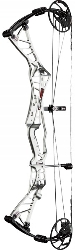
Hoyt built the 2016 HyperEdge to break a rule target archers thought was fixed: that a steady, forgiving hold needs a long, heavy riser. At just 36 inches axle-to-axle (the distance between the cam axles that governs how a bow balances and holds), it aims like a 40-inch target bow - owners routinely describe it holding rock-steady on the spot even with no stabilizers threaded on. The trick is the pairing of all-new UltraFlex limbs with the DFX Cam & 1/2, which stretch the effective axle-to-axle length at full draw and open the string angle a shorter bow normally can't. Successor to the ProEdge, it slotted into Hoyt's 2016 target line beside the Podium X Elite and Pro Comp Elite FX, and dealers also sold it under the "HyperEdge Target" label. What makes it interesting years later is its range: a hunting-derived DFX cam, 30-to-70-pound draw weights, and a 7-inch brace height give it real crossover reach into 3D and even hunting, not just paper. This is a bow for the shooter who wants a compact, maneuverable rig that still behaves like a full-size target bow when the pin settles.
Finish
The HyperEdge shipped in Hoyt's target-color program rather than hunting camo, and that palette is part of its character. Catalog hero colors were Victory Violet, Harvest Brown, and Orange Torch alongside a standard Black Out, and the broader target menu ran through Red, Blue, Teal, Jet Black, Green, Silver, and White. These are anodized finishes on the machined aluminum riser, giving this era's HyperEdge its deep, jewel-like target colors. Owners who have handled both old and new Hoyts often single out the finish quality here as a step above what replaced it. The tradeoff is at the wallet - custom target colors carried an upcharge over the standard Black Out at the dealer. For a bow that spends its life on a shooting line under bright light, the anodized coating also holds up well to handling and hardware contact.Riser
Hoyt described the HyperEdge's riser as the most aggressive shoot-through design it had engineered to that point, and the geometry is the whole point of the bow. Machined from aluminum, the riser carries a wide, open shoot-through window that lets the string track cleanly and keeps mass centered for a dead, low-torque hold. The Zero Torque Cable Guard System routes the cables so they stop twisting the riser at full draw - a real contributor to how still the bow sits when you are aiming. The shoot-through geometry and the long limb-to-limb layout are tuned to work with the UltraFlex limbs rather than fight them, producing the long full-draw string angle that makes a 36-inch bow behave like a longer one. In my experience the ZT guard is one of those features you notice by its absence of drama: the bow simply doesn't torque against your bow hand as the pin floats. It is a purpose-built target chassis, not a hunting riser wearing target colors.Grip
The HyperEdge uses Hoyt's Modular Grip System, and it is one of the bow's quietly best features. Four interchangeable grip modules set the grip angle to 0, +2, +4, or +6 degrees, so a shooter can dial the exact wrist position that lets the bow sit dead-center in the hand instead of fighting to torque left or right. This is meaningful on a target bow, where a repeatable hand position is the difference between a floating pin and a wandering one. Hands-on, the grip earns consistent praise - shooters describe it as comfortable and, more importantly, low-torque, which is exactly what you want when you are trying to hold a spot for several seconds. The narrow, filled profile suits a relaxed, palm-loaded hold. Because the angle is modular rather than fixed, the same riser adapts to different hand sizes and shooting styles without an aftermarket grip.Limbs
The all-new UltraFlex limbs were the structural headline for 2016. They are a split, parallel-to-beyond-parallel design built up from multiple laminations, and their job is to store energy for the DFX cam while contributing to that long full-draw axle-to-axle geometry. The limb profile tapers so it flexes evenly along its length rather than concentrating stress - a design approach that spreads load and has a long reliability track record across Hoyt's target and hunting lines. Pro-shop hands-on has singled these out as among the better laminated limbs in the class, with clean, consistent construction. Draw weight is offered in the familiar 30-40, 40-50, 50-60, and 60-70 pound brackets, so the platform covers everyone from a light-holding spot shooter to someone pulling a full 70 for 3D or hunting. The beyond-parallel geometry also cancels much of the limb recoil at the shot, so the bow sits quiet and still in the hand. Because the limbs and cam were engineered as a system, the bow keeps its broad string angle across that whole draw-weight range.Eccentric System
The DFX Cam & 1/2 is the engine - a hybrid cam (a yoked top wheel paired with a cam-and-a-half bottom) bred on Hoyt's hunting bows and asked here to do target work. It is rated at 325 fps, quick for a 7-inch-brace target bow, and it holds the HyperEdge's most distinctive trick: optimized cam geometry that lengthens the effective axle-to-axle measurement at full draw so the string angle opens up like a longer bow's. Let-off is adjustable - the cam ships with a forgiving high let-off (the percentage of peak weight the holding weight drops to, so you hold only a fraction of the draw weight at anchor) and drops to 65 percent with a mod change. I've felt what that swap does: at 65 percent the valley tightens and the back wall firms toward Spiral-cam territory, trading the relaxed hunt-style hold for the crisp, aggressive feel a lot of spot shooters chase. The back wall itself comes from dual cable stops, and for shooters who want absolutely no give, Hoyt's first-ever optional limb stop turns it into a wall that will not budge. Modules rotate through the draw-length range in three brackets from 25.5 to 31.5 inches. Against its rivals the 325 fps rating sits just under the Mathews TRX 36 and the Elite Echelon 37, but speed was never this bow's headline - the hold is.Draw Cycle/Shootability
Drawing the HyperEdge, the thing that stands out is how a compact bow settles into aim. The cycle loads firm through the first third, then eases as it rolls back into a clean, defined valley and stops cold against the wall - no vague mush at the bottom. Set at 60 pounds it draws noticeably lighter than the number suggests, an easy pull the whole way through. What owners describe, and what the geometry delivers, is a slow, steady float once the pin is on the spot: the bow wants to sit still. That it does this without stabilizers is the part that surprises people used to needing a long front bar to settle a bow. On the shot the HyperEdge goes dead in the hand - very low residual vibration, quiet, with none of the forward jump some shooters expect. One honest caveat from hands-on setup: if the draw-stop-to-string gap is left open, you can feel a faint buzz on release; setting that stop to touch cleans it up. This is not a bow that punishes a good shot, but it is also not a beginner's bow - it rewards a repeatable anchor and a settled hold, and gives its best to a shooter who already has form to spend.Usage Scenarios
The HyperEdge is happiest on a target line. For indoor spots and outdoor field or NFAA, the compact length is easy to maneuver between stakes and through doorways while the long full-draw string angle keeps groups tight. It is a natural 3D bow: at 36 inches it walks a course far more comfortably than a 40-inch rig, yet holds like one when you range a foam elk across a canyon. Picture a club 3D shooter who is tired of wrestling a long target bow through brush - this bow gives up almost nothing in aim and a lot in handling. Because the DFX cam is a hunting-derived system and draw weight tops out at a full 70 pounds, it also crosses over to the treestand for an archer who wants one bow that shoots spots all summer and hunts in the fall. The 7-inch brace height keeps it forgiving enough for that dual life. Where it is not the right tool is the first-timer's hand - a new archer is better served by a shorter, simpler entry bow, and someone chasing maximum speed for long-range hunting will look at faster hunting flagships.Hoyt HyperEdge vs Mathews TRX 36, Elite Echelon 37
| Bow | Hoyt HyperEdge | Mathews TRX 36 | Elite Echelon 37 |
| Version | 2017 | 2023 | 2018 |
| Picture |  |  |  |
| Brace Height | 7 " | 6.5 " | 6.75 " |
| AtA Length | 36 " | 36 " | 37.125 " |
| Draw Length | 25.5 " - 31.5 " | 24 " - 30.5 " | 26.5 " - 31 " |
| Draw Weight | 30 lbs - 70 lbs | 40 lbs - 70 lbs | 40 lbs - 70 lbs |
| IBO Speed | 325 fps | 330 fps - 334 fps | 298 fps - 343 fps |
| Weight | 4.5 lbs | 4.66 lbs | 4.6 lbs |
| Let-Off | 80% | 70% & 80% | 75% - 90% |
| Where to buy Best prices online |
| ||
| compare more bows | |||
All three of these are compact target bows built to hold like longer ones, which makes them a clean cross-shop. The Mathews TRX 36 matches the HyperEdge's 36-inch axle-to-axle exactly and adds a hair more speed at 330-334 fps, trading Hoyt's adjustable-let-off DFX cam for Mathews' crossbar-damped, silence-first build; it launched higher, at $1,849. The Elite Echelon 37 is the closest philosophical twin - like the DFX cam, its Echelon cam offers a limb stop for an immovable wall plus cable stops for a little give, and its let-off adjusts across a wide 75-90 percent band, all at a lower $1,399 launch price. The HyperEdge slots between the two on price, offering Hoyt's shoot-through riser and the standout no-stabilizer hold. The decision comes down to priorities: the TRX 36 for the shooter who wants Mathews' dead-quiet signature and a touch more speed, the Elite Echelon 37 for the tuner who wants the widest let-off adjustability at the lowest price, and the HyperEdge for the archer who values that rock-steady aim and firm, configurable wall in the most compact package.