
Hoyt Powerhawk Review
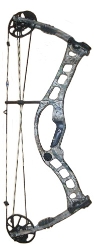

from $175
Pros
- Quiet, low-recoil shot - the parallel ZR12 split limbs load down-and-up with a rubber damper between them, so little energy jumps back into the hand
- Light 4.1 lb mass on a full 32-inch hunting frame - easy to pack up a mountain and hold steady from a treestand
- The 2010 30-70 lb weight span paired with the 25-30 inch draw covers a household from a lighter-draw teenager to a full-power adult on one bow
- Flagship-family toughness at a value price - ZR12 composite limbs and the Pro-Lock limb pockets carry Hoyt hardware into the mid-priced rack
Cons
- Discontinued after 2010, so today it is a used-market buy - budget a fresh set of strings and cables from any pro shop, which also refreshes the aging factory string
- Draw length changes through M4 modules rather than a tool-less rotating mod - a quick shop swap, but plan a press visit if you need a length other than how the bow arrives
Video
content from YouTube
Editors' review
Hoyt built the PowerHawk for the bowhunter who wanted a Hoyt and could not stretch to a flagship. Launched in 2009 as half of the new Hawk Series and carried into 2010, it took the parallel split-limb geometry, riser damping, and Pro-Fit grip that defined Hoyt's premium hunters and dropped them onto a mid-priced aluminum chassis aimed squarely at the PSE and Diamond value bows of the era. The headline is not raw speed - 303 fps IBO is honest mid-pack for its day - but the quiet, planted shot and full-size 32-inch geometry that make a bow easy to shoot well in the field. It runs the M4 Cam & 1/2, a 7 1/4-inch brace height, and a light 4.1-pound mass, and in 2010 Hoyt widened the draw-weight menu to reach lighter shooters. Fifteen years on it is a used-rack find rather than a showroom bow, which is exactly why a clear-eyed spec picture matters before you buy one. This is a review of what that bow actually is, what it does well, and who it still fits.
Finish
Hoyt dressed the PowerHawk in the hunting camo language of its era. The 2010 run offered Realtree APG HD, a solid Black Out, a Half & Half treatment pairing Realtree limbs with a Black Out riser, and a Bone Collector edition, with Custom Red, Custom Blue, Custom Black, and Pearl White available on the target-color side. The 2009 debut was leaner, built around Realtree APG HD and Black Out. The camo is a durable dip finish typical of the period rather than the cured cerakote-style coatings on modern bows, so a well-used example will show handling wear at the shelf and grip - normal for a bow of this age and not a sign of a bad example. The Half & Half look in particular reads well in the treestand, breaking up the riser while keeping the limbs in pattern. For a buyer chasing a specific finish on the used market, the Bone Collector and Half & Half variants are the harder ones to turn up; APG HD and Black Out are the common finds.Riser
The PowerHawk uses an aluminum riser cut in Hoyt's TEC style - a bridged riser design (a reinforcing web tying the two halves of the riser together) that adds stiffness without piling on mass, which is how the bow holds a full 32-inch axle-to-axle length while still weighing only 4.1 pounds. Hoyt paired it with the Pro-Lock Pocket System, a positive-locking limb pocket that keeps the limb bases seated and repeatable through weight changes. For 2010 the riser also carried RizerShox and AlphaShox, rubber dampers mounted at the riser and limb tips that soak up the buzz a bare aluminum riser can otherwise transmit. The geometry is conventional for the period - a Berger-hole rest mount and standard cable guard rather than any of the integrated systems Hoyt would adopt years later - which is a plus for a used buyer, since any drop-away or whisker-biscuit rest of the last two decades bolts straight on. It is a straightforward, serviceable platform, and the length gives it a stable, hang-and-hold feel on the shot.Grip
The PowerHawk wears Hoyt's 180 Pro-Fit Grip, the same modular grip Hoyt fitted across the Hawk Series and its higher bows of the era. It is a mid-profile grip - not the razor-thin blade Hoyt would later favor, nor a fat target grip - that fills the hand enough to encourage a repeatable, low-torque hold. Because it is a Pro-Fit system, the side panels can be swapped or removed to change the width and the throat feel, so a shooter who finds it a touch full can slim it down or run the bare riser directly. Many owners simply add a stick-on rubber grip for cold-weather warmth, which the flat back accepts cleanly. It is a comfortable, no-drama grip that does its job without asking for much attention.Limbs
The PowerHawk runs ZR 12 composite split limbs rather than the laminated limbs Hoyt put on the SuperHawk and TurboHawk, and that choice sets the bow's character. The split, parallel geometry means the two limbs work against each other and recoil down-and-up on release rather than driving forward, which is the mechanical reason the bow sits so quietly and calmly in the hand. Composite limbs of this design have a long, uneventful reliability record across Hoyt's budget line, and the Pro-Lock pockets hold them in tune through weight adjustment. On draw weight the bow tells its clearest year-to-year story: the 2009 model came in 40-70 lb peak options, and for 2010 Hoyt added a 30-40 lb range, opening the same bow to lighter and younger shooters without changing anything else. Adjusting peak weight is the usual limb-bolt turn within a range; moving between ranges is a limb or module change best done at a shop. For a full-size hunting bow the limbs give up little in energy storage, and the 303 fps IBO is competitive footing against the mid-priced field of its day.Eccentric System
At the heart of the PowerHawk is Hoyt's M4 Cam & 1/2, the brand's hybrid cam-and-a-half system in which a single power cam is slaved to a control cam for single-cam smoothness with better nock travel. It is tuned here for a manageable draw rather than an aggressive speed profile, which is why the IBO speed (the industry-standard chronograph rating measured at 30-inch draw, 70 pounds, and a 350-grain arrow) lands at 303 fps - honest mid-pack for a 2009-2010 hunting bow, a step below the 323-331 fps PSE Bow Madness and the 310-318 fps Diamond Black Ice, and traded knowingly for draw comfort. Let-off is 75% (the share of peak weight the cam sheds at full draw, so a 70-pound setup holds 17 to 18 pounds), a hunting-friendly figure that keeps you anchored without straining on a long sit. Draw length spans 25 to 30 inches in half-inch increments, set by the M4 module rather than a tool-less rotating dial - the one place the bow shows its age against a modern cam, since changing length means swapping a module rather than turning a screw. The system is forgiving to tune with a Berger-hole rest and a standard press, and holds timing well once set. For its slot in the market it is a sensible, smooth-leaning cam that prioritizes shootability over a chase for the fps chart.Draw Cycle/Shootability
The Cam & 1/2 layout gives the PowerHawk a rounded draw that builds to peak and eases into the valley (the relaxed pocket at full draw where holding weight is lowest) without the sharp front-end spike of a speed cam. The back wall (the firm stop at the end of the draw) is defined but not brutally rigid, which suits a hunter who wants to settle rather than fight the bow. Where this platform genuinely stands out is the shot itself. What stays with me about the Hawk-Series limbs is how little the bow moves after release - the parallel split limbs and the rubber damper riding between them absorb the recoil into a short, dead thump instead of a forward jump, and with the 2010 RizerShox and AlphaShox added, the residual buzz an aluminum riser can carry is largely gone. Owners of the platform consistently describe it as quiet and calm in the hand, and shooting one that impression holds up. The 7 1/4-inch brace height is generous enough to be forgiving of a slightly imperfect release, the kind of margin a new or casual hunter benefits from. At 4.1 pounds bare it is light to pack yet still long enough at 32 inches to hang steady on aim rather than feeling twitchy. None of this makes it a target-line tack-driver, but as a get-it-done hunting bow it is easy to shoot well.Usage Scenarios
The PowerHawk is a whitetail and hog bow first. Its 303 fps IBO and hunting let-off are built for treestand and ground-blind ranges out to 30-40 yards, where a quiet, planted shot and a forgiving brace matter more than an extra 20 fps. Picture a hunter who buys a clean used example in late summer, has a shop build fresh strings and set the draw over a weekend, sights it in at the range on a Tuesday, and is settled into a stand by the opener - the platform is simple enough to make that timeline realistic. The wide 2010 draw-weight menu and 25-30 inch draw make it a genuine family-share or first-serious-bow option: a lighter-draw teenager can start on it and stay on the same bow into adult hunting weights. It also makes a sensible, inexpensive backup to a modern flagship, since the standard rest mount takes accessories you likely already own. Where it runs out of room is the long-range speed game - a shooter reaching for flat 60-yard pins or Western elk setups will want more fps than 303 offers. For deer woods and hog country at practical bow ranges, it is right at home.Versions
The PowerHawk was a single-model line sold across two production years, differing mainly in the draw-weight menu and finish palette rather than package tiers. The 2009 debut offered 40-70 lb peak-weight options in Realtree APG HD and Black Out, launched alongside the laminated-limb SuperHawk. For 2010 Hoyt added a 30-40 lb range - bringing the span to 30-70 lb and opening the bow to lighter and younger shooters - expanded the finishes to include Half & Half and a Bone Collector edition, and foregrounded the RizerShox, AlphaShox, and Pro-Lock Pocket System in its marketing; that year the PowerHawk shared the Hawk Series with the faster TurboHawk. Both years kept the same 303 fps IBO, 32-inch ATA, 7 1/4-inch brace, 4.1-pound mass, ZR12 limbs, M4 Cam & 1/2, and 180 Pro-Fit grip. Hoyt positioned the bow in the mid-priced hunting market without a headline flagship price; on today's used market it trades as a value buy. If you are choosing between the two years, the 2010 is the more flexible bow purely for its wider weight range.Hoyt PowerHawk vs PSE Bow Madness, Diamond Black Ice
| Bow | Hoyt Powerhawk | PSE Bow Madness | Diamond Black Ice |
| Version | 2010 | 2011 | 2010 FLX |
| Picture |  |  |  |
| Brace Height | 7.25 " | 7 " | 7.25 " |
| AtA Length | 32 " | 32 " | 31.75 " |
| Draw Length | 25 " - 30 " | 25 " - 30 " | 25 " - 30 " |
| Draw Weight | 30 lbs - 70 lbs | 40 lbs - 70 lbs | 40 lbs - 70 lbs |
| IBO Speed | 303 fps | 323 fps - 331 fps | 310 fps - 318 fps |
| Weight | 4.1 lbs | 3.85 lbs | 3.8 lbs |
| Let-Off | 75% | 75% | 65% - 80% |
| Where to buy Best prices online | |||
| compare more bows | |||
In the mid-priced hunting class of its era the PowerHawk cross-shopped directly against the PSE Bow Madness and the Diamond Black Ice, and the three line up almost spec-for-spec on the fundamentals: all sit within a quarter-inch of 32 inches axle-to-axle, all cover a 25-30 inch draw, and all run to 70 pounds of draw weight. The separation is in character. The PSE Bow Madness is the speed pick of the group at 323-331 fps IBO with a 7-inch brace, a more aggressive cam that trades a little draw comfort for a flatter trajectory - the choice for a shooter who wants the most velocity in the tier. The Diamond Black Ice sits closest to the PowerHawk, with a matching 7.25-inch brace, 310-318 fps, and Diamond's wide 65-80% let-off adjustability that lets a buyer dial holding weight to taste - the pick for maximum tuning flexibility and a slightly higher speed than the Hoyt. The PowerHawk's own case is the quiet, low-recoil shot from its parallel ZR12 limbs and RizerShox damping, plus the Hoyt name and pocket hardware - it is the calmest, most planted-feeling shooter of the three even as it gives up a few fps. The decision comes down to priorities: the PSE Bow Madness for outright speed, the Diamond Black Ice for adjustability, and the PowerHawk for the quietest, steadiest hold and Hoyt build in a value hunting bow.