
Diamond Edge Max Review
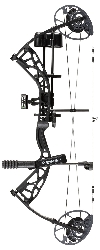

from $320
Pros
- One bow fits a short-draw partner and a long-draw hunter - 16 to 31 inches of draw and 20 to 70 pounds, all set on the module and limb bolts with an Allen wrench and no press
- Synchronized Binary Cam draws smoothly and lets down about as cleanly as bows costing three times as much, with the flat nock travel that makes it tune in fast
- Caged machined-aluminum riser stiffens the frame and deadens the shot noticeably better than the older non-caged Edge it replaces
- Solid limbs seated in solid aluminum pockets - an upgrade over the previous Edge that makes the bow more repeatable shot to shot
- Complete retail-ready Octane package - sight, rest, quiver, stabilizer, peep and sling - on the same chassis as the pro-shop-only Pro MAX for less money
Cons
- Some owners note more hand shock and a louder shot than a high-end bow - normal for a broad-adjustable bow at this price, and a stabilizer plus a set of limb dampeners settles most of it
- Some shooters find the Edge-line back wall a touch soft rather than a hard stop - worth drawing one first if you prefer to slam into a firm wall
Video
content from YouTube
Editors' review
Diamond sells almost this exact bow twice. The Pro-Shop-Exclusive Pro MAX - caged aluminum riser, Synchronized Binary Cam, 31-inch axle-to-axle, 16-to-31-inch draw, 20-to-70-pound range - costs $649 and is fitted only through independent dealers. The Edge Max is the same chassis on a big-box wall, and you buy it for less. What separates them is the channel and the box: the Edge Max ships with a three-pin sight and a lighter accessory kit instead of the Pro MAX's upgraded five-pin package, and it lives at retail rather than behind a pro-shop counter. Everything that decides how the bow shoots - the binary cam, the caged riser, the fitting range - is identical. For the value hunter or the mixed-draw household that wants the grown-up Diamond platform without paying the pro-shop premium, the Edge Max is the question this review answers: what do you actually give up by buying the cheaper twin? Very little that shows up downrange.
Finish
The Edge Max ships in three finishes: a solid Black, Mossy Oak Country DNA for hunters who want a modern all-terrain camo, and a Forest green for shooters who prefer a cleaner, non-camo look that reads equally well on a 3D range. That is a tighter palette than the color-of-the-week menus some rival value bows hang out, but it covers the practical bases - one true hunting pattern and two solid colors that hide the scuffs a shared, often-adjusted bow inevitably takes. Diamond's dip-coat finish holds up well to that handling over a season. Both right-hand and left-hand versions are offered across the range, which matters on a family bow because a left-handed shooter in the household should not be forced onto a right-handed grip. The finish is the one purely cosmetic decision here, and any of the three is a sensible default for the hunter this bow is built for.Riser
The riser is where the Edge Max earns its place a rung above the cheaper Edge bows. It is a caged machined-aluminum design - milled with an internal cage geometry rather than left as a plain extrusion - which is how Diamond stiffens the frame without adding bulk. Drawing and shooting it, the payoff of that cage is easy to feel: the cutouts brace the riser and pull the shot in quicker, deadening the thump noticeably better than the older non-caged Edge that came before it. On a broad-adjustable bow meant to be shot by several people at several draw settings, a rigid riser is exactly what keeps the whole thing repeatable and easy to tune. The geometry is a 31-inch axle-to-axle length - the cam-to-cam measurement - long enough to hang steady on target rather than twitch under a developing shooter's hand, while staying maneuverable in a treestand or blind. Standard threaded bushings carry the rest, sight and stabilizer, with two Berger button holes giving flexibility on rest choice, and no exotic mounting rail to complicate a first setup. It is straightforward, well-machined aluminum engineered to a price, and the build quality reads better than the price tag suggests.Grip
The grip is one of the nicer touches on the bow: a fully machined-in shape cut straight into the riser rather than a bolt-on plastic piece, which is unusual at this tier and something the shooter notices the first time they wrap a hand around it. It sits slim and low in the palm, and a narrow throat like this actively helps a developing archer - it discourages the death-grip that induces torque and gives a consistent hand position shot to shot. Because there is no separate grip panel to shift or rattle, the hand lands in the same place every draw, which does more for repeatability than any single number on the spec sheet. An archer with very large hands may want a little more to hold, but the shape is a fair compromise for a bow that has to fit a range of people rather than one. As delivered it needs no attention - it is set up to be picked up and shot.Limbs
The Edge Max runs solid limbs - a single limb top and bottom rather than a split pair - seated in solid aluminum limb pockets that ride on a rocker, and that pocket is the real story. It is a genuine upgrade over the previous Edge, where the pocket was a softer piece; sandwiching the limb into a solid aluminum pocket keeps everything located and takes the play out, which is why owners stepping off the older bow describe this one as noticeably more repeatable. The limbs cover the full 20-to-70-pound range on the limb bolts, so a partner or teen can shoot the bow at 30 or 40 pounds while a full-grown hunter turns the same bow up to a legal, effective 70-pound big-game weight, all with an Allen wrench and no press. That 50 pounds of span is the number that defines the bow's working life - it is what makes the Edge Max a genuine one-bow-for-the-household proposition rather than a bow that fits one person and disappoints the rest. Solid limbs are the durable, forgiving choice for this tier, holding up to the repeated adjustment and general knocking-about a shared bow sees.Eccentric System
The heart of the Edge Max is the Synchronized Binary Cam System - Diamond's patented dual-cam layout in which two symmetrical cams are slaved to each other so the string travels a flat, level path, which is what makes the bow both accurate and easy to tune. Draw length changes without new cams or modules: loosen the module screws, rotate the module, and the bow moves anywhere across 16 to 31 inches, close to a press-free fifteen inches of adjustment. Let-off (the percentage the holding weight drops to at full draw) is 80 percent, so at 70 pounds you hold about 14 while you settle the pin - a deep let-off that keeps a mixed-ability household steady at anchor. The published IBO speed (the industry-standard chronograph rating at 30 inches, 70 pounds and a 350-grain arrow) is 314 fps, and real chronograph numbers line up honestly with that: at the IBO setup the bow turns in right around 301 to 302 fps, about a dozen feet under the marketing figure, and with a heavy 422-grain hunting arrow at 29 inches and 70 pounds it still runs 273 fps - plenty of energy for whitetail inside sensible ranges. One practical note from setting it up myself: the binary cam prefers a slightly stiffer arrow spine than a single-cam bow at the same weight, so match your arrows a step stiffer when you tune. The binary layout is also the tuning story - two mirrored cams that stay in time are far easier to set and forget than a system that needs constant babysitting.Draw Cycle/Shootability
Drawing the Edge Max myself, what stands out for a bow this cheap is how little you fight it: the cam builds to peak without a hard hump and the let-down genuinely surprised me - buttery in a way I would not expect to find on a sub-$550 rig. The draw-force curve is even and consistent, with no whip or dump partway through, so a newer shooter is not wrestling the bow at the moment they should be settling into anchor. Where honesty matters is the shot: this is a broad-adjustable value bow, not a dead-in-the-hand flagship, and you will feel a little more hand shock and hear a bit more noise than a $1,200 bow gives you - a couple of owners flag exactly that, and it is normal for the class rather than a defect. The Edge line's back wall is the other characteristic to know: it is solid enough to anchor against, but a few shooters find it a touch soft rather than a hard, slamming stop, so if you like to crash into an immovable wall it is worth drawing one first. A stabilizer and a set of limb dampeners take most of the residual buzz out, and in practice the shot settles quickly. For the price, the draw and release are forgiving in exactly the ways a value hunter needs.Usage Scenarios
Picture a couple where one partner draws 27 inches at 45 pounds and the other draws 30 inches at 65: the Edge Max resets between them in a few minutes with an Allen wrench, no shop visit, so one bow genuinely serves both. Picture a new hunter who buys it off the wall on a Saturday, sets the draw to fit, sights in the three-pin package Sunday afternoon, and is in a treestand by opening week - a real whitetail and hog setup once it is dialed to 60 or 70 pounds. It handles backyard practice, 3D club nights, indoor lanes and entry-to-mid-level hunting, and because the whole range adjusts without a press it passes easily between a taller adult and a shorter partner or teen. Its 31-inch axle-to-axle length and tall 7.125-inch brace make it a stable, forgiving platform rather than a tight-quarters speed rig. What it is not built to be is a short, ultra-fast flagship for the experienced hunter chasing maximum speed and the quietest possible shot; that shooter is looking at a different class of bow, and the Edge Max is honest about being the fit-everyone tool instead. For a household that wants the youngest shooters covered too, the shorter-draw, lighter-poundage Diamond Radian reaches down further; the Edge Max starts at a 20-pound floor aimed at older teens and adults.Diamond Edge Max vs Bear Legit Maxx, PSE Stinger MAX
| Bow | Diamond Edge Max | Bear Legit Maxx | PSE Stinger MAX |
| Version | 2026 | 2026 | 2021 |
| Picture | 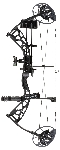 | 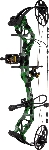 |  |
| Brace Height | 7.125 " | 6.25 " | 7 " |
| AtA Length | 31 " | 30 " | 30 " |
| Draw Length | 16 " - 31 " | 14 " - 30 " | 21.5 " - 30 " |
| Draw Weight | 20 lbs - 70 lbs | 10 lbs - 70 lbs | 45 lbs - 70 lbs |
| IBO Speed | 314 fps | 315 fps | 304 fps - 312 fps |
| Weight | 3.7 lbs | 4.2 lbs | 3.8 lbs |
| Let-Off | 80% | 75% | 80% |
| Where to buy Best prices online | |||
| compare more bows | |||
The broadly-adjustable hunting-package category has a few genuine alternatives, and the choice comes down to how small the smallest shooter is, how forgiving you want the geometry, and what you are willing to spend. The Bear Legit Maxx is the closest philosophical match: it adjusts across a 14-to-30-inch draw and a 10-to-70-pound weight, reaching down to a smaller, lighter beginner than the Edge Max can at its 20-pound, 16-inch floor, and it launched at $499; but at about 4.2 pounds of measured mass it is heavier in the hand, its 6.25-inch brace height is shorter and less forgiving, and its 30-inch draw ceiling will not fit the tallest long-draw adults the Edge Max reaches at 31 inches. The PSE Stinger MAX is the value pick at a $449 package price with a 7-inch brace and the same 80-percent let-off, and it also climbs to 70 pounds, but its 21.5-inch minimum draw brackets a narrower fitting window and rules out the smallest shooters. So the decision comes down to priorities: the Diamond Edge Max for the buyer who wants the longest, most forgiving geometry, the binary-cam draw and a full 31-inch long-draw fit; the Bear Legit Maxx for the household that needs the range to reach a smaller, lighter beginner; and the PSE Stinger MAX for the shooter who wants the lowest package price and does not need the Edge Max's shorter minimum draw or longer axle length.