
Diamond Edge 320 Review
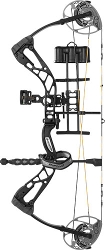

from $175
auctions from $490
Pros
- The name is the speed and it nearly holds up - 320 fps IBO on paper, and a real chronograph reads 320 at the top draw setting and 309 at the 30-inch mark, fast enough for any whitetail range
- One bow spans a child to a grown hunter - 7 to 70 pounds and 15 to 31 inches, all set on the limb bolts and a rotating module with an Allen wrench, no press required
- Smooth draw into a back wall that holds - the cam rises evenly to peak and settles into a wall firm enough to anchor against, easy to let down
- Quiet and dead in the hand - minimal post-shot vibration and hand shock for a budget bow, the kind of calm shot that usually costs more
- Complete R.A.K. ready-to-hunt package plus a high 85% let-off - everything to start hunting in the box and a light holding weight at full draw
Cons
- At peak weight it draws about a half-inch short of the marked length, and the 15-inch floor sits on the cam's B cable setting rather than the default A - back the draw weight off or move to the B setting and the full range opens up
- Plastic limb pockets and a barebones Tundra sight mark the price point - the whisker-biscuit rest and 3-pin sight get you hunting, but shooters who grow into the bow often swap the sight for a brighter multi-pin later
Video
content from YouTube
Editors' review
Diamond named this bow after a number, and the number is a promise: 320 feet per second. What is unusual is how close it comes to keeping it - put the Edge 320 across a chronograph and it reads 320 fps at its top draw setting and 309 at the 30-inch mark, which for a sub-$500 grow-with-you bow is genuinely fast. This was the bow that carried Diamond's best-selling Edge platform through its 2019 to 2022 run, the successor to the Edge SB-1 and the machine that later became the Pro 320. It is the biggest and deepest-adjusting member of the Edge family: a 32-inch axle-to-axle frame (the distance between the two cam axles) that hangs steadier than the shorter Edge bows, an 85 percent let-off that is the highest in the line, and a draw-weight range that starts at a featherweight 7 pounds and climbs to a full 70. For the household passing one bow between a growing kid and an adult hunter, the beginner who wants a bow they will not outgrow, and the value shooter who still wants real speed, the Edge 320 was built to be the one bow that does all of it - and on the used and closeout market where it now lives, it remains one of the most cross-shopped budget hunting bows around.
Finish
The Edge 320 shipped in three core finishes: a solid Black, Mossy Oak Break-Up Country for the whitetail and early-season hardwood hunter, and a Purple Blaze for shooters who wanted color rather than camo - a genuinely useful option for a younger or first-time archer choosing a bow that feels like their own. Diamond also ran special-edition Arctic and Boondocks packages during the model's life, so the palette was broader than the standard three at various points. The dip-coat finish holds up well to the knocks a shared, often-handled bow inevitably takes over a season, which matters on a bow that spends years being adjusted and passed around. Both right-hand and left-hand versions were offered, which is not a given at this price and matters for a left-handed young shooter who should not have to learn on a right-handed grip. Finish is the one purely cosmetic call in this purchase, and having a bright non-camo option alongside the traditional pattern gave the bow real range across ages and uses.Riser
The Edge 320 riser is machined aluminum with a clean, smooth finish, and it is the pre-caged Edge design - this bow predates the internal-cage riser and aluminum limb pockets that Diamond later brought to the Edge XT and Edge Max. That places it honestly in its era: a solid, straightforward aluminum riser built to a price, without the milled cage geometry of the newer bows. What the riser does give you is length. At 32 inches axle-to-axle it is the longest bow in the Edge family, an inch more than the SB-1 it replaced and the newer 31-inch Edge bows, and that extra length is the reason it hangs and aims steadier - a longer riser and wheelbase are more forgiving of a shaky hold, which is exactly what a developing archer needs. Standard threaded bushings carry the sight, rest and stabilizer, and there is no exotic mounting rail to complicate a first setup. Setting one up, the riser tunes without drama; the geometry does the forgiveness work, and the length is the single most important thing the frame contributes to how this bow shoots.Grip
The grip is a slim machined profile that sits directly against the riser, and hands-on owners consistently land on the same verdict - it is comfortable and gets out of the way. A narrow grip is the right choice for this bow's audience because it lets the hand wrap the riser without the palm heel forcing a torqued, inconsistent position, and low-torque hand placement is one of the first things that separates a shooter who groups well from one who sprays. There is no bulky rubber module or aftermarket-grip system to fuss over; what you get is a clean, direct hold that a returning shooter can find the same way each session. For a bow meant to teach form as much as fill a tag, a grip that encourages a repeatable, relaxed hand is worth more than any cosmetic flourish, and the Edge 320's does not fight the shooter.Limbs
The Edge 320 runs a split-limb design driving the full 7-to-70-pound range on the limb bolts - 63 pounds of adjustment, one of the widest spans in any budget bow. That range is the number that defines the bow's working life: a parent can set a child at 15 or 20 pounds in the backyard and turn the same bow up a few pounds a season until it reaches a full, legal 70-pound hunting weight years later. Getting the draw weight very low is worth doing carefully, because at the bottom of the range the string and cables go slack enough that they can slip off the cam - a set-and-check step, not a daily worry. The limb pockets are plastic, which is the honest mark of the bow's price and era; it is where Diamond saved cost, and while the later caged-riser Edge bows moved to aluminum pockets, the plastic here holds up fine in normal use and only becomes a consideration in hard freezing-cold impacts. Adjusting weight is a no-press job with an Allen wrench, and roughly 4 pounds come off per full turn of the limb bolt, so dialing in a specific weight is quick and repeatable.Eccentric System
The heart of the Edge 320 is the Synchronized Binary Cam System - the Bowtech-derived dual-cam layout where two symmetrical cams are slaved together so they stay in time with each other, giving flat-line nock travel and set-and-forget tuning. This is the same cam family as the pricier Edge Max, and it is the reason budget Diamonds shoot above their price. IBO speed (the industry rating measured at 30 inches, 70 pounds and a 350-grain arrow) is 320 fps, and unusually for a value bow the real chronograph numbers back it up: at the maximum 31-inch setting it reads a true 320, at the 30-inch IBO setting 309, and 296 at 29 inches, scaling smoothly down the range. Draw length adjusts from 15 to 31 inches by loosening the module screws and rotating the module - no press, no new cams - though it is worth knowing that the cam's A setting bottoms out at 16 inches and the advertised 15-inch floor lives on the B cable setting, and that at full 70-pound weight the bow draws about a half-inch shorter than the marked length. Backing the weight off lengthens the draw, so a longer-draw shooter simply runs a touch less than peak. Let-off (the share of peak weight the bow sheds at full draw) is 85 percent, the highest in the Edge line, and in practice that means a lighter, longer hold on target - enough relief for a beginner or a long treestand sit, while still leaving enough back tension to shoot cleanly against. Measured peak weight comes in right at spec, around 69 pounds on a bow marked 70.Draw Cycle/Shootability
Drawing the Edge 320, the thing that stands out is how composed it feels for the money - the cam rolls up to peak without a harsh hump and settles into a valley with a back wall firm enough to pull into and hold, not a vague slope. In my experience that combination of an even draw and a definite wall is what lets a newer shooter build a consistent anchor, and it is the Edge 320's quiet strength. The 85 percent let-off makes the hold genuinely light, so the bow does not start creeping forward while you settle the pin. At the shot it is calm: hands-on owners repeatedly describe the least hand shock and about the least vibration they have felt on a bow at this price, one owner noting it was quieter and smoother than pricier rigs he had tried, and that the low-shock, quiet release is the sort of thing that usually costs more. It is not a dead-silent flagship, but it is well-behaved - the shot finishes clean and the arrow is on its way before the bow has any chance to buzz. Out of the box the cam timing is typically very close, occasionally with one cam hitting a hair early, which is a normal budget-bow tune rather than a defect. Fully accessorized with the quiver, sight and rest it weighs a bit over 5 pounds in hand; bare, it is a light 3.6. For the shooter learning to hold steady and break a clean shot, the draw cycle and the calm release are the whole reason to reach for this bow.Usage Scenarios
Picture a parent setting up the Edge 320 for a ten-year-old: dial it to a 16-inch draw and 15 or 20 pounds, and the child is shooting into a backyard target the same afternoon, the 85 percent let-off keeping the hold light enough that their form does not fall apart. Four seasons later the same bow rotates out to a longer draw and turns up to 60 or 70 pounds on the limb bolts, carrying that now-teenage hunter into a treestand for whitetail inside 40 yards with real speed behind the arrow. Picture a value hunter who wants meat in the freezer and not a second mortgage - the Edge 320 comes out of the box as a complete R.A.K. package, sights in over a lunch break, and is hunting-ready the same week without a pro-shop fitting. The long 32-inch frame and 85 percent let-off make it a steady holder for ground blinds and treestands alike, and because the whole range adjusts without a press, one bow can be shared and re-set among siblings and family members of different sizes. It handles backyard practice, 3D club nights, indoor lanes and entry-level to serious whitetail hunting; a competitive target archer chasing tenths of an inch or a Western hunter needing maximum long-range speed will eventually want a purpose-built rig, but for the grow-with-you buyer this bow covers years of use.Diamond Edge 320 vs Bear Legit Maxx, PSE Stinger MAX
| Bow | Diamond Edge 320 | Bear Legit Maxx | PSE Stinger MAX |
| Version | 2022 | 2026 | 2021 |
| Picture |  |  |  |
| Brace Height | 7.25 " | 6.25 " | 7 " |
| AtA Length | 32 " | 30 " | 30 " |
| Draw Length | 15 " - 31 " | 14 " - 30 " | 21.5 " - 30 " |
| Draw Weight | 7 lbs - 70 lbs | 10 lbs - 70 lbs | 45 lbs - 70 lbs |
| IBO Speed | 320 fps | 315 fps | 304 fps - 312 fps |
| Weight | 3.6 lbs | 4.2 lbs | 3.8 lbs |
| Let-Off | 85% | 75% | 80% |
| Where to buy Best prices online | |||
| compare more bows | |||
The broad-adjustable value hunting category has a handful of genuine alternatives, and the choice comes down to how small the shooter starts, how much speed you want, and how steady a frame you prefer. The Bear Legit Maxx reaches down to a smaller, lighter beginner than the Edge 320 - a 14-inch, 10-pound floor against the Edge's 15-inch, 7-pound low end - and carries a comparable 315 fps IBO, but at about 4.2 pounds of measured mass it is heavier in a small shooter's hands, rides a shorter 6.25-inch brace height, and launched at $499. The PSE Stinger MAX matches the Edge 320's speed range and its 70-pound top end with a tall, forgiving 7-inch brace, but its 21.5-inch minimum draw will not fit the smallest shooters the Edge 320 reaches, and its let-off tops out at 80 percent against the Edge's 85. So the decision comes down to priorities: the Diamond Edge 320 for the buyer who wants the longest, steadiest-aiming frame with the deepest weight range and the highest let-off; the Bear Legit Maxx for the household that needs to start a smaller, lighter beginner; and the PSE Stinger MAX for the shooter who wants a tall, forgiving brace at a similar tier and does not need the Edge's lower minimum draw. Buyers who like the Edge 320's formula but want the current-production version will find it continued as the Diamond Pro 320, and the shorter Diamond Edge SB-1 it replaced remains a close relative on the used market.