
Hoyt Montega Review

Pros
- Long 44-inch axle-to-axle and 9-inch brace height make it exceptionally forgiving - owners routinely call it the most accurate bow they have drawn
- AccuWheel draws with a soft wall and a long, easy valley - the smooth, low-stress cycle finger shooters keep asking for
- Long riser geometry cuts string-angle finger pinch, so it stays comfortable even at 31-inch-plus draws where shorter bows crowd the fingers
- Forgiving enough to shoot tight groups with fixed-blade broadheads and a full-containment rest, not just target points
Cons
- Modest speed by design - 270 fps IBO puts trajectory behind short speed bows; shooters wanting a flatter setup can order the Cam & 1/2 option for 10 fps more, but this is a forgiveness-first bow, not a fast one
- A big, long bow to move - at 44-plus inches and 4.9 pounds it is a lot to maneuver in a tight treestand or cramped ground blind, so hunters in close quarters may want a shorter axle-to-axle instead
Editors' review
In an era when nearly every new bow was getting shorter and faster, Hoyt did the opposite and built the Montega long - a 44-inch axle-to-axle riser with a towering 9-inch brace height and, in place of an aggressive cam, a soft-drawing wheel. It was aimed squarely at a shooter most brands had stopped designing for: the finger shooter, plus the release archer who cares more about where the arrow lands than how fast it gets there. The payoff is stability. A long, deflexed riser and a tall brace forgive the small hand errors that a short, twitchy bow punishes, and the AccuWheel gives up the hard back wall in exchange for a long, calm valley that a finger release can settle into. Produced from 2007 through 2009 and discontinued since, it developed a quiet following among precision shooters who describe it as the most forgiving bow they have ever put in their hands. This is not a speed bow, and it never pretended to be. It is a shooting instrument built around accuracy, and understanding that trade is the whole story of whether it is your bow.
Finish
The Montega came in two clearly separated finish lines that also signaled how the buyer intended to use it. The target line wore high-polish anodized colors - Fusion, Red Ember, Jade, Cobalt Blue, Jet Black, and Pearl White - the kind of gloss that looks at home on an indoor spot line or a 3D range. The hunting line was dressed in Realtree APG HD, the standard concealment camo of Hoyt's late-2000s catalog, applied as a custom paint finish over the machined-aluminum riser. Both lines shared the same chassis, limbs, and cam options, so the choice was cosmetic and role-based rather than mechanical. The anodized target colors have proven durable on Hoyt risers of this generation, holding gloss with normal care. For a bow that spends its life on a range or in a blind rather than getting dragged through timber, either finish has aged well on the used examples still in circulation.Riser
The heart of what makes the Montega shoot is its riser geometry: a long, machined-aluminum riser with a deflex profile, meaning the grip is set back toward the shooter so the bow wants to sit still through the shot. Deflex geometry (the riser bending away from the string side) trades a little stored energy for a lot of stability, and on a 44-inch bow that stability is the entire point. Paired with the 9-inch brace height, the setup lengthens the distance the string travels while keeping the nock on the string well clear of the hand, which is what tames torque and forgives a less-than-perfect grip. It is the same design logic Hoyt used on its target risers of the era, brought to a bow a hunter could also carry. The riser accepts standard Hoyt accessories of its generation, so setting one up today with a modern rest and sight is straightforward. Nothing here is exotic - it is proven, conservative engineering aimed at one goal, which is putting arrows in the same hole.Grip
The Montega used Hoyt's Pro-Fit Custom Grip system, which let the shooter tailor the hand feel to the discipline. Hunting configurations shipped with the full wood grip, while target configurations came with side plates for a more minimal, repeatable hand position, and a high-wrist option was available across the line. That flexibility mattered on a forgiveness-first bow, because a consistent, low-torque hand position is where a tall-brace design earns its accuracy. The grip sits comfortably for a bow of this length and encourages a relaxed, open-hand hold rather than a strangling grab. Because the Pro-Fit plates were a common Hoyt part of the period, replacements and alternates still turn up, which helps if a used bow arrives with a grip that does not suit your hand. For finger shooters in particular, the ability to standardize the grip surface pays off in shot-to-shot repeatability.Limbs
The Montega ran Hoyt's XT 3500 limbs, a three-quarter-inch split-limb design that the brand promoted for its lateral and torsional stability - exactly the qualities you want on a bow chasing forgiveness. Split limbs of this width resist twisting, which keeps the cams tracking straight and the arrow leaving cleanly, and the XT 3500 was a long, deflexed limb sized to feed a 44-inch riser. Draw weight was offered in stepped brackets - 40-50, 50-60, 60-70, and by 2009 a 70-80-pound option - each adjustable about ten pounds down from peak, so a shooter could dial the bow into a comfortable holding weight rather than living at the top of the range. That 40-to-80-pound spread covers everything from a relaxed target poundage to a serious big-game setup. The limb design was shared across Hoyt's lineup of the era and has a solid reliability record, which is reassuring on a used bow now more than fifteen years old. A bow press and basic setup knowledge handle any limb-bolt or string work.Eccentric System
The Montega's defining choice lived in its eccentrics: buyers picked either the AccuWheel or the Cam & 1/2, and the two give genuinely different bows on one chassis. The AccuWheel is a wheel-and-a-half system built for a soft wall - it draws smoothly, rolls into a long, forgiving valley, and offers three and a half inches of draw-length adjustment, which is the configuration finger shooters gravitate to because a soft wall and a generous valley suit a finger release far better than a snappy stop. In AccuWheel form the bow carries a 270 fps IBO rating (the industry-standard speed measured at a fixed 70-pound, 30-inch, 350-grain setup), with a 26.5-to-34-inch draw-length window and 65% let-off - the holding weight dropping to about a third of peak, so a 60-pound bow holds near 21 pounds at full draw. Buyers who wanted a firmer back wall and a little more speed chose the Cam & 1/2, which lifts the rating to 280 fps at the cost of the AccuWheel's cushiony valley. Neither is fast by modern standards, and that is deliberate: this cam package was tuned for a calm, repeatable shot, not for chronograph bragging rights. Drawing the AccuWheel, what strikes me is how little there is to hit at the end - it eases into that long valley instead of slamming into a stop, which is precisely why a finger shooter can float the shot and let it break clean.Draw Cycle/Shootability
Pulling this bow is a study in restraint. The AccuWheel ramps up gently, never spikes hard at peak, and settles into one of the longest, most relaxed valleys you will find on a compound, so there is no nervous energy trying to jump the string forward out of your fingers. Owners consistently describe the draw as extremely smooth and the wall as soft, and that matches the design intent exactly. What I notice first on a bow this long and this braced is how still the pin sits - the 9-inch brace height does the forgiving for you, quieting the small tremors that a short, high-braced-for-speed bow would print on the target. The reward shows up downrange as accuracy that borders on unnerving; more than one owner has warned about Robin-Hooding their own arrows because groups stack so tightly. It is forgiving enough that it holds those groups even with fixed-blade broadheads and a whisker-biscuit-style rest, not just with finely tuned target points. Shot feel is calm and dead-in-the-hand for a bow of its length, with the mass and the long riser soaking up what little jump there is. This is a bow that rewards a patient, deliberate shooter and quietly punishes hurry.Usage Scenarios
The Montega fits a specific and rewarding niche. First and most obviously, it is one of the best finger-shooter compounds Hoyt ever cataloged - the long axle-to-axle length opens the string angle so the fingers are not pinched, even at 31-inch-plus draws, and the soft AccuWheel wall lets a finger release break cleanly. It is equally at home on a target or 3D range for the release archer who values a forgiving hold over a fast arrow, where the tall brace and long riser reward good form with tight groups at 40 and 50 yards. As a hunting bow it works best from a roomy blind or a stand where you have space to draw a long bow, paired with a heavier arrow that this forgiving platform stabilizes beautifully for whitetail, hogs, and black bear at sensible ranges. Where it is less suited is tight, cramped cover and long treks through thick timber, simply because 44-plus inches and nearly five pounds is a lot of bow to maneuver and carry. A shooter transitioning from a recurve to their first compound will also find this an unusually comfortable bridge, since it holds and forgives more like the traditional bow they know. Match the bow to a deliberate, accuracy-first mission and it excels; ask it to be a compact, run-and-gun speed rig and it was never built for that.Versions
The Montega was one model sold in a small matrix of configurations rather than separate bows. The two meaningful choices were the eccentric - the soft-wall AccuWheel (270 fps IBO) or the firmer Cam & 1/2 (280 fps IBO) - and the finish line, either the high-polish anodized target colors or the Realtree APG HD hunting camo. Both cam options rode the identical 44-inch riser and XT 3500 limbs, and both were available right- and left-hand, with the stepped draw-weight brackets from 40-50 up to 70-80 pounds by the 2009 run. Across its 2007-through-2009 catalog life the chassis stayed constant while Hoyt widened the AccuWheel's draw-length window and, by 2009, added the 70-80-pound option. Because it has been discontinued since 2009, there is no current MSRP - it was an upper-mid-tier bow in Hoyt's late-2000s lineup and today trades only on the used market, where clean examples still appear regularly. In Hoyt's own catalog the target side of this bow was eventually succeeded by the Stratos 40.Hoyt Montega vs Hoyt Vantage Elite, Mathews Switchback
| Bow | Hoyt Montega | Hoyt Vantage Elite | Mathews Switchback |
| Version | 2009 XT 3500 (AccuWheel) | 2010 | 2007 |
| Picture |  | 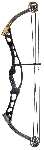 |  |
| Brace Height | 9.25 " | 8 " | 7 " |
| AtA Length | 44.25 " | 41 " | 33 " |
| Draw Length | 26.5 " - 34 " | 25.5 " - 34 " | 25 " - 30 " |
| Draw Weight | 40 lbs - 80 lbs | 30 lbs - 70 lbs | 40 lbs - 70 lbs |
| IBO Speed | 270 fps | 301 fps | 318 fps |
| Weight | 4.9 lbs | 4.8 lbs | 4.34 lbs |
| Let-Off | 65% | 65% or 75% | 65% or 80% |
| Where to buy Best prices online |
|
| |
| compare more bows | |||
Placing the Montega beside its natural cross-shops clarifies who it is for. The Hoyt Vantage Elite comes from the same late-2000s Hoyt world but leans fully into target: a 41-inch bow with a faster Spiral X cam at 308 fps and a shorter brace, it is the choice for the shooter who lives on a spot or 3D line and wants more speed and a firmer wall, where the Montega answers the finger shooter and the accuracy-over-everything archer who wants the softest, most forgiving hold Hoyt offered. The Mathews Switchback pulls the comparison the other direction: a compact 33-inch hunting classic famous for its own smooth draw and quiet shot, it is the honest pick for a hunter who wants a forgiving bow that is still easy to carry and swing in tight cover, trading the Montega's long-riser stability for maneuverability and a faster 318 fps arrow. All three are discontinued and shopped used today. The decision comes down to priorities: the Montega for the finger shooter and precision archer who will trade speed for a long, dead-still hold; the Hoyt Vantage Elite for the target shooter who wants that forgiveness with more speed and a harder wall; the Mathews Switchback for the hunter who wants forgiveness in a short, packable hunting bow.