
Browning Micro Midas Review
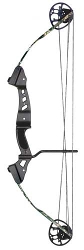

from $65
Pros
- Genuinely wide growth range - 15 to 45 lb of draw weight and three cam-swappable draw brackets from 15 to 27 inches let one bow follow a child for years
- Die-cast magnesium riser gives a real-metal handle a child won't outgrow or snap, closer to an adult hunting bow than a plastic youth toy
- Micro Maximizer cam adjusts draw length without a bow press, so a parent can re-fit the bow at the kitchen table as the kid grows
- Smooth, forgiving 65% let-off hold that suits a young shooter still building form and back tension
- Choice of Micro Maximizer or Whisper Plus cams on the same chassis, plus a combo package that ships with a sight and quiver
Cons
- Long discontinued and only found used - parents buying one today should confirm the string and cables are serviceable, as a fresh Fast Flite set is a straightforward re-string at any pro shop
- The 32.5-to-36 inch axle-to-axle and sub-3-pound mass are built around small-frame shooters, so a taller teen at the top of the range may want to step up to an adult platform sooner
Editors' review
Browning was selling a family grow-with-me youth bow in the late 1990s, more than a decade before the Diamond Infinite Edge and Bear Apprentice made the idea a category. The original Micro Midas is the first-generation bow that started it - a pre-PSE, in-house Browning design built in Tucson before PSE took the archery license in 2001. Its pitch was blunt for its day: most makers built bows as if no one under 5-foot-6 shot archery, and Browning marketed the Micro Midas as a real bow for small-frame archers, "just like dad's, not mere toys." The hardware backed the claim - a die-cast magnesium riser, solid-fiberglass limbs, and a cam adjustable across a wide draw range so a kid would not outgrow it in a season. It carried 15 to 45 pounds of draw weight and, by 1999, draw-length brackets reaching from 15 all the way to 27 inches. This is a collector's and a parent's bow now, long out of production, and understanding what Browning did and did not publish about it matters as much as the specs themselves.
Finish
By the 1999 catalog the Micro Midas was offered in four finishes - Apparition, Oakwood, Royal, and Red Metallic - a wider palette than most youth bows of the era carried, and a deliberate nod to kids who wanted a bow that looked like a choice rather than a hand-me-down. The combo package was shown in Oakwood. Browning did not enumerate finishes on the earlier 1997 page, so the four-color spread is specifically a late-run offering. These are painted and film finishes on a cast riser and fiberglass limbs; on a surviving used example, expect the honest wear of a 25-plus-year-old bow, and judge a prospective buy on limb and cam condition rather than cosmetics. The riser finish holds up better than the limb graphics on most examples that turn up today.Riser
The riser is die-cast magnesium - Browning called it the "Micro Midas Cast" handle - and it is the single feature that most separated this bow from the toy-grade youth compounds of its day. In my experience handling small-frame bows of this era, a cast-metal riser changes the whole character of the bow in a young shooter's hand: it has real mass and rigidity where a molded-polymer youth handle flexes and feels hollow, and that rigidity is what lets a child actually learn to aim and hold rather than fight the bow. Browning leaned on exactly that, marketing the Micro Midas as built "just like dad's." Magnesium casting keeps the handle light for a child while staying durable enough to survive being dropped, leaned on, and generally treated the way kids treat gear. For a bow sold to grow with its owner over several years, that durable metal core is what makes the long service life credible rather than a marketing line.Grip
The grip is molded into the cast magnesium riser in the straightforward, mid-height profile typical of late-1990s compounds, sized for a smaller hand. There is no interchangeable grip system here - this is a fixed handle - but for the intended shooter that is the right call, because a young archer benefits from a consistent, repeatable hand position far more than from grip options. The narrow riser suits small hands naturally, and the low-torque benefit of a child simply having a hand that fits the grip should not be underrated. A parent setting the bow up for a first-timer will find the hand placement intuitive, which is half the battle when teaching form.Limbs
The Micro Midas runs Browning's Youth XP limbs, built from solid fiberglass rather than the laminated or split limbs of adult flagships. Solid fiberglass is the right engineering choice for this bow: it is nearly indestructible under a child's draw weight, tolerant of the dry-fires and mishandling a beginner will inevitably commit, and it loads energy efficiently at the modest poundages involved. Draw weight spans 15 to 45 pounds across the standard limbs, with a dedicated 10-to-30-pound option appearing by 1999 for the youngest shooters. That range is the heart of the grow-with-me promise - a small child starts light in the backyard, and the same bow carries them up toward a 45-pound setup capable of real hunting as they get stronger. Adjusting within a given limb set is a simple limb-bolt turn. The solid-fiberglass limbs also explain the bow's light overall mass, which stays under three pounds even on the longer 34-inch and 36-inch versions.Eccentric System
The Micro Midas was offered with Browning's Micro Maximizer cam or, as an alternate, the Whisper Plus cam on the same chassis - both aimed at a smooth, forgiving draw for a young or developing shooter. The defining feature is the Micro Maximizer's draw-length adjustability: the 1997 catalog spelled out that the cam adjusts across a 19-to-24-inch range so "youngsters won't quickly outgrow their equipment," with a second bracket covering 25 to 27 inches, and the 1999 run adding a 15-to-20-inch short-draw option for the smallest archers. In my experience, press-free draw-length adjustment on a youth bow is the feature that actually keeps one bow in service for years - a parent can re-fit the draw as the child grows without a trip to a shop with a bow press, and that convenience is what prevents the "outgrew it, buy another" cycle. Let-off is roughly 65%, meaning a young shooter holds about a third of peak weight at full draw - enough relief to steady the aim while still teaching real back tension, not the near-weightless hold of a high-let-off adult cam. Here is the honest gap a buyer needs to know: Browning never published an IBO speed figure for the Micro Midas, and none appears on any catalog page for the original. That is a brand information gap, not a flaw - 1990s Browning youth pages simply carried no chronograph rating, and at these draw weights outright speed was never the point. What the cam system delivers instead is a controllable, confidence-building draw that a child can actually manage.Draw Cycle/Shootability
Drawing a bow of this type and era, what stands out is how unintimidating it is for a new shooter - the modest peak weight ramps gently, and the roughly 65% let-off drops the holding weight to something a child can sit behind and aim, which is exactly what you want when the goal is teaching form rather than chasing speed. In my experience the Micro Maximizer's smoother draw and the forgiving valley are what keep a young archer coming back, because a harsh or spiky draw is what makes a kid quit. The cast magnesium riser steadies the shot more than the bow's light overall weight would suggest; a rigid metal handle holds on target through the shot in a way molded youth bows cannot. Browning did not publish a brace height for the Micro Midas - it appears on no catalog page - so there is no official forgiveness figure to cite, and that again is an information gap of the era rather than a shortcoming. On the long 34-to-36-inch axle-to-axle versions the string angle is relaxed and the bow is easy to anchor consistently, while the 32.5-inch short-limb variant trims to 2.3 pounds for the smallest shooters. For its intended job - a first real bow a child learns on and keeps - it draws and holds exactly as it should.Usage Scenarios
Picture the household this bow was built for: a parent sets up the Micro Midas at 15 pounds and a 19-inch draw for an eight-year-old in the backyard, and three summers later the same bow is dialed to 40-plus pounds and a 26-inch draw for a teenager stepping into their first whitetail season. That single-bow arc, with no press and no second purchase, is the entire point. It fits target practice in the yard, 4-H and club youth programs, and small-game or first-deer hunting once a young shooter reaches the 40-plus-pound end of the range. The 15-to-20-inch short-draw option on the later run extends the bottom of that range to genuinely small children. What it is not is an adult performance bow - the small-frame geometry and modest poundage cap the ceiling, and a fully grown adult shooter will want a full-size platform. For a collector, it is a clean example of where the grow-with-me youth bow began. For a parent who finds a serviceable one used, it is still a legitimate way to put a durable, adjustable first bow in a child's hands.Versions
Browning sold the original Micro Midas as the bow alone and as a Micro Midas Combo that added a sight and quiver. The platform was also offered across a few configurations rather than SKUs in the modern sense: standard limbs ran 15 to 45 pounds with a 10-to-30-pound youth option added by 1999, draw length was covered by three cam brackets (15-20", 19-24", 25-27"), and axle-to-axle length changed over the run from 36 inches in the 1997 catalog to 34 inches by 1999, with a short-limb 32.5-inch variant at 2.3 pounds for the smallest archers. Both the Micro Maximizer and Whisper Plus cams were available on the same chassis. Launch pricing was not published in the sources that survive, and the bow sits squarely in the youth and entry tier of its era.Browning Micro Midas vs Bear Apprentice, Diamond Infinite Edge
| Bow | Browning Micro Midas | Bear Apprentice | Diamond Infinite Edge |
| Version | 2000 | 2011 | 2015 |
| Picture |  |  |  |
| Brace Height | " | 6 " | 7 " |
| AtA Length | 34 " | 27.5 " | 31 " |
| Draw Length | 15 " - 27 " | 15 " - 27 " | 13 " - 30 " |
| Draw Weight | 15 lbs - 45 lbs | 20 lbs - 50 lbs | 5 lbs - 70 lbs |
| IBO Speed | fps | 265 fps | 310 fps |
| Weight | 2.9 lbs | 2.9 lbs | 3.1 lbs |
| Let-Off | 65% | 70% | 75% |
| Where to buy Best prices online | |||
| compare more bows | |||
The Browning Micro Midas is best understood as the ancestor of the two bows most parents cross-shop today for a grow-with-me youth setup: the Bear Apprentice and the Diamond Infinite Edge. All three chase the same goal - one adjustable bow that carries a child from a light backyard draw up toward a real hunting setup - but they come from different eras of the idea. The Bear Apprentice is the modern budget interpretation, a single-cam youth-to-adult platform with a wide draw-weight and draw-length range and a complete ready-to-hunt kit, built to be bought, set up, and shot the same week. The Diamond Infinite Edge is the broadest-adjusting of the three, famous for a draw range that spans from small children to full-size adults on one bow, with Bowtech-derived engineering and no bow press needed to make the big changes. Against both, the Micro Midas was narrower in ceiling and smaller in frame - a true small-frame bow built around a 15-to-45-pound range and a maximum 27-inch draw - but it did the core job, press-free draw adjustment and a durable metal-riser build, years before either modern bow existed. The decision for a buyer today comes down to context: the Bear Apprentice or Diamond Infinite Edge for a parent who wants a current, warrantied, ready-to-shoot bow with the widest adult-reaching range, and the Micro Midas for a collector or a parent who has found a clean used example and wants a piece of where the grow-with-me youth bow began.