
Darton DS-3800 SD Review
Pros
- A real short-draw hunting bow, not a youth bow or a cranked-down adult rig - the full 70-pound-capable DS-3800 chassis at a 23-27 inch draw
- Draw cycle re-engineered for the short-draw shooter to reach peak weight comfortably, rather than just limiting an adult bow's modules
- Carries the DS-3800's quiet, low-shock shot, solid holdable back wall, and stout aluminum build
- Draw length changes by hand across 23-27 inches with no bow press - swap the synced DualSync module
Cons
- IBO drops to 305-310 fps against the standard's 345-350 - the physics of a shorter power stroke, a trait of any short-draw bow rather than a weakness, and the trade that buys a short-draw shooter the full chassis
- A 2011-2012-only bow from a thin-dealer brand - scarce used and hard to try in person, so confirm module and string availability before buying; standard aftermarket strings fit
Editors' review
Short-draw shooters usually get handed one of two compromises: a youth bow they will outgrow, or an adult bow with the draw modules cranked all the way down until the draw cycle turns ugly. The Darton DS-3800 SD was built to refuse that choice. "SD" is Darton's short-draw spin-off of its DS-3800 flagship - the same 33 13/16-inch aluminum chassis, the same DualSync cam, the same 70-pound-capable limbs - but with the draw cycle itself re-engineered so a shooter who pulls 23 to 27 inches reaches peak weight comfortably instead of fighting a tuned-down adult cam. It arrived for 2011 alongside the standard DS-3800 and ran a short two-year production life through 2012. For the archer with a shorter draw who wants a genuine fast hunting bow rather than a beginner's platform, it is one of the few bows ever built specifically to give them the real thing.
Finish
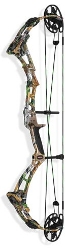
The SD shared the DS-3800's finish program rather than getting a reduced palette. The 2011 bows came in a tournament-style Shadow Black, and for 2012 the choices opened up to Next-G1 Vista - Darton's deep woodland camo under a matte, grippy Soft Touch coating - plus Shadow Black, a Limited Edition pattern, and Target Red. Darton leaned the SD's catalog presentation toward shooters who are often underserved by the industry's one-size-fits-all approach, picturing women archers on the feature page, but the finish and the hardware are full-spec, not a pared-down trim. The Soft Touch coating is the detail that ages well: it is a warm matte surface that wears quietly rather than scuffing to bright spots, which matters on a bow now more than a decade past its short production run.Riser
The riser is the DS-3800's unchanged foundation - CNC-machined 6061-T6 aluminum in a reflex geometry, built stout rather than skeletonized, which is why the SD carries the same planted 4.1-pound mass as the full-draw bow. That weight is an asset on a short-draw setup: a shorter draw length gives the shooter less leverage and a shorter sight radius, so a steady, front-heavy riser that resists torque does more for short-draw accuracy than a feather-light one would. Darton's 3-Axis Center Pull geometry lowers the grip and centers the arrow on all three axes relative to the string and cams, and the PTR rod - Progressive Torque Reduction - is the same curved cable guard that pulls the cables clear of the fletching while trimming the sideways torque the cam puts into the riser. Nothing here was decontented for the SD; the shooter gets the flagship chassis.Grip
The SD uses Darton's Signature Grip, a two-piece design with a molded rubber VibraGrip panel and interchangeable slim side plates - swap the plates and the throat goes from a warm, fuller rubber hold to a narrower, slicker profile without changing bows. For a short-draw shooter this adjustability is more than a nicety: hand size and draw length do not always track together, and being able to tune the grip width to the shooter's hand helps lock in a repeatable, low-torque anchor. The rubber option stays comfortable when the temperature drops and a hard grip turns cold, while the slim plate suits a shooter who wants minimal material between palm and riser. It runs a touch fuller than a target-bow grip, so a shooter coming off a very thin grip takes a session to settle in.Limbs
The SD runs the DS-3800's split E.E.T. limbs - Efficient Energy Transfer - a Gordon composite core with laminated skins seated in PPL pivoting limb pockets that self-align the limb to the cam for consistent timing. Crucially, the draw-weight range is the full adult spread: 40, 50, 60, and 70-pound peak limbs, so the SD is not capped at some gentle short-draw ceiling. A short-draw hunter can build a legitimate 70-pound setup with enough kinetic energy for whitetail and larger, which is exactly what a youth-derived short-draw bow cannot give them. The laminated split-limb design is built to store an aggressive force curve without harshness, and across Darton's lineup this limb-and-pocket system has a long, quiet reliability record.Eccentric System
The DualSync cam is the same binary-style, four-track system that powers the standard DS-3800, with the cams slaved together so they roll in sync and drive the nock straight at every draw length - but on the SD it is set up differently where it counts. Rather than simply bolting short-draw modules onto the flagship cam, Darton re-profiled the draw cycle so a shooter drawing 23 to 27 inches builds to peak weight smoothly instead of hitting the abrupt, poorly-timed pull that plagues an adult cam forced to its shortest setting. The honest trade is speed: the shorter power stroke of a sub-27-inch draw drops the IBO rating to 305-310 fps (the industry-standard chronograph figure at a fixed test setup), against 345-350 for the long-draw DS-3800. That is physics, not a weaker bow - every short-draw bow pays this toll, and 305-310 fps is genuinely quick for the draw lengths involved. Let-off is 80 percent, so the shooter holds roughly a fifth of peak weight at full draw, and draw length adjusts from 23 to 27 inches in half-inch steps by swapping the synced module by hand, with no bow press required.Draw Cycle/Shootability
The hardware the SD inherits is the forgiving part of this bow. On the DS-3800 chassis the back wall is firm and the bow holds rock-steady at full draw, and shooting that platform I found it settles dead in the hand with the factory string suppression - quiet, composed, with only a hint of residual buzz bare that a stabilizer erases. Those traits come from the riser, the limbs, the BNSS string suppression, and the 4.1-pound mass, all of which the SD carries unchanged, so the shot behaves the same. What is genuinely different, and the reason the SD exists, is the front end: a short-draw shooter on a tuned-down adult bow usually fights a cam that was never meant to run at 24 inches, and the SD's re-profiled draw cycle is built to remove that fight and let them reach peak weight cleanly. The steady, torque-resistant riser and the solid wall give a short-draw archer - who has less leverage and a shorter sight radius working against them - a stable, repeatable platform to anchor against. It is a short-draw bow that was engineered to be shot well, not merely shrunk to fit.Usage Scenarios
The SD is a hunting bow for the adult shooter whose draw length lands between 23 and 27 inches - a group the industry too often pushes toward youth models or ill-fitting detuned bows. Picture a shorter-statured hunter, or a shooter whose natural draw simply runs short, who wants a real 60 or 70-pound whitetail setup rather than a starter bow: that is this bow's reason for being. The full-weight limbs and 305-310 fps give it the kinetic energy and the flat-enough trajectory for whitetail and hog at typical bow range, from a treestand or a ground blind. It also fits a short-draw shooter stepping onto a club 3D course who wants the DS-3800's build and holdable wall at a draw length that fits them. It is not a grow-with-me youth bow - the 23-inch floor and adult draw weights mean it is sized for a shooter who has their draw length, not one still growing into it - and a long-draw adult should simply buy the standard DS-3800 instead.Versions
The DS-3800 SD was sold as a single bare-bow model with no package or electronics SKU, and Darton did not publish a separate SD price - it sat at the DS-3800's price point, the $829.99 class at 2011 launch. Within the model the choices were limbs (40/50/60/70-pound peak), draw-length modules (23-27 inches), and the finish options above. Buyers should know the SD had a short life: it appears in the 2011 and 2012 Darton catalogs and was discontinued after that, with Darton's later short-draw and grow-with-the-archer niche shifting to different models. The standard long-draw sibling, the Darton DS-3800, is the bow to choose if your draw runs 25 inches or longer; it shares every piece of this chassis but keeps the full 25-31 inch draw range and the 345-350 fps speed.Darton DS-3800 SD vs Bowtech Assassin SD, Diamond Infinite Edge Pro
| Bow | Darton DS-3800 SD | Bowtech Assassin SD | Diamond Infinite Edge Pro |
| Version | 2012 | 2012 | 2026 Legacy |
| Picture |  |  |  |
| Brace Height | 6 " | 7 " | 7 " |
| AtA Length | 33.8125 " | 30.25 " | 31 " |
| Draw Length | 23 " - 27 " | 22.5 " - 27 " | 13 " - 31 " |
| Draw Weight | 30 lbs - 70 lbs | 30 lbs - 70 lbs | 5 lbs - 65 lbs |
| IBO Speed | 305 fps - 310 fps | 305 fps | 300 fps |
| Weight | 4.1 lbs | 3.7 lbs | 3.3 lbs |
| Let-Off | 80% | 65% - 80% | 80% |
| Where to buy Best prices online |
|
| |
| compare more bows | |||
The SD's natural rivals are other bows built for the short-draw hunter, and the closest in concept is the Bowtech Assassin SD - like the Darton, it is the short-draw spin-off of a value speed flagship, introduced in 2012 with a nearly identical 22.5-27 inch draw range and a matching 305 fps IBO, but on a more compact 30.25-inch axle-to-axle frame and a more forgiving 7-inch brace height; it trades the Darton's longer, steadier 33 13/16-inch riser for a shorter, more maneuverable package. The Diamond Infinite Edge Pro comes at the same problem from the budget-adjustable direction: a 310 fps bow with a huge 13-31 inch draw range and 5-70 pound draw weight that covers short-draw shooters among everyone else, at a far lower launch price and a lighter 3.2-pound mass, but without the dedicated short-draw cam tuning or the planted feel of the Darton's heavier chassis. The DS-3800 SD sits between them as the purpose-built, full-mass short-draw hunting bow, so the decision comes down to priorities: the Darton for the short-draw shooter who wants the steadiest, most hunting-focused chassis, the Bowtech Assassin SD for a more compact short-draw frame with a more forgiving brace, and the Diamond Infinite Edge Pro for the widest adjustability and the lowest price.