
Hoyt REDWRX Carbon RX-7 Review

from $1799.99
Pros
- VitalPoint grip is the standout - warm, rubber-textured and flat-backed, it centers hand pressure for a low-torque, repeatable hold shot after shot
- Draw firms up early then rolls cleanly over the peak into a deep, hunting-friendly valley with a solid, no-squish back wall
- Dead in the hand and very hushed at the shot - the carbon riser and dual Shock Pods leave almost no hand shock
- Light at 3.9 pounds yet it balances like a longer-axle bow, settling steady and planted at full draw
- Carbon riser stays warm to the touch on cold sits and shrugs off real field abuse owners put it through
Cons
- Front end loads firm before the cams roll over - shooters expecting flagship-smooth from the first inch should draw one to feel the ramp
- Carbon-flagship price tier - buyers who want the same HBX Pro cam and VitalPoint grip for less can step to Hoyt's aluminum VTM or Ventum Pro
Video
content from YouTube
Editors' review
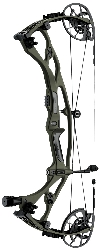
For years Hoyt's REDWRX carbon bows wrapped a carbon tube around aluminum caps and pockets - and paid for it with weight, the outgoing RX-5 tipping the scale near five pounds. The 2022 Carbon RX-7 throws that compromise out: it is Hoyt's first 100% carbon riser, two carbon tubes with no aluminum anywhere, and the bare bow drops to 3.9 pounds. That is the headline, but it is not the whole story. Hoyt also rebuilt the cam (the new HBX Pro), moved to a built-in Picatinny rail and integrated rest mount, redesigned the grip, and quieted the shot by a measured 24% over the RX-5. The result is a compact 30-inch hunting flagship that is light, quiet, fast, and - the part that surprises people who remember heavy early carbon Hoyts - genuinely comfortable to shoot. This is the carbon rig for the hunter who already knows they want carbon, and wants it without the weight penalty that used to come attached. Carried over unchanged into 2023, it was Hoyt's top carbon hunter for two seasons before the Carbon RX-8 replaced it.
Finish
At launch in 2022 the Carbon RX-7 came in three solids - Black Out, Buckskin, and Wilderness - alongside a deep camo slate aimed squarely at the Western and open-country hunter: Realtree Edge, Kuiu Verde 2.0, and Gore OptiFade in both Elevated II and Subalpine. Hoyt also offered Bone Collector and Cameron Hanes Signature Series treatments for buyers who follow those brands. For the 2023 carryover the palette rotated to Hoyt's then-current lineup - Black Out, Wilderness, Buckskin, Bottomland, and Vetiver, with Realtree options - but the riser, cam, and limbs underneath were unchanged. That breadth of patterns is wider than most carbon hunting bows carried at the time, and it leans toward the high-country and timber camo systems Hoyt's audience favors. Black Out remains the most timeless pick for a hunter who plans to add their own accessories and wants the riser to disappear behind them, while the OptiFade and Kuiu builds target the spot-and-stalk hunter who lives in open terrain. Coverage on Hoyt's carbon and laminated limbs held up well in real use, with owners reporting bows arriving clean and chip-free.Riser
This is the part that defines the bow. The Carbon RX-7 is built on Hoyt's first-ever 100% carbon riser - two hollow carbon tubes with no aluminum caps or pockets anywhere in the structure, where every prior RX riser had relied on an aluminum cap molded into the carbon. Pulling that aluminum out is exactly where the weight went: the bow comes in at 3.9 pounds, a full half-pound under the RX-5, and owners who remember the near-five-pound early carbon Hoyts treat that as the fix they had been waiting for. Carbon brings two benefits aluminum cannot match - Hoyt cites roughly seven times the strength integrity, and the material stays warm to the touch in cold weather, so the riser never goes ice-cold against bare fingers on a December treestand sit. One owner recounted a carbon Hoyt tumbling off a car roof at highway speed and shooting true afterward with nothing but cosmetic scratches; that toughness is a real part of the carbon argument, not just marketing. The riser also carries the redesigned In-Line accessory system: a Picatinny rail (the same accessory mounting standard used on AR-platform firearms) machined right into the front for the sight, an Integrate rest mount that docks a compatible rest tight to the back of the riser on a machined dovetail, and an optimized quiver location - all of it pulling accessory mass in-line and front-of-center for balance. Two Shock Pod locations sit near the limb pockets to absorb residual riser vibration after the shot.Grip
The VitalPoint grip earns near-universal praise across everyone who has shot this bow, and it is the kind of upgrade you feel in the first draw. It is molded directly to the riser from a new Versaflex non-slip material with a warm, rubber-like texture, and Hoyt flattened the grip angle so hand pressure centers in the meat of the palm instead of loading the bottom edge. The practical payoff is a repeatable hand position you settle into without thinking about it - the kind of low-torque hold that keeps a light, fast bow honest, because any palm torque on a 3.9-pound rig shows up downrange. Owners describe it as slim in the hand with a subtle relief along the side of the riser where the fingers rest, comfortable through the shot and free of the pressure point some earlier Hoyt grips put into the base of the thumb. The Versaflex material is the cold-weather story again - non-slip and never icy - which matters to the hunter holding at full draw through a long, freezing sit. There is no left-right windage adjustment as on Hoyt's adjustable side-plate target grips, but for a hunting bow the fixed, direct-to-riser connection is the cleaner, more consistent choice, and most owners leave it exactly as it ships.Limbs
The RX-7 runs Hoyt's split, past-parallel limbs seated in machined metal limb pockets, the proven interface that anchors the brand's flagship hunters and a big part of why these bows tune predictably and hold tune over seasons. Past-parallel geometry points the limb tips away from each other at the shot so their forces cancel, which is part of why this bow finishes so quiet and dead in the hand. Draw weight is offered across the full hunting span in 40, 50, 60, 65, 70, and 80-pound peak brackets, so a shorter-draw or smaller-framed hunter can sit at 40 or 50 while a backcountry hunter chasing maximum kinetic energy can run the 80-pound top end - a range that genuinely fits most of the hunting world on one platform. The smooth HBX Pro draw is part of why so many buyers move up to the 70 and 80-pound options without dreading the pull. Hoyt's limited lifetime warranty covers the limbs, pockets, and eccentrics to the original owner, reflecting the company's confidence in a limb-and-pocket system it has refined across the RX line for years.Eccentric System
The HBX Pro is a three-track binary cam - the same wheel top and bottom, tied together so the system stays in time - and it is the engine that makes the carbon riser shoot the way it does. Compared to the previous HBX, Hoyt re-profiled it to improve center shot and the full-draw sight picture and to make tuning simpler; several owners specifically called out a cleaner, better-centered sight picture at full draw versus the year before. Two module sizes cover the 25 to 30-inch draw range, and the cam carries a 342 fps IBO rating (IBO being the industry-standard chronograph rating taken at 30 inches, 70 pounds, and a 350-grain arrow). Real-world numbers track sensibly below that marketing figure: at 70 pounds and 29 inches a 350-grain arrow ran 320 fps, a 400-grain 301 fps, a 450-grain 287 fps, and a heavy 500-grain hunting shaft 272 fps, while one flagship test clocked 300 fps with a 435-grain arrow - fast for a hunting flagship, and plenty of momentum for heavy-shaft setups. Let-off is shooter-selectable between 80% and 85% (let-off being the share of peak weight your holding weight drops to at full draw) by sliding a peg in each cam's module, a tool-light change that lets a hinge or back-tension shooter pick the valley behind it. The back wall the system delivers is firm and defined - padded arms on each module meet the inner cable to give a wall that owners describe as neither concrete-hard nor spongy. Measured shot noise came in around 97.8 decibels, mid-pack among flagships, with Hoyt's own testing showing the bow 24% quieter than the RX-5.Draw Cycle/Shootability
What people remember after shooting the RX-7 is how civilized a light, fast carbon bow can feel. The front end loads firm - a touch demanding in the first inch - and then the HBX Pro rolls over the peak and turns buttery as weight builds, with no stacking or square spots on the way to the wall. The valley is the hunting sweet spot: deep enough to settle into and hold without the bow fighting to creep forward, which is exactly what a hunter wants when a buck takes its time stepping into the lane. The back wall is solid and repeatable, free of the late-draw squishiness that softens some bows, and a hinge shooter will find enough valley behind it to work the release cleanly. Post-shot is where the carbon and the damping earn their keep - the bow sits dead in the hand and very hushed, with hand shock owners call almost imperceptible, and a Short Stop stabilizer is included to quiet what little remains. At 3.9 pounds it could feel whippy, yet it balances like a bow with more inches between the axles, settling steady at full draw rather than darting around the target. One honest quirk: the draw can feel a hair short for its marked length, so a shooter at 29 inches may want to confirm the module setting at a shop. Get the draw length dialed and this is a bow you can hold comfortably and shoot all afternoon.Usage Scenarios
The Carbon RX-7 is built for the serious bowhunter who counts ounces and values silence, and its compact 30-inch axle-to-axle frame is the through-line. Picture a backcountry elk hunter packing in to 9,000 feet: at 3.9 pounds the bow shaves real weight off the load, the carbon riser stays warm in the hand at a frozen dawn, and an 80-pound build with a 500-grain shaft drives enough kinetic energy to punch through an elk's shoulder at the end of a long stalk. Drop into a tight whitetail treestand and the short axle-to-axle threads the lane between branches a 33 or 34-inch bow fights, while the dead-quiet, low-shock shot keeps a close deer from jumping the string from 20 yards up. For the Western spot-and-stalk hunter ranging mule deer across a canyon, the flat-shooting speed tightens pin gaps and the In-Line balance holds the sight steady at full draw. The wide 40 to 80-pound draw-weight span and 25 to 30-inch draw range let one platform fit a smaller-framed hunter at 50 pounds or a powerlifter at 80. It can moonlight as a 3D bow for shooters who like a fast arrow and a firm wall, though a target archer who wants a longer riser and a deeper parking valley will be happier on a dedicated target platform - and a hunter who needs 31 or 32 inches of draw should look to the longer-axle RX-7 Ultra instead.Versions
The REDWRX Carbon RX-7 is the compact, standard 30-inch model, and it was sold as a single bow configuration across two model years. It debuted in 2022 at roughly $1,799 MSRP and carried over unchanged into 2023 at roughly $1,849 - same carbon riser, same HBX Pro cam, same 342 fps / 30-inch / 6.25-inch-brace / 3.9-pound spec, with only the finish palette rotating between years. It was discontinued after 2023 and replaced by the Carbon RX-8 for 2024. Buyers choose their configuration through peak draw weight (40, 50, 60, 65, 70, or 80 pounds), draw-length module, hand, and finish rather than separate package SKUs. The separate REDWRX Carbon RX-7 Ultra is its own model - a longer 34-inch axle-to-axle bow with a 7-inch brace, 334 fps, 27 to 32-inch draw, and 4.3-pound mass - aimed at the longer-draw, maximum-forgiveness hunter rather than the compact-and-light buyer this review covers.Hoyt REDWRX Carbon RX-7 vs Mathews V3X 29, Bowtech SR350
| Bow | Hoyt REDWRX Carbon RX-7 | Mathews V3X 29 | Bowtech SR350 |
| Version | 2023 | 2023 | 2023 |
| Picture |  |  |  |
| Brace Height | 6.25 " | 6 " | 6 " |
| AtA Length | 30 " | 29 " | 33 " |
| Draw Length | 25 " - 30 " | 25.5 " - 30 " | 25 " - 30 " |
| Draw Weight | 40 lbs - 80 lbs | 50 lbs - 75 lbs | 40 lbs - 70 lbs |
| IBO Speed | 342 fps | 340 fps | 350 fps |
| Weight | 3.9 lbs | 4.47 lbs | 4.4 lbs |
| Let-Off | 80% or 85% | 80 or 85% | 85 / 87% |
| Where to buy Best prices online | |||
| compare more bows | |||
A RX-7 buyer almost always cross-shops the other 2022 flagship hunters, and two come up most. The Mathews V3X 29 is the direct compact rival: a 29-inch, 6-inch-brace, 340 fps bow at 4.47 pounds with the same 80/85% let-off, built around Mathews' aluminum bridge-lock chassis and switch-weight modules, and it launched at $1,199 - roughly $600 under the carbon Hoyt. The Bowtech SR350 plays the longer-and-faster card: a 33-inch, 6-inch-brace, 350 fps bow at 4.4 pounds with Bowtech's DeadLock cam tuning and an 85/87% let-off, launched at $1,299. Against both, the Carbon RX-7's case is material and weight - it is the only one of the three with a 100% carbon riser, the lightest at 3.9 pounds, and the only one that stays warm in cold-weather hands, all of which matter most to the backcountry hunter packing miles. The V3X 29 answers with Mathews' renowned silence and dead-in-hand shot at a far lower price, and the longest draw-weight floor-to-ceiling story for the buyer who wants flagship feel without the carbon premium. The SR350 answers with the longest axle-to-axle of the three for added forgiveness, the highest IBO, and DeadLock's reputation for fast, lock-in tuning. The decision comes down to priorities: the Carbon RX-7 for the hunter who wants the lightest, warmest, toughest carbon rig and will pay for it, the Mathews V3X 29 for the buyer who wants a quiet compact flagship for hundreds less, and the Bowtech SR350 for the shooter who values a longer, more forgiving aluminum platform and the most straightforward tuning.