
Hoyt Pro Comp Elite FX Review
Pros
- Shorter than the bow it replaced yet faster - the 35.25-inch riser rates 313 fps on the GTX and 328 on the Spiral Pro
- One riser, two target cams: the smoother GTX with a 65% or 75% let-off choice, or the quicker Spiral Pro
- Shock Rod damping quiets the shot and comes in nine custom colors for a coordinated target rig
- Compact, solid-drawing target bow that settles fast and holds well for its length
- A true short-draw FX SD version on XT1000 limbs reaches down to a 22-inch draw for smaller-frame competitors
Cons
- A short-valley target cam demands honest follow-through - stay in the shot to the wall or the miss opens up
- Even the SD build is a target rig, not a hunting bow - its length, let-off, and weight are wrong for the treestand
Video
content from YouTube
Editors' review
Shorter usually means slower. The Pro Comp Elite FX breaks that rule. Hoyt's 2014 refresh of its target platform pulled the axle-to-axle length in to 35.25 inches - a good two to five inches shorter than the standard Pro Comp Elite and the XL it replaced - yet the Spiral Pro build rates 328 fps against the older, longer bow's 315. It kept what made the platform a target-line staple: a choice of two cams on one riser, the deep competition color program, and the same 30-to-70-pound competition brackets. What changed, besides the geometry, is the damping - the FX moved to Hoyt's Shock Rod system, the technology Hoyt would carry forward into the Podium X Elite. And for the short-draw archer the platform never quite fit, the FX added a genuine answer: an SD version on shorter XT1000 limbs that reaches down to a 22-inch draw. It launched in flagship target territory and ran three seasons as the compact, faster face of the line.
Finish
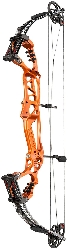
Hoyt dressed the Pro Comp Elite FX in the target palette the platform was known for - clean, high-visibility competition colors rather than any hunting camo. What the FX added to the coordination game is the Shock Rod color program: the limb-mounted Shock Rods came in nine custom color options, so an archer could match the dampers to the riser and accessories for a fully coordinated rig on the line. The riser finishes carry the constant handling a competition bow sees between ends, and the same look spans the GTX, Spiral Pro, and SD builds. There is no woodland pattern anywhere in the range - this is a bow finished for the indoor spot, the field course, and the 3D range, and it dresses the part.Riser
The riser is the heart of what changed. Hoyt shortened the target geometry to 35.25 inches axle-to-axle, a meaningfully more compact platform than the 37-to-40-inch standard and XL bows, and paired it with the XT2000 limbs on the standard builds. The compact length is the reason the FX both handles more easily and, with the refined geometry and cams, rates faster than its longer predecessors. Damping is where the FX visibly departs from the earlier bows: instead of the adjustable Air Shox of the original Pro Comp Elite, the FX runs Hoyt's Shock Rod system - the limb-mounted damping technology Hoyt proved on this bow and then carried into the Podium X Elite generation. The riser also offered a Pro Fit wood grip option, a nod to the target archer who wants a warm, shaped hand position. The lower rear stabilizer mount for a back bar is present, keeping the low-back-bar balance a target archer sets up.Grip
The Pro Comp Elite FX offered Hoyt's target grip with a Pro Fit wood grip option - a warm, shaped surface that seats the bow hand in a repeatable, low-torque position, which is what a competition archer chasing a dead-center hold is after. Wood is a deliberate choice on a target bow: it takes the chill off a cold outdoor morning and gives a consistent, non-slip surface that a bare aluminum grip cannot. The narrow throat keeps rotational torque out of the shot before it reaches the arrow. In my experience a shaped target grip like this rewards the archer who learns one hand position and repeats it - the grip stops being something you think about and becomes part of the anchor, which on a bow this focused is exactly the point.Limbs
The standard Pro Comp Elite FX runs Hoyt's XT2000 target limbs, the same proven parallel split-limb system as the rest of the line, tuned here for the shorter riser. Peak weight comes in the competition brackets - 30-40, 40-50, 50-60, and 60-70 pounds - covering everything from a comfortable indoor practice weight to an outdoor archer driving a heavier arrow. The important limb story is the SD: the Pro Comp Elite FX SD swaps to shorter XT1000 limbs to build a genuine short-draw target bow, reaching down to a 22-inch draw with its own 30-40 and 40-50 pound options - a real answer for the smaller-frame or short-draw competitor the standard platform left out. The Shock Rod dampers mount to the limbs across all builds, quieting the shot. Draw-weight changes are standard limb-bolt work, and the bow holds its tune across the practice rounds that define target use.Eccentric System
The cam choice defines the FX, and like the rest of the line it ships with two on one riser. The GTX Cam and a half is the smoother hybrid target cam: a selectable let-off of 65% or 75% - the percentage of peak weight your holding weight drops to at full draw - module-based draw adjustment, and a 313 fps IBO rating (the industry-standard figure at 30 inches, 70 pounds, 350 grains). The Spiral Pro Cam and a half is the faster, firmer option at 65% let-off, and it is where the FX's headline number lives: 328 fps, a solid 13 fps clear of the longer standard Pro Comp Elite's Spiral X despite the shorter, handier riser. That inversion - shorter and faster - is the whole reason the FX exists. The SD build runs the GTX cam on its short-draw limbs at 273 fps, trading speed for a genuine 22-inch reach. Across all three, the riser, limbs, grip, and Shock Rod damping stay the same, so the cam and limb pairing alone decide whether you get the smoother GTX, the faster Spiral Pro, or the short-draw SD.Draw Cycle/Shootability
Drawing the FX, the target-cam character is smooth and deliberate, but the compact riser gives it a different personality than the long standard and XL bows - it settles onto the spot quickly and feels handier in the hand while still holding well for its length. Shooting it, the draw stops are solid and the back wall is defined, and the bow sends the arrow out with more speed than its short size suggests - a genuinely pleasant surprise if you are used to longer target rigs. What carries over from the platform is the honesty: a short-valley target cam rewards staying in the shot all the way to the wall and punishes a lazy release with a wider miss, so this is a bow for the archer who follows through with intent. The Spiral Pro sits into a firmer wall for the back-tension shooter; the GTX at 75% let-off eases the hold for a long practice end. Coming to it from the longer bows in the line, I found the compact riser easier to manage on the shot without losing the transparent, form-rewarding feedback a target archer wants.Usage Scenarios
This is a target and 3D bow built for the archer who wants the platform's hold in a more compact, faster package. Picture a 3D shooter working a foam course who wants a handier bow that still settles on the spot, or an indoor spot archer who prefers a shorter riser on the line and appreciates the extra speed the Spiral Pro brings. The FX SD opens the platform to a shooter the standard bows could not fit - the short-draw or smaller-frame competitor who finally gets a real target bow reaching down to 22 inches rather than a cut-down hunting rig. The 60-70 pound bracket suits an outdoor archer pushing a heavier arrow, while the lighter brackets keep a long practice round comfortable. It is not a hunting bow - the let-off, geometry, and weight are built for the target line - and an archer who wants maximum length and the steadiest possible hold should look at the longer Pro Comp Elite or Pro Comp Elite XL instead. For the competitor who wants compact handling and speed on the target line, the FX is the one in the family built for it.Versions
The Pro Comp Elite FX is one model offered in three builds that share the riser, Shock Rod damping, and grip - the cam and limb pairing is the variable:- Pro Comp Elite FX GTX - GTX Cam and a half on XT2000 limbs, selectable 65% or 75% let-off, rated 313 fps, brace height 7 inches. The smoother, more flexible standard build.- Pro Comp Elite FX Spiral Pro - Spiral Pro Cam and a half on XT2000 limbs, 65% let-off, rated 328 fps, brace height 6.5 inches. The faster, firmer competition build and the speed leader of the family.- Pro Comp Elite FX SD - GTX cam on shorter XT1000 limbs at a shorter 33.75-inch axle-to-axle, a genuine short-draw target bow reaching down to a 22-inch draw, rated 273 fps, brace height 6 inches, offered in the 30-40 and 40-50 pound brackets.All three launched in flagship target territory, between the earlier standard Pro Comp Elite and the successor Podium X Elite, and the FX ran across the 2014 through 2016 seasons. The choice comes down to draw length and priority: the SD for short-draw archers, the Spiral Pro for speed, the GTX for a smoother pull and let-off flexibility.Hoyt Pro Comp Elite FX vs Bowtech Specialist, PSE Supra
| Bow | Hoyt Pro Comp Elite FX | Bowtech Specialist | PSE Supra |
| Version | 2016 GTX Cam | 2014 | 2018 EXT |
| Picture |  |  |  |
| Brace Height | 7 " | 7.5 " | 7 " |
| AtA Length | 35.25 " | 37.5 " | 37 " |
| Draw Length | 23 " - 29.5 " | 26 " - 30.5 " | 25 " - 30.5 " |
| Draw Weight | 30 lbs - 70 lbs | 50 lbs - 60 lbs | 30 lbs - 60 lbs |
| IBO Speed | 313 fps | 330 fps | 317 fps - 325 fps |
| Weight | 4.6 lbs | 4.1 lbs | 4.7 lbs |
| Let-Off | 65% or 75% | 65%, 75% | 65% & 75% |
| Where to buy Best prices online |
| ||
| compare more bows | |||
In the target class, the compact Pro Comp Elite FX lines up against the Bowtech Specialist and the PSE Supra - two bows a spot, field, or 3D archer would cross-shop, both running a little longer than the FX's handy 35.25 inches. The Bowtech Specialist sits at 37.5 inches axle-to-axle with a 7.5-inch brace and a 330 fps binary cam - close to the FX's Spiral Pro on speed but a longer, more traditional target length, where the FX counters with a shorter, handier riser and a cam choice. The PSE Supra, at 37 inches with a 7-inch brace and a 317-325 fps range, is another long-running competition platform that leans on speed; the FX undercuts it on length while matching or beating it on the Spiral Pro's 328 fps. Against both, the FX's distinguishing traits are its compact geometry, the shorter-and-faster payoff, Shock Rod damping in nine colors, and a genuine short-draw SD build neither rival offers. The decision comes down to priorities: the Pro Comp Elite FX for the archer who wants a compact, fast target bow with a short-draw option, the Bowtech Specialist for binary-cam simplicity, the PSE Supra for a proven speed-target platform. Within Hoyt's own line, an archer wanting maximum length and hold should look at the standard Pro Comp Elite or the Pro Comp Elite XL.