
Hoyt Alpha AX-3 33 Review
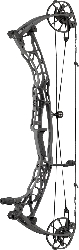
Pros
- Press-free XTS tuning corrects left-right and up-down nock tears at home, and owners reach a bullet hole in two shots straight out of the box
- Real-world speed holds close to the 340 fps IBO claim, with 70lb/30"/350gr chronographing around 333 fps
- Dead in the hand with almost no torque, one of the quietest and steadiest shots owners have measured this year
- Rock-solid back wall and a full, no-hump draw that stays smooth even set into the 80-plus-pound range
- Long 33-5/16" axle-to-axle plus deep In-Line accessory integration make it a stable, tight-to-riser hunting platform
Cons
- At 4.75 lbs the bridged aluminum riser runs heavier than a carbon flagship, so weight-conscious western hunters may want to shoot it before committing
- The full, stiff draw cycle rewards staying engaged on the back wall, and shooters coming off a buttery entry-level cam should pull one in person first
Video
content from YouTube
Editors' review
Carbon usually gets the speed headline. This aluminum Hoyt beats its own carbon sibling to the punch on the one thing 2026 buyers actually asked for: tuning you can finish at home. The Alpha AX-3 33 is the flagship 33-5/16" axle-to-axle member of Hoyt's third-generation Alpha X aluminum hunting line, sitting between the compact AX-3 29 and the long-draw AX-3 33 LD, with a short-draw AX-3 SD rounding out the family. The chassis carries over the proven bridged riser and the HBX Gen 4 cam, but the story for 2026 is the patent-pending XTS tuning system built into the limb pockets. It is the "crowd pleaser" length in the lineup, fast enough to chase the 340 fps IBO number (the industry-standard chronograph rating at a fixed 30-inch, 70-pound, 350-grain setup) yet long enough in the axle to stay forgiving for the longer-draw hunter. At $1,599 launch MSRP it asks a premium, and the sections below explain what that premium buys.
Finish
Hoyt offers the AX-3 33 in thirteen finishes, split between solids and camo. The two new-for-2026 solids are Georgia Clay, a warm earthy tone, and Sandstorm, a desert tan, joining Blackout, Tombstone, Wilderness and America 250. On the camo side you get Mossy Oak Bottomland, Realtree APX, KUIU Verde 2.0 and Sitka Gore Optifade Subalpine, covering treestand timber through open western terrain. The signature series expands this year: the Bone Collector and Keep Hammering blackout-limb treatments, previously locked to their own colors, are now available across the full palette, so a hunter can pair blackout limbs and logos with any riser color. Hoyt's finishes have a long track record of holding up against brush, weather and quiver rub, and the solid Georgia Clay in particular photographs far richer than a catalog swatch suggests. For most whitetail hunters a camo is the practical pick; for a bow that lives in the truck and the treestand, the durable dip is what matters more than the pattern.Riser
The AX-3 33 is built on Hoyt's bridged "Tec" aluminum riser, and for 2026 Hoyt machined more metal out of the frame while reworking the bridge geometry. The point of that rework is vibration: Hoyt claims a 16% reduction versus the 2025 model, a number owners take on faith since it comes from lab equipment, but the shot feel backs up the direction of travel. The riser's real advantage is stiffness. This is a rigid platform that resists torque and holds steady through the shot, and the trade-off is honest, an aluminum flagship weighs more than a carbon one. The In-Line accessory system is the other riser story: a Picatinny front sight mount is machined directly into the riser (Hoyt originated the pic-rail bow mount), an IMS dovetail handles the rear rest, and dual stabilizer bushings, low-profile quiver mounts and go-stick attachments let a hunter pull every accessory tight to the centerline. Drawing my accessories in close on this riser, the whole rig balances like a single mass rather than a bow with weight hung off it. The roller cable guard is lightly revised to clear the new sling and pull-up-rope options Hoyt is shipping alongside the bow.Grip
Hoyt carried over its Vital Point grip on the AX-3 33, and after years of iteration that is the right call. The profile is a low-to-mid wrist shape that fills the hand without forcing it, and the surface finds a repeatable, low-torque hand position without the sharp edges that make some target grips punish a hunter's cold-weather hold. In my experience the grip is the single most underrated reason this bow shoots dead in the hand: a hand position that does not fight you is half of a torque-free shot. The grip is interchangeable for shooters who want a different fill or a side-plate setup, so hand-size outliers are not stuck with the stock shape. It sits and balances well straight out of the box, and it is one of the few parts of the bow nobody feels a need to change.Limbs
The AX-3 33 runs Hoyt's split-limb design in the bridged pockets, and the draw-weight range is where the platform shows its breadth: peak options come in 50, 60, 65, 70, 75 and 80 pound modules, spanning a 30 to 80 pound range across the family. That top-end reach matters. One owner set his 33 to 86 pounds for a heavy-bone African setup and the limbs handled it without complaint, which tells you the 70 and 80 pound hunters have real headroom rather than living at the edge of the design. The genuinely new hardware for 2026 lives in the limb pockets themselves: the XTS wedge-and-worm-gear mechanism sits under each pocket and drives against the limb tip, and it doubles as a fine poundage adjustment, letting you shift peak weight up to a pound and a half without touching the limb bolts. Hoyt's limb-and-pocket design has a strong reliability record across the RX and AX lines, reinforced this year by the brand's 1,500 dry-fire and million-draw-cycle durability testing.Eccentric System
The AX-3 33 uses the HBX Gen 4 cam, a four-track design carried over from 2025 with the same modules, which dealers appreciate because it means no new module inventory to stock or source. Hoyt re-profiled it lightly for 2026 for a marginally smoother pull, though owners are candid that most shooters will not feel the difference between last year's cam and this one. Draw length adjusts in one-inch steps through five modules across the 26 to 31 inch range, and the cam offers three self-adjustable let-off settings at 75, 80 and 85 percent (let-off is the percentage of peak weight the holding weight drops to at full draw), plus rotating draw stops that set a hard or extra-hard back wall. On speed, the 340 fps IBO rating is close to honest in the real world: at 70 pounds, 30 inches and a 350-grain arrow the 33 chronographs around 333 fps, and at a realistic hunting setup of 65 pounds, 29 inches and a 450-grain arrow it settles at 278 to 279 fps, which is quick for a 33-inch bow with a 6-3/8 inch brace. Speed falls off at about 8 fps per inch of draw, a useful figure for short-draw shooters projecting their own numbers. Where the cam is genuinely differentiated is the XTS tuning system paired to it: because tuning happens at the limb pocket, you never fiddle with the cams to chase a tear, which owners find makes the whole setup more repeatable.Draw Cycle/Shootability
Drawing the AX-3 33 at 70 pounds, the pull is full and stiff but never abrupt, there is no hump to fight over and no dump into the valley, just a steady load that rolls into a rock-solid back wall. This is not a buttery entry-level draw, it is the firm, efficient cycle that comes with chasing a 340 fps number, and I found it settled quickly into a comfortable rhythm after a handful of shots. The back wall is a wall, not a slope, and the rotating draw stops let a shooter dial it firmer still. What surprised me most is how the bow behaves at the shot: it sits dead in the hand with almost no torque, and an owner who set his to 86 pounds reported it felt closer to his 80-pound carbon flagship from the year before than the extra poundage suggests. Noise reads quiet across the board, though the actual dB figures scatter by meter and room, so I would trust the consistent "you hear the arrow hit before the bow finishes settling" impression over any single number. Post-shot vibration is minimal, backing Hoyt's damping claims without needing the lab to prove it. The overall shot signature is what a Hoyt hunter expects, steady, quiet and repeatable, with the XTS system meaning the day you get it tuned is the day it stays tuned.Usage Scenarios
This is a longer-draw hunter's bow first. If your draw length runs past 29 inches, the 33-5/16 inch axle-to-axle gives you the stability and forgiveness a compact bow cannot, which is exactly why several long-draw shooters gravitate to this length over the AX-3 29. Picture a whitetail hunter who tunes the bow himself on a Tuesday evening, drives a bullet hole in two shots with the XTS system, and is in the treestand by Saturday's opener with zero pro-shop trips. It handles heavier arrow builds well for elk and larger western game, and one owner runs it at the top of its poundage for African plains game where the nearest bow shop is six thousand miles away, trusting the platform to hold zero through the trip. For 3D and backyard practice the steady hold and quiet shot make it easy to shoot well at distance. Where it is less suited is the shooter whose draw sits well under 27 inches, or the hunter who counts every ounce on a long backcountry pack, both of whom the family's other lengths or the carbon line serve better. For most treestand and Western hunters in the 27 to 31 inch draw window, this is the crowd-pleaser of the lineup for good reason.Versions
The Alpha AX-3 33 is sold as a single bow-only model at a $1,599 launch MSRP, configured by the buyer through module and finish choices rather than separate package SKUs. Draw weight is set by peak module (50, 60, 65, 70, 75 or 80 pounds), draw length by the five one-inch modules across 26 to 31 inches, and let-off self-adjusts among 75, 80 and 85 percent, so a single SKU covers a wide range of shooters. Finish is chosen from the thirteen-option palette, including the signature-series blackout treatments now offered across all colors. Within the wider family, the AX-3 29 ($1,499) is the compact-draw option, the AX-3 33 LD ($1,599) extends the draw range to 33 inches for the tallest shooters, and the AX-3 SD ($1,499) drops to a 23 to 27 inch range on a lower brace for short-draw and youth-to-adult growth, none of which are packages of this bow but separate models on the same platform.Hoyt Alpha AX-3 33 vs Mathews Phase4 33, PSE Mach 34
| Bow | Hoyt Alpha AX-3 33 | Mathews Phase4 33 | PSE Mach 34 |
| Version | 2026 | 2024 | 2024 EC2 |
| Picture |  | 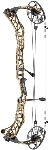 |  |
| Brace Height | 6.375 " | 6.5 " | 7.25 " |
| AtA Length | 33.3125 " | 33 " | 34 " |
| Draw Length | 26 " - 31 " | 27 " - 31.5 " | 26.5 " - 32 " |
| Draw Weight | 30 lbs - 80 lbs | 50 lbs - 75 lbs | 40 lbs - 80 lbs |
| IBO Speed | 340 fps | 336 fps | 330 fps |
| Weight | 4.75 lbs | 4.68 lbs | 3.65 lbs |
| Let-Off | 85% | 80% or 85% | 80% - 90% |
| Where to buy Best prices online |
|
| |
| compare more bows | |||
Three 33-inch-class aluminum hunting flagships, three different priorities. The Alpha AX-3 33 is the fastest on paper at 340 fps IBO and the priciest at $1,599 launch MSRP, and its case rests on the press-free XTS tuning and the rigid bridged riser rather than a spec-sheet bargain. The Mathews Phase4 33 comes in at 33 inches, a 6.5-inch brace and 336 fps IBO for a $1,299 launch MSRP, and Mathews' calling card is quietness and vibration damping, so a hunter who ranks a silent treestand shot above every other trait leans that direction. The PSE Mach 34 stretches to a 34-inch axle-to-axle and a tall 7.25-inch brace at 330 fps IBO for about $1,299 to $1,400, trading a little speed for the extra forgiveness that a long brace and long axle buy, which suits a target-leaning or accuracy-first hunter. The Hoyt asks the most money and answers with the most speed and the only genuinely at-home tuning system of the three, plus Hoyt's resale strength. The decision comes down to priorities: the Alpha AX-3 33 for the hunter who wants speed and self-tuning and will pay for it, the Mathews Phase4 33 for the buyer who values silence and damping at a lower price, and the PSE Mach 34 for the shooter who wants the most forgiving geometry of the group.