
AMS Fire Eagle Review
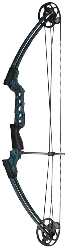

from $189.99
Pros
- Smooth, near tuning-free draw straight out of the box - owners consistently describe it as easy to shoot with little setup fuss
- Hard-hitting perimeter-weighted cams - one owner's 50-pound Fire Eagle out-penetrated his 60-pound recurve on big buffalo
- Long 35.5-inch axle-to-axle keeps finger pinch low, which finger-shooters and longer-draw archers notice first
- Wide 40-to-50-pound range cranks down far enough for kids and lighter shooters while still carrying fish-killing power
Cons
- Some owners have reported the rubberized grip's adhesive letting go over time - a dab of contact cement or a simple grip wrap sorts it out permanently
- Out of production since around 2013, so it is a used-market buy - anyone wanting a new-in-box AMS bowfishing rig should look at the current Hooligan instead
Video
content from YouTube
Editors' review
Most bowfishing bows are built around zero let-off and a bare-bones cam so you can snap-shoot at any draw. The AMS Fire Eagle took a different path: a smooth constant-force draw, a slight let-off, and perimeter-weighted dual cams tuned to hit hard through water. The result surprised even skeptics - a diehard traditional shooter who switched over reported his 50-pound Fire Eagle sinking arrows deeper into big buffalo than his 60-pound recurve ever did. This was AMS's top compound of its era, an upgrade over the company's Fish Hawk, sold from 2009 until roughly 2013 before the Hooligan replaced it. It is a discontinued bow now, found on the used market, but it still shows up in the hands of guides and tournament shooters who bought one and never saw a reason to switch. For the archer shopping secondhand for a smooth, powerful, finger-shot rig - or a family that wants one bow spanning an adult and a kid - the Fire Eagle remains worth knowing.
Finish
The Fire Eagle shipped in a single dip AMS called "Fire Storm" camo, covering both the riser and the split limbs. There were no color options to weigh - one look, applied consistently across the bow. For a bowfishing tool that lives in boats, mud, and spray, the dipped finish is less about looks than about sealing the surfaces against a wet, abrasive environment, and it holds up to the knocks that come with clambering around a fishing platform. Buyers on the used market will find most surviving examples still wearing that Fire Storm pattern, sometimes faded from sun and water, which is cosmetic rather than functional.Riser
The Fire Eagle's riser is built long and lean, setting the bow at a 35.5-inch axle-to-axle length that is generous for a bowfishing rig. That length is a deliberate choice: bowfishers shoot off their fingers, and a longer riser opens the string angle at full or partial draw so the fingers are not pinched hard against the nock. Every piece of hardware on the riser is stainless steel, which is the detail that matters most on a bow that spends its life around water - corrosion is the enemy of a bowfishing bow, and AMS specced the fasteners and pockets to survive it. The riser also integrates a rubberized grip surface directly into its shape rather than bolting on a slippery machined section. It is a straightforward, purpose-built platform with no wasted complexity, which is exactly what a tool that gets dunked, dropped, and dragged through a jon boat should be.Grip
The grip is a rubberized section molded into the riser, and it is the kind of detail I appreciate the moment my hands are wet and slick with fish slime. A bare aluminum or hard-plastic grip turns treacherous in those conditions; the Fire Eagle's rubber surface gives the palm something to bite into when a boat is rocking and everything is soaked. It sits at a comfortable, neutral wrist angle suited to the quick, instinctive shooting bowfishing demands rather than the precise repeatable hand placement a target shooter chases. The one caveat owners raise is that the adhesive holding the rubber can let go after enough seasons in the sun and water; when it does, re-bonding it with contact cement or wrapping the grip restores it for good, and it is a cosmetic annoyance rather than a performance problem.Limbs
AMS built the Fire Eagle on exclusive 50-pound split limbs seated in reinforced limb pockets, and the split-limb design keeps mass down while standing up to the repeated stress of bowfishing's rapid, no-anchor shooting. Peak draw weight starts at 50 pounds and adjusts down to 40, which is a usefully wide swing for a single bow - heavy enough to drive an arrow through a big gar or buffalo, light enough that a younger or smaller shooter can pull it comfortably. The reinforced pockets are the quiet workhorse here: bowfishing subjects a bow to shock loads a hunting bow rarely sees, from botched shots into hard water to arrows that suddenly stop against a scale-armored fish, and a beefed-up pocket keeps the limbs seated and in tune through that abuse. Across its production run the limb design earned a reputation for durability, which is why so many still turn up working on the used market years after the bow left the catalog.Eccentric System
The heart of the Fire Eagle is its perimeter-weighted dual cam system, and it is the feature that separates this bow from the plainer cams on most fishing rigs. Adding weight to the outer edge of each cam builds rotational energy into the shot - AMS marketed it as extra "kick," and in practice it translates to an arrow that drives deeper and travels farther under water. That is the mechanism behind the story that keeps coming up with this bow: a shooter who moved over from a 60-pound recurve found his 50-pound Fire Eagle out-penetrating the heavier traditional bow on big rough fish. The cams also deliver a smooth, constant-force draw across the full 15-to-30-inch draw-length window, so there is no fixed anchor to hit - you can draw to whatever length the snap shot allows and the bow loads consistently. There is a modest let-off of roughly 20 percent, which is unusual for the category, where zero let-off is the norm; it is slight enough that this remains a snap-shooter's bow rather than a hold-and-aim rig, but it does take a touch of the edge off if you do pause on a stationary fish. What I keep coming back to is how much usable power the cams wring out of a middleweight draw - you are not fighting 60 or 70 pounds to get the penetration, and that makes long days on the water far less punishing.Draw Cycle/Shootability
Drawing the Fire Eagle on fingers, the first thing that registers is how little the long riser pinches - at 35.5 inches axle-to-axle the string angle stays open, and shooters with longer draws especially feel the difference against the stubby geometry of many fishing bows. The draw itself is smooth and continuous rather than stacking, which is exactly what you want when you are throwing quick, instinctive shots and never settling into a deliberate anchor. Owners repeatedly land on the same word for it - smooth - and note that the bow needs almost no tuning to shoot well, a real asset for a fishing rig that most people rig once and then abuse all summer. Shootability was clearly the design goal: guides who put hundreds of shots through it across a season, and tournament shooters who value fast follow-ups, both gravitated to it. Because bowfishing shots are close and fast, there is no chronograph culture around this bow and no dB noise obsession; what matters is that the arrow leaves quickly and hits hard, and on both counts the Fire Eagle delivers. In my experience a rig like this earns its keep not on a single impressive shot but on the fiftieth shot of a hot afternoon, when a smooth draw and a forgiving hand position are the difference between still shooting well and calling it a day.Usage Scenarios
This is a dedicated bowfishing bow, and it shines on rough fish that fight back - carp, buffalo, gar, and tilapia are the targets owners mention landing with it. Picture a summer evening on a shallow flat: you are wading or standing in the bow of a jon boat, spotting fish in the film, and shots come fast and at odd angles with no time to settle. The Fire Eagle's smooth, anchorless draw and quick, hard-hitting cams are built for exactly that tempo. It handles deep, clear water where a fish is holding down in the column and you need penetration to reach it - the perimeter cams put an arrow where a lighter fishing bow would run out of steam. It is equally at home as a family or guide bow: cranked to 50 pounds it is a serious big-fish tool, and dialed down to 40 it opens up to kids and lighter shooters without leaving them underpowered. What it is not is a hunting or target bow - there is no sight, no release, and no need for either; this is a finger-shot, spool-and-line fishing instrument, and judged on that job it earns its place.Versions
The Fire Eagle was sold under one specification with a couple of package and configuration choices rather than distinct spec variants. The bare bow - Bow Only - carried a $369.95 launch MSRP and came in the single Fire Storm camo, available in right or left hand. The Bow Kit added roughly $112 and turned it into a ready-to-fish rig with an AMS Retriever Pro reel spooled with 200-pound line, an AMS Wave Rest, and a nock point installed. Buyers could also add AMS's No Glovs finger protection for a few dollars on request. Arrows were sold separately, as is standard for bowfishing. There were no draw-weight module SKUs or alternate finishes - one bow, one look, dressed up as far as the buyer wanted with the reel and accessories.AMS Fire Eagle vs AMS Hooligan, PSE Mudd Dawg
| Bow | AMS Fire Eagle | AMS Hooligan | PSE Mudd Dawg |
| Version | 2014 | 2021 | 2025 |
| Picture |  |  |  |
| Brace Height | 7.75 " | 7.5 " | 6 " |
| AtA Length | 35.5 " | 34.75 " | 32.25 " |
| Draw Length | 15 " - 30 " | 22 " - 32 " | 0 " - 30 " |
| Draw Weight | 40 lbs - 50 lbs | 24 lbs - 50 lbs | 30 lbs - 40 lbs |
| IBO Speed | fps | fps | fps |
| Weight | 3.4 lbs | 3.25 lbs | 3.6 lbs |
| Let-Off | 20% | 0% | |
| Where to buy Best prices online |
| ||
| compare more bows | |||
Within AMS's own line, the natural comparison is the AMS Hooligan, the bow that replaced the Fire Eagle after 2013. The Hooligan drops let-off entirely for a true zero-let-off, no-anchor draw, widens the range to 24-to-50 pounds, and rides a slightly shorter 34-inch axle-to-axle chassis with the brand's RAP cam adjustment posts - it is the newer, more adjustable, still-in-production choice for a buyer who wants a warranty and new strings off the shelf. The Fire Eagle answers with its slight 20 percent let-off, a longer riser that finger-shooters prize for reduced pinch, and the perimeter-weighted cams that built its hard-hitting reputation, all at used-market prices. Cross-brand, the PSE Mudd Dawg is the other budget bowfishing compound worth a look: it is a wide-adjustment, zero-let-off fishing rig sold in the same value tier, aimed at the same first-rig-or-second-rig buyer. Against both, the Fire Eagle's edge is that smooth, powerful draw and the finger-friendly geometry; its disadvantage is simply that it is discontinued, so parts and strings come from a general pro shop rather than the maker. The decision comes down to priorities: the AMS Hooligan or PSE Mudd Dawg for a buyer who wants something new and supported, the Fire Eagle for the shooter who finds a clean used one and values its smooth cams and open riser.