
Athens Peak 38 Review
Pros
- A genuinely forgiving target platform - the 38-inch axle-to-axle length and 4.6-pound mass settle the pin and stay put through a long spot or 3D session
- Smooth, unhurried draw that eases into the valley instead of slamming a wall, which matters when you are pulling 30, 60, or 90 arrows in an afternoon
- Fits archers other target bows leave out - draw length runs to 32.5 inches for tall shooters, and draw weight spans 40 to 70 pounds with dedicated 55 and 65 peak options
- Modular tuning without draw-specific cams - a module swap sets draw length in half-inch steps, and the rotating-cam years let you dial draw length and let-off independently
- Semi-custom and built to order in New York, with a deep riser-and-limb color menu, GAS strings, and a lifetime warranty at a launch price that undercuts premium target rigs
Cons
- Built as a target bow first - the 4.6-pound mass and 38-inch length steady the shot but are deliberately heavy for the treestand, so a hunter wanting a compact carry bow should look at Athens' Summit or Vista hunting line instead
- The 2021 and 2022 versions cap let-off at 80 to 90 percent, higher than some spot shooters want for a firm back wall - target archers who like to work the wall should pick the 2023 version's 70 percent option or set the draw stops low
Video
content from YouTube
Editors' review
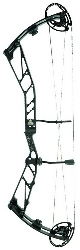
Most target archers know the trade they usually make: a long, forgiving riser that holds rock-steady tends to arrive with a flagship price tag. The Athens Peak 38 is a small Henrietta, New York shop's answer to that trade - a 38-inch axle-to-axle, 7-inch brace target bow that chases forgiveness and repeatability rather than headline speed, and does it without asking flagship-target money. Athens builds it to order and calls it the universal bow for any target format, and the spec sheet backs that up: a draw length that stretches to 32.5 inches, a draw weight that climbs to a full 70 pounds, and a modular cam that lets a shooter fine-tune the setup without swapping draw-specific cams. Over its three model years the platform kept the same geometry but evolved its cam, cable containment, and let-off range, so which year you buy changes how it tunes. What stays constant is the character: a heavy, long, deliberately steady rig for the archer who scores their afternoons on paper or foam, not the one packing into a treestand at dawn.
Finish
Athens treats color as configuration rather than a short menu, and on a target bow - a category where most competitors ship in plain black - that stands out. The riser color and the limb color are ordered separately, so a shooter can pair a bright riser against contrasting or white limbs for a rig that looks like no one else's on the shooting line. The palette runs from vivid solids like Mantis green, Dragonfly blue, Majesty Purple, Musket Brown, Anthracite grey, Pearl White, and Monarch, through patriotic Old Glory, to full camo wraps in Realtree, Kuiu, and Treezyn for archers who cross over to hunting. Athens applies its Kolorfusion process for durability and coating quality, and the finish reads as a satin that resists glare under indoor lights. Because each bow is built to order, the finish is locked in at purchase rather than picked off a rack, which is part of the semi-custom appeal. In practice, two Peak 38 owners rarely end up looking at the same bow.Riser
The Peak 38 is built around a longer forged aluminum riser, and the choice of a forging rather than a machined billet keeps a target-length riser from getting overly heavy while holding tight tolerances. The extra riser length is where a target bow earns its forgiveness - more distance between the grip and the cams settles the sight picture and shrinks the effect of small form errors. At the limb pockets Athens fits its patent-pending Limb-Lok system, which balances the limb loads and locks both the limb and the pocket solidly to the riser to eliminate lateral movement in the transition area that governs how repeatable the bow tunes. On the 2023 version the riser picked up integrated levels for setup and an Integrate-style rest-mounting interface, bringing the Peak in line with how modern target risers manage rests and leveling. The whole assembly is aimed at one thing: a platform that returns to the same place shot after shot.Grip
The grip follows the thin, low-torque profile that target shooting rewards, giving the hand a narrow, repeatable seat rather than a filled palm. On a long forgiving bow the grip's job is consistency - a repeatable hand position keeps the riser from twisting under a target release, whether the shooter runs a thumb button or a hinge. Athens keeps the grip simple and unobtrusive, and shooters who want a different shape or a fatter palm swell can fit an aftermarket grip without any special work. Nothing about the factory hand position fights a clean, static target shot, which is what most spot and 3D archers are after.Limbs
The Peak 38 runs 1-inch-wide split limbs, and the extra width spreads the working forces over more limb surface for stability and balance across a long, high-energy target stroke. The Limb-Lok pocket ties those limbs down hard so there is no lateral wobble as the bow cycles. Draw weight spans 40 to 70 pounds in the usual 10-pound modules, but Athens also offers dedicated 55 and 65-pound peak options, and that 55-pound choice is genuinely useful: it lets a shooter stay under the poundage ceiling of an IBO speed class while still pulling a full-weight limb. Factory Axion limb dampeners handled shot vibration on the 2021 build; the 2022 and 2023 versions switched to low-profile X-Out dampeners made by Mountain View Products. Changing peak weight is the standard bolt turns; changing draw length is a module job rather than a full cam swap. It is a rugged, straightforward limb system built to hold tune through the high arrow counts a target bow lives with.Eccentric System
The cam is where the three model years genuinely differ, so it pays to know which Peak 38 you are looking at. The 2021 debut runs Athens' MT modular cam: draw length changes in half-inch steps come from swapping a module held by three set screws, with no draw-specific cams to buy, and the system carries an 80 to 90 percent adjustable let-off (the percentage of peak weight the holding weight drops to at full draw). Its IBO speed - the industry-standard rating measured at 70 pounds, 30 inches, and a 350-grain arrow - is 335 fps, which is quick for a 7-inch-brace bow this long and forgiving. For 2022 Athens moved the Peak to its RT-X rotating cam, rated "up to 330" and paired with a new TCS Tunable Cable System roller guard in place of the earlier Saunders Hyperglide slide. The 2023 version steps up to the RT-X Cam Rev 2 with infinitely adjustable draw length and broadens the let-off range down to 70 percent. That rotating-cam design is the tuner's favorite: it lets a shooter set draw length and let-off independently, so you can run a short, crisp hold or open the valley into a deep, forgiving one at the same draw length. In my experience that independence is exactly what a target archer wants - the freedom to tune the hold to the release style rather than accept whatever the cam hands you.Draw Cycle/Shootability
Draw the Peak 38 and the first thing that registers is how unhurried it feels. It builds to peak weight without a harsh hump and eases off cleanly at the break, settling into the valley rather than slamming forward against the wall, and that gentle transition is the quality that keeps a high-volume session comfortable. Pulling it, I found the long riser and moderate speed make for a draw you can repeat for 30, 60, or 90 arrows without the fatigue an aggressive short hunting bow builds into your back over an afternoon. At full draw the 4.6-pound mass - heavy by hunting standards - is the point: it hangs the pin steady and damps the small tremors that pull a spot shooter off center. The bow shoots quiet and settled, with the Axion or X-Out dampeners taking the sting out of a target-weight limb. One owner setting a 2023 model up for a bowhunter-class round shot a 299 out of 300 with fifteen X's at around 60 pounds, which tells you the platform will out-shoot most of the archers holding it. Winding down to 55 or 60 pounds keeps the draw pleasant over a long day and, on a 55-pound limb, drops the bow into a lower IBO speed class for the archers who compete by those rules. What I keep coming back to is how little the Peak asks of the shooter - it wants a clean, static shot and rewards it.Usage Scenarios
This is a target and 3D bow first, and it fits the archer who scores their shooting. Picture a shooter setting up for indoor spots: the 38-inch length and heavy front end park the pin on a Vegas face, and the 32.5-inch draw ceiling means even a tall archer gets a full anchor instead of a cramped one. On a 3D range the same forgiveness helps on awkward downhill and uphill shots where form gets sloppy, and the wide finish menu shows up nicely against a foam target. Field archers get the long, stable riser they want for uphill and downhill lanes. The draw-weight span makes the Peak flexible in a way most dedicated target bows are not: a shooter can run 55 or 60 pounds for a comfortable target season and, because the limbs climb to 70, take the same bow to a legal hunting weight if they want one rig that crosses over. Bowhunter-class competitors who are restricted to smaller-diameter arrows and open-class shooters running fat 27s can both set it up to the rules. What it is not is a treestand hunter - the mass and length that make it steady on the line are exactly what you do not want on a long pack-in. For the archer whose season is measured in Xs and rings, though, it covers indoor, 3D, and field from one riser.Versions
The Peak 38 ran for three model years on the same 38-inch, 7-inch-brace geometry, with the changes concentrated in the cam and hardware:- 2021 (debut) - MT modular cam, 335 IBO, 80 to 90 percent let-off, Saunders Hyperglide cable slide, Axion limb dampeners, draw length to 32.5 inches. Launch MSRP $899 to $949 depending on finish (base black, with color and camo options adding cost).- 2022 - switched to the RT-X rotating cam (rated up to 330), added the TCS Tunable Cable System roller guard in place of the Saunders slide, and moved to low-profile X-Out limb dampeners by Mountain View Products; draw length extended to 33.5 inches.- 2023 - RT-X Cam Rev 2 with infinitely adjustable draw length, let-off range broadened down to 70 percent for target shooters who want a firmer hold, plus integrated riser levels and an Integrate-style rest mount.Every year is ordered built-to-order with the riser and limb colors chosen separately. A buyer shopping used should confirm the model year, because the cam and let-off range are the real differences between them.Athens Peak 38 vs Bowtech Specialist, PSE Supra
| Bow | Athens Peak 38 | Bowtech Specialist | PSE Supra |
| Version | 2023 | 2014 | 2018 EXT |
| Picture |  |  |  |
| Brace Height | 7 " | 7.5 " | 7 " |
| AtA Length | 38 " | 37.5 " | 37 " |
| Draw Length | 27.5 " - 33.5 " | 26 " - 30.5 " | 25 " - 30.5 " |
| Draw Weight | 30 lbs - 70 lbs | 50 lbs - 60 lbs | 30 lbs - 60 lbs |
| IBO Speed | 330 fps | 330 fps | 317 fps - 325 fps |
| Weight | 4.6 lbs | 4.1 lbs | 4.7 lbs |
| Let-Off | 70% - 90% | 65%, 75% | 65% & 75% |
| Where to buy Best prices online |
| ||
| compare more bows | |||
In the sub-flagship target class the Peak 38 lines up naturally against the Bowtech Specialist and the PSE Supra, and the three tell a clear story about priorities. The Bowtech Specialist is the forgiveness benchmark of the group: at 37.5 inches axle-to-axle with the tallest 7.5-inch brace height and a competition-minded 65 or 75 percent let-off, it is built for the archer who wants the most stable, wall-defined shot and shoots a lighter 4.1-pound bow to get there. The PSE Supra sits at 37 inches with a 7-inch brace and a lower 30-to-60-pound draw range, a lighter-poundage target option that trades speed away, topping out around 317 to 325 fps. The Peak 38 is the longest and fastest of the three at 38 inches and 335 IBO, and it stretches furthest in two directions that matter - its draw length reaches 32.5 inches where the other two stop at 30.5, and its draw weight climbs to a full 70 pounds, so it fits tall archers and doubles as a hunting-weight crossover in a way the Specialist and Supra do not. It also launched at a lower price than either premium rig. The decision comes down to priorities: the Bowtech Specialist for the shooter who wants maximum brace-height forgiveness and a competition let-off, the PSE Supra for a lighter-draw PSE target build, and the Peak 38 for the archer who wants the longest, most adjustable platform - especially a tall shooter or one who wants a single bow that crosses from the target line to a hunting weight.