
Darton DS-3800 Review
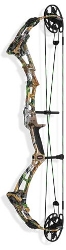

from $550
Pros
- Genuine 345-350 IBO speed that holds up on a chronograph, not just on the spec sheet, even across full hunting setups
- Draws smoother than a 6-inch brace height has any right to - the "muscle bow with manners" name is earned
- Draw length changes by hand with no bow press - swap the module, no trip to the shop
- Quiet shot with very little hand shock, settling dead in the hand with the factory string suppression
- Solid, holdable back wall and a stable full-draw feel that shoots more forgiving than its short brace suggests
Cons
- Short valley typical of a speed bow - the back wall is firm, so staying engaged against it keeps you off any creep
- Darton's thin dealer network makes one hard to try in person - ordering through its online dealers, helped by no-press draw changes, sidesteps most of that
Video
content from YouTube
Editors' review
Here is a quiet secret of the archery industry: some of the cam-sync technology inside bows wearing other brands' logos was patented by Darton, a Michigan company that has been building bows since 1950 and spends almost nothing telling you about it. The DS-3800 is where that engineering shows up under Darton's own name. Launched for 2011 and carried with refinements through 2017, it is a 345-350 fps speed bow built on a 6-inch brace height - the kind of spec sheet that usually promises a punishing draw and a twitchy shot. It does not deliver either. Darton called it "A Muscle Bow with Manners," and after putting arrows through one the name stops reading like marketing. This is a review of a bow that out-performs its price, out-draws its brace height, and out-lasts most buyers' awareness that Darton still exists.
Finish
Finish choices widened considerably over the bow's run. Early 2011 bows came in Realtree APG camo or a tournament-style Shadow Black. By the mid-decade catalogs the palette had grown to Next-G1 Vista - a deep woodland camo with an almost felt-textured Soft Touch coating - plus a Carbon Black with carbon-look limbs that became one of the most-requested looks on the used market, four Soft Touch solids (red, blue, green, white over the carbon limbs), and Muddy Girl for women shooters who wanted the pink-and-black treatment. The Soft Touch finish is the detail worth knowing: it is a warm, grippy, matte coating rather than a glossy dip, and it wears quietly rather than scuffing to bright spots. Camo patterns typically carried a small upcharge over the black riser. Across the years the coating held up well to field use, which matters on a bow this many seasons removed from the showroom.Riser
The riser is CNC-machined 6061-T6 aluminum in a reflex geometry, cut for strength rather than for the weight-shaving lattice you see on modern flagships - part of why the bow carries a planted, muscular 4.1-pound mass. Darton builds it around what it calls 3-Axis Center Pull geometry, lowering the grip and centering the arrow on all three axes relative to the string and cams, which is a tuning-first design choice aimed at predictable arrow flight. Cable control comes from the PTR rod - Progressive Torque Reduction - a curved guard that pulls the cables clear of the fletching while reducing the sideways torque the cam system puts into the riser as you draw. In 2016 Darton reworked the shelf, the limb pockets, and portions of the riser substantially enough that owners who shot both described the later bow as nearly a new platform, though the core numbers never moved. It is not a carbon-light hunting riser; it is a stout aluminum chassis that holds steady at full draw and shrugs off abuse.Grip
Darton's Signature Grip is a two-piece design that splits the difference most companies make you choose: a molded rubber VibraGrip for warmth and a low-torque hold, with interchangeable slim side plates for shooters who prefer a narrower, slicker throat. Swap the plates and you change the hand feel without changing bows. It runs a touch thicker and wider than the skinny grips on target-leaning bows, and shooters coming off an ultra-slim grip need a session to adapt - but the trade is a repeatable hand position that fights torque, which is exactly what a 6-inch-brace speed bow needs to shoot accurately. The rubber option stays comfortable in cold weather where an aluminum or hard-plastic grip turns into a cold bar; the slim plate is the pick for warm-weather shooting when you want less material between hand and riser.Limbs
The DS-3800 uses split E.E.T. limbs - Efficient Energy Transfer - built from a Gordon composite core with laminated skins, seated in PPL pivoting limb pockets that self-align the limb to the cam for consistent timing. The split design and the laminated construction are aimed at storing a lot of energy without the harshness that usually rides along with an aggressive force curve. Draw weights come in 40, 50, 60, and 70-pound peak limbs, enough spread to set the bow up for a lighter-drawing hunter or a full 70-pound rig. The 2016 pocket redesign tightened limb-to-cam alignment further. Across Darton's lineup this limb-and-pocket system has a long, uneventful reliability record - the kind of durability that only shows up as the absence of complaints, which is what you want from a limb you will draw thousands of times.Eccentric System
The DualSync cam is the heart of the bow and the piece of Darton engineering the rest of the industry quietly borrowed. It is a binary-style system running on a four-track cam layout, with the cams slaved to each other so they roll in perfect sync and drive the nock in a straight, level line at every draw length - no single-cam nock-travel compromise, no hybrid-cam timing drift. The practical headline is the speed: Darton rates it at 345-350 fps IBO (the industry-standard chronograph rating at a fixed 30-inch, 70-pound, 350-grain setup), and independent bench testing confirmed a real 345 fps at that setup with 84 percent energy efficiency - this bow actually reaches its number rather than falling 15 fps short like many "350" bows. Real hunting setups scale predictably down from there: 327 fps with a 385-grain arrow at 70 pounds, 317 fps at a 29-inch, 70-pound setup with a 381-grain shaft, and 305 fps with a 369-grain arrow at a 60-pound setting. One shooter put it directly against a Bowtech RPM 360, a bow rated 13 fps faster on paper, and found them throwing arrows at the same speed in the real world. Let-off is 80 percent (a 65 percent option was available), meaning you hold roughly a fifth of peak weight at full draw. The cleverest part is mundane: because the cams are synced, you change draw length - adjustable from 25 to 31 inches in half-inch steps - by swapping modules by hand, with no bow press required.Draw Cycle/Shootability
This is where the "manners" live. The front end is honest about being a speed cam - there is real resistance building up front, aggressive in the way that stores energy - but instead of stacking into a sharp hump it rolls over and folds into the back wall cleanly. Drawing it at 70 pounds, what struck me was how little the 6-inch brace announced itself; this draws smoother than most bows carrying an inch more brace height, and I have pulled plenty that do not. The back wall is firm and the valley is on the shorter side, as a speed bow's should be - you settle against a genuine wall rather than sagging into a deep target-style pocket, and staying leaned into that wall keeps the shot clean. At release it is quiet and composed: hands-on testing put the shot signature in the low-50-dBA range with a stabilizer, and with the factory string suppression the bow settles dead enough in the hand that I found the residual buzz negligible - a hint of it is there bare, but a stabilizer erases it. What surprised me most is the forgiveness. A 6-inch brace is supposed to punish form errors, yet this bow holds rock-steady at full draw and shoots far more tolerant than its numbers predict. It does not feel like a bow built to a short brace; it feels like a bow built to be shot well.Usage Scenarios
The DS-3800 is a whitetail-and-mule-deer hunting bow first, and a club-level 3D bow second - the "serious bowhunter or 3D shooter" buyer Darton named on the catalog page. The speed buys you a flatter trajectory that forgives a yardage misread on a deer that stepped out closer or farther than you ranged, which is the real-world payoff of 345 fps in a treestand. Picture a hunter who wants flagship-class arrow speed but refuses to pay flagship money, sets the bow up once, and hunts it hard for a decade - that is this bow's natural owner, and the aluminum chassis is built for exactly that timeline. The wide 25-to-31-inch draw range makes it a strong fit for taller shooters with a long wingspan who get cramped on shorter-draw hunting bows. It has the speed and the holdable wall for stepping onto a 3D course on club nights, though a dedicated spot-target shooter who lives for a long, deep valley will want a longer target rig. For elk at extended range it will do the work within sensible bowhunting distances, but it is a deer-sized hunting bow by design, not a long-range specialist.Versions
The DS-3800 was sold as a single bare-bow model across its 2011-2017 run - no RTH package or electronics SKU - with the launch price at $829.99 MSRP in 2011, undercutting the era's flagship speed bows by a wide margin. The only naming wrinkle worth knowing for used buyers: in 2014 Darton stamped the model year into the name and sold the identical bow as the DS-3814 (it reverted to DS-3800 for 2015-2017), so a listing for a "DS-3814" is this same bow, not a different model. Choices within the model were limbs (40/50/60/70-pound peak), draw-length modules (25-31 inches), let-off (80 or 65 percent), and the finish options above. The short-draw shooter is served by a separate bow built on this same chassis - the Darton DS-3800 SD - which shifts the draw range down to 23-27 inches for shorter-draw archers.Darton DS-3800 vs Bowtech Assassin, Bear Carnage
| Bow | Darton DS-3800 | Bowtech Assassin | Bear Carnage |
| Version | 2017 | 2013 | 2012 |
| Picture | 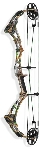 |  |  |
| Brace Height | 6 " | 7 " | 7.25 " |
| AtA Length | 33.8125 " | 30.625 " | 32 " |
| Draw Length | 25 " - 31 " | 26 " - 30 " | 25.5 " - 30.5 " |
| Draw Weight | 30 lbs - 70 lbs | 40 lbs - 70 lbs | 40 lbs - 70 lbs |
| IBO Speed | 345 fps - 350 fps | 333 fps | 345 fps |
| Weight | 4.1 lbs | 3.8 lbs | 4.0 lbs |
| Let-Off | 80% | 65% - 80% | 80% |
| Where to buy Best prices online | |||
| compare more bows | |||
All three are value-priced speed hunters from the early 2010s that a DS-3800 shopper would cross-shop. The Bowtech Assassin is the closest in concept: it shares the DS-3800's no-bow-press draw-length changes, a solid back wall, and little hand shock, but it is a more compact 30.6-inch axle-to-axle bow with a more forgiving 7-inch brace height and a lower 333 fps IBO - it trades the Darton's raw speed and long-draw range for a shorter, more maneuverable package that suits tighter treestands and shorter-draw shooters. The Bear Carnage lands between them on forgiveness, matching the Darton's speed class at 345 fps IBO but on a 7.25-inch brace and a 32-inch axle-to-axle frame, making it the easier bow to shoot well for a less experienced archer willing to give up the DS-3800's speed-to-brace efficiency. The DS-3800 is the fastest-for-its-brace of the three and the only one with a true 31-inch draw ceiling, so the decision comes down to priorities: the Darton for the shooter who wants the most speed and draw range per dollar, the Bowtech Assassin for the short, press-free, compact-hunting setup, and the Bear Carnage for the buyer who prioritizes a forgiving brace over outright speed.