
Darton Ranger II Review
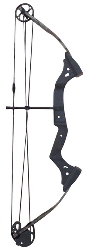

from $110
Pros
- Light and easy to hold at 2.9 pounds, comfortable for a young-to-intermediate shooter at full draw
- Wide grow-with-me range without a bow press - 15 to 45 pounds (15 to 50 from 2010) and a 17-to-28-inch draw across nine modules
- Smooth, forgiving draw into a long valley with high let-off and a solid back wall
- The no-press module adjustability that shops point to as the youth grow-with-me benchmark
Cons
- The factory 3-pin sight is a budget unit - one owner had it break and swapped in an aftermarket 3-pin, an inexpensive fix worth planning for on a used bow
- Tops out at youth weights with no published hunting speed - a shooter ready for serious big game will outgrow it, and the camo Ranger III or a 50-to-70-pound bow suits that step
Video
content from YouTube
Editors' review
Buy a Darton Ranger III and a Darton Ranger II, strip the Realtree camo and the matching quiver off the III, and you are holding the II - Darton said as much in its own catalog, that the Ranger II "includes all of the features of the Ranger III" with "nothing eliminated from the shooting experience." That makes the Ranger II the value sweet spot of Darton's three-model Ranger youth series (2006-2010): the full adjustable platform of the top model, in a black riser with camo limbs, at the middle price. Where the entry-level Ranger I grows by weight alone on a fixed valley, the Ranger II unlocks the nine-module draw-length system - a 17-to-28-inch draw and a 15-to-45-pound range (15-to-50 from 2010), all adjustable with no bow press. At 2.9 pounds on a forgiving 32-inch frame, it is the bow that actually spans the years between a child's first real compound and a teenager's.
Finish
The Ranger II wears the finish that defines its value position: a black riser with camo limbs, the tell that separates it from the full-Realtree Ranger III above it and the all-black Ranger I below it. The two-tone treatment looks the part of a hunting bow without the cost of a full camo dip, which is exactly the compromise the middle model is supposed to strike. The powder finish is durable enough for the hard backyard life a youth bow leads, and the camo limbs give a young shooter the look they want when they are starting to imagine a first season afield.Riser
The riser is the same 32-inch machined-aluminum youth platform that runs the length of the Ranger line, with a 6 7/8-inch brace height. That 32-inch axle-to-axle length is generous for a youth bow - longer than the Bear Apprentice's 27.5 inches - and the extra length pays off as forgiveness, giving a growing shooter a stable frame that settles rather than a short, twitchy one that punishes a loose hold. It is a conventional, forgiveness-first geometry, which is the right priority for a bow meant to teach good form across several years of growth.Grip
The grip is a simple molded youth grip, slim enough for a child's hand and shaped to keep the wrist relaxed. One hands-on owner, shooting a used Ranger II run up to its maximum weight, summed up the ergonomics the way most do - light and comfortable to hold, a bow a young-to-intermediate shooter keeps enjoying rather than fighting. In my experience a slim, low-torque grip like this one is exactly what keeps a learning shooter from fighting their own bow. There is no aftermarket grip ecosystem to chase here, and none is needed.Limbs
The Ranger II carries the light youth limb set shared across the line, keeping mass at 2.9 pounds. Draw weight spans 15 to 45 pounds for most of the run and widens to 15 to 50 pounds in 2010, and the whole range adjusts without a bow press - a parent winds it down for a smaller child and opens it up as the shooter grows, no shop visit required. That 15-pound floor paired with a 45-to-50-pound ceiling is the model's reason for being: it is wide enough that one bow genuinely follows a kid from early target work toward a young hunter's weight.Eccentric System
The Ranger II runs Darton's PFC (Post Feed Cam) single cam, and this is where it earns its place above the Ranger I. Instead of the entry model's single fixed valley, the II carries nine high-let-off draw-length modules that set the draw anywhere from 17 to 28 inches, all swappable without a bow press. Effective let-off runs from 40 percent on the shortest module settings to 75 percent on the longer ones (let-off is the percentage by which the holding weight drops at full draw), so a growing shooter gets a deeper, easier hold as they stretch into the longer draws. Adjustable positive draw stops guard against over-drawing a short arrow - a genuine safety feature on a youth bow. Darton did not publish an IBO speed for the Ranger series; these are youth bows built for fit and forgiveness, not for the chronograph.Draw Cycle/Shootability
Mechanically the Ranger II is identical to the Ranger III, so it shares the draw that the camo model's owners describe: a smooth pull with no harsh peak, rolling into a long, gracious valley with a high let-off and a back wall that is solid rather than mushy. On a bow this light and this low in draw weight, that combination makes for an easy, confidence-building shot - the kind of draw a young shooter can repeat a hundred times in an afternoon without tiring. What I keep coming back to on the Ranger platform is how little it asks of the shooter: the valley is long enough that a growing child who creeps forward between sessions still finds an anchor, and the back wall gives them something definite to pull into. It is a bow that rewards a learning archer instead of punishing them.Usage Scenarios
The Ranger II is the one-bow-for-several-years pick in the family. Picture a nine-year-old starting at 20 pounds and a 19-inch draw on backyard foam, then the same bow - wound up a few pounds and a couple of modules longer each year - carrying them to a 40-pound, 26-inch setup as a young teenager, all without a trip to the press. In the lower two-thirds of its range, where kids actually shoot, it is gentle and forgiving; near the top, a capable young teen can push it toward a light hunting weight. It is a target-and-backyard bow first, with the ceiling to reach a youth hunting setup for a smaller-framed shooter. For a young hunter who specifically wants the camo and the matching quiver for a first season, the Ranger III is the same bow dressed for the woods.Versions
The Ranger II (Darton model #7219) was sold as a single youth configuration - black riser, camo limbs - available bow-only or as a package with a 3-pin fiber-optic sight, an arrow rest, three arrows, and a bow-mounted quiver (a step up from the Ranger I's belt quiver, and short of the Ranger III's matching camo quiver). It ran from 2006 to 2010; the one meaningful change over that span was the 2010 bump from a 45-pound to a 50-pound ceiling. The two higher-numbered details that distinguish it from its siblings are deliberate: the Ranger III is this exact bow in full Realtree Hardwoods HD camo with a matching quiver, and the Ranger I is a simpler, lower-weight model without the draw-length modules. Darton sold the Ranger dealer-direct and did not publish a retail price; the II sat at the middle rung of the youth tier, between the I and the III.Darton Ranger II vs Bowtech Rascal, Bear Apprentice
| Bow | Darton Ranger II | Bowtech Rascal | Bear Apprentice |
| Version | 2010 | 2005 | 2011 |
| Picture |  |  |  |
| Brace Height | 6.875 " | 7.625 " | 6 " |
| AtA Length | 32 " | 24.75 " | 27.5 " |
| Draw Length | 17 " - 28 " | 20 " - 25 " | 15 " - 27 " |
| Draw Weight | 15 lbs - 50 lbs | 10 lbs - 40 lbs | 20 lbs - 50 lbs |
| IBO Speed | fps | 246 fps - 254 fps | 265 fps |
| Weight | 2.9 lbs | 2.188 lbs | 2.9 lbs |
| Let-Off | 40-75% | 65% - 80% | 70% |
| Where to buy Best prices online |
| ||
| compare more bows | |||
The Darton Ranger II sits between a compact value youth bow and a hunting-capable one. The Bowtech Rascal is the closest in spirit - another light, grow-with-me youth single-cam from the mid-2000s - but it is a smaller tool: a 24.75-inch frame, a 10-to-40-pound range and a 20-to-25-inch draw, with an adjustable let-off and a retrofit upgrade-limb path. The Ranger II out-reaches it on both a longer 32-inch frame and a wider ceiling (45, then 50 pounds) with a longer 28-inch draw, so it follows a child further before they outgrow it. The Bear Apprentice pushes the other way: a 20-to-50-pound range and a 265 fps IBO on a 27.5-inch frame, sold Ready-to-Hunt in camo, built to reach a legal 50-pound hunting weight. The Apprentice starts higher (a 20-pound floor versus the Ranger's 15) and ships as a complete hunting package, while the Ranger II starts lighter and rides a longer, more forgiving frame with no-press module adjustment. The decision comes down to priorities: the Rascal for the smallest, most compact grow-with-me bow, the Bear Apprentice for the family that wants a complete Ready-to-Hunt camo setup reaching 50 pounds, and the Ranger II for the shooter who wants the longest, most forgiving frame with the lightest starting weight.