
Diamond Edge XT Review
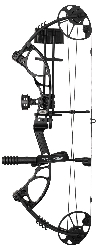

from $150
Pros
- Compact and light - a short 22-inch riser and a 3.7-pound bare weight make it genuinely easy to hold and maneuver, especially for smaller-framed and younger shooters
- Smooth, unaggressive draw that pulls easily and lets down without a fight - one of the easiest cycles in the value class and forgiving for a new archer
- One bow grows with the shooter - 19 to 31 inches of draw and 20 to 70 pounds, all set on the module and limb bolts with an Allen wrench and no press
- Caged aluminum riser and aluminum limb pockets - metal where budget bows cut cost with plastic, so it tunes and holds together like a more expensive bow
- Ultra-wide quad limbs with top-and-bottom dampeners give a stable platform and a shot that settles quickly for the price
Cons
- At 300 fps IBO it is the slowest-rated bow in the value-adjustable class - plenty for whitetail at sensible ranges, but shooters who want flatter arrow flight for longer shots may want a faster rig
- The short riser and small, slim grip suit smaller and younger hands - a large-handed adult may find the hold a touch cramped, so it is worth drawing one first if you have big hands
Video
content from YouTube
Editors' review
Most grow-with-you bows try to be everything to everyone. The Diamond Edge XT goes the other way and builds small on purpose. Its riser measures only about 22 inches, the whole bow tips a scale at 3.7 pounds, and the grip is short enough top-to-bottom that it lands naturally in a younger or smaller-framed hand - this is the Edge that fits the smallest shooter in the family best. It is also the cheapest bow in Diamond's caged-riser Edge line, and it earns that price by trading a little speed and a slightly softer cam for the smoothest, most forgiving draw in the group. Where the Edge Max leans on the faster Synchronized Binary Cam, the Edge XT runs a gentler dual-cam system with rotating modules, tuned for comfort over speed. For the beginner buying a first real compound, the parent outfitting a growing teen, or the value hunter who wants a light, easy-drawing bow that still climbs to a full 70 pounds, the Edge XT is built to be picked up and shot without a fight.
Finish
The Edge XT ships in three current finishes: a solid Black, Mossy Oak Bottomland for the traditional hardwood and early-season whitetail hunter, and a Forest green for shooters who want a cleaner, non-camo look. Earlier runs of the bow offered a wider spread - Mossy Oak Break-Up Country alongside brighter blue and green camo options - so the palette has tightened over the model's life to a cleaner three. That still covers the practical bases: one true hunting pattern and two solid colors that hide the scuffs a first bow inevitably takes. Diamond's dip-coat finish holds up well to the knocks a shared, often-handled bow sees over a season. Both right-hand and left-hand versions are offered, which matters more here than on an adult flagship because a left-handed young shooter should not be forced onto a right-handed grip while learning. The finish is the one purely cosmetic decision in this purchase, and having a genuine camo alongside the solids lets the bow feel like the shooter's own.Riser
The riser is where the Edge XT quietly outbuilds its price. It is a caged machined-aluminum design - milled with an internal cage geometry rather than left as a plain extrusion - which stiffens the frame without piling on weight, and it carries aluminum limb pockets, metal in a place where a lot of budget bows still use plastic. Setting one up, the payoff of all that metal is that it tunes cleanly and stays where you put it: cam timing comes into line with a small tweak and there is no flex fighting you. The defining geometry choice is how short the riser is - about 22 inches - with the limbs doing the work to reach the 31-inch axle-to-axle length. That makes the whole bow compact and light in the hand, easy to maneuver in a ground blind and easy for a smaller shooter to hold up, though the short riser is also why a large-handed adult notices the bow is built on the small side. Standard threaded bushings carry the rest, sight and stabilizer with several mounting holes for flexibility, and there is no exotic rail to complicate a first setup. What the riser delivers is the two things that actually help a developing archer: rigidity and low weight.Grip
The grip is a slim, direct-to-riser profile with rubberized side inserts, and it is cut short top-to-bottom - noticeably sized for smaller and younger hands. For the Edge XT's core audience that is the right call: a narrow grip lets a young shooter wrap the bow without the palm heel forcing a torqued, inconsistent hand position, and low-torque hand placement is one of the first things that separates a kid who groups well from one who sprays arrows. The rubberized inserts are not tacky but give a little warmth and a defined place for the hand to sit, which helps a returning shooter find the same placement each session. The honest trade-off is size: an adult with large hands using the top of the draw range will find the grip small, and that is worth feeling in person before buying. For the smaller-framed and younger shooters this bow is built around, the shape needs no attention out of the box.Limbs
The Edge XT uses an ultra-wide quad-limb design - a split pair top and bottom rather than a single solid limb - and the wide stance does real work: spreading the limb tips farther apart increases lateral stability at full draw, which helps a newer archer who has not yet learned to hold the bow dead still. Top and bottom limb dampeners are built in, and they are a genuine part of why the shot settles as quickly as it does for a bow at this price. The limbs cover the full 20-to-70-pound range on the limb bolts, so a parent can start a growing teen near 20 or 30 pounds and turn the bow up a few pounds a season as they get stronger, all with an Allen wrench and no press. That 50 pounds of adjustment span is the number that defines the bow's working life - it is what lets a single purchase follow a shooter from first arrows to a full, legal hunting weight. The aluminum limb pockets keep the limbs located and consistent, holding up to the repeated adjustment and general handling a shared, learning-archer's bow inevitably takes.Eccentric System
The Edge XT runs a dual-cam system with rotating-module draw adjustment - and, importantly, it is not the Synchronized Binary Cam of the pricier Edge Max. To change draw length you loosen the module screws and rotate the module through the 19-to-31-inch range; there are no separate cams or modules to buy and no press required, which is the whole point for a household that will reset the bow as a shooter grows. Draw weight adjusts the same press-free way on the limb bolts across the 20-to-70-pound span. Let-off (the percentage the holding weight drops to at full draw) is 80 percent, and there is even an optional zero-let-off "Infinity" module setting for multiple users or bowfishing, where the bow holds most of its peak weight through the whole cycle. The cam itself is deliberately unaggressive - a gentle draw rather than a speed-cam's hard hump - and that is the character of the whole bow. IBO speed (the industry-standard rating at 30 inches, 70 pounds and a 350-grain arrow) is 300 fps, the modest end of the class, and real chronograph numbers reflect the comfort-over-speed tuning: at 28 inches and 60 pounds with a 410-grain arrow it runs about 231 fps, and up at 70 pounds with a 500-grain arrow it turns in around 264 - plenty for whitetail inside practical range, where a well-placed arrow does the work. Drawing it back, what strikes me is how little it asks of you: the pull is smooth and easy the whole way, which is exactly what a beginner needs.Draw Cycle/Shootability
The first thing I noticed pulling the Edge XT is how undemanding it is for this class - the cam eases up to peak without a hard hump, and letting it back down is genuinely easy, so a new shooter is never wrestling the bow at the moment they should be settling into anchor. That smoothness is the bow's signature, and it is the direct result of the gentle, unaggressive cam. The back wall is solid enough to anchor against, though it is a soft wall rather than a hard, slamming stop - a shooter who likes to crash into an immovable wall will notice it flexes a little, and it is worth drawing one to see where your preference lands. At the shot there is a little vibration in the hand, but the limb dampeners do their job and it fades quickly; the noise is modest, not the sharp crack of a poorly-set-up bow, and honestly pleasant for the price. This is a light, compact bow, so a touch of hand movement at release comes with the territory of the small riser - a stabilizer steadies it, and in practice the shot is clean and repeatable. For the beginner and the value hunter, the draw and release are forgiving in exactly the ways a learning archer needs, and the comfort of that cycle is the whole reason to choose this bow over a faster one.Usage Scenarios
Picture a teenager buying a first real compound with saved-up money: set the Edge XT to a 22-inch draw and 40 pounds, and they are flinging arrows into a backyard target the same afternoon, the light 3.7-pound bow easy enough to hold that their form does not collapse by the tenth shot. Two seasons on, the same bow rotates out to a longer draw and turns up on the limb bolts, carrying that shooter into a ground blind for a first whitetail season inside 30 yards at a full 60 or 70 pounds. Picture a value hunter who wants meat in the freezer, not a trophy program - the Edge XT is a complete package that goes from box to treestand in an afternoon and does not ask for a pro-shop fitting. It fits backyard practice, 3D club nights, indoor lanes and entry-level hunting, and because the range adjusts without a press, one bow can be shared and passed between siblings of different sizes. Its compact frame makes it a natural for tight ground blinds and smaller shooters, while a large-handed adult chasing maximum speed will feel the bow is built small and slow for them. For a household that wants the faster binary-cam draw and a taller, more forgiving brace on the same Edge platform, the Diamond Edge Max is the step up; the Edge XT is the lighter, cheaper, easier-drawing way in.Diamond Edge XT vs Bear Legit Maxx, PSE Stinger MAX
| Bow | Diamond Edge XT | Bear Legit Maxx | PSE Stinger MAX |
| Version | 2026 | 2026 | 2021 |
| Picture | 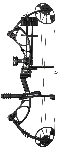 | 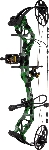 |  |
| Brace Height | 6.75 " | 6.25 " | 7 " |
| AtA Length | 31 " | 30 " | 30 " |
| Draw Length | 19 " - 31 " | 14 " - 30 " | 21.5 " - 30 " |
| Draw Weight | 20 lbs - 70 lbs | 10 lbs - 70 lbs | 45 lbs - 70 lbs |
| IBO Speed | 300 fps | 315 fps | 304 fps - 312 fps |
| Weight | 3.7 lbs | 4.2 lbs | 3.8 lbs |
| Let-Off | 80% | 75% | 80% |
| Where to buy Best prices online | |||
| compare more bows | |||
The value grow-with-you category has a few genuine alternatives, and the choice comes down to how small the shooter is, how much speed you want, and what you are willing to spend. The Bear Legit Maxx is the closest philosophical match: it adjusts across a 14-to-30-inch draw and a 10-to-70-pound weight, reaching down to a smaller, lighter beginner than the Edge XT can at its 20-pound, 19-inch floor, and it carries a faster 315 fps IBO rating; but at about 4.2 pounds of measured mass it is heavier in a small shooter's hands, and it launched at $499, fifty dollars above the Edge XT. The PSE Stinger MAX is the exact price match at $449 with a taller, more forgiving 7-inch brace height and the same 80-percent let-off, and it also climbs to 70 pounds, but its 21.5-inch minimum draw will not fit the smallest shooters the Edge XT reaches at 19 inches. So the decision comes down to priorities: the Diamond Edge XT for the buyer who wants the lightest, most compact bow with the smoothest, easiest draw at the lowest price; the Bear Legit Maxx for the household that needs to reach a smaller, lighter beginner and wants more speed; and the PSE Stinger MAX for the shooter who wants the same low price with a taller, more forgiving brace and does not need the Edge XT's shorter minimum draw.