
Diamond Infinite Edge Pro Review


from $125
Pros
- One set of limbs covers 13-31 inches of draw and 5-65 pounds of weight - genuinely one bow for a young beginner and the adult hunter that beginner becomes
- Smooth draw cycle that rolls over the peak with no lope and settles into an easy valley against a solid back wall
- Quiet, low-shock shot for the price tier - the arrow is in the target before the riser finishes settling
- Forgiving to tune thanks to a double-yoke setup - cam lean comes into line quickly and a bullet-hole tune is easy to reach
- Complete ready-to-hunt package - sight, rest, quiver, stabilizer, peep and sling - at a price below both its main rivals and below its own 2015 launch
Cons
- Changing draw length means pressing the bow to reach the module screw and re-timing the cam afterward - set it to your draw once at a shop and it is a non-issue day to day
- Some owners find the grip a touch bulky in the hand though the shape stays comfortable - an aftermarket grip is an inexpensive swap for anyone who wants a slimmer throat
Video
content from YouTube
Editors' review
Few budget bows have a resume like this one: over a million bows sold across the Edge series, and enough of a following that Diamond brought the model back from the dead. Discontinued after 2021, the Infinite Edge Pro returns for 2026 as a limited "Legacy" edition - the same 31-inch axle-to-axle chassis, the same 13-to-31-inch draw range, the same idea that a single bow can carry a shooter from a backyard first-timer to a fully drawn hunting setup. What changed is small: the Legacy is tuned to a 65-pound peak and a 300 fps IBO rating rather than the original's 70 pounds and 310, and it launched cheaper than it did in 2015. For the parent buying one bow the whole household will share, or the new archer who wants a rig that still fits in three years, this is the bow the reintroduction was aimed at.
Finish
The Legacy edition ships in two finishes: Mossy Oak Bottomland for hunters who want a traditional bottomland-timber pattern, and a solid Smoke Grey for shooters who prefer an understated, non-camo look that reads equally well on a 3D range. Both are applied over the aluminum riser and hold up to the knocks a first bow inevitably takes. The original 2015 run offered a wider spread - BlackOps, Pink Blaze and Mossy Oak Break-Up Country - so the Legacy trades palette breadth for a tighter, cleaner two-option lineup. Because the reintroduction is a limited run, finish availability tracks whatever stock a retailer still has rather than a full seasonal catalog. Both hands are offered, so left-handed shooters are not an afterthought here.Riser
The Infinite Edge Pro is built on a fully machined, one-piece aluminum riser with a series of weight-relieving cutouts that shed mass without giving up rigidity, landing the bare bow at 3.3 pounds for the Legacy. That light mass is deliberate: on an entry rig it leaves the shooter room to add a sight, quiver and stabilizer without ending up with a front-heavy bow. The geometry is compact - a 31-inch axle-to-axle length that stays maneuverable in a treestand or ground blind while keeping enough length between the cams to be forgiving for a new shooter still building form. Long limb bolts and generous accessory mounting holes make the riser easy to set up with standard hardware. It is not a carbon flagship and does not pretend to be; it is a straightforward aluminum platform engineered to a price, and the machining quality is better than the price tag suggests.Grip
The grip is one of the few molded polymer pieces on the bow, blended into the riser shelf so a stray arrow bumping the shelf stays quiet before the shot. In the hand it fills the palm and sits comfortably, though its profile looks bulkier than a slim flagship throat and some shooters will notice that. What I keep coming back to on bows like this is that a wide, low grip actually helps a beginner - it discourages the death-grip that induces torque, and it gives a consistent hand position shot to shot. For anyone who prefers a thinner throat, an aftermarket grip is a ten-dollar swap that drops right on. As delivered, it is a sensible, forgiving shape for the archer this bow is built for.Limbs
Solid limbs, rather than split, sit in anodized aluminum pockets - a cost-effective, durable choice that keeps the limb tips contained and consistent shot to shot. The headline is the range: the Legacy adjusts from a 5-pound backyard setting all the way up to a 65-pound peak, all on this one set of limbs and all with an Allen wrench. Backing the limb bolts out sheds about three to three-and-a-half pounds per full turn, so dialing a specific weight is quick and predictable. The shot is at its quietest and lowest in hand shock down in the lower-weight settings, where these limbs spend most of their working life - a real benefit for the youth and small-frame shooters who will live in that range. Worth understanding up front: peak weight tracks with draw length, so a shooter set at a shorter 26-inch draw tops out near 65 pounds rather than the full number, which is normal for this module design and matters when you are matching the bow to a growing kid.Eccentric System
The heart of the bow is a machined-aluminum dual-cam system - branded the "IE Pro Legacy" cam on the reintroduced edition - with rotating draw-length modules and a solid back wall. The draw-length adjustment is the standout: instead of buying new cams or modules, you rotate the module and the bow moves anywhere from 13 to 31 inches, close to twenty inches of adjustment that no flagship comes near. That range is the whole reason this bow exists. Speed is where the Legacy quietly parts from the original - it carries a 300 fps IBO rating against the 2015 model's 310, in step with its 65-pound-class tuning. Real-world numbers line up honestly with that: on a chronograph the original bow turned in 300 fps at the IBO setup of 30 inches and 70 pounds, and speeds scale down cleanly as you shorten the draw, into the 250s at a youth-length 26-inch setting. An 80-percent let-off (the holding weight drops to about a fifth of peak at full draw) makes the bow easy to hold steady while a young or new shooter settles the pin. The one honest caveat lives here too: moving the module means pressing the bow to reach the adjustment screw and re-timing the cam afterward, so draw-length changes are a set-once job, not a field tweak.Draw Cycle/Shootability
Drawing the Infinite Edge Pro, what strikes me is how little drama there is in the cycle - the cam rolls over the peak without a hump or a dump, and the transition into the valley is smooth enough that a new shooter is not fighting the bow at the moment they should be settling into anchor. The back wall is firm, a genuine wall to pull into rather than a mushy slope, which gives a consistent anchor point that helps repeatability more than any single spec on the sheet. At release the shot is notably quiet for a sub-$350 rig, with hand shock minimal enough that it hardly registers, especially once the bow is set in the lower-poundage part of its range. Tuning is where it earns real goodwill: the double-yoke system lets you pull cam lean into line without a fight, and getting to a clean bullet-hole tune does not take long even for someone doing it themselves. None of this makes the Infinite Edge Pro a flagship in disguise - the shot is not dead-in-the-hand silent the way a $1,200 bow is - but for the audience it targets, the draw and release are forgiving in exactly the ways a learning archer needs.Usage Scenarios
Picture a household where a 12-year-old, a parent, and maybe a spouse all want to shoot: set the kid at 25 pounds and a short draw in the backyard, crank the parent's setting to a 60-pound whitetail rig, and it is the same bow passed hand to hand. That is the Infinite Edge Pro's native habitat. For a first-time hunter it is a complete package that goes from box to treestand in an afternoon - a genuine whitetail and hog setup at practical ranges once it is dialed to 55-65 pounds. On a 3D or backyard target range it is forgiving enough to build form on and cheap enough that a beginner is not afraid to shoot it hard. Its ceiling is real and worth stating plainly: the 65-pound peak and 300 fps class put big-game hunters chasing elk at long range, or speed shooters wanting flatter arrow flight, into a different bracket of bow. But for youth archery, new adult hunters, a shared family bow, or a knock-around backup, it does the job it was designed for and gets out of the way.Versions
The current product is the **2026 Infinite Edge Pro Legacy** - a limited reintroduction of the model, sold as a complete ready-to-hunt package (three-pin sight, brush-style rest, four-arrow quiver, five-inch stabilizer, peep and wrist sling - just add arrows and a release) for roughly $330 at retail, in Mossy Oak Bottomland or Smoke Grey, right or left hand. It is tuned to a 5-65 pound draw-weight range and a 300 fps IBO rating. The **original Infinite Edge Pro** ran from 2015 through 2021 across seven model years with essentially stable specs - a 5-70 pound range and a 310 fps rating - and launched in 2015 at $399. Buyers cross-shopping a used original against a new Legacy should know the difference is narrow: five pounds of top-end weight and ten fps of rated speed, on an otherwise identical 31-inch, 13-to-31-inch chassis. The Legacy's advantage is that it is new, complete, and typically cheaper than the original's launch price.Diamond Infinite Edge Pro vs Bear Cruzer G3, PSE Stinger MAX
| Bow | Diamond Infinite Edge Pro | Bear Cruzer G3 | PSE Stinger MAX |
| Version | 2026 Legacy | 2024 RTH | 2021 |
| Picture |  | 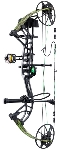 |  |
| Brace Height | 7 " | 6.5 " | 7 " |
| AtA Length | 31 " | 30 " | 30 " |
| Draw Length | 13 " - 31 " | 14 " - 30 " | 21.5 " - 30 " |
| Draw Weight | 5 lbs - 65 lbs | 10 lbs - 70 lbs | 45 lbs - 70 lbs |
| IBO Speed | 300 fps | 315 fps | 304 fps - 312 fps |
| Weight | 3.3 lbs | lbs | 3.8 lbs |
| Let-Off | 80% | 75% | 80% |
| Where to buy Best prices online | |||
| compare more bows | |||
In the sub-$500 grow-with-you bracket, the Infinite Edge Pro's natural rivals are the Bear Cruzer G3 and the PSE Stinger MAX. The Bear Cruzer G3 is the closest match in spirit - a whole-family RTH rig with a 10-70 pound range, a 14-30 inch draw span, a 315 fps IBO rating and a shorter 6.5-inch brace, priced around $420 for the ready-to-hunt package. Where the Infinite Edge Pro pulls ahead is reach at the extremes: its 5-pound floor and 13-inch minimum draw drop lower than the Cruzer for a genuinely small first-time shooter, and its 7-inch brace is a touch more forgiving. The PSE Stinger MAX comes at roughly $449 as a ready-to-shoot package with the same 7-inch brace and an 80-percent let-off, but it starts at 45 pounds and a 21.5-inch draw - it is aimed at an adult stepping into hunting, not a child growing into the sport. So the decision comes down to priorities: the Infinite Edge Pro for the household that needs the widest possible adjustment span at the lowest price, the Bear Cruzer G3 for a buyer who wants the extra top-end speed and Trophy Ridge accessory kit, and the PSE Stinger MAX for the adult-sized shooter who does not need the youth end of the range.