
Hoyt Alpha AX-3 29 Review
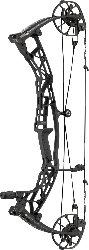

from $999.99
Pros
- Silky-smooth draw that Hoyt is known for, with a rock-solid back wall you can make even firmer by swapping the draw-stop shoes
- Press-free XTS tuning corrects left/right and high/low nock tears without a bow press, and locks in place without drifting shot to shot
- Chronographs right at its 340 IBO claim, landing 330-336 fps at the 70 lb / 30 inch / 350 grain setup
- Dead in the hand post-shot with no felt vibration or feedback, and the Vital Point grip stays repeatable
- The efficient HBX Gen 4 cam holds speed at shorter draws, so short-draw shooters give up far less than the 29.5 inch axle length suggests
Cons
- The short 29.5 inch riser stacks slightly and shortens the valley near the wall, so shooters used to a longer, more forgiving bow may want to draw one in person first
- At 4.4 lbs it is not a light bow, and hunters set on the lowest possible carry weight can step up to Hoyt's carbon Alpha for less mass at a higher price
Video
content from YouTube
Editors' review
Carbon usually wins the speed contest. This aluminum one does not lose it. The Alpha AX-3 29 is Hoyt's compact 2026 hunting flagship, a 29.5-inch axle-to-axle bow built for the treestand and the timber where a shorter riser swings quicker and clears branches cleaner. It is the third generation of the Alpha X aluminum platform, and on the chronograph it holds right at its 340 fps IBO rating (the industry-standard speed test at 30 inch draw, 70 lb, 350 grain arrow) - matching what shooters expect from a bow costing several hundred dollars more in carbon. The headline change for 2026 is not the cam or the riser, though: it is that Hoyt, after years of holding out, finally built a press-free tuning system into the limb pockets. That one addition is what turns a very good bow into a complete package, and it is the reason to look hard at this model whether you are upgrading from an older Hoyt or cross-shopping the compact-flagship field.
Finish
The Alpha AX-3 29 ships in a deep 2026 palette that runs from patriotic and solid-color options to full hunting camo. Solids and near-solids include America 250, Blackout, and two new-for-2026 additions - Georgia Clay, a warm earthy solid that has been heavily requested in the Southeast, and Sandstorm, a lighter tan that reads a little pale under shop lights but pops once it hits outdoor cover. The camo side covers the major systems hunters actually run: Realtree APX, Mossy Oak Bottomland, KUIU Verde 2.0, Sitka Gore Optifade Subalpine, plus Duck Camo, Wilderness, and Tombstone. Signature-series treatments pair blackout limbs with subdued logos for shooters who want the finish to disappear. It is a broad menu even before you factor in that most of these are true hunting-grade patterns rather than showroom colors, so matching the bow to your terrain rarely means compromising on the camo you already trust.Riser
The AX-3 29 is built on a bridged aluminum "Tec" riser - a stiff, machined chassis that Hoyt reworked for 2026 to quiet the aluminum ring that some shooters noticed on the prior AX-2. Hoyt states the update cuts vibration by 16 percent versus the 2025 model; in hand the practical result is a shot that finishes dead with no felt buzz. Because this is the compact 29.5-inch version, the riser sits shorter than the 33-inch sibling, which trades a touch of at-full-draw stability for a bow that maneuvers faster in tight cover. The accessory integration is the real story: a Picatinny front sight mount (the same rail standard used on AR-platform firearms, a mount Hoyt originated on bows) and an IMS dovetail rear rest mount are machined right into the riser, alongside dual stabilizer bushings, low-profile quiver mounts, and go-stick attachment points. In my experience that integrated approach keeps accessory weight tight to the centerline and cuts the number of bolt-on brackets a hunting setup usually accumulates. It is a clean, purpose-built riser that looks the part and shoots without torque.Grip
The Vital Point grip carries over, and it remains one of the quieter reasons Hoyt shooters stay loyal. It is a narrow, low-torque profile that indexes the hand the same way shot after shot, which is what you want when a repeatable release matters more than a plush feel. Drawing the 29 at a shorter draw length, I found the string angle still sat comfortably in the hand rather than pinching, and there was no sense of the riser wanting to twist under load. Owners consistently describe the grip as repeatable and torque-free, and that predictability is worth more on a hunting bow than any amount of padding. Shooters who prefer extra bulk can add an aftermarket wrap, but most will leave it as-is - the stock grip is dialed for the kind of consistent hand placement that keeps groups tight.Limbs
The AX-3 29 runs split limbs seated in the bridged riser, and the platform covers a wide 30-to-80-pound draw-weight span through 10-pound-increment limb options, so the same model fits a lighter-pulling shooter and a full 80-pound hunter. What is genuinely new for 2026 lives in the limb pockets rather than the limbs themselves: all four pockets house the XTS tuning hardware, a wedge-and-worm-gear mechanism that shifts limb tilt at the tip. That is a structural change Hoyt would not ship without validation, and the system was run through the brand's standard 1500-dry-fire durability protocol before reaching production. The limb design itself is the proven Hoyt geometry that has carried the Alpha line for several generations, so there is no first-year-limb risk here - the reliability track record is established, and the new hardware bolts into a known-good foundation.Eccentric System
The heart of the bow is the HBX Gen 4 cam, a four-track design carried over from 2025 and lightly re-profiled for 2026. Hoyt kept the module system unchanged, which shops appreciate because it means no new draw-length inventory: draw length adjusts in quarter-inch steps across five modules (#1 shortest through #5 longest), covering 25 to 30 inches. Let-off is shooter-adjustable across three settings - 75, 80, and 85 percent (let-off is the percentage of peak weight the holding weight drops to at full draw) - and swappable draw-stop shoes let you dial the back wall from hard to extra-hard. On the chronograph the cam earns its 340 fps IBO claim: shooters measured 331 fps at 70 lb / 30 inch / 350 grain and 336 fps in a separate session, landing within single digits of the rating. Drop to a realistic hunting configuration of 65 lb / 29 inch / 450 grain and it produces about 279 fps, still fast for a compact bow. The most impressive trait is efficiency at shorter draws - one head-to-head test found the 29 at 28 inches holding heavy arrows so well it beat a longer 30-inch carbon bow downrange at 50 yards. For short-draw shooters worried the compact axle length costs them speed, the numbers say otherwise.Draw Cycle/Shootability
Drawing the AX-3 29, the first thing you feel is the smooth front-end pull Hoyt cams are known for - it comes back without a harsh hump, then rolls cleanly into the back wall. That wall is the standout: it is genuinely stiff, with essentially no sponge, and swapping the draw-stop shoes takes it from firm to a dead stop that gives you a hard, repeatable anchor. Because this is the shorter 29.5-inch platform, the valley is a touch tighter and stacks slightly right at the wall, and at the 85-percent let-off setting it holds you engaged rather than dumping into a deep valley - a characteristic that rewards staying leaned into the wall. In my experience that firm, defined wall is exactly what a hunter wants for a consistent release under pressure, though a shooter coming off a long, forgiving target bow will notice the shorter valley immediately. The shot itself finishes quiet and dead in the hand, with no post-shot vibration or hand shock to speak of, and owners peg the shot noise around 81 dB. It draws smooth, walls up hard, and shoots quiet - a hunting-ready combination.Usage Scenarios
This is a treestand and timber bow first. A whitetail hunter perched over a field edge at first light gets a 29.5-inch bow that swings up quickly, clears the rail without snagging, and holds a rock-solid wall for the moment the buck steps clear. The 30-to-80-pound range and 25-to-30-inch draw span mean a short-to-mid-draw shooter can run a real 70-pound hunting setup without settling for a youth-capped bow, and the efficient cam means dropping to a comfortable 65-pound draw still throws a 450-grain arrow near 279 fps - plenty for whitetail and hogs at ethical range, and enough energy for larger game with a heavy arrow. It is at home in a ground blind where its short axle length keeps the cams clear of the shooting window, and it doubles capably as a 3D or backyard bow thanks to the wide let-off and draw-length adjustability. Where it asks for a second look is the long-draw target shooter who wants maximum valley forgiveness for spot rounds - that buyer is better served by a longer-axle platform, and Hoyt makes one in the same family.Versions
The Alpha AX-3 29 is sold as a single-model bow-only configuration at a launch MSRP of $1,499. There are no separate package tiers or Ready-to-Hunt bundles under this name - the variation is in finish (13 options) and in draw-weight limb selection across the 30-to-80-pound range, plus the shooter-set let-off. Hunters who need a different geometry rather than a different package should look across the Alpha AX-3 family: the AX-3 33 is the longer 33.3-inch crowd-pleaser, the AX-3 33 LD extends draw length to 33 inches for tall shooters, and the AX-3 SD drops to a 23-to-27-inch range for short-draw and youth-to-adult growth. Those are separate models with their own pages, not versions of the 29.Hoyt Alpha AX-3 29 vs Mathews Phase4 29, PSE Mach 30 DS
| Bow | Hoyt Alpha AX-3 29 | Mathews Phase4 29 | PSE Mach 30 DS |
| Version | 2026 | 2024 | 2026 FDS |
| Picture |  |  |  |
| Brace Height | 6.375 " | 6 " | 5.875 " |
| AtA Length | 29.5 " | 29 " | 30 " |
| Draw Length | 25 " - 30 " | 25.5 " - 30 " | 24.5 " - 30 " |
| Draw Weight | 30 lbs - 80 lbs | 50 lbs - 75 lbs | 40 lbs - 80 lbs |
| IBO Speed | 340 fps | 340 fps | 348 fps |
| Weight | 4.4 lbs | 4.48 lbs | 3.6 lbs |
| Let-Off | 85% | 80% or 85% | 70% - 85% |
| Where to buy Best prices online | |||
| compare more bows | |||
In the compact-flagship class, the Alpha AX-3 29 lands squarely between its two closest cross-shops on price. The Mathews Phase4 29 comes in at a $1,199 launch MSRP - $300 under the Hoyt - and matches it almost spec for spec at 29 inches axle-to-axle and 340 fps IBO, with Mathews' signature emphasis on a silent, dead shot. The PSE Mach 30 DS sits at the top of the trio around $1,799 MSRP and answers with the fastest IBO of the group at 348 fps and the tightest 5.875-inch brace height, a speed-first build for the shooter who prioritizes raw velocity. Against the Phase4 29, the Hoyt's argument is its new press-free XTS tuning and its wider 30-to-80-pound draw-weight range versus the Mathews' 50-to-75-pound span - the AX-3 29 fits a lighter-pulling shooter the Phase4 cannot. Against the Mach 30 DS, the Hoyt gives up a few fps of IBO but costs $300 less and answers with the same integrated accessory ecosystem and that solid, dead-in-hand shot. The decision comes down to priorities: the Phase4 29 for the buyer who wants Mathews silence at the lowest price, the Mach 30 DS for the speed chaser willing to pay a premium, and the AX-3 29 for the hunter who wants press-free tuning, the widest draw-weight fit, and Hoyt's integrated-riser platform in the middle of the price band.