
Hoyt Alpha AX-3 SD Review
Pros
- Reaches down to a 23 inch draw and 30 lb, fitting petite adults and youth-to-adult shooters that most flagship-tier hunting bows cannot
- XTS limb-shift tuning corrects both left-right and high-low nock tears with an Allen key, no bow press
- In-Line riser integrates the sight rail, rest dovetail and stabilizer mounts, keeping accessory weight tight to the bow
- Vital Point grip drops the hand into the same repeatable, low-torque spot shot after shot
- Bridged aluminum riser settles quiet and near dead in the hand on the shot
Cons
- Short-draw geometry and 310 fps IBO give up speed to longer-draw bows, the expected trade for fitting a 23-27 inch draw
- Some owners of the aluminum AX-3 platform have noted faint post-shot buzz with a bare riser, which a stabilizer and the built-in Hoyt dampener quiet
Editors' review
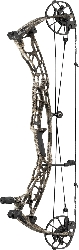
The Hoyt Alpha AX-3 SD answers a question most flagship hunting bows quietly ignore: what does the short-draw shooter get? Usually the answer is a stripped youth bow or an adult flagship that simply will not shorten far enough. The SD is the third answer. It is the short-draw member of Hoyt's 2026 Alpha AX-3 aluminum family, and it carries the same headline technology as its longer-draw siblings, the press-free XTS Tuning System, the In-Line accessory riser, the stiff bridged Tec aluminum chassis, shrunk to fit draw lengths from 23 to 27 inches. That range is the whole story. Where the AX-3 29 starts at 25 inches and the 33 at 26, the SD reaches down to 23 inches and a 30 lb floor, then climbs to a genuine 70 lb hunting weight through the same self-adjustable let-off. It is not a scaled-down bow with scaled-down parts; it is the full Alpha platform re-geared for shorter power strokes. At a $1,499 launch MSRP it asks flagship money, and what it delivers for that is flagship engineering in a fit that the compact competitors in its tier cannot match at the bottom of the draw scale.
Finish
The Alpha AX-3 SD shares the family's thirteen-finish palette, one of the broader factory selections in the flagship hunting tier. Solid options lead with the new Georgia Clay and the new tan Sandstorm, alongside Blackout and the America 250 pattern. The hunting camos cover the major systems archers already run their optics and packs in: Realtree APX, Mossy Oak Bottomland, KUIU Verde 2.0 and Sitka Gore Optifade Subalpine, plus Duck Camo, Wilderness and Tombstone. Partnership finishes round it out with Bone Collector Blackout and Keep Hammering Blackout. Hoyt's Signature series pairs blackout limbs with blackout logos for shooters who want the whole bow to disappear. The coatings are the same durable process applied across the AX-3 line, so the short-draw buyer is not stepping down in finish quality to get the fit. For a bow that a parent and a growing teenager may share, the breadth genuinely matters, because agreeing on the camo is sometimes the last hurdle before the bow comes home.Riser
The SD is built on the same bridged Tec aluminum riser as the rest of the AX-3 family, a stiff, heavily cut-out chassis that Hoyt reworked at the bridge for 2026 to knock down the aluminum ring that shooters noticed on the prior AX-2. The riser is where the In-Line accessory system lives: a Picatinny rail machined directly into the sight side, an IMS dovetail for the arrow rest, dual stabilizer bushings with one carrying Hoyt's vibration dampener, low-profile quiver mounts, go-stick limb-leg mounts and a V-bar attachment. In my experience with this integration on the aluminum platform, it removes the fiddliest part of a setup, because the sight and rest index off machined interfaces instead of loose Berger holes and shims, and it keeps the added hardware tucked close to the riser instead of hanging off it. Hoyt states the 2026 bridge rework cuts vibration 16 percent versus the 2025 model. At a listed 4.25 lb bare, the SD is the lightest bow in the AX-3 family, a byproduct of the shorter riser and short-draw geometry rather than any material change. The stiffness is what a short-draw shooter actually benefits from, since a rigid riser holds tune and holds still through a shorter, quicker shot.Grip
The SD keeps Hoyt's Vital Point grip, the same narrow, low-wrist panel carried across the AX-3 line. The shape drops the hand into a repeatable position and encourages a low-torque hold, so the palm lands in the same spot draw after draw without the shooter fighting the riser. The surface has a slight tack to it that keeps the hand from sliding, which matters more than it sounds on a cold late-season morning when a smooth grip wants to shift under a gloved hand. Because the grip is a bolt-on panel, shooters who prefer a different profile can swap to a compatible aftermarket grip, and small-handed archers, who overlap heavily with the short-draw audience this bow targets, will find the narrow Vital Point profile easier to wrap than the deeper grips on some competing flagships. The low-wrist geometry helps a newer or smaller-framed shooter build a consistent hand position early, which is exactly the shooter the SD is built to grow with.Limbs
The SD uses the AX-3 family's split-limb design in the four-pocket bridged chassis, with each pocket carrying an XTS wedge for press-free tuning. The draw-weight range runs 30 to 70 lb, a ceiling ten pounds below the 80 lb siblings, which is the right ceiling for the short-draw buyer, since a genuine 70 lb hunting weight covers whitetail and similar game cleanly while the 30 lb floor lets a lighter or younger shooter start well under a full hunting pull. Peak weight is set at the limb bolts with an Allen wrench, no press needed, and the peak-weight modules cover the common bands a household would step through as a shooter gets stronger. The limb pockets are the same architecture proven across the AX-3 line and Hoyt's broader aluminum lineup, so durability across the adjustment range is not a question mark. For a bow meant to serve a shooter from a light starting weight up to a full hunting setup, the 30 to 70 lb span is the practical range that span of shooters actually uses.Eccentric System
The heart of the SD is the HBX SD Cam, the short-draw member of Hoyt's HBX cam family, tuned specifically to the 23 to 27 inch geometry rather than shortened from the longer-draw Gen 4 cam. It adjusts draw length in half-inch increments, a coarser step than the quarter-inch modules on the 29, 33 and LD, but half-inch resolution is plenty across a four-inch short-draw window and it is the increment that lets a growing shooter re-mod the exact same bow as their draw lengthens, without buying up to a new one. Let-off is self-adjustable across 75, 80 and 85 percent, and swappable draw stops let the shooter dial the back wall from hard to extra-hard. Hoyt rates the SD at 310 fps IBO (the industry-standard chronograph rating at a fixed setup), lower than the 340 fps of the standard-draw siblings, and that gap is simply physics, since a shorter power stroke stores less energy, so 310 fps is the expected and honest number for a 23 to 27 inch bow rather than a weakness in the cam. Hoyt does not publish a measured chronograph speed for the SD specifically, and no independent chronograph data for this variant exists yet, so the review anchors to the published IBO and leaves it there rather than borrowing a longer-draw sibling's faster number. Across the HBX platform the cam builds a touch early in the draw and then runs consistent into a defined valley, and the SD carries that same character in a shorter cycle.Draw Cycle/Shootability
The SD draws in the HBX family's manner, a small build early that settles into a smooth, consistent pull and drops into a defined valley against a solid, non-spongy back wall. In my experience with this cam family, the back wall is the standout, a firm wall rather than a slope, which gives a short-draw shooter a definite stop to anchor against instead of a mushy edge that invites creep. The self-adjustable let-off is the lever that shapes the hold: at 85 percent the valley is forgiving enough to relax into on a long treestand sit, and stepping down to 80 or 75 percent tightens the valley and stacks a little more holding weight for a shooter who wants to stay actively engaged through the shot. The swappable draw stops let the same shooter tune the back wall harder or softer to taste. On the shot the bridged aluminum riser settles quiet and close to dead in the hand, with only a faint post-shot buzz on a bare riser that a stabilizer and the built-in dampener take out. For a shorter power stroke the SD gives up some of the stored-energy punch of its longer siblings, but the trade buys a shooting experience that fits a draw length the faster bows simply cannot reach.Usage Scenarios
The SD fits a set of shooters that the flagship tier usually underserves. A petite adult who has always been forced into youth bows or undersized flagships gets a genuine 70 lb hunting setup at a 23 to 26 inch draw, with the same tuning and accessory system a taller hunter runs. A teenager who is serious about hunting can start at 30 lb and a short draw, then keep the exact same bow through the growth years by re-modding the half-inch cam and stepping up the limb weight, no bow press and no buying up to a new bow at eighteen. In the whitetail woods the compact 29.5 inch axle-to-axle is easy to handle from a treestand or a ground blind, and a full hunting draw weight carries clean energy for deer-sized game at typical bow ranges. Short-draw target and 3D shooters who want flagship tunability in a bow that actually fits their draw are covered as well. What the SD is not is a long-range speed bow, since the short power stroke and 310 fps IBO trade top-end velocity for fit, so a shooter who needs maximum flat trajectory at extended distance is looking at the wrong member of the family and should step up to the standard-draw AX-3 29 or 33.Versions
The Alpha AX-3 SD is sold as a single bare-bow model at a $1,499 launch MSRP, the same launch price as the compact AX-3 29 and below the $1,599 of the longer 33 and 33 LD. Configuration happens within the one SKU rather than across separate packages: the buyer selects the finish from the thirteen-option palette, the peak-weight band at the limb bolts, and the draw length through the half-inch HBX SD Cam. Let-off is set by the shooter across 75, 80 and 85 percent and the draw stops are swappable, so there is no separate let-off or back-wall SKU to choose. Right and left-hand options are offered. The bow ships as a bare bow, so the sight, rest, quiver and stabilizer are separate purchases that mount to the In-Line interfaces built into the riser.Hoyt Alpha AX-3 SD vs Mathews Phase4 29, PSE Mach 30 DS
| Bow | Hoyt Alpha AX-3 SD | Mathews Phase4 29 | PSE Mach 30 DS |
| Version | 2026 | 2024 | 2026 FDS |
| Picture |  | 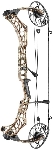 | 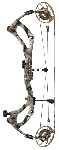 |
| Brace Height | 6 " | 6 " | 5.875 " |
| AtA Length | 29.5 " | 29 " | 30 " |
| Draw Length | 23 " - 27 " | 25.5 " - 30 " | 24.5 " - 30 " |
| Draw Weight | 30 lbs - 70 lbs | 50 lbs - 75 lbs | 40 lbs - 80 lbs |
| IBO Speed | 310 fps | 340 fps | 348 fps |
| Weight | 4.25 lbs | 4.48 lbs | 3.6 lbs |
| Let-Off | 85% | 80% or 85% | 70% - 85% |
| Where to buy Best prices online |
| ||
| compare more bows | |||
The short-and-compact hunting bows the SD cross-shops against are strong, and the choice turns on how short a draw the buyer actually needs. The Mathews Phase4 29 is the value pick of the three at a $1,199 launch MSRP, with a 29 inch axle-to-axle, a matching 6 inch brace and a faster 340 fps IBO, but its draw length starts at 25.5 inches, so it does not reach the shorter-draw and younger shooters the SD is built for. The PSE Mach 30 DS is the speed and premium play at a $1,799 MSRP, a longer 30 inch axle-to-axle with a low 5.875 inch brace and a 348 fps IBO that outruns both, and it drops to a 24.5 inch draw, closer to the SD's range but still an inch and a half short of the SD's 23 inch floor. The Alpha AX-3 SD sits between them on price and is the slowest of the three at 310 fps IBO, but it is the only one that reaches a true 23 inch draw and pairs it with Hoyt's press-free XTS tuning and In-Line integration, the practical draw for a petite adult or a youth-to-adult shooter that neither competitor covers. The decision comes down to priorities: the Mathews Phase4 29 for the buyer who fits its draw and wants the lowest price, the PSE Mach 30 DS for the shooter chasing top speed and a premium build, and the Alpha AX-3 SD for the short-draw archer who needs a genuine 23 to 27 inch fit with flagship tuning and does not want to compromise on either.