
Hoyt Carbon RX-10 SD Review
Pros
- Built for the short-draw shooter without a youth-bow cap - 23-27 inch draw and a full 70-pound top end let a compact archer run a genuine hunting setup
- XTS Xact Tuning System lets owners chase out left/right and high/low tears at home without a bow press, a first for a Hoyt carbon bow
- Same Gen 2 carbon riser that made the RX-9 quiet and dead in the hand carries straight over - shooters describe a very quiet shot with almost no residual vibration
- Flat, hold-forever draw cycle that settles onto a firm cable-stop wall - the compact geometry does not turn harsh
- Draw weight floor drops to 30 pounds, so a smaller-framed or transitioning shooter can start light on the same bow they will hunt with
Cons
- Draw length tops out at 27 inches, so anyone drawing 27.5 inches or longer is outside the fit - those shooters belong on the standard RX-10 or the long-draw LD instead
- Flagship carbon pricing that some short-draw shooters may not expect to pay - buyers who want the short-draw fit without the carbon premium can look at an aluminum compact flagship first
- Hoyt does not publish a mass weight for the SD - worth putting it on a scale in the shop if a specific carry weight matters for your setup
Video
content from YouTube
Editors' review
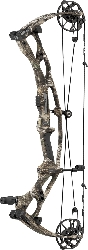
Hoyt built the Carbon RX-10 SD for the archer the flagship market usually forgets: the shorter-draw hunter who still wants a real 70-pound carbon rig, not a scaled-down youth bow. It is the short-draw member of the 2026 Carbon RX-10 family - the same carbon platform, the same new tuning system, the same cam, shrunk into a 23-27 inch draw window with a 30-pound floor. Where the standard RX-10 starts at 25 inches and 40 pounds, the SD reaches down to a 23 inch draw and a 30 pound peak, which is the whole reason it exists. The headline story for the 2026 family is the new XTS Xact Tuning System, and the SD gets it in full. Priced at $2,149, it lands exactly where the standard RX-10 sits - this is not a discount bow or a premium bow, it is the same flagship built to a different set of body dimensions. If your draw falls inside that 23-27 inch band, the SD is the RX-10 that actually fits your frame.
Finish
The SD shares the full 2026 Hoyt carbon palette - thirteen options at a single price, with no camo upcharge across the range. Solid choices include the new Sandstorm, a lighter tan that reads cleaner in daylight than the old buckskin tone it replaces, plus Blackout, Tombstone gray, and the red-rock Georgia Clay. Camo shooters get Wilderness, Mossy Oak Bottomland, Realtree APX, KUIU Verde 2.0, and Sitka Gore Optifade Subalpine, along with America 250 and Duck Camo. Signature blackouts round it out in the Bone Collector and Keep Hammering treatments. Owners consistently gravitate to Bottomland and the Tombstone gray as the standout looks in the lineup. The carbon tube itself takes finish well and the coatings have held up across the REDWRX generations. For a short-draw shooter who did not want to be stuck with a stripped-down color selection, getting the entire flagship palette matters.Riser
The SD uses the same Gen 2 hollow-carbon REDWRX riser that Hoyt carried over from the RX-9 - a decision the company made specifically because that riser handled vibration and sound so well that there was no reason to redraw it. Carbon-tube construction is warmer to the touch than aluminum in cold weather and damps shot energy differently than a milled bar. The In-Line Accessory System is built in: a Picatinny rail up front for the sight (the same rail standard used on AR-platform optics), an Integrate dovetail at the rear for the rest, dual stabilizer mounts, and in-line quiver attachment. In my experience that in-line setup is where a carbon Hoyt earns its keep - the sight and rest lock to fixed hard points, so a short-draw shooter dialing in a fresh rig spends less time chasing zero. The riser geometry is a slightly shrunk-down version of the standard RX-10 rather than a different chassis, which keeps the balance and hand feel consistent with the rest of the family.Grip
The SD carries Hoyt's standard carbon-series grip, a narrow, low-torque profile that sits the same in the hand whether the shooter is drawing 23 inches or 27. The narrow throat suits smaller hands, which fits the short-draw buyer this bow targets, but there is nothing gender-specific about it - it is the same grip philosophy Hoyt uses across the carbon line. Drawing this bow at a shorter length, I found the grip stays neutral and does not encourage a torqued hand position, which is exactly what you want when a compact draw already shortens your margin for error at anchor. The two-piece grip is removable and swaps for aftermarket options if a shooter prefers a fatter or thinner palm shelf. It is a quiet, functional grip rather than a talking point, and that is the right call.Limbs
The SD runs Hoyt's split-limb configuration in the carbon platform, with the XTS-equipped limb pockets that define the 2026 family. Draw weight spans 30 to 70 pounds - the 30-pound floor is the key number, dropping ten pounds below the standard RX-10's 40-pound entry and opening the SD to smaller and transitioning shooters who still want the option to build up to a full hunting weight. Hoyt offers the family in five-pound-increment limb sets, so a shooter can land on a peak weight without leaving a lot of adjustment on the table. The limb pockets are where the XTS system lives: a driver screw pushes a wedge block against the limb to change its stiffness, letting the shooter correct tune without a press. That is a meaningful reliability and convenience gain for anyone who does not live near a pro shop. Split-limb carbon Hoyts have a long, stable service history across the RX generations, and the SD inherits it.Eccentric System
The SD uses Hoyt's HBX Gen 4 cam - the same four-track cam family Hoyt runs across the 2026 carbon line, tuned to the SD's shorter draw window. IBO speed is rated at 310 fps, the lowest of the RX-10 family, which is the honest trade a short-draw geometry makes: a shorter power stroke stores less energy than the standard bow's 342 fps rating, so the SD is not chasing the family's top speed and does not need to. Real-world speed lands proportionally below that 310 IBO once a shorter hunting draw, a heavier hunting arrow, and a comfortable let-off are factored in - for the short-draw hunter, ethical range and arrow flight matter more than a chronograph headline, and 310 IBO is plenty for whitetail-range work. Let-off is adjustable across 75, 80, and 85 percent, so a shooter can trade a longer holding window for a firmer back wall or the reverse. Draw length adjusts in half-inch increments across the 23-27 inch range, and the cam settles onto a firm cable-stop wall. Owners across the RX-10 family describe the draw as flat rather than aggressive, without a deep valley - it builds to peak and holds steady rather than dumping hard over the hump. That flatter character is a good match for a shorter draw, where a violent cam would be harder to manage.Draw Cycle/Shootability
Because the SD is a shrunk-down version of the same platform, it draws and shoots like the rest of the RX-10 family, and the shared read across owners is consistent: a flat draw cycle that builds smoothly, no deep valley to fall into, and a defined back wall you can hold on forever. Drawing a compact RX-10, I found the front end can feel a touch firm at the very start before the cam rolls onto the cable stops, at which point the wall goes solid and the hold settles. Post-shot, the bow is genuinely dead in the hand - the Gen 2 carbon riser earns its reputation here, with owners reporting almost no residual vibration and a very quiet shot signature for a hunting bow. There is a small amount of post-shot jump some shooters notice, typical of a light carbon rig, but nothing that translates to hand shock. For a short-draw shooter, the flat cycle is the important part: a compact draw leaves less room to muscle through an aggressive hump, and the SD's cam does not ask you to. The XTS system indirectly helps shootability too - a bow tuned cleanly to centerline shoots quieter and more forgiving arrows, and XTS lets the owner keep it there without a press.Usage Scenarios
The SD's home is the treestand and the ground blind for the shorter-draw whitetail and mule-deer hunter. Picture a 5-foot-6 hunter with a 25 inch draw who has spent years compromising on flagship bows built around a 28 inch shooter - the SD is the first carbon flagship that fits without cranking the mods to their limit. It suits a smaller-framed adult who wants a real 60- or 70-pound hunting setup, and equally the archer transitioning up who can start at 30 pounds in the backyard and grow into hunting weight on the same bow. Inside 40 yards on whitetail, the 310 IBO rating and short-draw geometry are more than adequate, and the quiet, dead-in-hand shot is an asset from a treestand where sound carries. It works for 3D and backyard practice too, where the flat draw and long holding valley reward a deliberate shot process. What it is not is a long-draw or long-range Western rig - a hunter drawing 28 inches or reaching for maximum forgiveness at distance should step to the standard RX-10 or the long-draw LD. Within its 23-27 inch window, though, it does everything a full-size flagship does.Versions
The Carbon RX-10 SD sells as a single bare-bow model at $2,149 launch MSRP - notably the same price as the standard Carbon RX-10, not a cheaper short-draw model and not a premium one. The choice between the SD and its siblings is geometry, not features or price: the SD covers 23-27 inches of draw with a 30-pound floor, the standard RX-10 covers 25-30 inches at 40-80 pounds, the Ultra stretches the axle-to-axle for a steadier hold, and the Ultra LD handles long-draw shooters up to 33 inches. All four share the same HBX Gen 4 cam, the same XTS tuning system, the same Gen 2 carbon riser, and the same thirteen finish palette at one price with no camo upcharge. Draw-weight limb sets are offered in five-pound increments across the family, including a 65-pound option new for 2026, so a buyer can order close to their target peak.Hoyt Carbon RX-10 SD vs Mathews Phase4 29, PSE Mach 30 DS
| Bow | Hoyt Carbon RX-10 SD | Mathews Phase4 29 | PSE Mach 30 DS |
| Version | 2026 | 2024 | 2026 FDS |
| Picture | 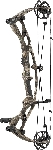 |  | 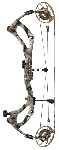 |
| Brace Height | 5.625 " | 6 " | 5.875 " |
| AtA Length | 30.3125 " | 29 " | 30 " |
| Draw Length | 23 " - 27 " | 25.5 " - 30 " | 24.5 " - 30 " |
| Draw Weight | 30 lbs - 70 lbs | 50 lbs - 75 lbs | 40 lbs - 80 lbs |
| IBO Speed | 310 fps | 340 fps | 348 fps |
| Weight | lbs | 4.48 lbs | 3.6 lbs |
| Let-Off | 85% | 80% or 85% | 70% - 85% |
| Where to buy Best prices online |
| ||
| compare more bows | |||
The Carbon RX-10 SD competes against a small set of compact hunting flagships, though it is the only one built specifically around a short draw. The Mathews Phase4 29 is a 29 inch axle-to-axle aluminum flagship rated at 340 fps IBO, with a 25.5-30 inch draw range and a $1,199 launch MSRP - it is the quietest, deadest-in-hand Mathews of its generation, but its draw range starts at 25.5 inches and does not reach down to the SD's 23 inch floor, so it does not fit the shortest-draw shooters at all. The PSE Mach 30 DS is a carbon-riser compact flagship at 30 inch axle-to-axle, 348 fps IBO, a 24.5-30 inch draw range and a $1,799 launch price, one of the lightest carbon bows on the market; it is faster and reaches slightly shorter than the Phase4, but it too bottoms out at 24.5 inches and, like the Mathews, was not designed as a short-draw specialist. The SD gives up top-end speed to both - 310 IBO against 340 and 348 - but that is the deliberate cost of its 23 inch reach and 30-pound floor, neither of which its rivals match. The decision comes down to priorities: the Mathews Phase4 29 for a shooter who wants Mathews silence and the lowest price and draws at least 25.5 inches, the PSE Mach 30 DS for the lightest fast carbon rig in a compact frame, and the Hoyt Carbon RX-10 SD for the shorter-draw hunter whose 23-27 inch draw simply does not fit the other two.