
Hoyt Carbon RX-10 Ultra LD Review
Pros
- Reaches a genuine 33-inch draw in a compact carbon hunting rig, so a long-draw shooter no longer has to run an oversized target bow to fit
- The long power stroke turns into speed: 355 fps IBO, the fastest of the four Carbon RX-10 models
- Same gen-two carbon riser owners praise for a dead, quiet shot with almost no felt vibration
- New XTS tuning system corrects paper tears without a bow press, often in two or three limb-pocket adjustments
- Tall brace and 33-inch axle-to-axle give a steady, forgiving hold at full draw for the longer-draw archer
Cons
- XTS wedge indicator lines can be hard to read in low light, so some owners set up under good light or a headlamp when dialing tears
- Long-draw geometry runs only on the number 4 and 5 mods, so it fits 31 1/4 to 33 inch draws and no shorter; anyone under that should look at the standard RX-10 or the Ultra
Video
content from YouTube
Editors' review
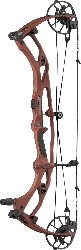
The fastest bow in the Carbon RX-10 family is not the flashiest one, and that surprises people. It is the Ultra LD, the long-draw model, and its 355 fps IBO comes from the draw length itself rather than a hotter cam. Hoyt built the LD for a specific archer who has always been caught in the middle: too tall for a compact hunting bow that tops out at 30 or 31 inches, but not interested in hauling a full target rig into a treestand. The LD answers that by taking the 33 1/4-inch Ultra chassis and pairing it with a larger long-draw cam, TXL limbs, and a new roller guard so it reaches out to a true 33 inches. It is new for 2026, replacing the RX-9 as Hoyt's carbon hunting flagship, and it carries the family's headline feature, the press-free XTS tuning system. This is the carbon flagship for the long-draw hunter who wants hunting portability at target-rig draw length.
Finish
The Ultra LD shares the full 2026 Carbon RX-10 finish palette, more than a dozen options covering solids, camos, and tribute wraps. Solids include the new Sandstorm, a light grayish-tan that reads clean and subtle, along with Tombstone gray, Blackout, and Wilderness. Camo choices span Realtree APX, Mossy Oak Bottomland, KUIU Verde 2.0, and Sitka Gore Optifade Subalpine, and the tribute options add America 250, Bone Collector Blackout, and Keep Hammering Blackout, with Topo variants noted on the LD. Georgia Clay rounds out the earth-tone solids for shooters who want a warmer red-rock look. Hoyt does not charge a finish upcharge, so every wrap sits at the same price and the choice is purely visual. The carbon riser itself takes coatings well and holds up to the scuffs of treestand and pack use. Matching Pro-line accessories are offered in the newer Sandstorm and Georgia Clay tones so a full rig can be color-matched.Riser
The Ultra LD is built on Hoyt's REDWRX carbon riser, the hollow carbon-tube platform carried forward from the RX-9 because it did its job so well on vibration and sound. Owners of the carbon line consistently describe the shot as dead in the hand, and that quiet character is the main reason a hunter pays the carbon premium over an aluminum bow of the same geometry. Carbon also runs warmer to the touch than aluminum on a cold morning, a small but real comfort on a November sit. The riser carries Hoyt's In-Line Accessory System: a Picatinny rail up front for the sight, an Integrate dovetail at the rear for the rest, dual stabilizer mounts, and in-line quiver mounting. In my experience that dovetail-and-rail setup shaves real time off a rest install because the rest indexes to centershot instead of being eyeballed. The LD stretches this chassis to a 33 1/4-inch axle-to-axle length, which puts more mass out toward the ends and steadies the sight picture at full draw. It is the same riser that makes the standard, Ultra, and SD models, so the choice between them is geometry, not build quality.Grip
The grip is Hoyt's standard carbon-bow two-piece side-plate design, a fairly slim, low-torque profile that indexes the hand the same way every draw. Shooters coming from an earlier Hoyt carbon will find it immediately familiar; there is no relearning the hand position. The narrow shape keeps the palm centered on the riser, which matters more on a long-draw bow where any hand torque is magnified across the longer draw. Owners note it stays comfortable through a long practice session without hot spots. Aftermarket side plates and grip wraps from the Hoyt ecosystem drop straight on for anyone who wants a fatter or tackier hand feel. For most long-draw hunters the factory grip is the right starting point and rarely needs changing.Limbs
The Ultra LD uses Hoyt's TXL limbs, the specific pairing the long-draw cam needs to reach 33 inches, set in the carbon-line limb pockets. Draw weight spans 40 to 80 pounds across limb options, so a long-draw shooter can build anything from a lighter 3D-and-practice setup to a full 80-pound hunting rig. The wide range matters here because a taller shooter often wants the top end, and the LD gives real 80-pound peak weight rather than capping short. Limb changes are done at the pocket in the normal Hoyt fashion, and the new roller guard that comes with the LD package smooths cable travel across that long power stroke. The split-limb carbon platform has a long reliability record across Hoyt's lineup, so there is no unproven hardware here, just a longer-draw tune of a known design.Eccentric System
The heart of the LD is the HBX Gen 4 LD cam, a larger long-draw version of the family cam. That extra size is what lets it store energy over a longer stroke, and it is the reason the LD is rated at 355 fps IBO, confirmed in Hoyt's own 2026 whitepaper as 355 fps measured at 33 inches of draw. The speed is a product of the draw length: a longer power stroke moves the same arrow faster, which is why the long-draw model, not the standard 342 fps RX-10, is the fastest of the four. The LD cam runs only on the number 4 and number 5 modules, giving it a 31 1/4 to 33-inch draw window in quarter-inch increments and no shorter, so the geometry is committed to the long-draw shooter. Let-off is selectable at 75, 80, or 85 percent, and the back wall can be set hard or extra-hard depending on how firm a stop the shooter wants. There is no published LD-specific chronograph reading yet, but the shared carbon platform gives a useful anchor: the standard RX-10 clocked a 281 fps average on a hunting setup at 28.5 inches, 70 pounds, and a 450-grain arrow, landing close to its IBO given the short test draw. Stretch that same chassis to a 32 or 33-inch draw and real-world speed climbs well past the standard model's numbers, exactly as the longer stroke predicts. Draw-length changes are module swaps rather than a full cam change, keeping tuning within the two long-draw mods.Draw Cycle/Shootability
The carbon RX-10 draw is best described as flat and controlled rather than aggressive. Off the standard model, shooters describe a slight stiffness building off the front, then a steady pull straight to the back with no deep valley to fall into, settling onto a firm cable-stop wall you can hold on target for a long time. On the LD that character stretches across a longer stroke, which actually smooths the cycle out, because the same energy is spread over more inches of draw. The 33 1/4-inch axle-to-axle length and the 7 5/8-inch brace give the LD the steadiest hold in the family, and a taller brace is more forgiving of small form errors at release, a real benefit for the long-draw shooter who tends to be reaching for maximum performance. The shot itself is the carbon line's calling card: quiet, dead in the hand, with almost no residual vibration and only a touch of post-shot jump. In practice the bow settles so fast you register the hit before it finishes moving. The firm back wall lets a long-draw archer anchor hard and stack shots, which is where the extra axle-to-axle length pays off. This is a bow that rewards a deliberate, held shot rather than a snap release.Usage Scenarios
The Ultra LD is a purpose-built tool for the 6-foot-2-and-up hunter whose draw runs 31 1/4 to 33 inches. Picture the tall bowhunter who has spent years splitting the difference: capping a hunting bow at 30 inches and losing performance, or shooting an unwieldy target rig from a treestand. The LD ends that compromise, giving a compact-handling carbon hunter that actually fits the long draw and turns it into 355 fps of speed. It is at home on a whitetail treestand where the quiet, dead shot matters, and it has the reach and speed for Western spot-and-stalk on mule deer or elk where a longer poke is on the table. Target and 3D shooters with a long draw will appreciate the steady hold and firm wall for stacking arrows at distance, using it as a do-everything bow across seasons. At 40 to 80 pounds it covers everything from a lighter practice weight to a full big-game setup. The one thing it will not do is fit a shorter draw: anyone under 31 1/4 inches belongs on the standard RX-10, the Ultra, or the short-draw SD instead.Versions
Hoyt sells the Carbon RX-10 Ultra LD as a single bare-bow model at a $2,199 launch MSRP, a modest 50 dollars over the standard RX-10 and SD and matching the RX-10 Ultra it is based on. That small step buys the long-draw geometry, not extra features, since every model in the family shares the same cam platform, XTS tuning, riser, and finish palette. It is one of four siblings in the 2026 line: the standard RX-10 at 30 1/2 inches for most hunters, the 33 1/2-inch RX-10 Ultra for a steadier hold at normal draws, this Ultra LD for the 31 1/4 to 33-inch long-draw shooter, and the RX-10 SD for short draws down to 23 inches. Draw-weight limb options run 40 to 80 pounds, and left-hand and right-hand builds are offered. Choosing among the four comes down to draw length and desired hold, not to which one is the better bow.Hoyt Carbon RX-10 Ultra LD vs PSE Mach 34, Mathews Phase4 33
| Bow | Hoyt Carbon RX-10 Ultra LD | PSE Mach 34 | Mathews Phase4 33 |
| Version | 2026 | 2024 EC2 | 2024 |
| Picture |  |  | 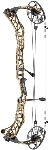 |
| Brace Height | 7.625 " | 7.25 " | 6.5 " |
| AtA Length | 33.25 " | 34 " | 33 " |
| Draw Length | 31.25 " - 33 " | 26.5 " - 32 " | 27 " - 31.5 " |
| Draw Weight | 40 lbs - 80 lbs | 40 lbs - 80 lbs | 50 lbs - 75 lbs |
| IBO Speed | 355 fps | 330 fps | 336 fps |
| Weight | 4.6 lbs | 3.65 lbs | 4.68 lbs |
| Let-Off | 85% | 80% - 90% | 80% or 85% |
| Where to buy Best prices online |
|
| |
| compare more bows | |||
Among long-axle carbon and flagship hunting bows, the Ultra LD's edge is that it is the only one built specifically to reach a true 33-inch draw while posting the fastest IBO of the group. The PSE Mach 34 is the closest on geometry, a 34-inch axle-to-axle carbon flagship with a 7.25-inch brace and a 330 fps IBO, and it draws up to 32 inches; it sells for roughly 1,300 to 1,400 dollars in its 2024 form, well under the Hoyt, and appeals to the buyer who wants a long, stable carbon bow at a lower price and does not need the last inch of draw or the extra speed. The Mathews Phase4 33 comes in at a 33-inch axle-to-axle with a forgiving 6.5-inch brace and a 336 fps IBO, drawing to 31.5 inches, at a $1,299 launch price; it is the quietest and most damped of the three and the pick for a hunter who prioritizes a dead, silent shot over draw-length reach. Neither the PSE Mach 34 nor the Mathews Phase4 33 covers a genuine 33-inch draw, which is exactly the gap the Ultra LD fills, and neither matches its 355 fps. The tradeoff is price: the LD's $2,199 launch MSRP is roughly 900 dollars over both. The decision comes down to priorities: the Hoyt Carbon RX-10 Ultra LD for the true long-draw shooter who wants maximum speed and carbon quiet in a hunting rig, the PSE Mach 34 for the value-minded long-ATA buyer, and the Mathews Phase4 33 for the shooter who puts silence and forgiveness first.