
Hoyt Carbon RX-10 Review
Pros
- Silky, hump-free draw cycle that rolls to full draw without a hard peak or a dump into the valley
- Press-free XTS tuning in the limb pockets clears roughly a one-inch paper tear at the shop without a bow press
- Dead-in-hand carbon shot that pushes forward instead of buzzing, with almost no felt vibration
- Light 4.1 lb carry for a 30.5-inch bow, easy to hang in a treestand all day
- Warm carbon riser that stays comfortable to grip in late-season cold, unlike an aluminum handle
Cons
- The 25-30 inch draw window fits mid-draw shooters; longer or shorter draws should step to the Ultra LD or SD sibling instead
- Some owners note limbs can arrive a peak weight or two over spec out of the box, so plan to check draw weight and back it down on setup
- Carbon-flagship pricing puts it well above aluminum equals; buyers who want the same cam without the carbon premium may want to shoot an aluminum Alpha in person first
Video
content from YouTube
Editors' review
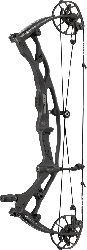
Carbon costs more, and the Carbon RX-10 does not pretend otherwise. What Hoyt actually changed for 2026 is not the riser or the cam, both carried over from the RX-9 it replaces, but the one thing the platform was missing: a real tuning system. The new XTS (Xact Tuning System) lives in the limb pockets and corrects both left/right and high/low without a bow press, closing the gap that let other brands claim easier tuning. Everything else is the carbon RX line hunters already know: the hollow-tube REDWRX riser, the HBX Gen 4 cam, a 30.5-inch axle-to-axle frame that lands right in the do-everything zone. At 4.1 lb it is one of the lightest bows in its size class in any material. This is the flagship for the hunter who has already decided they want carbon, and wants the mid-draw, one-bow-for-everything version of it.
Finish
Hoyt offers the standard RX-10 in thirteen color options, and two of them are new for 2026. Sandstorm is a light tan that suits open Western and prairie country; Georgia Clay is a red-brown that owners in the Southeast gravitate to, alongside Mossy Oak Bottomland, which stays one of Hoyt's most-requested camo patterns. The rest of the palette spans solids like Blackout and Wilderness through licensed patterns including Realtree APX, KUIU Verde 2.0, and Sitka Gore Optifade Subalpine. Hoyt does not charge a finish upcharge - every color sits at the same price, so the choice is purely about the country you hunt, not the budget. The dip-and-cure coating on the carbon tubes has held up well across prior RX generations, which is the durability record that matters on a bow you drag through brush.Riser
The RX-10 uses Hoyt's hollow carbon-tube REDWRX riser, the same construction lineage that has defined the carbon RX line for years and, by the maker's own account, changed little from the RX-9. That continuity is the point: it is a proven, low-vibration chassis rather than a redesign chasing novelty. The riser carries the In-Line Accessory System - a front Picatinny rail for sight mounting, an IMS dovetail underneath for Integrate-style rests, and in-line quiver mounting - which keeps a loaded rig tight and slim against the bow. In my experience the front Picatinny mount is the detail that most cleans up a hunting setup, letting a low-profile quiver and sight sit close instead of hanging off brackets. The headline riser change is functional, not cosmetic: the XTS tuning hardware now lives in the top and bottom limb pockets. There is also a small kickstand tab at the top so the cam does not take the hit when the bow is set on the ground.Grip
Hoyt's Vital Point grip returns, a narrow rubberized handle with just enough texture to locate the hand the same way shot after shot. Owners coming from a bare aluminum grip tend to notice the warmth first - the rubberized surface and the carbon behind it do not turn into a cold bar in December the way a metal handle does. One bowhunter who lives with Raynaud's, where cold makes the hands blanch white, described the carbon platform as the reason he can hold this bow through a late-season sit without his grip hand going numb; that is a narrow case, but it points at a real property of the material. The profile is low-torque and repeatable, and it takes standard aftermarket side plates for shooters who want a different fill. For most hands the factory grip is the one to leave on.Limbs
The RX-10 runs Hoyt's split-limb carbon-riser platform with the new XTS tuning wedges built into both pockets. Draw weight spans 40 to 80 pounds in five-pound limb increments, including a 65-pound option new for 2026 for shooters who like to sit around there - the range covers essentially every adult hunting setup. One thing worth knowing on setup: limbs can come in stiff. One shop measured this bow at 76 pounds out of the box on a nominal 70-pound limb and backed it down a little over a full turn per bolt to hit spec, so a peak-weight check on day one is time well spent. The XTS system itself works at the limb tip - set screws drive a wedge that changes tip pressure and effectively the spring rate on that limb - which is how the tuning correction happens without ever touching a press. Adjustment is continuous rather than click-indexed, so it dials in finely.Eccentric System
The HBX Gen 4 cam is the same eccentric that carried the RX-9, and it is a mod-specific system rather than a big rotating module - you swap or set modules for one-inch draw-length steps, with quarter-inch increments inside that, which keeps the cam efficient across the whole 25-30 inch range and especially rewards shorter-draw shooters. Let-off is genuinely adjustable: three settings at 75, 80, and 85 percent, plus flippable back-wall shoes that trade between a firm wall and an even harder one. Hoyt rates the bow at 342 fps IBO, the marketing speed measured at 30 inches, 70 pounds, and a 350-grain arrow. On a shop chronograph at that exact setup, real reads settled around 325 fps once the first hot shot was set aside - roughly 16 to 18 fps under IBO, which is the normal gap between a lab number and a real string. Load a 440-grain arrow, the weight most hunters actually shoot, and it runs about 297 fps at 30 inches and 70 pounds; a heavy 545-grain FMJ still leaves around 274 fps. Those are honest hunting speeds, not headline speeds, and they hold up well against anything in the carbon class.Draw Cycle/Shootability
Drawing the RX-10 is where the carbon RX character shows: the cam builds to peak and rolls over without a sharp hump, and it settles into the valley without the dump that makes some fast bows feel like they fall off a cliff at the back. The back wall is firm - a defined wall, not a slope - and if you want it firmer still, flipping the back-wall shoes top-to-bottom stiffens it further, which is a nice touch for a shooter who likes to lean hard into the wall. At the shot the bow reads dead but distinct from aluminum: instead of a lingering buzz, it delivers a short, quick thump and pushes forward toward the target with almost no vibration in the hand. In my hands that forward push is the carbon signature - it is not silent so much as it is over instantly, which on a treestand at first light is exactly what you want. Pair the smooth draw with the 4.1-pound mass and this is a bow you can hold at full draw waiting on a step-out without the front end wandering. It is a shooter's bow that happens to be a hunting flagship.Usage Scenarios
The standard RX-10 is the one-bow answer for the whitetail and Western hunter whose draw lands in the 25-30 inch band and who wants a single carbon rig for everything. Picture an October treestand hunt: a 4.1-pound bow hangs off the hook all morning without wearing on the arm, the warm carbon grip does not bite the hand at 20 degrees, and when the buck steps out the smooth draw goes back quietly under a watchful eye. The 30.5-inch axle-to-axle length is short enough to swing in a ground blind yet long enough to hold steady for a 40- or 50-yard Western shot, which is why it reads as the do-everything member of the family. With a 440-grain arrow at roughly 297 fps it carries plenty of kinetic energy for whitetail, mule deer, and antelope, and it is honest elk medicine at sensible ranges. Shooters who want a longer, steadier bar for open-country or target-leaning work should look up the family, and short-draw or long-draw hunters are better served by the SD or Ultra LD. For the mid-draw hunter, this is the center of the lineup.Versions
The Carbon RX-10 standard is sold as one bow at $2,149 launch MSRP, with the only real choice being finish (thirteen colors, no upcharge) and draw-weight limb set. The larger decision is which of the four RX-10 siblings fits your body and hunting: the standard RX-10 (30.5-inch ATA, 25-30 inch draw, this review) is the mid-draw do-everything pick; the RX-10 SD drops the draw range to 23-27 inches and the floor to 30 pounds for smaller-framed and short-draw hunters, at the identical $2,149 - same price, different fit, not an upgrade; the RX-10 Ultra stretches to a 33.5-inch axle-to-axle for a steadier hold at $2,199; and the RX-10 Ultra LD is the long-draw specialist at 31.25-33 inches and the family's fastest at $2,199. All four share the HBX Gen 4 cam, XTS tuning, and finish palette - the choice between them is geometry and draw length, not features.Hoyt Carbon RX-10 vs Mathews Phase4 29, PSE Mach 30 DS
| Bow | Hoyt Carbon RX-10 | Mathews Phase4 29 | PSE Mach 30 DS |
| Version | 2026 | 2024 | 2026 FDS |
| Picture |  | 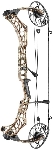 | 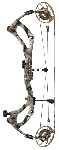 |
| Brace Height | 6.125 " | 6 " | 5.875 " |
| AtA Length | 30.5 " | 29 " | 30 " |
| Draw Length | 25 " - 30 " | 25.5 " - 30 " | 24.5 " - 30 " |
| Draw Weight | 40 lbs - 80 lbs | 50 lbs - 75 lbs | 40 lbs - 80 lbs |
| IBO Speed | 342 fps | 340 fps | 348 fps |
| Weight | 4.1 lbs | 4.48 lbs | 3.6 lbs |
| Let-Off | 85% | 80% or 85% | 70% - 85% |
| Where to buy Best prices online |
| ||
| compare more bows | |||
The Carbon RX-10 sits between two very different alternatives. The Mathews Phase4 29 is the aluminum value counter-argument: at $1,199 launch it undercuts the Hoyt by roughly $950 and brings the quietest, deadest-in-hand draw Mathews builds, in a compact 29-inch frame whose 25.5-30 inch draw range overlaps the RX-10 almost exactly. What it asks in return is weight and material: at 4.48 pounds bare it is heavier than the 4.1-pound carbon Hoyt, its 340 fps IBO sits a hair under the RX-10's 342, and an aluminum handle turns cold and hard in December where the carbon riser stays warm. For a hunter cross-shopping on price, the Phase4 29 is the honest do-I-need-carbon question. The PSE Mach 30 DS is the true head-to-head: another carbon flagship in the same tier, and the bow that finally has shooters describing a carbon rival as dead-even with Hoyt. The Mach 30 DS leans toward speed and aggression, the house PSE character, while the RX-10 leans toward the silky draw and the firm-but-adjustable wall that define Hoyt. The RX-10 also answers PSE on tuning now, with XTS matching the press-free adjustment that carbon buyers used to have to leave Hoyt to get. The decision comes down to priorities: the Phase4 29 for the hunter who wants a quiet aluminum flagship for nearly a thousand less, the Mach 30 DS for the shooter who wants carbon with a hotter, more aggressive personality, and the RX-10 for the one who wants the smooth-drawing, warm-in-hand carbon flagship with tuning finally built in.