
Hoyt Double XL Review
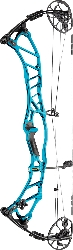

from $850
Pros
- Long-draw fit most bows can't match - the 32-34 inch range serves tall archers and big wingspans that mainstream hunting bows leave stranded at 30-31 inches
- Smooth ZT Hyper Cam draw that rolls over peak weight into a solid back wall, a draw cycle owners repeatedly rank among the smoothest they have pulled
- Quiet and dead in the hand - owners report it settles still after the shot even without a stabilizer
- Long axle-to-axle paired with a generous brace height makes it forgiving and steady to hold on target
- Tunes easily and shoots accurately - the zero-torque cam and split-cable system keep nock travel straight, and owners call it a tack driver
Cons
- Built for stability over raw speed rather than chasing a top IBO number - long-draw shooters chasing maximum velocity should weigh the 345 fps rating against shorter speed bows first
- Some owners have noted the ZT cam settles into a fairly short valley - staying firmly into the back wall handles it, and a buyer who wants more forgiveness on holding can shoot one in person before committing
- Discontinued after 2021 and only found on the used market now - long-draw buyers who want a new bow should look at Hoyt's current LD-suffix models that replaced it
Video
content from YouTube
Editors' review
Headroom. Cramped legs at full draw. A string that crowds your face because the bow was never built for your reach. If you draw 32, 33, or 34 inches, you already know most hunting bows quietly cap you at 30 or 31 and tell you to make it work. The Hoyt Double XL was built for the opposite problem: it starts where those bows stop. From 2017 through 2021 this was Hoyt's dedicated long-draw, large-frame compound - "reward that monster wingspan with a bow built for you," as Hoyt's own 2021 guide put it. Across its run the platform evolved from a 36 3/4-inch, DFX-cam hunter into a 35 7/8-inch, 345 fps IBO (the industry-standard chronograph rating at a fixed setup) rig running Hoyt's HYPER ZT Cam, and along the way it split into hunting (HTG) and target (TGT) trims on one shared chassis. It is a niche bow, and proudly so - the rare rig that treats a long draw as the design starting point rather than an afterthought.
Finish
Across its run the Double XL wore Hoyt's full standard hunting palette, so a long-draw hunter never had to settle for a single drab option. The 2018-2021 catalogs list Blackout, Buckskin, Wilderness Green, Storm, Realtree Edge, KUIU Verde 2.0, Gore Optifade Subalpine, Gore Optifade Elevated II, and Under Armour Ridge Reaper finishes, with the riser anodized and the limbs dipped to match. Target and 3D shooters on the TGT trim could go a different direction entirely: the 2019 line added a striking anodized "Gold Medal" colorway alongside solid-color target options, the carbon-fiber-look black limbs setting off the bright riser. Some years offered the Bone Collector Signature Series treatment as well, pairing an Under Armour Barren or Black Out riser with custom limb graphics. The anodized and dipped finishes are the same durable coatings Hoyt runs across its flagship line, so wear resistance matches the rest of the lineup rather than being a budget afterthought. Between camo for the treestand and anodized color for the shooting line, the Double XL covered both of its audiences.Riser
The Double XL is built on Hoyt's TEC riser platform, and on the target side it uses the super-stiff shoot-through riser - the central cage geometry that routes the stabilizer and cable system through a rigid, low-vibration structure. In its 2018-2019 form the bow shared its riser geometry directly with the Pro Force; a Hoyt rep walking through the lineup described the Double XL as mirroring the Pro Force chassis, the shoot-through riser being the main hardware difference between the two. The long axle-to-axle measurement - 36 3/4 inches in 2017, settling at 35 7/8 inches for 2020-2021 - is the whole point: a longer riser-to-limb span steadies the bow in the hand and flattens out the steering errors a tall archer's long draw tends to amplify. A sealed ball-bearing roller cable guard manages the cables with minimal friction, and the rear stabilizer mounting bushing is built in for shooters who run a back bar. This is deliberately a big, stable platform, not a compact treestand carbine - the riser is doing forgiveness work, and it shows on the holding pin.Grip
Grip is where the hunting and target trims diverge, and it is the clearest tell of which Double XL a buyer is holding. The HTG hunting trim ships with Hoyt's fixed hunting grip - a slim, direct-to-riser profile that keeps the hand low and torque-free for cold-weather, gloved shooting. The TGT target trim instead carries the adjustable multi-angle grip system that lets a spot or 3D shooter dial the wrist angle to their preference, the same approach Hoyt runs on its dedicated target bows. A Hoyt engineer, relayed through an owner's unboxing, confirmed the two trims were otherwise identical and shot the same - so the grip and intended-use trim, not the shooting behavior, is what a buyer actually chooses between. For the tall archer this matters: a longer draw puts more of the hand's geometry into play at full draw, and a clean, low-torque grip is part of why owners describe the bow holding so steady.Limbs
The Double XL runs Hoyt's split-limb configuration with QuadFlex limbs seated in a Bi-Ax limb pocket, the same proven limb-and-pocket architecture Hoyt uses across its flagship hunters. Draw-weight coverage is broad enough to span both audiences: the HTG hunting trim reached a full 70-80 pound peak for shooters who want maximum kinetic energy out of a long power stroke, while the target-oriented TGT trim topped out around 70 pounds where holding weight and all-day comfort matter more than raw poundage. By the 2020-2021 generation Hoyt settled the line into 50-60, 55-65, and 60-70 pound modules, reflecting the bow's evolution toward a forgiving target-and-hunting crossover rather than a pure poundage monster. The long draw length is itself an energy advantage - every extra inch of draw is extra power stroke - so even at a moderate peak weight a long-draw shooter stores more energy than a 28-inch shooter at the same poundage. The limb pockets and roller-guard hardware are the same components that have held up across Hoyt's lineup for years, so durability tracks with the rest of the brand.Eccentric System
The defining hardware of the 2018-2021 run is Hoyt's ZT (Zero-Torque) Hyper Cam paired with a patent-pending Split-Cable System, and it is genuinely the heart of this bow. The design goal was straight nock travel: the cam is tuned to perform at its best standing straight up and down, with a yoke wrapping both sides of the cam to hold that alignment through the entire draw. Hoyt's own claim, made on camera by a company rep, is that this approach eliminated lateral nock travel "50 percent more than what a flex guard would do" - pulling the steering work into the cam and cable system rather than a guard arm. Top and bottom cams are timed to fire together, which is why owners consistently report the bow tunes easily and groups like a tack driver. Speed sits where the geometry puts it: 340 fps IBO on the original 2017 platform, 325 fps in the 2018-2019 generation that traded a little ATA for stability, and back up to 345 fps for 2020-2021 once Hoyt refined the chassis - respectable numbers for a long-draw rig, though the bow was tuned for steadiness rather than to chase a headline velocity. Let-off ran 77-79 percent in 2017 and settled at a deep 85 percent (the percentage of peak weight the holding weight drops to at full draw) from 2018 on, easing the long-haul hold a tall archer faces. Draw length is set by cam size rather than a module pack - Cam 2 covering 26.5-30 inches, Cam 3 covering 29-32 inches, and Cam 4 reaching 31-33 inches "for the big guy" in the earlier years - before the 2020-2021 bows consolidated to a single #4 module spanning a true 32-34 inches.Draw Cycle/Shootability
Drawing the Double XL is the part owners come back to. The ZT Hyper Cam ramps smoothly to peak and then rolls cleanly over the top into a solid, defined back wall - owners repeatedly rank it among the smoothest cams they have pulled, and that is high praise on a bow with this much draw length to work through. The 85 percent let-off means a long-draw shooter holds a fraction of peak weight at the back, which matters more here than on a short-draw bow because there is simply more time under tension getting to full draw. The valley is on the shorter side, so this is a bow that rewards staying firmly into the wall rather than creeping forward - once you lean into it, the wall is genuinely a wall, not a slope. Where the bow truly distinguishes itself is after the shot: owners describe it as remarkably quiet and dead in the hand, with several noting it settles still even without a stabilizer hanging off the front. That comes from the combination of the roller guard, the Shock Pod and Limb Shox damping, and the long, stable riser soaking up vibration. Hold it on a target and the long axle-to-axle and generous brace height do their forgiveness work - the pin floats slow, and the bow wants to sit still. It is not a snappy speed bow that demands perfect form; it is a steady, quiet, accurate platform that flatters a long draw.Usage Scenarios
The Double XL exists for one archer above all: the tall hunter or shooter with a 32-34 inch draw who has spent years forcing a too-short bow to fit. For that buyer, this is the rig that finally lets full draw feel relaxed instead of crowded - less facial contact, less string pressure against the cheek, a more natural posture at the back wall. As a whitetail or western big-game bow in the HTG trim at 70-80 pounds, the long power stroke banks plenty of kinetic energy for ethical penetration at typical hunting ranges, and the quiet, dead-in-hand shot is an asset from a treestand or a spot-and-stalk setup where noise carries. In the TGT trim it crosses over cleanly to 3D and spot target work: the long axle-to-axle and forgiving hold are exactly what a spot shooter wants standing on the line, and at its launch it was positioned as an accessible entry into a Hoyt target rig. It is not the bow for a treestand hunter who prizes a compact, sub-32-inch axle-to-axle bow for tight maneuvering, and a shorter-draw shooter gains nothing here that a standard-length Hoyt wouldn't give them. But for the long-draw archer, that is the whole point - this bow was never trying to be everything to everyone.Versions
The Double XL ran as a single continuously-named model from 2017 through 2021, with the specifications evolving year to year and a hunting/target trim split in the middle years. 2017 launched the original platform: a 36 3/4-inch axle-to-axle, 8-inch brace height bow running the DFX Cam & 1/2 system and modeled after the Pro Defiant, rated 340 fps IBO across a 31-33 inch draw and 40-80 pound range. For 2018 Hoyt rebuilt it on the new ZT Hyper Cam and shoot-through TEC chassis, trimming to 35 3/4-inch axle-to-axle and a 7-inch brace at 325 fps, and split it into two trims: the HTG (hunting) trim with a fixed hunting grip reaching 80 pounds, launch MSRP $1,199 per Lancaster Archery, and the TGT (target) trim with the adjustable multi-angle grip topping out at 70 pounds. 2019 carried both trims forward unchanged on spec, adding the anodized Gold Medal target colorway. For 2020 and 2021 Hoyt refined the platform a final time - 35 7/8-inch axle-to-axle, a taller 7 3/4-inch brace, 345 fps IBO, 4.7 pounds, and a single #4 cam module delivering a true 32-34 inch draw across 50-70 pounds - before discontinuing the model after 2021. Hoyt did not separately publish MSRP for the 2017, 2020, or 2021 versions. The bow is out of production now; long-draw shooters shopping new should look to the LD-suffix models that replaced it in Hoyt's current lineup.Hoyt Double XL vs Hoyt Katera XL, Bowtech Revolt XL
| Bow | Hoyt Double XL | Hoyt Katera XL | Bowtech Revolt XL |
| Version | 2021 | 2009 (Z3 Cam) | 2023 |
| Picture |  |  |  |
| Brace Height | 7.75 " | 7.5 " | 6.625 " |
| AtA Length | 35.75 " | 36 " | 33 " |
| Draw Length | 32 " - 34 " | 25.5 " - 31.5 " | 27.5 " - 33 " |
| Draw Weight | 50 lbs - 70 lbs | 40 lbs - 80 lbs | 40 lbs - 70 lbs |
| IBO Speed | 345 fps | 320 fps | 358 fps |
| Weight | 4.7 lbs | 4.6 lbs | 4.5 lbs |
| Let-Off | 85% | 65% or 75% | 80% |
| Where to buy Best prices online | |||
| compare more bows | |||
For a long-draw buyer the Double XL's real cross-shops are the handful of large-frame, long-axle bows that can actually reach past a 31-inch draw. The Hoyt Katera XL was the brand's earlier large-frame XL hunter at 36 inches axle-to-axle, 7.5-inch brace and 320 fps IBO, with a draw range topping near 31.5 inches - a forgiving, proven platform, but one that stops just short of the true 32-34 inch reach the Double XL was built to deliver. The Bowtech Revolt XL comes at the long-draw need from the speed side: a shorter 33-inch axle-to-axle and 6.625-inch brace, a faster 358 fps IBO, and a draw that stretches to 33 inches, making it the pick for a long-draw shooter who wants more velocity and a more compact frame, at the cost of the Double XL's longer, steadier hold. The decision comes down to priorities: the Hoyt Double XL for the archer who needs a genuine 32-34 inch draw with a steady, quiet hold; the Bowtech Revolt XL for the long-draw hunter who wants speed and a tighter frame.