
Hoyt Raptor Review


from $94.99
Pros
- Smooth, quiet, accurate shooter that long-time owners still speak well of decades later
- Five limb-and-cam combinations let a buyer dial the character from soft wheel to aggressive cam
- Die-cast magnesium riser paired with laminated limbs that have proven famously hard to kill
- Genuine Hoyt build quality and accuracy at an entry, budget-minded price point
Cons
- Some owners have noted the cable serving wears quickly where it wraps the cam - a fresh serving or string at any pro shop handles it and is routine on a bow of this age
- As a discontinued late-1990s bow, replacement Carbonite cams and modules are scarce today - worth confirming a used example is complete and tunable before buying
Video
content from YouTube
Editors' review
Before Hoyt was a carbon-riser company, it was a magnesium company, and the Raptor is where that expertise met a budget. Built through 1998 - and, by longtime owner accounts, dating back to about 1996 - it was the bow Hoyt pointed at the beginner and the budget-minded hunter who still wanted real Hoyt accuracy - and the trick was that it did not feel like a compromise to get there. Cast from die-cast magnesium with 1.1 inches of reflex geometry (the riser leaning the string toward the target for a touch more speed), it borrowed the same short, stiff riser philosophy that made Hoyt's pricier machined bows shoot. What makes the Raptor interesting a generation later is how configurable it was: one riser, five different limb-and-cam combinations, and a draw feel you could choose rather than accept. Owners who tuned them describe a smooth, quiet, accurate bow that punched well above its shelf price, and enough of them are still shooting today - usually just needing fresh strings - to say the platform was built to last. This is a review of a bow you buy used, so it is as much about what to look for as what it does.
Finish
The Raptor arrived in camo dress aimed squarely at the whitetail woods, and its 1997 headline was the then-new RealTree X-tra Brown pattern - a warmer, bark-and-leaf palette that suited early-season and hardwood settings better than the greener patterns of the era. Hoyt applied its standard durable dip-and-clear finish over the magnesium casting, and surviving examples generally show the camo holding up well where the bow has not been rack-rubbed. Because the Raptor was a value model rather than a flagship, the finish menu was narrow - this was not a bow sold in a dozen colorways - and target-oriented buyers often took theirs in the plainer configurations. For a used shopper today, finish is mostly a condition question rather than a choice: you take the pattern the bow was born with, and the thing to inspect is wear at the grip throat and limb tips rather than the specific camo.Riser
The heart of the Raptor is a die-cast magnesium riser, a material Hoyt had years of experience casting by the mid-1990s, chosen here to keep weight and cost down without giving up rigidity. It carries 1.1 inches (27.9 mm) of reflex geometry, and Hoyt machined it with the practical touches that made the bow easy to live with: it was cut out for SpeedFlight overdraws (letting a shooter run a shorter, lighter arrow for more speed), fitted with Lock Fit accessory cutouts for clean sight and rest mounting, and finished with a single-bend cable guard and a Speed Guard shelf. The axle-to-axle length runs long for a hunting bow - a full 38 5/8 inches on the Carbonite configuration - and in my experience that length is exactly why a budget bow like this shoots better than its price suggests, because a long, stable riser forgives small hand errors that a short bow punishes. The magnesium casting also gives the Raptor a solid, planted feel in the hand rather than the whippy feel of the cheapest aluminum bows of its day. It is a straightforward, honest riser, and its durability is the reason so many are still in service.Grip
Hoyt split the Raptor's grip by intended use, which tells you the bow was meant for two audiences. Hunting models shipped with the Pro Hunter grip - a slim, weather-friendly profile designed to index the hand the same way shot after shot in cold-weather conditions - while target-oriented Raptors came with wood grip plates that gave a broader, more deliberate platform for a spot shooter's static hold. Both sit on the same magnesium throat, so the hand position is low and close to the riser, which keeps torque down for a shooter who lets the bow sit rather than gripping it. The narrow hunting grip is the one most used examples wear, and it remains comfortable in a gloved hand. If a used Raptor turns up with a chewed or missing grip, the plates are a simple field to address, and the throat shape underneath is the part that actually matters for consistency.Limbs
The Raptor's limbs are the story of its versatility, because Hoyt offered the riser in several distinct limb families. The headline was the Carbonite limb - a four-piece laminated carbon limb, 16 inches long - which is where the popular 1998 "Raptor Carbonite" name comes from, and it is the configuration that earned the platform its reputation for near-indestructible limbs. Alongside it Hoyt sold Super G and Intruder limb options, plus more affordable limb-and-wheel setups such as the Rebel XT for the tightest budgets. Draw weight followed the standard classes of the era, with 40-50, 50-60, and 60-70 pound limbs documented on surviving bows, so a buyer could spec anything from a lighter youth-to-adult transition setup to a full-power whitetail rig. The laminated limbs in particular have aged remarkably well - owner after owner reports them still holding poundage and tune decades later - which is a genuine point in the used bow's favor. The one caveat for a shopper is simply to confirm which limb family a given bow wears, since it changes both the feel and the parts you would ever need to source.Eccentric System
This is where the Raptor rewards a patient buyer, because it was sold with an unusually broad menu of cams and wheels, and each one changes the bow's personality. Across its official 1997 spec sheet and tune chart Hoyt documented a range of cams and wheels for the Raptor - including the Command, Master, Indy, and Advance cams and the Redline and Rebel XT wheels - a spread that let the same riser be a soft, forgiving wheel bow or a more aggressive cam bow depending on what the buyer wanted. Let-off (the percentage of peak weight the bow sheds at full draw, so you hold less) was chosen by that hardware rather than fixed: the Command Cam sits at a soft 60 percent for the smoothest pull, the Master and Indy cams land at 65 percent, and the Advance Cam runs a high 80 percent for shooters who want the lightest holding weight. Draw length on the flagship Carbonite setup spans 26 to 31 inches, with the wider cam menu covering 23 to 32 inches across configurations, all set by module and cam choice rather than a modern rotating module. Hoyt never printed a headline speed on the Raptor's tune charts, and I would treat any single figure with caution - owners loosely recall the Carbonite version landing near 300 fps IBO, but that is recollection, not a factory rating, and the real answer depends entirely on which cam and limb the bow carries. Drawing a Command-cam example, what stands out is how gentle the ramp is for a bow of this vintage: it builds without a harsh hump and settles cleanly, which is exactly the smooth character owners describe. The trade-off common to the single-cam bows of this era shows up here too - the cable serving can wear where it wraps the cam - so a used Raptor is a bow to inspect and, often, to re-string before it earns your full trust.Draw Cycle/Shootability
The Raptor's draw is its quiet strength, and it is the thing owners consistently come back to. Pulled through a Command or wheel setup, it draws smoothly and without drama, and the long riser holds steady at anchor in a way that flatters an average shooter - I found the hold noticeably more planted than the short, nervous budget bows it competed against. Shooters describe the shot itself as quiet, which for a magnesium bow of the late 1990s is a real compliment, and accuracy is the word that comes up again and again, from tuned-up forum veterans to owners still ringing steel with theirs in backyard sessions. It is not a modern parallel-limb bow, so there is some of the gentle post-shot life you expect from a reflex-riser design of this age, but nothing that a decent stabilizer and fresh strings do not tame. The cam choice sets the ceiling on both speed and smoothness: pick the Command Cam and you get the softest, most forgiving draw; pick the Advance Cam and you trade a little of that smoothness for the lightest holding weight at 80 percent let-off. What you do not get is a punishing valley or a mushy wall - for a value bow, the shot is honest and repeatable, which is why so many of these became somebody's first serious hunting bow.Usage Scenarios
The Raptor was built for the whitetail hunter on a budget, and that is still where it fits best: a 50-60 or 60-70 pound Carbonite setup, a fixed-pin sight in the Lock Fit cutouts, and a treestand on opening weekend is the scenario Hoyt designed it around. The long axle-to-axle and forgiving hold make it a friendly bow for a newer hunter who is still building form, and the adjustable draw-length range means a growing shooter or a household passing the bow around can make it fit without buying new limbs. Target and 3D club shooters were served too - the wood-grip-plate configuration and the smoother wheel and Command-cam options make a stable, quiet bow for a relaxed spot session, though the modest speed keeps it out of serious competitive contention by today's standards. As a modern purchase it makes the most sense as an inexpensive entry into real Hoyt engineering, a durable knockaround or backup bow, or a nostalgia buy for someone who shot one in the 1990s and wants it back. What it is not is a long-range speed bow for open-country elk - that was never its job, and asking it to be one misreads a bow that was always about honest accuracy at a fair price.Versions
The Raptor is best understood as one riser sold in a family of configurations rather than a single fixed bow, so a used shopper should identify which one they are looking at:Limb family - Carbonite (four-piece laminated carbon, 16 inches; the durable flagship limb and the source of the "Raptor Carbonite" name), Super G, and Intruder limbs, plus the more affordable Rebel XT.Cam/wheel - Command Cam (softest, 60 percent let-off), Master and Indy cams (65 percent), Advance Cam (80 percent), plus the Redline and Rebel XT wheels, each changing draw feel, let-off, and speed on the same riser.Model year - the 1997 "Raptor" and the 1998 "Raptor Carbonite" are the same bow, the latter name simply denoting the carbon limb configuration; by owner accounts the platform was rebadged the Raider, a budget version, for 1999.Use trim - hunting models with the Pro Hunter grip versus target models with wood grip plates.Draw weight - 40-50, 50-60, and 60-70 pound limb classes are the ones documented on surviving examples.Hoyt Raptor vs Mathews MQ32, Bowtech Patriot
| Bow | Hoyt Raptor | Mathews MQ32 | Bowtech Patriot |
| Version | 1998 Carbonite | 2005 VFT | |
| Picture |  | 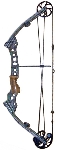 |  |
| Brace Height | 7.375 " | 8.5 " | 6.875 " |
| AtA Length | 38.625 " | 32 " | 33.375 " |
| Draw Length | 26 " - 31 " | 24 " - 30 " | 25 " - 30 " |
| Draw Weight | 40 lbs - 70 lbs | 40 lbs - 70 lbs | 40 lbs - 70 lbs |
| IBO Speed | fps | 303 fps | 318 fps - 326 fps |
| Weight | 4.69 lbs | 3.25 lbs | 4.063 lbs |
| Let-Off | 75% | 80% or 70% | 65% - 80% |
| Where to buy Best prices online | |||
| compare more bows | |||
Cross-shopping a late-1990s to early-2000s value hunter, the Hoyt Raptor lines up naturally against two other bows of the era that still turn up used at similar money: the Mathews MQ32 and the Bowtech Patriot. The Mathews MQ32 (1998-2002) takes the opposite geometry approach - a short 32-inch axle-to-axle with a very forgiving 8.5-inch brace height and a single SoloCam rated at 303 fps IBO - making it the lightest and smoothest-holding of the three at about 3.25 pounds, and the simplest to own thanks to its one-cam design. The Bowtech Patriot (2002-2005) is the speed-and-comfort pick: its Vertical Force Technology platform pushes 318 to 326 fps (up to 340 in the Dually dual-cam version) and shoots notably dead in the hand, but it launched at a much higher $649 to $749 and is a busier bow to tune. The Raptor splits the difference in a way that suits a specific buyer: it is the longest and most stable riser of the three at 38 5/8 inches axle-to-axle, the most configurable thanks to its limb-and-cam menu, and the most budget-oriented, though it gives up the MQ32's featherweight simplicity and the Patriot's outright speed and recoil cancellation. The decision comes down to priorities: the Mathews MQ32 for single-cam simplicity and maximum forgiveness, the Bowtech Patriot for speed and a dead-in-hand shot, and the Hoyt Raptor for a long, stable, endlessly configurable magnesium hunter at the lowest cost of entry.