
Hoyt Torrex Review
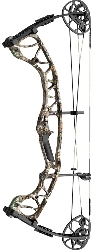

from $429.9
auctions from $1560
Pros
- Carries Hoyt's Cam & 1/2 and the RX-1-derived X-Act grip on a sub-$600 chassis, giving repeatable hand placement and a clean, easy-drawing platform
- Smooth draw that rolls into a firm cable-stop back wall and settles solid once the cams come over the top
- Strong real-world speed for the tier - high-260s to low-290s fps with hunting-weight arrows at 70 pounds
- Light 3.8-pound bare weight, with tool-only draw-length changes that need no bow press
- Quiet, low-vibration shot for a budget bow, with hand shock many owners rate below far pricier Hoyts
Cons
- The X-Act grip's slick plastic surface divides owners - a few dollars of grip tape gives a more secure hold for cold or wet hands
- Short valley means the bow wants you to stay on the back wall, so shooters prone to creeping should settle in deliberately
Video
content from YouTube
Editors' review
Pull the cam and the grip off Hoyt's $1,700 carbon flagship, bolt them to a cast-aluminum riser, and sell the result for under $600 - that is essentially the Torrex. It is Hoyt's value hunting bow, the model that replaced the long-running Powermax, and it does not try to hide where it saves money. The riser is cast rather than machined, the limb pockets are molded polymer instead of aluminum, and the finish list is short. What Hoyt refused to cheapen is the part you touch and the part that fires the arrow: the X-Act grip is the same one found on the Carbon RX-1, and the Cam & 1/2 system is pulled straight from the company's performance line. The reward is a sub-$600 bow that draws, holds, and shoots like something far more expensive - and that lands it squarely in front of the first-time buyer who wants a real Hoyt without flagship money. This is the bow for the hunter shopping their first serious compound, or the parent buying one rig a growing teenager and an adult can share.
Finish
The standard Torrex ships in two base finishes - Realtree Edge and a solid Black Out - which is a deliberately lean palette compared to Hoyt's flagship color books. Beyond the two base options, Hoyt offered the Torrex in up-charge special editions: Realtree Edge Bone Collector, Black Out Bone Collector, and a Black Out "Keep Hammering" edition tied to Cameron Hanes, which dresses the blackout riser with red strings and accent graphics. The dip-and-coat finish is the same durable process Hoyt uses across its hunting line, so the value pricing does not translate into a fragile coating. For a bow at this price the finish quality holds up well to brush, treestand rails, and the usual season-long abuse. Buyers who want a louder camo book will find Hoyt keeps the extravagant patterns for the carbon bows, but the Edge and Black Out cover the two choices most whitetail and western hunters actually pick.Riser
The Torrex riser is where Hoyt did most of its cost engineering, and the company is upfront about it. Rather than machining the riser from a solid billet of aluminum the way the flagship bows are cut, the Torrex uses a cast riser - molten aluminum poured into a mold, then cooled, polished, and finished. The geometry still carries Hoyt's familiar reflex back-bridge look, and in the hand it reads as solid and nicely shaped rather than budget. The practical difference between a cast and a machined riser comes down to micrometer-level consistency, which matters to a target archer chasing tenths but is invisible to a hunter at normal ranges. Field tests bear that out: pressed in a bow press the riser stayed quiet, with no creak, click, or flex, which is the real test of whether a cast riser was done right. Hoyt routes a conventional cable guard off the riser (the faster XT sibling upgrades this to a roller guard), and the StealthShot string stop mounts cleanly off the back. It is a genuinely good riser for the money - the kind of part that makes the price look like a typo until you remember the casting.Grip
The single best decision Hoyt made on the Torrex was leaving the grip alone. This is the X-Act grip, the same one used on the Carbon RX-1, with a thin throat and a flat back that locks the hand into a repeatable, low-torque position shot after shot. Grip consistency is one of the quiet fundamentals of accuracy - the hand has to land in the same place every draw - and the X-Act's shape makes that easy without filling the palm or forcing a death grip. In my hands the throat sits exactly where the lifeline wants it, and the flat back keeps the bow from rolling under pressure. The one catch is the surface: the Torrex grip is molded in a slick plastic rather than the tackier rubber some owners prefer, and opinion splits on it. Some shooters love the clean feel and the way it lets them re-seat the hand at full draw without torquing the bow; others want more bite, especially with cold or wet hands. The fix is trivial - a couple dollars of grip tape or a stick-on grip wrap solves it - so this is a preference to be aware of, not a flaw to fear.Limbs
The Torrex runs wide, stout split limbs that should be familiar to anyone who has handled a recent Hoyt hunter. They sit in molded polymer limb pockets - the first all-plastic pockets Hoyt put on a bow, with no aluminum liner - which is the other place the price comes down. On paper that reads like a compromise, but Hoyt's reputation is built on limb durability, and the shooters and shops who tune these for a living are quick to tell nervous buyers not to let the plastic pockets scare them off. The limbs accept the full spread of peak-weight options Hoyt builds the Torrex in - 30-40, 40-50, 50-60, 55-65, and 60-70 pounds - so a buyer can order the bow at the weight they actually shoot rather than backing a 70-pound bow down to 50, which bleeds efficiency. Draw weight adjusts with a standard Allen wrench across the limb-bolt range, no press required for the routine turns. Split-limb geometry like this stores energy efficiently and keeps the bow lively, and the design has years of proven service across Hoyt's hunting catalog behind it.Eccentric System
The heart of the Torrex is Hoyt's Cam & 1/2 system - a two-cam layout where the top and bottom cams are tied together by control cables so they fire and sync as a unit. The payoff is a consistent, accurate platform that is also a touch easier to draw than a single hard cam, and the Torrex cam geometry openly resembles the RX-1 cam it descends from. The published IBO speed (the industry chronograph rating taken at a fixed 30-inch, 70-pound, 350-grain setup) is 327 fps, and real-world numbers track that honestly once you account for normal hunting weight. Across multiple chronograph sessions, a 70-pound Torrex pushed 287 fps with a 407-grain arrow at 29 inches, 290 fps with a 440-grain shaft at 30 inches, and into the high 260s down to the high 240s with heavier 480- to 545-grain hunting arrows - output that turns 74-plus foot-pounds of kinetic energy, plenty for pass-throughs on whitetail-sized game. Let-off is 80 percent (the share of peak weight the cams shed at full draw), which means a 70-pound model holds around 14 pounds in your hand - notably easier than the 75-percent Powermax it replaced. Draw length runs 26 to 30 inches on the standard number-three cam, with a number-two cam available to drop a shorter-draw shooter down to 24 inches, and changing draw length is a tool-only job with the letter chart printed right on the limb.Draw Cycle/Shootability
Drawing a 70-pound Torrex, the front end builds steadily - there is a defined hump to break through rather than a soft ramp - and then the cams roll cleanly over the top into the valley. The valley itself is on the short side, so the bow wants you engaged against the back wall; let your draw creep forward and you will feel it, which is the one habit a new shooter has to mind. The back wall is the good news: once the cams come over, the cable stops give a firm, repeatable stop that is not the spongy wall of a cheap bow nor the dead-stop of a flagship limb stop, but a defined, leanable wall that settles the pin. Shooting it, I came away with the same read most owners do: the bow is genuinely quiet, with noise close to a non-issue for the tier - and post-shot vibration is minimal, with hand shock several owners place below much more expensive Hoyts. There is a little jump in the hand on the shot, a touch more than a $1,400 flagship, but a stabilizer tames most of it and at hunting distances it never bothers the shot. At 3.8 pounds bare the Torrex is genuinely light, which is a blessing on a long pack-in and only asks for a modest front stabilizer to settle the float. The more arrows you put through it, the smoother the draw gets as the system breaks in.Usage Scenarios
The Torrex is, first and foremost, a whitetail and big-game hunting bow for the value-minded buyer. With hunting arrows in the high-260s to low-290s fps and 74-plus foot-pounds of energy on tap at 70 pounds, it has the punch for clean pass-throughs on deer, hogs, and antelope at the ranges most hunters actually shoot, and enough headroom for elk for a shooter who keeps things inside their effective distance. Picture a first-time buyer who walks into the pro shop Saturday, has the RTH package set up and paper-tuned Sunday, and is sitting a treestand opening week - the Torrex is built for exactly that timeline. Its forgiving 7-inch brace height and easy-holding 80-percent let-off also make it a strong choice for the household where a parent and a growing teenager will pass one bow back and forth, since the wide peak-weight options and tool-only draw-length changes let it follow a young shooter from their first 40-pound setup up to a full 70-pound hunting rig. It works for backyard practice, 3D club nights, and as a light, dependable backup to a flagship. What it is not is a target archer's tack-driver - the cast riser gives up the last sliver of consistency a spot shooter chases - but for the field, it covers the job.Versions
The Torrex is sold in two package levels under the standard model. The bow-only configuration carried a $599 launch MSRP (2020-2021); the ready-to-hunt (RTH) package ran $699 at launch and adds everything needed to shoot - a QAD Hunter drop-away rest (a Whisker Biscuit was the alternate option), a Fuse ProFire 5-pin sight, a Fuse Maxxis 4-arrow quiver, a 5-inch Fuse FlexTorch stabilizer, and a Hoyt wrist strap. Both ship in the two base finishes, with the Bone Collector and Cameron Hanes "Keep Hammering" editions available as up-charge color options. Two siblings sit alongside the standard Torrex and each has its own review: the Torrex XT trades a full inch of brace height for 9 fps more speed and adds a roller cable guard and Shock Pods dampers (4.0 pounds, $749 bow-only at launch), and the Torrex XT LD takes that XT package and fits a long-draw module for 30-31-inch shooters. A buyer choosing within the family is really choosing how much speed and refinement they want over the standard bow's forgiving, lowest-cost setup.Hoyt Torrex vs Hoyt Powermax, PSE Stinger Max
| Bow | Hoyt Torrex | Hoyt Powermax | PSE Stinger MAX |
| Version | 2021 | 2020 | 2021 |
| Picture |  |  |  |
| Brace Height | 7 " | 6.75 " | 7 " |
| AtA Length | 30.75 " | 31 " | 30 " |
| Draw Length | 26 " - 30 " | 24 " - 30 " | 21.5 " - 30 " |
| Draw Weight | 30 lbs - 70 lbs | 30 lbs - 70 lbs | 45 lbs - 70 lbs |
| IBO Speed | 327 fps | 328 fps | 304 fps - 312 fps |
| Weight | 3.8 lbs | 3.8 lbs | 3.8 lbs |
| Let-Off | 80% | 75% | 80% |
| Where to buy Best prices online | |||
| compare more bows | |||
The Torrex's most direct rival is the bow it replaced - the Hoyt Powermax (2016-2020), the prior value Hoyt that sold for a similar sub-$600 dealer price in its day. The two are close in speed (the Powermax rates 328 fps to the Torrex's 327), but the Torrex improved the formula in ways a shooter feels: it holds easier at 80-percent let-off versus the Powermax's 75 percent, and its 7-inch brace height is more forgiving than the Powermax's 6.75 inches, while the Powermax's edge is a slightly wider 24-30-inch draw range. If you are choosing between a used Powermax and a new Torrex, the Torrex is the better-holding, more-forgiving bow. The cross-brand alternative is the PSE Stinger MAX, which launched around $449 as a ready-to-hunt package and undercuts the Torrex on price while matching its forgiving 7-inch brace. The Stinger Max's trump card is adjustability - a 21.5-to-30-inch draw range and a 45-to-70-pound span make it the better one-bow-grows-with-the-kid choice for a young shooter - but it gives up speed, rating 304-312 fps to the Torrex's 327, and its overall fit and finish read a step below the Hoyt. The decision comes down to priorities: the Hoyt Powermax for a bargain-hunter cross-shopping the used market, the PSE Stinger Max for the family that needs the widest adjustment range at the lowest price, and the Torrex for the buyer who wants the most genuine flagship feel - that grip, that cam, that draw - in a sub-$600 new bow.