
Hoyt Trykon Review


from $150
Pros
- The hybrid Zephyr Cam & 1/2 draws with a rounded, forgiving pull that made the Trykon Hoyt's smooth-but-fast hunting choice of the mid-2000s
- Buyer-selectable 65% or 80% let-off by module lets a shooter set the hold to match either speed-tuned or long-stand-comfort priorities
- Machined riser and XT500 limbs give the platform a stiff, durable chassis that owners still hunt hard with 15-plus years on
- Wide 25-31 inch draw and 40-80 lb range make one used chassis fit almost any adult hunter without a proprietary module hunt
- Responds strongly to a modern string set and a damping kit - a low-cost path to a quiet, dead-in-hand shot on a used bow
Cons
- Runs heavier in the hand than a modern hunting bow - many owners actually prefer that mass for a steadier hold on aim, but shooters counting ounces for long mobile hunts may want to weigh it in person first
- Stock 2006-07 damping is dated - an aftermarket string-silencer and limb-dampener kit takes the vibration and noise out and is the first upgrade most owners make
- Draw-length changes are a bow-press job on the Z-module string set, not a tool-free rotating module - dial in your exact draw at a shop before the season
Video
content from YouTube
Editors' review
There is a certain kind of buyer who walks into a pro shop, watches a $900 bow on the wall, then picks up a fifteen-year-old Hoyt off the used rack and out-shoots the new one for a couple hundred dollars - and the Trykon is exactly the bow that keeps making that happen. Hoyt built the Trykon in 2006 and 2007 as the mid-tier flagship of its hunting line, the model that modernized the lineup around the hybrid Zephyr Cam & 1/2 rather than the twin cams and single cams archers had been choosing between. The geometry is deliberately do-everything: a 33 inch axle-to-axle for a stable, forgiving hold and a 7 inch brace height that keeps the bow honest at hunting distances, with a machined riser and XT500 limbs underneath. The cam story is the whole story - a hybrid two-cam system that trades a hard binary bow's aggression for a rounded draw, with let-off you set at 65% or 80% by module choice. The Trykon never got a spec change across its two model years, and it was replaced by the Vectrix and Katera in 2008, which is precisely why it is a used-market staple today rather than a catalog item. This review is for the archer standing in front of one of those used racks, deciding whether the old Hoyt is the smart buy.
Finish
The Trykon shipped in Hoyt's mid-2000s hunting palette - the Realtree Hardwoods-era camo dips that defined the period - alongside the solid target and black options Hoyt offered on the same chassis. Because the bow left production after 2007, the finish a buyer actually encounters today is whatever the used market holds, and condition matters more than the original pattern: a dip that has ridden a treestand and brushed through timber for a decade and a half will show edge wear at the limb tips and along the riser cutouts. That wear is cosmetic on a machined-aluminum bow and does not touch the structure. One thing to watch when shopping used is that some Trykons have been refinished by owners - the well-known Project Trykon build, for instance, was stripped and repainted black in automotive paint at home - so a black or non-camo Trykon is often an aftermarket job rather than a factory finish. None of that changes how the bow shoots; it only tells you to judge the coating on the individual bow in front of you rather than on a catalog swatch.Riser
The Trykon rides on a machined-aluminum riser, the construction approach that anchors Hoyt's reputation for stiff, durable hunting chassis. Weight-relief cutouts shape the riser without giving up rigidity, and the limb pockets (Hoyt's #31/#32 on this platform) seat the XT500 limbs on solid, repeatable contact faces. Cable management runs through Hoyt's period cable-guard bar rather than a modern roller guard, which is part of why the stock bow reads a touch busier at the shot than a current build. The riser carries standard stabilizer and accessory bushings, and because the platform was Hoyt's mainstream hunting model rather than a niche run, rests and sights of the era bolt on without adapters. The practical takeaway for a used buyer is that the riser is the part of a fifteen-year-old Trykon least likely to have aged - machined aluminum does not fatigue the way strings and dampeners do, so a structurally sound Trykon riser is essentially the same tool it was in 2006.Grip
The Trykon uses Hoyt's mid-2000s hunting grip, a moderate profile that sits between the deep target grips of the era and the thin, low-torque grips that came later. It indexes the hand into a repeatable low-wrist position, which is what a hunting bow at this axle-to-axle wants - a consistent hand means consistent arrow flight, and the Trykon's longer 33 inch geometry rewards that consistency. The stock grip is comfortable enough that most owners simply shoot it, but like nearly every bow of the period it accepts aftermarket grips for shooters who want a thinner shelf or a warmer surface in late-season cold. Because grips are a bolt-off part, this is one of the easiest personalizations on a used Trykon and not something to weigh heavily when buying - the hand fit is adjustable long after the sale.Limbs
The Trykon carries Hoyt's XT500 limbs, the straight-limb family that gave the mid-2000s Hoyt hunting bows their stiff, energy-dense character. The number in the name is a deflection class; on the Trykon these limbs span the full 40 to 80 lb draw-weight range, which covers essentially any adult hunting setup from a light-poundage shooter up to a maxed-out 80 lb hunter. Draw weight adjusts through the standard limb bolts with an Allen wrench, no press required within the published band, and the limbs seat in the machined #31/#32 pockets on a 21/2 inch limb bolt. This XT limb architecture ran across multiple Hoyt models of the era, so its long-term durability record is well established - the limbs are among the reasons a Trykon bought used is a reasonable bet rather than a gamble. The one honest caveat is age: any fifteen-year-old bow deserves a limb inspection for cracks or delamination at purchase, which is a five-minute check a pro shop does for free and which applies to every used bow of this vintage, not the Trykon specifically.Eccentric System
The Zephyr Cam & 1/2 is the reason the Trykon exists and the feature that defines it. It is a hybrid cam-and-a-half system - a control cam up top slaved through a buss and control cable to a power cam on the bottom - sitting between the aggressive binary cams and the forgiving single cams archers were choosing between in 2006. That hybrid geometry is what gives the Trykon its rounded draw and level nock travel, the smooth-but-fast middle ground Hoyt was aiming for. Let-off (the percentage of peak weight the hold drops to at full draw) is buyer-selectable at 65% or 80% by module choice, so the same bow can be set up firm-holding for speed or high-let-off for long treestand sits. The catalog IBO is 316 fps at the industry-standard 70 lb, 30 inch, 350 grain setup - genuinely fast for a hunting bow of its day. Real-world numbers land where physics says they should: on one owner's tuned Trykon a 338 grain arrow at a lower 65 lb, 28.5 inch setup chronographed 297 fps, up from 287 fps before a fresh string set and re-timing - the gap below IBO is entirely the lighter poundage and shorter draw, not a soft cam. Draw length is set by the Z-module string set from 25 to 31 inches in half-inch steps, which is a bow-press job rather than a tool-free rotating module - so a used buyer wants the bow already close to their draw or a shop visit factored in. In my experience the single most important thing to know about a Trykon is that the Zephyr cam is the fixed character of the bow: you can tune the string, open the valley slightly, and shave the holding weight, but the fundamental draw feel is what it is - and that feel is exactly what earned the bow its following.Draw Cycle/Shootability
Drawing a Trykon, the Zephyr cam rolls up without the hard front-end spike of a binary bow and settles into a defined valley - a good tuner can open that valley a little and drop the holding weight, but stock it sits on the firmer, shorter side, so the bow asks the shooter to stay engaged rather than parking behind a huge let-off shelf. The back wall is solid. Where the Trykon shows its age honestly is in mass and stock damping: the bow is heavier in the hand than a modern hunting rig, and here the experienced-owner read splits from the spec-sheet read - many shooters treat that weight as an asset, because the extra mass steadies the pin float and holds the bow quieter on aim through the shot. Stock, the 2006-07 bow is livelier at release than a current build, but it responds dramatically to a modern string-silencer and limb-dampener kit; owners who add one describe the transformation as taking the vibration and noise out and turning it into a genuinely pleasant bow to shoot. On the accuracy side, the Trykon does exactly what its geometry promises: shooters put it through clean two-arrow groups at 30 and 40 yards with nothing more than a four-pin sight and a peep - lethal placement on a whitetail's vitals at every practical treestand distance. My honest summary of the shot is that the Trykon rewards a shooter who wants a stable, deliberate hunting bow and has no problem adding a $40 damping kit; it frustrates only the ounce-counter who wants a featherweight mobile setup out of the box.Usage Scenarios
The Trykon is a whitetail-and-general-hunting bow first, and it fits that job cleanly. Picture the archer who finds a clean Trykon on an ArcheryTalk classified in August, ships it to a good string maker for a fresh set and a tune, adds a damping kit and a modern rest, and walks into the October woods with a 297 fps bow that cost a fraction of a new flagship - that is the Trykon's most common and most rewarding life today. The 33 inch axle-to-axle and 7 inch brace make it forgiving enough for the hunter who values a steady hold from a treestand or ground blind over raw maneuverability, and it is equally at home on a 3D course where that same stability pays off. The 40 to 80 lb range means it scales from a lighter-poundage shooter up to a full 80 lb hunting setup, and the 25 to 31 inch draw span fits nearly any adult once it is moduled to their length. It is a strong pick as an affordable backup bow for a hunter who already runs a flagship, or as a first serious hunting bow for someone who wants real Hoyt engineering without a new-bow budget. Where it is not the right tool is the ultralight mobile hunt where every ounce on a long pack-in matters, and the shooter who insists on a tool-free draw-length change out of the box will be happier on a rotating-module bow.Versions
The base Trykon was sold as a single configuration across both of its model years - 2006 and 2007 - with no spec change between them: the same Zephyr Cam & 1/2, XT500 limbs, 33 inch axle-to-axle, 7 inch brace, 25-31 inch draw and 40-80 lb range. There is no RTH-versus-bare-bow package split and no draw-weight-module SKU tree to navigate; a Trykon is a Trykon regardless of the model year on the limb sticker. Hoyt did not print a launch MSRP in its 2006 or 2007 catalogs, so there is no original price to anchor to - the Trykon is a used-market bow, and its value today is set entirely by condition, the freshness of the string and cables, and whatever accessories come mounted. Within the broader Trykon family, three siblings share the name but not the geometry and are separate buying decisions: the Trykon XL (2006 only) stretches the platform to a 36 inch axle-to-axle and a longer 26-32 inch draw for long-draw and target-leaning shooters; the Trykon Sport (2007-2010) is the compact, lighter-draw value hunter; and the Trykon Jr (2007-2010) is the youth bow with a huge 17-25 inch growth range. A buyer who specifically wants more axle-to-axle should look at the XL; a shorter-draw or younger shooter is better served by the Sport or Jr.Hoyt Trykon vs Mathews Switchback, Bowtech Allegiance
| Bow | Hoyt Trykon | Mathews Switchback | Bowtech Allegiance |
| Version | 2007 | 2007 | 2008 |
| Picture | 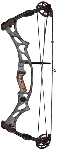 |  |  |
| Brace Height | 7 " | 7 " | 7.25 " |
| AtA Length | 33 " | 33 " | 33.25 " |
| Draw Length | 25 " - 31 " | 25 " - 30 " | 26.5 " - 30.5 " |
| Draw Weight | 40 lbs - 80 lbs | 40 lbs - 70 lbs | 50 lbs - 70 lbs |
| IBO Speed | 316 fps | 318 fps | 317 fps - 335 fps |
| Weight | lbs | 4.34 lbs | 3.8 lbs |
| Let-Off | 65% or 80% | 65% or 80% | 65% - 80% |
| Where to buy Best prices online | |||
| compare more bows | |||
The 2006 hunting-bow decision, then and now on the used market, most often came down to three bows in the same 33 inch, 7 inch brace class, and the choice is a clean statement of priorities. The Mathews Switchback is the defining single-cam bow of the era - a very quiet, forgiving bow rated around 315 fps IBO that built its following on shot signature and dead-in-hand feel rather than aggression; a shooter who prioritizes silence on a treestand above all else and prefers the simplicity of a single cam gravitates to the Switchback. The Bowtech Allegiance goes the other direction - a binary-cam 2006 hunter rated around 328 fps IBO, the fastest and most aggressive of the three, for the archer who wants top-end speed and a snappier draw and is willing to trade a little of the Switchback's serenity to get it. The Trykon sits deliberately between them: its hybrid Zephyr Cam & 1/2 is smoother than the Allegiance's binary and faster on paper than most single cams, with a 316 fps IBO that splits the difference, and its 65%-or-80% selectable let-off is a flexibility neither rival offers out of the box. All three share the forgiving 33 inch geometry, so the decision comes down to cam philosophy: the Mathews Switchback for the shooter who ranks quiet and single-cam simplicity first, the Bowtech Allegiance for the one who ranks raw speed first, and the Trykon for the archer who wants the hybrid middle ground and the let-off flexibility to set the bow up either way.