
Bear Alaskan Review
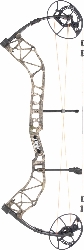

from $100
Pros
- Draws far lighter than the scale reads - even near a 70-pound peak it breaks over like a much lighter bow, one of the smoothest pulls in the sub-$550 class
- Uncommon back-wall choice - run the cable stop for a deep valley, or set the top limb stop for a rock-solid wall, a tuning option most mid-price hunters never offer
- Grows with the shooter - two 15-pound draw-weight modules (45-60 and 55-70) plus a 25.5 to 31 inch draw span cover a short-draw teen up to a full-weight adult on one bow
- Quiet and dead in the hand - the KillerWave limb dampeners and aluminum pockets settle the shot with only a faint tick of buzz once a stabilizer is on
- Built tougher than its price - machined aluminum limb pockets where most bows at this tier drop to composite, and a slim low-torque machined grip
Cons
- Some owners find the cable-stop back wall a touch soft - setting up the top limb stop instead gives a rock-solid wall, so it is a two-minute setup choice rather than a flaw
- Runs a little over its listed weight - Bear lists 3.9 pounds but it reads closer to 4.2 bare; the removable KillerWave limb dampeners pull out for shooters counting every ounce on a long pack-in
Video
content from YouTube
Editors' review
The Alaskan is the bow that carried Bear's value hunting line into the DHC era. Launched for 2022 as a made-in-USA mid-price hunter, it introduced the redesigned DHC Hybrid Cam and, more interestingly, gave a $500 bow something usually reserved for pricier rigs: a genuine choice of back wall. Most bows in this bracket hand you one slightly spongy wall and that is that - the Alaskan lets you run a soft, forgiving cable stop or bolt in a top limb stop for a wall that feels like hitting a brick. It is a 32-inch axle-to-axle bow (the distance between the two cam axles, and a forgiving mid-length for hunting) with a 6.25-inch brace height and an honest 335 fps IBO rating (the industry-standard chronograph number at a fixed 30-inch, 70-pound, 350-grain setup). What makes it worth a look years after its 2023 discontinuation is how much bow Bear packed under that price - wide adjustability, aluminum hardware, and a shot that shoots quieter than its tier suggests. It was replaced by the longer Alaskan XT in 2024, but as a value do-all hunter it still earns its keep.
Finish
The Alaskan shipped in three looks, and Bear spread them across solid and patterned tastes. Mossy Oak Break-Up Country is the full modern camo option, an all-around woodland pattern that disappears well in mixed timber. Olive is the understated solid - a matte drab that reads as tactical rather than traditional and hides scuffs from a season of hard use. The standout is Throwback Black: a blacked-out riser paired with classic Fred Bear camo limbs, an old-school nod on a rack full of gray-and-green hunters. That Throwback Black is the one catch for southpaws - it was offered in right-hand only, while the two camo-and-olive options came in both hands. The soft-coat finish is the same durable treatment Bear runs across its lineup, and on a bow built to be knocked around a treestand that matters more than gloss.Riser
The Alaskan rides on an aluminum riser with machined aluminum limb pockets - not a billet chassis, which is exactly right at this price, and Bear put the savings where a shooter feels it. Rest and sight mounting is traditional: standard double rest bolt holes and a Berger-style stabilizer bushing, not the Integrate Mounting System dovetail or Picatinny rail (the same accessory-rail standard used on AR-platform firearms) that the later Alaskan XT would add. The payoff of the double rest holes is a rest that locks in and will not pivot if the bow gets banged in transit, and any conventional drop-away rest or threaded sight bolt goes straight on. A single string stop hangs off the back of the riser to catch shot energy before it rings through the handle. The cutouts are clean and the 32-inch geometry keeps the string angle comfortably open at full draw. What stands out drawing it is how inert the riser stays after the shot - the energy dies into the dampeners instead of buzzing through the grip.Grip
Bear kept the Alaskan's grip simple and it works. This is the brand's slim machined grip - the same narrow, rounded-edge profile Bear had run for several years, integrated into the riser rather than the over-molded rubber Bear Paw that shows up elsewhere in the lineup. It sits low in the palm and shapes a repeatable, low-torque hand position, which is exactly what a hunter wants when the shot count for the whole season might be one. In my experience a narrow grip like this is easier to index the same way shot after shot than a fat rubber one, and reviewers who put a lot of arrows through the Alaskan consistently called the grip comfortable and easy to repeat. There is nothing to remove or swap here - the grip is part of the riser - so a shooter who prefers a warmer surface on a cold morning can add a slip-on aftermarket grip without any fitment fuss.Limbs
The Alaskan uses split limbs seated in those machined aluminum pockets, and the draw-weight strategy is the real story. Rather than a single narrow band, Bear offers two 15-pound modules - 45 to 60 pounds and 55 to 70 pounds - so a shooter can dial in a genuinely light setup or a full 70-pound hunting weight from the same bow. That 15-pound spread is unusually generous for a mid-price hunter, where a 10-pound window is the norm, and it means someone can start softer while building form and climb into full weight later without buying new limbs. The KillerWave dampeners nest between the split limbs, doing much of the work that keeps the shot quiet, and the aluminum pockets give the limb bases a rugged, rock-solid seat rather than the flex some composite pockets allow. It is a limb-and-pocket architecture Bear has leaned on across its value line for exactly that reason.Eccentric System
At the center of the Alaskan is the DHC Hybrid Cam, Bear's redesigned-for-2022 hybrid that trades the EKO cam's adjustable let-off for a fixed 80 percent (let-off being the percentage of peak weight the hold drops to at full draw - here you hold 14 pounds of a 70-pound peak). What the DHC gives up in let-off adjustability it returns in draw-length range and pull quality: 25.5 to 31 inches of adjustment, wide enough to fit most of a household. The 335 fps IBO rating is competitive for the tier, and real chronograph work shows what a hunter actually gets - 295 fps with a 400-grain arrow at 70 pounds and a 29-inch draw, and 266 fps with a heavy 468-grain shaft, which still stacks up to 73.5 foot-pounds of kinetic energy, plenty for any North American big game at hunting range. The genuinely unusual feature is the back-wall system. A top limb stop can be run out for a soft cable-stop feel with a generous valley, or bolted in for a rock-solid wall - a real tuning latitude the category almost never offers at this price.Draw Cycle/Shootability
Drawing the Alaskan is where the DHC earns its keep. The front half is linear and easy, there is a mild stack building toward the top, and then it rolls into the valley without the grabby snap the old single cams were known for. What surprised me most is the disconnect between the scale and the hand - pulled to a 66-pound peak it broke over like a 60-pound bow, and that easy pull is the single thing owners bring up most. Where it settles depends on how you set it up: leave the cable stop and you get a deeper, more forgiving valley with a slightly soft wall; bolt in the limb stop and the wall turns firm and repeatable, which is how I would run it for a deliberate, back-tension shot. The shot itself is quiet for the class - a hair over 95 decibels on a hunting arrow, quieter than a number of pricier bows on the same meter - and with a stabilizer mounted the hand shock all but disappears. Between the smooth pull, the quiet release, and the forgiving 32-inch geometry, it is an easy bow to shoot well from the first arrow, and shooters have reported holding two-inch groups at 40 yards with it.Usage Scenarios
The Alaskan is a whitetail and general big-game hunter first. Set at 400 grains and 60 to 70 pounds it carries plenty of energy for deer, hogs and black bear at normal treestand and ground-blind ranges, and the quiet shot is what you want when a deer is standing at fifteen yards inside a treeline. The 32-inch axle-to-axle length keeps it forgiving on longer shots from a blind while staying manageable from a saddle or a crouch. It doubles nicely as a summer 3D and backyard target bow: set the limb stop for the firm wall and it rewards a deliberate shot process on the range, where fixed-blade broadheads have flown true with almost no tuning. Above all it is a one-bow-fits-the-household buy - start a teenager at the bottom of the 45-to-60 module and a 25.5-inch draw, then let the same bow grow into a 70-pound, 31-inch adult hunting rig. What it is not is a long-range speed weapon; a shooter chasing the flattest possible trajectory past 60 yards will want a dedicated two-cam speed bow, and that is a fit question, not a flaw.Versions
The Alaskan was sold as a bow-only hunter at a $529.99 launch MSRP, made in the USA. Rather than package tiers, its choices were the two draw-weight modules and the three finishes:- Draw-weight modules - 45-60 pounds or 55-70 pounds, each with 15 pounds of adjustment, chosen at purchase.- Finishes - Mossy Oak Break-Up Country and Olive in both hands; Throwback Black (blacked-out riser, Fred Bear camo limbs) in right-hand only.The bow shoots identically regardless of module or color - the difference is the weight band and the look. Buyers cross-shopping the lineup should note the Alaskan XT is the direct successor: it stretched the chassis to 33 inches, added the Integrate Mounting System rest dovetail and a Picatinny sight rail, and moved to the faster DHC-XR cam.Bear Alaskan vs Diamond Edge 320, PSE Stinger MAX
| Bow | Bear Alaskan | Diamond Edge 320 | PSE Stinger MAX |
| Version | 2023 | 2022 | 2021 |
| Picture |  |  |  |
| Brace Height | 6.25 " | 7.25 " | 7 " |
| AtA Length | 32 " | 32 " | 30 " |
| Draw Length | 25.5 " - 31 " | 15 " - 31 " | 21.5 " - 30 " |
| Draw Weight | 45 lbs - 70 lbs | 7 lbs - 70 lbs | 45 lbs - 70 lbs |
| IBO Speed | 335 fps | 320 fps | 304 fps - 312 fps |
| Weight | 3.9 lbs | 3.6 lbs | 3.8 lbs |
| Let-Off | 80% | 85% | 80% |
| Where to buy Best prices online | |||
| compare more bows | |||
At $529.99 the Alaskan sits just above two of the most cross-shopped value hunters, and the decision comes down to what a buyer values. The Diamond Edge 320 ($449 launch) is the grow-with-you champion - its draw weight bottoms out at 7 pounds and its draw length shrinks to 15 inches, so it fits a small child where the Alaskan's floor is a 45-pound, 25.5-inch adult-and-teen setup; the trade is a shorter 320 fps IBO and a taller 7.25-inch brace that gives up a little speed for forgiveness. The PSE Stinger MAX ($449 launch) is the other budget do-all, a tall-brace, easy-shooting bow aimed at the same first-real-bow buyer, but it lacks the Alaskan's dual back-wall choice and its machined aluminum pockets. Against both, the Alaskan's edge is hardware and tuning latitude - aluminum limb pockets, a genuine limb-stop-versus-cable-stop wall, and a smoother pull at full hunting weight. The decision comes down to priorities: the Diamond Edge 320 for a family that needs the widest possible child-to-adult range, the PSE Stinger MAX for the lowest entry price, and the Alaskan for the buyer who wants the most bow - hardware, quiet, and back-wall control - a step up in that tier.