
Bear Pathfinder Review


from $139.99
Pros
- Genuinely adjustable youth bow - a wide 14-to-25-inch draw span and 15-to-29-pound weight range let one bow follow a child through several growth spurts
- Arrives ready to shoot: 1-pin sight, Whisker Biscuit capture rest, 2-arrow quiver, two safety-glass arrows and a nock set - nothing else to buy to start
- Light at 2.1 pounds with a forgiving 65% let-off and a 15-pound floor - a six-year-old can draw it, hold on target, and take real shots
- The most affordable route into a genuinely adjustable Bear youth bow - the budget pick in its cluster, undercutting rivals like the Diamond Atomic
Cons
- Tops out at 29 pounds and a 25-inch draw, so a fast-growing pre-teen can outgrow it in a season or two - families whose child is already near that range can step straight to the Bear Limitless at 25 to 50 pounds
Video
content from YouTube
Editors' review
A first bow gets outgrown - that is the problem every parent runs into, and the one the Pathfinder is built to postpone. Bear's youth package is not a toy with suction-cup arrows; it is a real compound bow scaled down for small archers, with a 26-inch axle-to-axle length (ATA, the tip-to-tip measurement) and an 11-inch span of draw-length adjustment. Where a fixed-size beginner bow fits for one season, the Pathfinder covers a child from age six through several growth spurts by adjusting both how far it draws and how hard it pulls. It ships as a complete kit - sight, rest, quiver, arrows and a nock set - so a parent can hand it over the same afternoon it arrives. It is aimed squarely at the household following in Mom and Dad's footsteps, where a young shooter needs to learn form on a bow that behaves like the grown-up ones. The catch is where its ceiling sits, and that is the one thing worth checking before buying.
Finish
The Pathfinder comes in a single finish: a matte black across riser and limbs. There is no camo pattern and no color-pop youth graphics option, which keeps it gender-neutral and, frankly, harder for a kid to scuff visibly than a glossy or brightly-printed bow. The flat coating hides fingerprints and the inevitable dings of a bow that gets dropped in the backyard grass. Some rival first-bows lean into bright pink, green or camo dips to catch a child's eye on the shelf, and a parent shopping on color alone will notice the Pathfinder plays it plain. What the single black option loses in shelf appeal it makes back in looking like a serious piece of equipment rather than a plaything - which, for a kid trying to shoot like the adults, is part of the draw.Riser
The riser is built to youth scale, and the compact 26-inch ATA is the point of it: a short riser-and-limb geometry is easy for a small archer to raise, hold level, and keep steady, where a full 32-inch hunting bow would simply be too much length in short arms. That short frame is a big reason the whole bow weighs just 2.1 pounds ready to shoot, light enough that a first-timer's front arm does not collapse before the shot breaks. The riser carries standard mounting hardware for the included sight, rest and quiver, so everything bolts on where it should and the bow arrives assembled and tuned. There is nothing exotic here - no machined lattice cutouts or carbon, and none is needed at this size and price. The design brief was a stable, light, correctly-proportioned platform for a child, and the geometry delivers exactly that.Grip
The grip is a narrow, molded youth panel sized for small hands, which matters more than it sounds: an adult-width grip forces a child to splay the palm and introduces the exact hand torque that sends arrows wide. The slim profile lets a young shooter seat the bow in the meat of the palm and keep a relaxed, repeatable hand position - the foundation of consistent form. It is a fixed molded grip rather than a swappable one, appropriate for a bow a child will use for a couple of years before moving up. The surface gives enough texture to locate the hand the same way every draw without being so aggressive it bites cold fingers. For teaching grip fundamentals, a correctly-sized panel like this does more good than any premium material would.Limbs
Draw weight adjusts across a wide 15-to-29-pound range at the limb bolts, and it is done at home with a hex wrench - no bow press, no pro-shop visit. That range is the heart of a grow-with-me bow: start a six-year-old at 15 pounds in the backyard, and back the bolts out as the child gets stronger without buying a second bow. The limbs are youth-scale and store modest energy, which is exactly right for the audience - nobody wants a beginner fighting 60 pounds of peak weight. At 29 pounds maxed out, the Pathfinder sits below the 40-pound minimum most states set for hunting, so this is a target and practice platform by design rather than a game-getter. Backed all the way down to 15 pounds it is genuinely easy to pull, which is what keeps a new shooter's form from falling apart under strain.Eccentric System
The Pathfinder's cam is tuned for learnability rather than speed, and its most useful trait is range: draw length spans the full 14-to-25-inch window and draw weight the full 15-to-29-pound range, so a parent can size the bow to the child and keep resizing it as the child grows. That wide adjustment window is what turns a single purchase into several seasons of use. The 65% let-off - the percentage of peak weight the bow sheds at full draw - means a shooter pulling the 29-pound peak holds only about 10 pounds while aiming, and a beginner at the 15-pound setting holds barely 5. That light holding weight is what lets a child settle the pin and take a real, aimed shot instead of snap-shooting before their arm gives out. Speed is not the story here: the 150 fps IBO rating (the industry's standard chronograph number, measured at a fixed 70-pound, 30-inch, 350-grain setup that no youth bow actually reaches) reflects a bow tuned for learnability, not arrow velocity. For a first compound, that trade is exactly the right one - the Pathfinder is built to teach the draw-anchor-aim-release cycle, and every eccentric choice serves that goal.Draw Cycle/Shootability
Drawn at its lower settings, the Pathfinder pulls light and short, with a gentle ramp to a low peak and a soft, forgiving valley - there is no aggressive hump for a child to fight through. In my experience the number that decides a first bow is not speed but whether a young shooter can hold it steady long enough to aim, and between the 2.1-pound mass, the 15-pound floor and the 65% let-off, the Pathfinder clears that bar with room to spare. Watching a six-year-old draw it to anchor, hold, and put arrows into a target the way this bow is actually used tells you what a spec sheet cannot: a genuine beginner can run it unassisted. Because it stores so little energy - and because a factory string suppressor damps the string at the shot - the report is quiet and nearly free of the hand-buzz and jump that would flinch a new archer off the target. The back wall is soft rather than a hard stop, which suits a learner still building anchor consistency. It is not a bow you evaluate on grain-per-second; it is one you evaluate on whether a child can shoot it well on the first afternoon, and this one can.Usage Scenarios
Picture a Saturday in the backyard: the bow shows up in the morning, a parent sets the draw length to the child's arm and the weight down to 15 pounds, and by lunch a six-year-old is grouping arrows into a foam block at ten yards. That is the Pathfinder's home turf - first target practice, learning form, and the structured settings of a 4-H club, scout program or NASP-style school range. As the child grows, the same bow moves up to 20-yard practice and toward its 29-pound ceiling without a new purchase. It is a fit for the young shooter who wants to shoot like Mom and Dad rather than play with a toy, and for the family that wants one dependable bow to carry a kid through the learning years. Be clear-eyed about the boundary: at a 29-pound cap it is a practice and target bow, not a hunting rig - it lacks the poundage for ethical game shots. Within that lane, though, it does the one job that matters at this age: it makes a beginner want to keep shooting.Bear Pathfinder vs Diamond Atomic, Bear Limitless
| Bow | Bear Pathfinder | Diamond Atomic | Bear Limitless |
| Version | 2026 | 2026 | 2025 RTH |
| Picture | 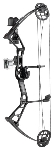 |  |  |
| Brace Height | 6 " | 6 " | 7 " |
| AtA Length | 26 " | 24 " | 28 " |
| Draw Length | 14 " - 25 " | 12 " - 24 " | 19 " - 29 " |
| Draw Weight | 15 lbs - 29 lbs | 6 lbs - 29 lbs | 25 lbs - 50 lbs |
| IBO Speed | 150 fps | 191 fps | 265 fps |
| Weight | 2.1 lbs | 1.9 lbs | 3.7 lbs |
| Let-Off | 65% | 70% | 65% |
| Where to buy Best prices online | |||
| compare more bows | |||
The Pathfinder sits in the middle of a three-bow adjustability ladder, and the right pick depends entirely on the child's size and where you want to land on price. The Diamond Atomic reaches lower than either Bear - down to a 6-pound draw weight and a 12-inch draw length, on aluminum cams and a metal-heavy build - making it the bow to reach for when the archer is genuinely tiny, though at around $280 at retail it is the priciest of the three. The Bear Limitless goes the other direction: it starts at 25 pounds and stretches to 50 pounds with a 19-to-29-inch draw and a much quicker 265 fps IBO, so it is the natural next bow when a child has grown into real draw weight, priced at $269.99. The Pathfinder splits the difference - a 15-to-29-pound, 14-to-25-inch window that overlaps the tail of the Atomic's range and the start of the Limitless's - and it undercuts both on price. The decision comes down to priorities: the Diamond Atomic for the smallest beginner who needs the lowest possible starting weight, the Bear Limitless for the older kid ready to pull real poundage, and the Pathfinder for the parent who wants the widest useful growth range at the lowest cost of entry.