
Darton Tempest E 3D Review
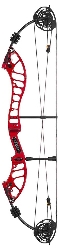

from $1199
Pros
- Forgiving at full draw - the E-System roller-and-yoke equalizes limb stress and offloads the cam bearings, and the platform settles and holds the pin with unusual calm
- Rock-solid back wall - the big cable-stop pad hits with no sponginess, and an optional limb stop gives a second, even firmer wall
- Heavy, planted hold - the machined 7075 riser and matching 7075 cams on wide 0.790-inch pockets keep the sight still while you aim
- Deep tuning for the money - 85 percent adjustable let-off, valley-shortening spacers, and combinable limb-stop and cable-stop setups let you shape the back half of the shot
Cons
- The square machined grip is polarizing - some shooters take to it immediately while others find the flat profile unusual at first; thin grip tape or stick-on side plates reshape the hand feel if it does not suit you
- Paint, not anodize - the painted riser can pick up finish runs or lift under repeatedly applied grip tape, so inspect the sight-screw holes on setup and leave grip wrap in place once it is on
Video
content from YouTube
Editors' review
Darton priced a genuine target rig like a mid-tier hunting bow, and that is the whole story of the Tempest E 3D. Built the first year Darton folded in with the Black Eagle and Conquest target group, it brings a machined 7075 riser, 7075 cams, and the brand's E-System cable roller to the known-distance and 3D line at a fraction of flagship money. This is the shorter-limbed, lower-braced member of the Tempest E family - tuned for a touch more speed than its indoor sibling while keeping the forgiveness that makes a target bow easy to hold. It is not trying to feel like a speed bow; drawn and shot, it reads as a stable, deliberate target platform. For the club 3D shooter or the known-distance archer who wants real target hardware without a four-figure price, it answers a question the big names rarely do. What it asks in return is a shooter who values a planted, heavy hold over a light, flickable one.
Finish
The Tempest E 3D ships in Darton's Target Colors and in matte finishes, with black paint as the base option and camouflage or colored-limb combinations stepping up in price. The coating is paint rather than a hard anodize, and that is worth knowing going in: on setup, paint can sit in the sight-mounting screw holes and need re-tapping, and a painted riser is more prone to lifting where grip tape is applied and peeled repeatedly than an anodized one would be. None of this affects how the bow shoots, but a buyer used to anodized target risers should handle the finish accordingly - seat accessories cleanly and leave grip wrap on once it is set. The colored-limb options make for a sharp-looking rig on the 3D course, where a little personality is part of the fun.Riser
The riser is machined from 7075 aluminum - the harder, higher-strength alloy - rather than the more common 6061, and the bow carries that choice through to the cams, which are 7075 as well. Darton cuts the riser for rigidity and claims it resists flex under load better than a standard target riser; in hand it is a beefy, solid casting with two sight-hole positions to suit different sight bars. The 36-inch axle-to-axle length places it on the compact end of the target spectrum, which is deliberate: a shorter, stiffer riser walks a 3D course more easily than a 40-inch spot bar. The wide limb stance and long machined pockets give the limbs a broad, supported base off the riser. The net impression is mass and stiffness working together - this is a platform built to sit still, not to feel nimble.Grip
The grip is a medium wrist-height section machined directly into the riser, with a squared profile rather than the rounded shapes PSE or the narrowed Elite target grips use. It is a polarizing piece. Some shooters find it plants the hand consistently and never think about it again; others need a session or two to decide whether the flat, angular feel suits them. Because it is part of the riser rather than a bolt-on, there is no swapping it for a different factory plate - but thin grip tape or stick-on side plates reshape the contact surface cheaply if the bare machined feel is not for you. One consequence of the one-piece design shows up at the shot, covered below. For a target archer who builds a repeatable hand position and leaves it, the squared grip gives a defined, torque-resistant reference.Limbs
The Tempest E 3D runs split limbs in a wide stance, starting more vertical at the pocket and coming toward parallel at the tips - the common target geometry that trades a little raw speed for forgiveness and a quieter, calmer shot. They are Gordon glass limbs, the same industry-standard material most of the field uses, and Darton reinforces them at the axle to help resist the shock of an accidental dry-fire. The machined limb pockets are notably wide, measured at 0.790 inch, with a locking screw arrangement so the pocket cannot shift once the limb bolt is set. Peak draw weight comes in the usual 40, 50, 60, and 70-pound options. The whole limb-and-pocket assembly is a big part of why the bow weighs what it does and holds the way it does - mass low in the system steadies the aim.Eccentric System
The cams are Darton's E-System target cams, machined from 7075 aluminum and riding on 5/8-inch axles and 5/8-inch bearings - oversized hardware meant to keep the system tight shot after shot. The published rating is 320 to 325 fps IBO, but that number is set at a long 30-inch draw, 70 pounds, and a light 350-grain arrow, and real-world speed sits well below it at a target shooter's setup: on a chronograph the bow turned 268 fps at 26 inches and 60 pounds with a 327-grain arrow, and 271 fps once draw length was opened to 29 inches. That is squarely target-speed, not speed-bow speed, and the bow makes no pretense otherwise. Let-off is 85 percent and adjustable, swapped between 85 and 80 with factory mods, and the real tuning richness is in the back wall: valley-shortening spacers tighten the hold, a cable stop provides a firm stop as standard, and a limb stop can be added or run alongside it for an even harder wall. The E-System roller is the signature piece - the yoke runs through it and ties back to the cam, spreading limb stress and taking load off the bearings for the forgiveness the whole family is built around.Draw Cycle/Shootability
Drawing it, I found the cycle sits firmly in target territory - it builds gradually rather than snapping over an aggressive hump, and at the longer 29-inch setting it starts easier and gains weight smoothly toward the back. It is closer in character to a Bowtech-style draw than to the glassy-smooth PSE or Elite target cycles, with a little more felt weight through the pull. What I keep coming back to is the back wall: the cable-stop pad hits rock-solid with essentially no creep, and that defined stop is a real asset for a shooter who leans into the wall to execute. The hold at full draw is calm and planted, helped by the bow's mass and the forgiving E-System. At the shot there is some forward shock and a bit of in-hand vibration - partly because the grip is machined straight into the riser with nothing to absorb it - but it is the ordinary target-bow kind that a proper stabilizer setup settles, not the sharp jump of an under-built bow. Set up with a front bar and side rod, it sits still, drops into the valley, and lets you run a clean, deliberate shot.Usage Scenarios
This is a 3D and known-distance target bow first. On a club 3D course, the compact 36-inch length and heavy, stable hold make it easy to carry between stakes and steady on the odd uphill or downhill shot, while the forgiving platform tolerates the varied anchor and form that 3D throws at you. At an outdoor known-distance or field round, the same stability and firm wall reward a repeatable shot process. The 25 to 30-inch draw range covers most adult target archers of average to shorter draw; taller archers who need more than 30 inches should look to the long-draw sibling instead. It is not a hunting bow - the target cams, mass, and speed profile are built for paper and foam, not for chasing fps in a treestand. For a newer competitive archer building toward 3D leagues on a budget, or an experienced shooter who wants a stable second bow without flagship outlay, it fits the bench cleanly.Versions
The Tempest E 3D is one of three bows in Darton's 2021-2022 Tempest E target line, each a separate model built on the shared E-System platform, machined 7075 riser, split limbs, and machined grip:- Tempest E 3D - the balanced 3D member reviewed here: 36-inch ATA, 6.5-inch brace, 320-325 fps, 25-30-inch draw, 5.1 lb, $799.99 launch (target colors).- Tempest E 3D LD (marketed as the "Tempest XT 3D/LD") - the long-draw member on the adjustable Maverick-XT cam: 27 to 32.5-inch draw and a lighter 3.9-lb mass, $799.99 launch.- Tempest E T - the indoor and spot member: a longer 37.25-inch ATA and taller 7 5/16-inch brace for maximum forgiveness, 310-315 fps, $1,249.99 launch.Within the 3D bow itself, the choices are peak draw weight (40/50/60/70), right or left hand, and target versus matte color schemes. The two back-wall stops (cable and limb) and the let-off mods ship with the bow rather than as separate SKUs.Darton Tempest E 3D vs Mathews TRX 38, Hoyt Invicta 40 SVX
| Bow | Darton Tempest E 3D | Mathews TRX 38 | Hoyt Invicta 40 SVX |
| Version | 2022 | 2020 | 2022 |
| Picture |  |  |  |
| Brace Height | 6.5 " | 7.5 " | 7.25 " |
| AtA Length | 36 " | 38 " | 40.25 " |
| Draw Length | 25 " - 30 " | 23 " - 30 " | 27 " - 32 " |
| Draw Weight | 40 lbs - 70 lbs | 40 lbs - 70 lbs | 30 lbs - 70 lbs |
| IBO Speed | 320 fps - 325 fps | 328 fps | 325 fps |
| Weight | 5.1 lbs | 4.86 lbs | 4.9 lbs |
| Let-Off | 85% | 70% & 80% | 65% |
| Where to buy Best prices online | |||
| compare more bows | |||
Against the name-brand target flagships, the Darton's pitch is value with real hardware rather than a spec crown. The Mathews TRX 38 is a 38-inch 3D and target platform rated at 328 fps with a 23 to 30-inch draw range, built around Mathews' silence and refinement - and priced in flagship territory well above the Darton. The Hoyt Invicta 40 SVX stretches to 40.25 inches with a 325 fps rating and a 27 to 32-inch draw, a longer, more spot-oriented bar that also lands at a premium launch price. The Tempest E 3D undercuts both substantially while matching them closely on headline IBO and bringing its own forgiveness story in the E-System roller; what it gives up is the fit-and-finish polish, the anodized riser, and the quieter shot those flagships are known for. The decision comes down to priorities: the Mathews TRX 38 or the Hoyt Invicta 40 SVX for the archer who wants top-tier finish and brand support and will pay for it, the Darton Tempest E 3D for the shooter who wants most of the target performance for far less and does not mind a painted riser and a heavier hold.