
Hoyt Enduro Review
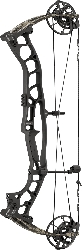

from $649.98
Pros
- Flagship HBX cam brings a genuinely smooth, predictable draw down into Hoyt's value tier for the first time
- In-Line accessory integration lets you bolt on the same Pic-Rail sights, Integrate rest and quivers as Hoyt's flagships
- One platform covers 24-30 inch draw and 35-70 lb across three modules, fitting smaller-framed newcomers and full-size hunters alike
- The 7-inch brace height plus real riser mass makes it forgiving and steady to hold on target
- Ships with genuine WireWRX bowstrings, so it shoots well out of the box without a string upgrade
Cons
- Not a whisper-quiet bow - owners notice a little post-shot buzz in the hand, which a stabilizer or damper settles down
- Heavier than most value bows at 4.65 lb - a plus for treestand steadiness, something to weigh if you pack deep on foot
Video
content from YouTube
Editors' review
Hoyt built the Enduro to replace the long-running Torrex, but it did something the Torrex never attempted: it dropped the flagship HBX cam into a bow this affordable. That single decision reshapes what a value Hoyt feels like at full draw. Where the old Torrex leaned on a friendly Cam & 1/2, the Enduro pulls back with the same rolling, planted draw you feel on Hoyt's four-figure carbon rigs, then integrates the brand's In-Line accessory system so the sights, rest and quiver from the top of the line all bolt straight on. It is not a featherweight and it is not silent, but at its price it hands a newer or budget-minded hunter a genuine flagship-cam experience with room to grow from a 35-lb starter setup to a 70-lb whitetail rig. Think of it as the accessible on-ramp to the Hoyt ecosystem rather than a stripped-down beginner bow. For the shooter who wants Hoyt's draw feel and accessory compatibility without flagship pricing, this is the model that finally makes that possible.
Finish
The Enduro ships in eleven finishes, a wide spread for a bow at this price. Solid-color hunters get Blackout, and camo shooters can choose Duck Camo, Sandstorm or the earthy Wilderness pattern, each also offered in a version with Mossy Oak Bottomland limbs for a two-tone look that breaks up the riser against the limbs. Two collaboration finishes cover the personality end - Bone Collector Blackout and Keep Hammering Blackout - for buyers who follow those brands. Rounding out the range are Enduro Red and Enduro Blue, unusual for a hunting bow and a nod to shooters who want something with color rather than another tree pattern. The dip-coated camo and anodized solids are the same durable coatings Hoyt runs across its line, so the finish holds up to brush and treestand rub about as well as bows costing twice as much. Between the field patterns, the Bottomland limb options and the two bold solids, most buyers will find a look they want without special-ordering.Riser
The Enduro is built on an aluminum riser rather than the carbon tube of Hoyt's RX flagships, which is exactly how a bow lands at this price while still feeling solid in the hand. What matters more than the material is what Hoyt mounted onto it: the In-Line accessory system, which routes the sight onto a Picatinny rail (the same accessory-mounting standard used on AR-platform firearms) and drops the rest into an Integrate dovetail. In practice that means the Pic-Rail sights, Integrate rests and Pro Series quivers designed for the expensive Hoyts line up on this riser without adapters. In my experience that integration is the Enduro's quiet superpower - you are not locked into budget accessories, so the bow can wear a flagship-grade setup the day you can afford one. The riser carries noticeably more mass than the outgoing Torrex, and you feel it as a planted, deliberate front end rather than a twitchy one. Cable management and the accessory shelf are clean and conventional, with nothing fussy to fight during setup.Grip
The Enduro uses Hoyt's Vital Point grip, a slim vertical design that indexes the same way shot after shot. Shooters consistently describe it as comfortable and repeatable, and it earns particular praise in cold weather, where a thin, warm grip is easier to hold without gloves bunching your hand torque. Set side by side with the Bowtech Ascend's thinner grip, owners tend to find the Enduro's fills the hand a touch better and rolls less under pressure, which helps a newer shooter build a consistent hand position. The vertical throat encourages a low, relaxed wrist rather than forcing a high grip. Because it follows Hoyt's standard grip geometry, aftermarket and side-plate options carry over if you want to fine-tune the fit. For a bow aimed partly at hunters still developing their form, a forgiving, low-torque grip is more valuable than any spec, and this is one of the places the Enduro quietly outperforms its price.Limbs
The Enduro's limbs come in three draw-weight modules - 35-50, 45-60 and 55-70 lb - and each adjusts a full 10 lb down from its peak, so the platform spans a genuine 35 to 70 lb without swapping limbs. That range is the heart of the bow's grow-with-you pitch: a shooter can start a teenager or a smaller-framed hunter at 35 lb and later dial the same bow up to a 70-lb hunting weight. Let-off is 80% (the percentage the holding weight drops to at full draw), so at a 70-lb peak you settle in holding around 14 lb - light enough to wait out a deliberate shot. One honest cost-saving choice lives here: the limb pockets are a polymer design rather than the machined metal you get on the pricier Bowtech Ascend. It has not shown reliability problems in early use, but it is part of how Hoyt hit the price, and worth knowing if you expect a metal pocket. The limbs otherwise carry the same conventional split-limb layout Hoyt has run reliably across its lineup for years.Eccentric System
The headline is the cam. The Enduro runs Hoyt's HBX cam - the same family that powers its flagship hunters - with a rotating module that sets draw length and keeps the cam performing across all three draw-weight ranges. Tuning is done by shimming the cam: loosen the set screws, turn an Allen key to shift the cam left or right, and you have the same cam-shift tuning capability Hoyt builds into its top bows. The one catch is that the Enduro must go in a bow press to make those shim changes, where a rival like the Bowtech Ascend tunes press-free; for a buyer who tunes at a pro shop anyway that is a non-issue, but home tuners should note it. On paper the Enduro rates 328 fps IBO (the industry-standard chronograph rating at a fixed 30 inch, 70 lb, 350 grain setup). With a real 412-grain hunting arrow it settles into the high 270s to high 280s - one hands-on chronograph session logged 287.2 fps averaged over three shots at 29 inch and 70 lb, dropping to roughly 275 fps at a shorter 28.5-inch draw. That is honest speed for a forgiving 7-inch brace height, and plenty for whitetail and similar game inside sensible range. The back wall is firm thanks to an optimized cable stop, so you know exactly where full draw ends.Draw Cycle/Shootability
Drawing the Enduro is where the flagship cam justifies itself. The HBX rolls up to peak weight without the harsh mid-draw spike that plagues a lot of value bows, then eases into a valley that is genuinely forgiving - there is no sudden dump on the back half, the cam rolls cleanly over and settles you against a solid wall with no sponge. Pulling it back myself, what stood out was how little the cam fights you for the price bracket; it feels a class above the Torrex it replaces. At the shot, the Enduro's extra mass pays off: it holds dead-steady on target, and multiple shooters note there is no hand torque induced through the grip. It is not a silent bow, though. There is a mild post-shot thud and a little vibration you feel in the hand, and while it is easily tamed with a stabilizer or a damper, a buyer stepping down from a flagship-quiet rig will notice it bare. I would add a stabilizer before hunting with it, both to quiet that buzz and to lean into the steady hold the weight already gives you. For a shooter who values a smooth, repeatable draw and a planted aim over outright quietness, the Enduro shoots well above its cost.Usage Scenarios
The Enduro is at its best as a treestand and ground-blind whitetail bow for a hunter who wants Hoyt draw feel without spending flagship money. Picture a first-serious-bow buyer who has outgrown a hand-me-down: they can start at a comfortable 45-lb module, learn good form on the forgiving valley and low-torque grip, and dial the same bow to 70 lb as they get stronger - all while running real Hoyt accessories they can upgrade one piece at a time. The 24-30 inch draw range makes it a strong fit for shorter-draw adults, teenagers in transition and smaller-framed hunters, and the 35-lb floor means a household can genuinely share it across seasons. It handles 3D club nights and backyard practice just as happily. Be realistic about two limits: at a 30-inch draw cap it will not fit a very long-draw shooter, and at 4.65 lb it is more bow to carry than a lightweight backcountry rig if you pack miles on foot for elk or mule deer. For the stand hunter and the growing shooter, though, that same mass is a feature, not a flaw.Versions
The Enduro is sold in one chassis with three purchase paths, all sharing the identical bow. The bow-only Enduro carries a launch MSRP of $749 (Hoyt's own site now lists it at $849 direct) and comes in all eleven finishes, ready for you to add your own accessories through the In-Line system. For buyers who would rather walk out hunt-ready, Hoyt offers two Ready-to-Hunt packages built on the same bow. The Value package at $899 adds a Whisker Biscuit capture rest, a Pro Fire sight, a Flex Torch stabilizer and a Maxxis 4-arrow quiver. The Premium package at $999 steps up to a QAD Hunter drop-away rest, an Enduro 5-pin Pic-Rail sight, a Short Stop stabilizer and the same Maxxis quiver. Because the RTH packages sit only $150 and $250 above the bare bow, they are an easy call for a first-time buyer who does not already own a rest and sight - those accessories cost far more bought separately. The shooting behavior is the same across all three; the only decision is how much of the setup you want done for you.Hoyt Enduro vs Bowtech Ascend, Diamond Infinite Edge Pro
| Bow | Hoyt Enduro | Bowtech Ascend | Diamond Infinite Edge Pro |
| Version | 2026 | 2026 | 2026 Legacy |
| Picture |  |  |  |
| Brace Height | 7 " | 6.5 " | 7 " |
| AtA Length | 30 " | 31 " | 31 " |
| Draw Length | 24 " - 30 " | 24.5 " - 30 " | 13 " - 31 " |
| Draw Weight | 35 lbs - 70 lbs | 45 lbs - 70 lbs | 5 lbs - 65 lbs |
| IBO Speed | 328 fps | 340 fps | 300 fps |
| Weight | 4.65 lbs | 4.2 lbs | 3.3 lbs |
| Let-Off | 80% | 80 / 85% | 80% |
| Where to buy Best prices online | |||
| compare more bows | |||
The Enduro lands in the busy mid-price hunting bracket, and two very different bows frame the decision. The Bowtech Ascend is the natural step-up rival: at a $999 launch MSRP it is faster (340 fps IBO to the Enduro's 328), tunes press-free with a metal limb pocket, and shares the same flagship-features-at-mid-price pitch - a head-to-head puts the Ascend clearly ahead on raw speed. What the Enduro answers back with is a smoother draw and a deeper, more forgiving valley, more draw-weight range (35-70 lb versus the Ascend's narrower band), and a $150 lower entry, so the choice there is speed and press-free tuning against draw feel and adjustability. At the other end sits the Diamond Infinite Edge Pro, the benchmark grow-with-you value bow priced around $450, well below the Enduro: its 13-31 inch, 5-70 lb range is far wider than the Enduro's, making it the pick for the youngest beginners or the tightest budgets, but it is slower at 310 fps and built as a beginner chassis without the flagship-cam feel or Hoyt's accessory ecosystem. Buyers cross-shopping the outgoing Hoyt Torrex should know the Enduro is a heavier, pricier, more capable bow with the flagship HBX cam the Torrex lacked. The decision comes down to priorities: the Bowtech Ascend for the shooter chasing speed and toolless tuning, the Diamond Infinite Edge Pro for maximum adjustability on the smallest budget, and the Enduro for the hunter who wants Hoyt's draw feel and accessory compatibility at the lowest possible entry point.