
Bear Persist 33 Review
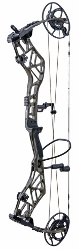

from $702.89
Pros
- Longer 33-inch axle-to-axle makes it noticeably more stable and forgiving - the pin settles and holds steady at distance, out past normal hunting range
- Genuinely fast for a Bear hunting bow - 334 fps with a 350-grain arrow at 70 pounds, among the quickest Bear has produced
- Dead in the hand with minimal post-shot vibration - the Killer Wave and in-riser dampeners leave almost nothing to feel at the shot
- Deep tunability from the EKO cam - four-position let-off from 75 to 90 percent, rotating-module draw length, and an adjustable roller cable guard
- Fully integrated riser - Picatinny sight rail, sling slot, pull-up rope loop and bubble level built into the frame, with an IMS dovetail that accepts a clamp-in rest
Cons
- On the heavier side for the class - the machined riser and 33-inch frame carry some mass, which steadies aim but is worth weighing if you pack in long distances
- A small dump into the back wall at the 90 percent let-off, and the wall could be a touch firmer - dialing let-off down to 80 or 85 percent tightens both up
Video
content from YouTube
Editors' review
Take everything that makes the Bear Persist a quiet, planted hunting bow, then stretch the chassis two inches longer - that is the Persist 33. New for 2025, it answers the buyer who liked the 31-inch Persist but wanted more forgiveness on the shot: a 33-inch axle-to-axle (ATA, the tip-to-tip length that steadies aim) built on a 29-inch riser, with the brace height trimmed slightly to 6.25 inches to hold the speed. The result is one of the fastest bows Bear has built - an owner who shoots a rack of Bears calls it the quickest he has drawn - wrapped in a shot signature that is dead in the hand. It runs the same proven EKO cam with a four-position let-off, the same fully integrated riser that hides the rest, sight rail, sling and pull-up rope inside the frame, and it is machined in Gainesville, Florida like its sibling. Priced a step under the Mathews and Hoyt flagship tier, it is aimed at the hunter who trades a little maneuverability for a bow that holds a pin like it is on a rest. Longer, steadier, and fast - that is the whole pitch, and it lands.
Finish
The Persist 33 ships in three finishes chosen for the field rather than the shelf: Mossy Oak Bottomland, a heritage bottomland-timber camo for the whitetail woods; Stone, a muted solid that reads as a low-visibility working tool; and Emerge 2.0, Bear's own pattern. That is a tighter, more curated menu than the base Persist's five, and it splits cleanly between the traditionalist who wants Bottomland and the growing group of hunters who prefer a clean solid like Stone that disappears in open country. The coating is the durable dip finish Bear runs across its hunting line, built to survive the scrapes of treestand hangs and pack-ins over multiple seasons. Emerge 2.0 is the value pick as well, priced slightly below the two others. It is a practical, field-first palette rather than a fashion range.Riser
The riser is machined aluminum with a heavily skeletonized cutout, and at 29 inches it is a long riser that puts the bow's mass between the hands for stability. Every accessory point is built into the frame: an IMS (Integrated Mounting System) dovetail on the back accepts a clamp-in dropaway rest, a Picatinny rail (the same accessory standard used on AR-platform firearms) up front centers the sight, the sling threads through the riser, and a pull-up rope loop is built into the limb-and-riser junction so a treestand hunter can haul the bow up without wrapping a line around a cam. A bubble level sits in the riser to square up second- and third-axis sight work. On this bow the IMS dovetail is a bolt-on piece rather than machined directly into the riser, and the riser also keeps standard Berger holes, so a shooter can run an integrated rest or a traditional bolt-on without giving anything up. In my experience the extra riser length is what you feel most at full draw - it is the difference between a pin that hovers and one that parks. The roller cable guard is adjustable to pull cable torque out during tuning.Grip
The Persist 33 uses Bear's composite hunting grip - a slim, fairly symmetrical profile with clean edges and a center channel running top to bottom. That channel is the useful part: it gives the hand a tactile index so it lands in the same place every draw, which is where repeatable accuracy at hunting range actually comes from. The composite is warm to the touch, a real advantage over bare aluminum on a cold-morning sit, and it carries just enough tack to stay put in a sweaty summer practice session. Bear offers more than one grip option, so a shooter who wants a different palm fill can swap it. Grip shape is the most personal call on any bow, and drawing this one I found the slim profile encouraged a low-torque, relaxed hand - though a shooter who prefers a square-backed target grip will notice the rounded contour. For most hunting hands it is comfortable as delivered.Limbs
The Persist 33 runs the same wide, stable limb design as the base Persist, and on the longer chassis that width pays off even more in steadiness on aim. Draw weight comes in two 15-pound modules - a 45-to-60 and a 55-to-70 - so a shooter can back the poundage down to build strength or peak it for energy without swapping limbs, and one owner reported happily shooting his at 60 pounds and still clearing 330 fps with light arrows. The limb pockets are machined aluminum rather than molded polymer, keeping the limb-to-riser connection rigid, and owners who have run Bear's recent bows hard note the pockets and finish have held up well over several seasons. Bear kept the threaded axles that let you service the cam without compressing the bearings. It is a proven, forgiveness-first limb setup, and the longer riser lets those wide limbs do their work.Eccentric System
The EKO cam carries over from the base Persist unchanged in philosophy, and it remains Bear's best-shooting cam. It is a mod-adjustable dual cam: a rotating module sets draw length across the 26.5-to-30.5-inch range in half-inch steps - a window shifted slightly longer than the base Persist to suit taller shooters - and a separate draw-stop module sets let-off (the share of peak weight your holding weight drops to) to 75, 80, 85, or 90 percent. That adjustable let-off is more useful on a hunting bow than it first sounds: 90 percent gives the lightest hold for a long sit, but a hunter shooting in wind often wants the extra holding weight of a lower setting to steady the bow, and a lower let-off also softens the roll-over into the valley. IBO is 340 fps, and the real numbers back it honestly across a range of arrow weights: at a 29-inch draw and 70 pounds a 350-grain arrow ran 319 fps, stepping down to 301 with a 400-grain, 284 with a 450-grain and 273 with a 500-grain; at a 30-inch draw a 350-grain clocked 334, and a heavy 650-grain bone-crusher still made 246 to 250 fps. As on the base bow, the four-position let-off and module indexing are not obvious at a glance, so the manual earns its keep during setup.Draw Cycle/Shootability
The Persist 33 draws like a modern flagship: mostly smooth, with a small hump rolling over the top and a manageable dump into the valley at the 90 percent setting. It is not a harsh cam - the dump is soft enough that you feel the roll-over without fighting it - and backing the let-off down to 80 or 85 percent tightens the transition and firms the hold. The back wall is solid, though one thing I noticed is that it stops just short of rock-hard; a shooter who wants a truly rigid wall will feel it, and it is the kind of thing a lower let-off setting improves. Where the bow shines is the shot: it is dead in the hand, with so little post-shot vibration that it surprises shooters stepping onto it, and even with a fast, machined riser the after-shot stays calm. The longer 33-inch frame is the real story on aim - at full draw the pin settles and holds where the shorter Persist wanders a hair, which is exactly why a forgiveness-first hunter reaches for the longer bow. It does carry some physical weight, and you feel it in the hand, but on a treestand that mass is what keeps the pin planted.Usage Scenarios
The Persist 33 is built for the hunter who values a steady hold over a light carry. Picture an open-country whitetail or mule-deer setup where the shot might stretch past 40 yards: the extra axle-to-axle length parks the pin and forgives a slightly imperfect grip, and the quiet, dead shot means the animal never places the release. It is a natural treestand bow - the pull-up loop hauls it up cleanly, the 90 percent let-off holds through a long sit - but it is equally at home for the shooter who practices at distance and wants a bow that rewards good form. One owner uses his for long-range balloon and trick shots out past 100 yards, which tells you how well it holds. The wide draw-weight range lets a shooter drop to 45 pounds to recover from an injury or build strength, then peak it for a full hunting setup. Where it asks a question is the long pack-in: the mass that steadies aim is mass you carry, so the ounce-counting backcountry hunter should weigh that. For the sit-and-wait and open-country hunter, the length and weight are the point.Versions
The Persist 33 is sold as a single bow-only model, with the choice made at finish and draw-weight module. Launch MSRP is $1,249.99 in Mossy Oak Bottomland and Stone, with the Emerge 2.0 finish priced slightly lower at $1,199.99, and each finish is available in the two 15-pound draw-weight modules - a 45-to-60 and a 55-to-70. There is no ready-to-hunt package; like the rest of the dealer-exclusive Legend Series, it is aimed at the buyer building a bow up with their own accessories, which the integrated rest and sight mounts are designed to make clean. Buyers who want the same platform in a shorter, more maneuverable package should look at the base Bear Persist, which shares the EKO cam, let-off range and price on a 31-inch axle-to-axle chassis with a slightly taller 6.5-inch brace.Bear Persist 33 vs Mathews Phase4 33, Bowtech SR350
| Bow | Bear Persist 33 | Mathews Phase4 33 | Bowtech SR350 |
| Version | 2026 | 2024 | 2023 |
| Picture | 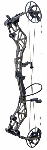 | 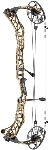 |  |
| Brace Height | 6.25 " | 6.5 " | 6 " |
| AtA Length | 33 " | 33 " | 33 " |
| Draw Length | 26.5 " - 30.5 " | 27 " - 31.5 " | 25 " - 30 " |
| Draw Weight | 45 lbs - 70 lbs | 50 lbs - 75 lbs | 40 lbs - 70 lbs |
| IBO Speed | 340 fps | 336 fps | 350 fps |
| Weight | lbs | 4.68 lbs | 4.4 lbs |
| Let-Off | 75% - 90% | 80% or 85% | 85 / 87% |
| Where to buy Best prices online |
| ||
| compare more bows | |||
Among longer hunting bows, the Persist 33 competes on stability and a quiet shot at a price below the flagship benchmarks. The Mathews Phase4 33 is the class standard for a dead-quiet, planted 33-inch bow - its bridged riser and Harmonic Stabilizer damping make it one of the stillest bows on aim - but it sits a notch higher in the premium flagship tier and locks let-off through Switchweight modules rather than a quick four-position stop. The Bowtech SR350 comes at the same forgiveness-and-speed target from the other direction, pairing a long 33.5-inch axle-to-axle with a fast 350 IBO and Bowtech's DeadLock cam tuning for the shooter who prioritizes raw speed and micro-adjustable tune. The Persist 33's answer is a genuinely fast, dead-in-hand shot on a machined USA riser with a four-position let-off, for less money than the Mathews and in the same neighborhood as the Bowtech - with the trade being physical weight, since it is the heaviest of the three. The decision comes down to priorities: the Mathews Phase4 33 for the buyer who wants the quietest possible long flagship, the Bowtech SR350 for the speed-and-tune-obsessed shooter, and the Persist 33 for the hunter who wants flagship-level forgiveness and a dead shot without the flagship outlay.