
PSE Sicario Review
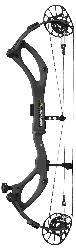

from $1429
Pros
- At 3.9 pounds bare, one of the lightest 33-inch hunting rigs you can buy - built to be carried and held, not just shot
- Genuinely top-of-class fast - real-world chronograph readings of 350-353 fps with a 350-grain arrow at 70 lb back up the 357 IBO claim
- The FDS cam rolls over early with no harsh stack, so the draw is far tamer than a 357-fps speed bow leads you to expect
- Quiet, low-vibration shot for a speed bow - measured near 70 dB with a crisp, dead-in-the-hand finish
- Textured carbon grip sits low-torque and repeatable, and the riser shows no twist at full draw even on the short brace
Cons
- The 5.25-inch brace runs vanes close to the rest - owners report keeping fletching under 3 inches to clear it cleanly, easy to plan for at setup
- Less forgiving of form than a tall-brace bow, with a short valley - staying engaged on the back wall and running the 85% let-off setting (the 75% feels aggressive) keeps it settled
- Fine cam-lean tuning relies on the EZ.220 snap-spacer kit (about $100, sold separately) and a bow press - only a concern if you tune your own gear
Video
content from YouTube
Editors' review
PSE calls the Sicario "the fastest carbon bow ever built," and the marketing wants you to picture a punishing, jaw-clenching draw - the price speed bows usually charge. The surprise is what happens when you actually pull it. This is a 357 fps IBO bow (IBO is the industry chronograph rating taken at a fixed 30-inch, 70-pound, 350-grain setup) that draws like a hunting bow rather than a drag strip, because the new FDS cam - Force Distribution System - rolls over early and adds effective brace height at full draw instead of stacking weight into your face. It rides on PSE's Dead Frequency Carbon riser, a foam-cored, carbon-wrapped chassis that puts the whole bow at 3.9 pounds, among the lightest 33-inch rigs on the market. The result is a speed bow aimed squarely at the carbon believer: the Western or mobile hunter who already knows they want the lightest possible rig and refuses to give up velocity to get it. Launched for 2026 at $1,999, it asks a flagship price and answers with flagship numbers. The question this review settles is whether the shooting experience lives up to the speed sheet - and for the right shooter, it does.
Finish
The Sicario ships in seven finishes, a broad palette for a carbon flagship: solid Black, Charcoal, Clay Brown, and Olive Green for shooters who want a clean monochrome riser, plus Kuiu Verde, Mossy Oak Bottomland, and Kryptek Skyfall for full hunting concealment. The coating is a coarse, textured paint rather than a glossy dip, and that texture is deliberate - it gives the bare carbon grip section real traction so your hand doesn't slide, and it reads as durable and hard-wearing in person. The trade-off is honest: the matte texture shows fine surface scratches more readily than a slick finish would, something to expect on a bow that lives in a pack and a treestand rather than a case. The solid colors in particular show off the carbon riser's lines well, and the black is the one that most looks the part of a premium carbon rig. For a hunting bow, seven options across solid and camo is generous coverage.Riser
The riser is the heart of the Sicario's pitch. PSE builds its carbon bows by wrapping carbon around a foam core in a one-piece monocoque structure it calls Dead Frequency Carbon - a different approach from Hoyt's aluminum-framed carbon or Bowtech's aluminum-then-carbon construction, and the reason a 33-inch bow lands at just 3.9 pounds. That weight is the whole point of buying carbon: on a long pack-in or an all-day sit, the rig you barely notice on your shoulder is the one you'll still hold steady on the shot. The carbon also damps vibration at the source, which is a large part of why the Sicario shoots quiet for its speed. Cable management runs through a CGM cable guard, and the cables attach to recessed posts on the cams - a detail that keeps the load on the axles consistent so the riser doesn't torque as you reach full draw. In my experience that recessed-post geometry is the unsung feature here: drawing the bow and watching the top cam, everything tracks dead in line, with none of the riser twist that a short-brace speed bow can punish you for. Accessory mounting is modern, with a Picatinny rail integrated directly into the riser for sights and a QAD Integrate dovetail mount for the rest.Grip
The grip is the bare carbon riser section itself, given shape and traction by that textured finish rather than a bolt-on side-plate. It runs narrow through the throat and is angled to seat the hand in a low, repeatable position that resists torque - the kind of grip that rewards a relaxed hand and punishes a tight, twisting one. Shooters who have spent time on PSE's carbon bows will find it familiar; it carries the same character as the carbon grips before it, which several owners count among their favorite PSE grips for how naturally it indexes to the same spot shot after shot. There is a real interaction between the grip and the short brace height worth understanding: with a tight, knuckled grip the bow delivers a small sharp push into the hand on release, while a relaxed grip makes that disappear entirely. That makes the Sicario a bow that pays back good hand technique - settle into the low position with a loose hand and it sits quiet and dead; fight it and it lets you know. For a hunting carbon bow the grip is a strength, not an afterthought.Limbs
The Sicario uses split limbs anchored in Limb Vise pockets that lock the limb base for alignment and stability, paired with the carbon riser to keep the whole package light and rigid. Draw weight is offered in 50, 60, 70, and 80-pound peak options, the 80-pound ceiling giving serious-poundage hunters real kinetic-energy headroom - at a 467-grain arrow the bow produced over 97 foot-pounds of energy in hands-on testing, enough authority for the largest North American game. The limbs adjust across roughly five turns of the limb bolts to drop into the next weight band down, the usual press-free poundage range. Carbon-riser PSE bows have a long durability reputation behind this limb-and-pocket design, and each bow ships with a tag showing it was drawn and weight-checked by name before leaving the factory - a small reassurance that the 70-pound bow you ordered actually makes its number. The limb geometry, working with the FDS cams, is what stores the energy that turns into the Sicario's headline speed without resorting to a brutally short, heavily preloaded limb.Eccentric System
The FDS cam - Force Distribution System - is the genuinely new part for 2026 and the reason the Sicario shoots the way it does. PSE's claim is that the cam adds about 10 fps over the previous carbon-bow cam while keeping a smoother draw, and the design backs it up two ways. First, it rolls over earlier in the cycle and refuses to stack - instead of piling weight on at the end the way speed cams traditionally do, it transitions cleanly into the wall. Second, it raises the effective brace height at full draw: PSE quotes roughly 6.5 inches of effective brace from a 5.25-inch physical brace, so the bow holds and forgives more like a longer-brace rig than its dimensions suggest. The cam runs oversized 5/8-inch bearings and a redesigned, larger draw stop that gives the back wall more contact surface, and let-off is adjustable across 75 to 85 percent (let-off being the percentage of peak weight your holding weight drops to at full draw). The speed is real and repeatable: independent chronograph sessions logged 350.1 fps at 29 inches and 352-353 fps at 30 inches with a 350-grain arrow at 70 pounds, putting the Sicario at the very top of the carbon speed class against a 357 IBO. Draw-length adjustment runs from 24.5 to 30 inches in half-inch increments within the cam, and the EZ.220 snap-spacer system lets you fine-tune cam lean in 0.020-inch steps - though that adjustment needs a press and the spacer kit, sold separately for around $100.Draw Cycle/Shootability
Here is where the Sicario defies its own spec sheet. A 357 fps IBO rating sets you up to expect a wall of resistance and an aggressive, jumpy back end, and that is not what you get. Drawing it, the front end builds into a relatively firm but linear pull - I wouldn't call it buttery the way a long-brace target cam is buttery, but it is dramatically less aggressive than the IBO number implies, with none of the big mid-draw hump that speed bows usually demand to generate their velocity. It rolls into the valley cleanly, and the back wall is firm and well-defined thanks to that enlarged draw stop. The let-off setting matters more than usual here: at 85 percent the holding weight is light enough to settle on target all day, while the 75 percent setting feels noticeably more aggressive and wants to creep, so most hunters will leave it at 85. The shot itself is the pleasant surprise - for a carbon speed bow it is quiet and crisp, measured at just under 70 dB, with no meaningful buzz and almost nothing left in the hand once you've learned the relaxed-grip position. The valley is on the shorter side, so this is a bow that wants you engaged on the wall rather than coasting, and at distance it will amplify a sloppy shot the way any short-brace speed rig does. Shooters who do their part are rewarded with sub-3-inch groups at 60 yards, but this is an honest speed bow that asks for honest form.Usage Scenarios
The Sicario fits the hunter who has already decided weight is worth paying for. Picture the Western elk or mule deer hunter packing miles into the backcountry, where every ounce on the shoulder matters and the lightest rig that still hits hard is the right rig - the 3.9-pound Sicario disappears in the hand on the climb and still delivers enough kinetic energy at 70 or 80 pounds for elk-sized game. It suits the mobile whitetail hunter too, the one hanging and stripping sticks on public land who carries the bow more than they shoot it, and the flat trajectory from that speed shrinks the guesswork when a buck steps out at an unranged distance. It is a capable 3D and target option for a shooter who values a fast, flat arrow and is comfortable maintaining form, though the short brace makes it less of a forgiving spot-shooting platform than a long-axle target bow. Where it asks for honesty about fit is the new or inconsistent shooter: this is not the bow to learn fundamentals on, because the short brace and short valley reward good technique and expose bad. For the experienced hunter who wants maximum speed in the lightest possible carbon package, though, it lands exactly in the niche it was built for.Sicario vs Hoyt Carbon RX Twin Turbo, Bowtech SR350
| Bow | PSE Sicario | Hoyt Carbon RX Twin Turbo | Bowtech SR350 |
| Version | 2026 | 2022 | 2023 |
| Picture |  | 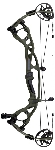 |  |
| Brace Height | 5.25 " | 5.875 " | 6 " |
| AtA Length | 33 " | 33 " | 33 " |
| Draw Length | 24.5 " - 30 " | 25 " - 30 " | 25 " - 30 " |
| Draw Weight | 40 lbs - 80 lbs | 30 lbs - 70 lbs | 40 lbs - 70 lbs |
| IBO Speed | 357 fps | 350 fps | 350 fps |
| Weight | 3.9 lbs | 4.5 lbs | 4.4 lbs |
| Let-Off | 75% - 85% | 85% | 85 / 87% |
| Where to buy Best prices online | |||
| compare more bows | |||
The Sicario's most direct rival is the Hoyt Carbon RX Twin Turbo, the other carbon-riser speed flagship built on a 33-inch platform - a near-perfect cross-shop. Both chase the same buyer, but the Sicario undercuts it on the two numbers that define a carbon speed bow: it is roughly 0.6 pounds lighter at 3.9 versus 4.5 pounds, and faster, with a 357 IBO against the Twin Turbo's 350, while running a tighter 5.25-inch brace to the Hoyt's 5.875. The Twin Turbo answers with Hoyt's aluminum-framed carbon construction and a longer track record, and the choice between them often comes down to which brand's grip and cam feel you already trust. The Bowtech SR350 comes at the speed question from the value tier: also a 33-inch, 350 IBO speed bow, but built on an aluminum riser at 4.4 pounds and launched at $1,299, several hundred dollars under the Sicario. The SR350 gives up the carbon weight savings and a touch of top-end speed but delivers Bowtech's DeadLock tuning and a gentler price of entry. The decision comes down to priorities: the Sicario for the hunter who wants the lightest, fastest carbon rig and will pay flagship money for it, the Hoyt Carbon RX Twin Turbo for the carbon shooter loyal to Hoyt's platform, and the Bowtech SR350 for the speed-minded buyer who would rather keep the money than shave the ounces.