
PSE Force DS Review
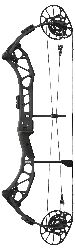

from $699.99
Pros
- Runs PSE's brand-new flagship FDS cam on a sub-$1000 bow, and it delivers - around 340 fps on a chronograph at 70 lb, 30 inch, 350 grain, a touch above its published 335 IBO number
- Smooth, controlled draw for a fast cam - clean rollover into a firm back wall with no sponge, and a valley that holds you without fighting the let-down
- Quiet, dead-in-hand shot - roughly 81.5 dB bare with minimal vibration and no hand torque at full draw
- Real at-home tunability at this price - EZ.220 snap-spacer cam-lean adjustment plus a three-piece tuning string let you square the bow up yourself
- Rubber-coated grip stays warm and indexes the same way every time - a genuine plus for cold treestand mornings on an aluminum riser
Cons
- Cast-aluminum riser makes it a little heavier than the carbon flagships at about 4.6 lb bare - most hunters read the extra mass as a steadier hold, but anyone chasing the lightest carry may want to shoot one first
- Fixed 85% let-off with no adjustment - 85% suits most hunters, but shooters who like to dial let-off down for a firmer valley will need to step up to the flagship Mach or Sicario cam to get that
Video
content from YouTube
Editors' review
Mid-price hunting bows almost always get last year's cam - or the year before that. PSE did the opposite with the Force DS: it took the FDS Cam System (Force Distribution System), the brand-new-for-2026 cam that powers its carbon flagships, and bolted it onto a sub-$1000 aluminum-riser bow. The result behaves like a bow that costs a lot more than it does. On a chronograph it clears its own 335 fps IBO rating (the industry-standard speed measured at a fixed 30 inch, 70 lb, 350 grain setup), and it does it with a draw cycle that stays civil and a shot that goes quiet and dead in the hand. At 30 inches axle-to-axle (ATA, tip-to-tip along the bow) with a 6 5/8 inch brace height, it splits the difference between a maneuverable treestand bow and a forgiving one. The trade for that price is a cast-aluminum riser instead of machined aluminum or carbon and a fixed let-off module instead of an adjustable one - everything that actually drives the shot carries straight over from the flagship line. For the hunter who wants flagship cam performance without flagship money, this is the most interesting bow PSE built for 2026.
Finish
The Force DS ships on a black riser paired with your choice of three finishes: solid Black, Kryptek Skyfall, and Mossy Oak Bottomland. That covers the two camo patterns most whitetail and Western hunters actually reach for - Bottomland for timber, blinds, and early-season edges, Skyfall for a more open, rocky, high-country look - plus a clean blacked-out option for shooters who prefer a bow that disappears without a pattern. It is a tighter palette than PSE's carbon flagships offer, which is normal for a value-tier model where the finish menu is trimmed to hold the price. The dip-coated camo and anodized black are the same durable field coatings PSE runs across its hunting line, so scuffs and blind contact hold up as well here as on the more expensive bows.Riser
The riser is where PSE spent its cost savings, and it is the single honest difference between this and a flagship. Instead of the machined-aluminum or hand-laid carbon risers on the Mach and Sicario bows, the Force DS uses a cast-aluminum riser - poured to shape rather than cut from billet, which drops the manufacturing cost sharply and adds a little weight. It carries roughly 1.5 inches of reflex on a compact riser, geometry that helps the 30 inch bow feel quick in hand without giving up stability. Accessory integration is genuinely modern for the tier: the sight mounts to a front Picatinny rail (the same accessory-rail standard used on AR-platform firearms), and the rest drops into a rear QAD IMS dovetail, so most hunters can hang their kit without a spacer stack. The sight rail bolts to the front of the riser rather than being machined in, so it comes off if you'd rather run a direct-mount sight. A metal roller cable guard handles cable clearance - not the noisier friction slide you sometimes find at this price - and a limb-vise pocket keeps the limbs squared to the riser. In my experience the front-rail-plus-dovetail combination is the part of this bow that most makes it feel like a flagship during setup, not a budget build.Grip
The grip is a rubber-coated PSE hunting grip, medium in thickness and rounded rather than thin. It indexes the same way shot after shot, which is exactly what you want from a hunting grip - repeatability is where accuracy actually comes from, and a hand that lands in the same place every draw is doing half that work for you. The rubber coating earns its keep in cold weather: an aluminum riser gets genuinely cold in a November treestand, and the coated grip keeps that chill off your bow hand in a way a bare metal grip never will. It reads a touch fuller than the thinner grip on PSE's Decree, so shooters who prefer a slim, low-torque profile may notice the difference, but new and intermediate hunters tend to appreciate the extra to hold onto. There is no perceptible hand torque induced at full draw with a neutral hand, which is the real test of a grip's shape.Limbs
The Force DS runs split limbs in three draw-weight options - 50, 60, and 70 lb - covering everything from a lighter-drawing or younger hunter up to a full-power whitetail and Western setup. The limb-vise pocket is the notable piece of hardware here: it locates each limb positively against the riser so left-right alignment stays put, which is part of why the bow tunes as predictably as it does. The bow's standout trait, though, comes from the FDS cam rather than the limbs themselves: it raises the effective (dynamic) brace height at full draw. PSE lists the static brace at 6 5/8 inches, but the cam geometry grows it to over 8 inches by the time you reach the wall - so the bow behaves more forgivingly than its short static brace would suggest, buying back some of the stability a shorter, faster bow normally trades away. PSE sells this family under its Full Draw Stability (DS) banner, but that effective-brace gain is a cam-driven effect, not a separate limb system. The split-limb design and cast-riser pocket are proven across PSE's hunting lineup, so there is no first-year-limb risk to weigh here.Eccentric System
The cam is the whole story. The FDS Cam System - Force Distribution System - is PSE's new-for-2026 inline cam, and it is the identical cam found on the carbon Sicario, Decree, and Mach 30/33/35 DS flagships. Its defining change is a cable post recessed further inline on the cam, which distributes load more evenly and tightens up how the bow holds and repeats. The only cam difference between this bow and the flagships is the module: the Force DS carries a fixed 85% let-off (let-off is the percentage of peak weight the holding weight drops off to at full draw, so 85% means you hold only about 15% of peak) on a metal module, where the flagship cam offers adjustable 75/80/85%. Performance does not suffer for the lower price. On a chronograph at 70 lb and 30 inch draw, it ran about 340 fps with a 350 grain arrow - five feet per second over its own IBO claim - then roughly 300 fps with a 450 grain arrow and 252 fps with a heavy 650 grain shaft. Drop to a realistic hunting setup of 65 lb, 29 inch draw, and a 450 grain arrow and it still delivers around 277 fps; a 412 grain hunting arrow at 70 lb and 29 inches clocked 306.7 fps. Those are numbers that embarrass a lot of pricier bows. Tuning is done through the EZ.220 snap-spacer system, which shifts cam lean in 0.020 inch increments to clear left-right tears; it is genuinely a do-it-at-home system paired with the PBTS three-piece string, though swapping the spacers does require putting the bow in a press.Draw Cycle/Shootability
On paper the FDS cam is aggressive, and I expected the usual fast-bow tax - a stiff hump and a grabby, disappearing valley. Drawing it, that tax never came due. The front end builds and rolls cleanly over peak weight, the back wall is firm and defined with no spongy give, and the valley sits right in the sweet spot: not so short the bow lunges forward if you relax, not so soft you have to shove it to let down. That matters in the field, where you may sit at full draw waiting for a deer to clear a branch, and it is exactly the spot most fast value-bows get wrong. The shot is where the flagship DNA shows most: bare, it measured about 81.5 dB, squarely in the quiet range, with minimal vibration and no hand torque to fight. What I keep coming back to is how little you actually give up - the draw is smooth enough to shoot all afternoon without wearing out your bow arm, and the bow settles so fast you almost hear the arrow hit before it finishes. The cast-aluminum riser makes it a hair heavier than a carbon bow, and that mass reads as a steadier float on the pin rather than a drawback for most hunters.Usage Scenarios
This is a whitetail bow first. At 30 inches axle-to-axle it swings easily in a treestand and tucks into a ground blind without clipping the walls, and the forgiving hold suits the twenty-yard, high-pressure shot on a deer that stepped out early. It has the speed and draw weight to reach further, so it carries cleanly into Western spot-and-stalk for mule deer, antelope, and elk-country backup duty where the shot might stretch. The 25.5 to 31 inch draw-length range and 50, 60, and 70 lb weight options cover most adult hunters and a good share of shorter-draw shooters, which makes it a sound first serious bow for someone stepping up from an entry package as well as a no-compromise second bow for a veteran who wants flagship cam performance in a beater they won't baby. Picture a hunter who walks into the shop the week before the opener, hangs a sight and rest on the front rail and dovetail that afternoon, tunes it with a quick paper pass, and is in a stand by the weekend - the Force DS is built for exactly that timeline. What it is not is a carbon ultralight for all-day mountain packing; the extra riser mass you feel on the trail is the price of the lower sticker.Versions
The Force DS is sold as a single-spec bow at a $899 launch MSRP (bow only, 2026), with the only SKU choice being finish: Black, Kryptek Skyfall, or Mossy Oak Bottomland, all at the same price. Every version shares identical hardware - the same FDS cam with the fixed 85% module, the same cast-aluminum riser, the same 30 inch / 6 5/8 inch geometry - so the choice is purely cosmetic. It is offered in 50, 60, and 70 lb peak weights and across the full 25.5 to 31 inch draw-length range. Unlike PSE's ready-to-hunt packages, this is a bare bow: budget separately for a sight, rest, quiver, and stabilizer.PSE Force DS vs PSE Brute ATK, Bear Whitetail Legend
| Bow | PSE Force DS | PSE Brute ATK | Bear Whitetail Legend |
| Version | 2026 | 2025 | 2022 |
| Picture |  | 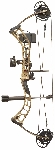 |  |
| Brace Height | 6.625 " | 6.75 " | 6.75 " |
| AtA Length | 30 " | 32 " | 31 " |
| Draw Length | 25.5 " - 31 " | 23 " - 30.5 " | 23 " - 30 " |
| Draw Weight | 40 lbs - 70 lbs | 50 lbs - 70 lbs | 45 lbs - 70 lbs |
| IBO Speed | 335 fps | 321 fps - 329 fps | 320 fps |
| Weight | 4.5 lbs | 4.1 lbs | 4.3 lbs |
| Let-Off | 85% | 80% | 80% |
| Where to buy Best prices online | |||
| compare more bows | |||
The Force DS lands one clear step above the value bows it shares a shelf with, and the comparison is really about how much bow you want for the money. The PSE Brute ATK is the platform the Force DS effectively replaces - a 32 inch, 321 to 329 fps hunting bow on PSE's older ATK cam, sold around $699.99 as a complete ready-to-shoot package. The Bear Whitetail Legend goes the other direction on price: a 31 inch, 320 fps single-cam bow that ships as a full ready-to-hunt kit - sight, rest, quiver, stabilizer, peep - for under $500. Both are genuinely good buys, and both are cheaper out the door than the bare Force DS once you add accessories. What the extra money buys is the cam: the Force DS carries PSE's current flagship FDS cam and posts real-world speeds neither of the others can touch, plus a firmer back wall, a better-defined valley, and at-home cam-lean tuning. The Brute ATK and the Whitetail Legend answer a different question - turnkey, accessorized, and hunting this weekend for the least money. So the decision comes down to priorities: the Bear Whitetail Legend or PSE Brute ATK for the hunter who wants a complete rig for the lowest price, the Force DS for the one willing to buy a bare bow and spend up for flagship-grade cam performance and speed.