
Bear Cruzer G3 Review


from $249.97
Pros
- One bow that spans a whole family - the DrawDial module rotates through the full 14 to 30 inch draw range and 10 to 70 pounds with nothing but an Allen key
- Ships as a complete Trophy Ridge kit that genuinely shoots out of the box once the draw length is set at the shop
- Comfortable 75% let-off - even a first-time archer can hold and shoot it drawing the full 70 pounds
- Compact 30-inch axle-to-axle that stays easy to swing and carry for spot-and-stalk in tight timber
Cons
- The draw-length module steps in full inches and its rear screw hides behind the cam - a helper on the string or a press eases it, and any pro shop sets it in minutes
- The factory Whisker Biscuit can fray feather-fletched arrows over time - shooters running feathers may want to switch to vanes, an inexpensive swap
Video
content from YouTube
Editors' review
Bear built the Cruzer line on a single promise: one bow the whole household can share, from a kid drawing 15 pounds in the backyard to that same kid filling a tag at 18. The G3 is the generation where that promise stopped needing a bag of spare parts. Where the outgoing G2 asked you to swap in a different module for every draw length, the G3's MV1 cam carries a rotating DrawDial that covers 14 to 30 inches from the modules already on the bow - an Allen key and a few minutes, no separate parts to buy or lose. Bear also raised the let-off (the percentage of peak weight the bow sheds at full draw) to 75% and lifted the draw-weight floor to 10 pounds, so the range now runs 10 to 70. The geometry stays honest to the line - 30-inch axle-to-axle, 6.5-inch brace, 315 fps IBO (the industry-standard speed rating measured at a fixed 30-inch, 70-pound, 350-grain setup) - and the whole thing still lands as a factory-rigged Ready-to-Hunt package under $500. This is the grow-with-you bow with the friction taken out.
Finish
Bear offers the Cruzer G3 in seven finishes, all built on a Shadow black riser so the camo lives on the limbs and accents. The camo choices are Fred Bear Camo, Mossy Oak Country DNA, TrueTimber Strata, and Wildfire; the bolder palettes cover Toxic and Muddy Girl; and there is a straight Shadow all-black for shooters who would rather skip pattern entirely. That is a wider spread than most sub-$500 packages bother to stock, and it matters for a bow this line targets - a household picking one bow for two or three people appreciates being able to match it to the shooter rather than settling for whatever single pattern the budget tier usually allows. The finish is a durable dipped coat over the cast-aluminum riser; it is workmanlike rather than a premium anodize, which is exactly right at this price. Solid Shadow tends to be the easiest to keep looking clean over years of backyard and treestand use, while the Muddy Girl and Toxic runs speak to shooters who want the bow to read as theirs on sight.Riser
The Cruzer G3 rides on a cast-aluminum riser with the same relieved, cutout geometry that has carried the Cruzer line for years - light in the hand, stiff enough for the job, and built to a price. Bear machines the accessory holes to standard spacing so the factory Trophy Ridge sight, rest, and quiver bolt straight on and any aftermarket replacement drops in later without drama. The 30-inch axle-to-axle length keeps the riser short and the whole bow compact, which is a deliberate trade - you give up a little of the dead-steady hold a long target riser offers in exchange for a bow that swings and carries easily. Setting mine up out of the box, the appeal of a true Ready-to-Hunt platform is obvious: everything is pre-mounted, the geometry is forgiving, and the only real decision left to the buyer is draw length. It is not a carbon flagship and does not pretend to be; it is a sensibly-built aluminum chassis whose job is to make the adjustability and the RTH kit work, and it does that job cleanly.Grip
The G3 uses Bear's slim molded grip integrated into the riser, a low-to-medium wrist shape that sits the hand in a repeatable, low-torque position. For a line aimed at new shooters and shared households that consistency is worth more than a plush custom feel - a narrow, neutral grip is easier for a beginner to load the same way shot after shot, which is where accuracy actually comes from at this level. It runs a touch firm and thin against the palm in cold weather, and shooters who want a warmer or fuller fill can add a slip-on grip in the standard aftermarket sizes. Across the range of hand sizes a growing household throws at one bow, the neutral profile is the safe choice, and it torques less than the chunkier grips some budget bows still ship.Limbs
The Cruzer G3 runs quad (split) limbs in a forgiving pre-loaded geometry, and the draw-weight story is the headline: a single limb-bolt range covers 10 to 70 pounds, a genuinely wide swing for one set of limbs. That span is what lets the bow start a child at backyard weights and finish as a full 70-pound hunting rig years later without new hardware. Adjustment is the familiar Allen-key turn on each limb bolt - back them out evenly, and the gap that opens at the bolt gives you a quick read on how much thread, and therefore how much weight, you have left. No press is needed for weight changes. The split-limb design has a long, boring reliability record across the Cruzer line, which at this price point is exactly the kind of boring you want: limbs that hold poundage and timing without fuss over seasons of backyard and field use.Eccentric System
This is where the G3 earns its generation number. The MV1 dual-cam system replaces the G2's swap-in module set with a rotating DrawDial: the module already on each cam turns to any mark from 14 to 30 inches, in one-inch steps, set with an Allen key - no separate modules to buy, keep track of, or lose. Bear and its dealers position the change as press-free, and in practice the adjustment is genuinely tool-simple; the one honest wrinkle is that the rear of the two module screws tucks behind the cam, so relieving string tension - a friend holding the bow back, or a press - makes reaching it easier, and any shop will set your length in minutes if you would rather not fuss with it. The payoff for that small friction is real versatility that the G2 could not match from a single configuration. Let-off climbs to 75%, meaning at full draw you are holding a quarter of peak weight, which is what makes long waits at anchor comfortable for smaller and newer shooters. Speed stays rated at 315 fps IBO - quick enough for whitetail-range hunting energy, and honest for a wide-range budget cam rather than a speed-first flagship. Bear does not publish a real-world chronograph figure, and no independent speed test of the G3 exists yet, so treat the 315 as the fixed-setup IBO number it is; a shooter at a shorter draw and lighter weight will see less, as with any bow.Draw Cycle/Shootability
The Cruzer G3 draws the way a wide-range budget cam should: an even, unhurried ramp to peak with no sharp spike, rolling into a valley that is forgiving rather than aggressive. Pulling it at the full 70 pounds, the 75% let-off does the quiet, important work - the holding weight drops off enough that staying at anchor is comfortable, which is precisely why a brand-new archer can pick this bow up and put a full quiver into a target on their second-ever session with a compound. The back wall is defined without being punishing, and the forgiving valley means a beginner who creeps forward slightly is not immediately punished with a jumpy shot. It is not a whisper-quiet flagship, and Bear does not publish a decibel figure - there is a modest budget-bow shot signature you can feel and hear - but nothing about the shot is harsh or unruly. What I keep coming back to with this bow is how little it asks of the shooter: set the length, pull it back, and it behaves, which is the entire point of a bow meant to be handed between people of very different sizes.Usage Scenarios
Picture a household where dad, mom, and a 13-year-old will pass one bow back and forth for three or four seasons: the G3 is built for exactly that, spanning 14 to 30 inches of draw and 10 to 70 pounds so nobody is shooting the wrong bow. It is a natural first serious bow - buy the package on Saturday, have the shop set your length, and be flinging arrows in the backyard by Sunday afternoon. The compact 30-inch axle-to-axle is the reason more than one owner has chosen it over Bear's larger Legit: it stays easy to maneuver still-hunting through tight timber or slipping along a trail, rather than fighting brush like a longer target bow. At full weight it carries honest whitetail and hog energy at practical woods ranges, and its adjustability makes it an ideal platform to learn tuning and form on before a shooter commits to a pricier rig. Where it is not the tool: a serious long-range western elk hunter or a competitive spot shooter chasing raw speed and a dead-still long-riser hold will outgrow it - but that buyer was never the Cruzer's audience.Bear Cruzer G3 vs Diamond Edge 320, PSE Stinger MAX
| Bow | Bear Cruzer G3 | Diamond Edge 320 | PSE Stinger MAX |
| Version | 2024 RTH | 2022 | 2021 |
| Picture | 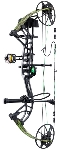 |  |  |
| Brace Height | 6.5 " | 7.25 " | 7 " |
| AtA Length | 30 " | 32 " | 30 " |
| Draw Length | 14 " - 30 " | 15 " - 31 " | 21.5 " - 30 " |
| Draw Weight | 10 lbs - 70 lbs | 7 lbs - 70 lbs | 45 lbs - 70 lbs |
| IBO Speed | 315 fps | 320 fps | 304 fps - 312 fps |
| Weight | lbs | 3.6 lbs | 3.8 lbs |
| Let-Off | 75% | 85% | 80% |
| Where to buy Best prices online | |||
| compare more bows | |||
All three of these are sub-$500 fully-adjustable ready-to-shoot bows chasing the same grow-with-you buyer, and they separate on geometry and reach rather than headline speed. The Diamond Edge 320 is the roomier, more forgiving platform - a 32-inch axle-to-axle and a 7.25-inch brace with 85% let-off and a 7-to-70-pound range, at a $499 package price, which buys a longer, steadier hold and an even easier draw-weight floor for the smallest shooters, at the cost of the Cruzer's compactness in the timber. The PSE Stinger MAX sits closest to the G3 on intent - a similarly-priced adjustable ready-to-shoot bow at a $449 package - but its draw range starts near 21.5 inches, so it does not reach down to the 14-inch youngest-shooter length the Cruzer G3 covers, making the Bear the better one-bow-for-everyone pick when a small child is in the mix. The Cruzer's own case is the DrawDial: the widest draw span of the three set without swapping modules, in the most compact package, with the broadest finish selection. The decision comes down to priorities: the Diamond Edge 320 for the shooter who wants the most forgiving long-riser hold, the PSE Stinger MAX for a lean adult-and-up setup, and the Cruzer G3 for the household that needs one bow to genuinely fit a 14-inch draw and a 30-inch draw at once.