
Bear Inception Review


from $310
Pros
- Real hunting-weight speed for the money - rated 340 fps IBO, and even a heavy 400-grain arrow at 29 inches and 70 pounds still crosses the chronograph near 304 fps
- Quiet with little hand shock - the ShockWaves limb dampeners and rear string stop kill most of the vibration, so the shot goes quiet and dead in the hand
- Slim, low-torque grip that owners keep singling out - the narrow side-plate grip sits the hand deep and repeatable instead of perched high where torque creeps in
- Wide press-free fit range - a rotating module covers 25.5 to 30 inches of draw and a 15-pound weight window, so one bow sets up for a range of shooters without a bow press
Cons
- The draw starts a touch stiff up front - the hybrid cam ramps harder than Bear's EKO single-cams, the honest price of the speed; it settles into a defined valley, and shooters chasing the smoothest possible pull should shoot an EKO single-cam bow first
- Fixed 75 percent let-off runs lower than the 85 percent many rivals offer - you hold a little more weight at full draw, which some owners flag on long treestand waits; buyers who hold at anchor for extended periods may prefer an adjustable-let-off bow
- Some owners have reported the RTH package's Trophy Ridge quiver grippers arriving very stiff and hard to load - working them in or swapping in any aftermarket quiver solves it, and the Bow Only version skips the kit entirely
Video
content from YouTube
Editors' review
Speed is usually the expensive spec - the Inception sold it cheap. For 2021 Bear slotted this bow into the mid tier of its Legend Series and gave it the brand's Synchronized Hybrid cam, a two-cam system tuned to chase a 340 fps IBO rating (the industry-standard chronograph number at a fixed 30-inch, 70-pound, 350-grain setup) rather than the buttery draw of its EKO single-cam bows. It wraps that cam in a compact 32-inch axle-to-axle riser, hangs Bear's ShockWaves limb dampeners and a string stop off it to keep the shot quiet, and strings it with Bear's Contraband cables - then offered the whole thing bare or as a complete Ready-to-Hunt kit. The pitch, in Bear's own words, was premium performance without the premium price, and the shooting bears most of it out: this is a fast, quiet, compact hunting bow that lands well under flagship money. It was a one-year model, dropped from the 2022 lineup, so today it lives on the used rack - which is exactly where its value case is strongest. If you want real speed and a slim, low-torque hand without paying for an adjustable-let-off flagship, the Inception is the bow to hunt down.
Finish
The Inception came in three finishes, a tighter palette than Bear's sprawling flagship color lists but a well-chosen one. Realtree Edge is the all-purpose woodland camo that suits most whitetail country. Shadow is a blackout treatment for shooters who want a solid, non-patterned look that hides in a treestand's shade. The standout is Fred Bear Camo, a retro throwback pattern that nods to the brand's late-1980s and early-1990s heyday - the kind of finish an older hunter recognizes from the bow they grew up shooting, and a younger one buys for exactly that character. All three wear Bear's state-of-the-art hydrographic dipping, the durable coating that runs across the lineup and holds up to a season of treestand knocks and brush. For a mid-priced bow the finish quality punches above the price tier, and the Fred Bear pattern in particular gives the Inception a personality that its plainer rivals lack.Riser
The Inception rides on a machined aluminum riser cut to keep the bow at a compact 32 inches axle-to-axle (the tip-to-tip axle span that sets how forgiving and how maneuverable a bow feels). Bear designed the riser to resist flex and shed weight while holding its strength, and in the hand the payoff is a bow that carries easily - short enough to swing through thick brush and tuck into a treestand or blind without fighting the frame. Front and rear stabilizer bushings let a shooter hang weight at both ends to balance the bow to taste, a nice touch on a mid-priced rig. Complete vibration control runs from the limbs through the riser to a rear string stop, and that full-system approach is a big part of why the shot settles down instead of ringing. It is not a long, target-length riser built for maximum hold stability at distance - it is a purpose-built hunting chassis, and the compact geometry is the point rather than a compromise.Grip
The grip is one of the Inception's quiet strengths. Bear fitted the slim side-plate grip it ran across several models of the era - a narrow profile that seats the hand low and deep in the throat of the riser rather than perched high where torque sneaks into the shot. Owners consistently single it out: narrow grips divide shooters, but the ones who dislike a fat, blocky grip tend to praise this one specifically. Drawing the bow, I found the thin profile makes it easy to return to the same hand position shot after shot, which is exactly what a hunter wants when the season's opportunity comes down to a single arrow. The side plates are replaceable and the riser is machined to shoot off the bare grip if you strip them, so both the slim-grip crowd and the bare-riser purists are covered. For a bow at this price, the grip feels a tier above what the money usually buys.Limbs
The Inception uses split limbs paired with Bear's generous two-module draw-weight strategy. Two 15-pound modules - 45 to 60 pounds and 55 to 70 pounds - let a shooter set a genuinely moderate draw or a full 70-pound hunting weight from the same bow, a wider adjustment window than the 10-pound band many competitors offer in this class. That spread, combined with the wide draw-length range, is what lets a single Inception fit a range of body sizes and shooting styles. The limbs feed into the ShockWaves dampening system, which nests rubber dampeners at the limb tips to soak up the energy that would otherwise buzz back through the riser. It is a proven, no-drama limb architecture - the kind of durable, consistent design Bear has run across its hunting lineup for years, chosen for reliability at the price rather than for exotic materials.Eccentric System
The cam is where the Inception earns its name and its trade-offs. Bear built it around the Synchronized Hybrid cam - a two-cam system, not a single cam, with a control cam and a power cam that roll together - and tuned it for speed: a 340 fps IBO rating that Bear positioned as the fast option in the mid Legend Series. Draw length adjusts through a rotating module across 25.5 to 30 inches, done by lining up the module index mark and moving the draw stop, with no bow press required - a genuinely convenient setup for a shop or a home tinkerer. What the buyer should understand is the let-off (the percentage of peak weight the holding weight drops to at full draw): it is fixed at 75 percent, noticeably lower than the 85 percent many rivals run and well short of the selectable 75-to-90 percent on Bear's own EKO cams. That means you hold a bit more weight at anchor, which some shooters like for a steadier aim and others notice on a long wait. The speed is real, though - over a chronograph with a heavy 400-grain hunting arrow at 29 inches and 70 pounds, the Inception still posted around 304 fps, which is genuinely fast for that weight and setup and leaves plenty of kinetic energy for any North American big game at hunting range.Draw Cycle/Shootability
Drawing the Inception, the front half loads a touch harder than Bear's EKO single-cam bows - there is a defined ramp up to peak, a small hump, and then it steps down into the valley rather than rolling gently over the top. That firmer front end is the honest cost of pulling 340 fps from this cam, and owners describe it as manageable rather than harsh. Where it settles is the good part: the valley is defined and the back wall is solid, firm enough to lean into and set a consistent anchor. Drawing it back myself, the pull felt purposeful rather than punishing, and the 75 percent let-off puts a bit more weight in the hand at full draw than a high-let-off bow would. The shot is the standout - the ShockWaves dampeners and string stop leave very little hand shock and keep the noise down, so the bow goes quiet and largely dead in the hand instead of buzzing after the arrow leaves. It is not the glass-smooth draw of a flagship, but it is a stable, quiet, honest shooting bow that rewards a deliberate process from the first arrow.Usage Scenarios
The Inception is a whitetail and general big-game hunter first. The compact 32-inch frame is easy to carry into thick timber and quick to maneuver from a treestand or a ground blind, and set at 60 to 70 pounds with a 400-grain arrow it carries plenty of energy for deer, hogs, and black bear at normal hunting ranges. The quiet, low-shock shot is exactly what you want when an animal is standing close inside a treeline and any extra noise sends it bounding. A hunter who walks into a shop wanting to be in the woods fast can buy the Ready-to-Hunt version, have it sighted in over a weekend, and hunt the following week. It doubles capably as a backyard and 3D bow for off-season practice, where the solid back wall rewards a repeatable anchor, though the fixed 75 percent let-off and hunting-length riser mean it is not chasing the ultra-forgiving hold of a dedicated target rig. With the two 15-pound modules and the 25.5 to 30 inch draw span it fits a broad range of adult and teenage shooters, but its floor is an adult-and-teen setup rather than a small child's first bow. What it is not is a buttery flagship or a long-axle target bow - a shooter whose top priority is the smoothest possible draw should weigh that honestly.Versions
The Inception was sold in two packages, both at 2021 launch pricing. The Inception "Bow Only" carried a $499.99 launch MSRP and shipped as the bare bow for shooters who already own their accessories or want to build their own setup. The Inception RTH carried a $599.99 launch MSRP and added a complete Ready-to-Hunt kit - a Trophy Ridge Fix 5 sight, a Trophy Ridge Quick Shot arrow containment, a Whisker Biscuit rest, a Trophy Ridge five-arrow quiver, a Trophy Ridge Static 6-inch stabilizer, and a factory-installed No-Tie peep and D-loop. Both packages came in all three finishes, in right and left hand, and in the two peak-weight options (the 45-to-60 and 55-to-70 pound modules). The bow shoots identically across every version - the choice is simply how much of the setup you want in the box and which weight and finish you prefer.Bear Inception vs Diamond Edge 320, Redemption EKO
| Bow | Bear Inception | Diamond Edge 320 | Bear Redemption EKO |
| Version | 2021 | 2022 | 2022 |
| Picture | 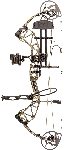 |  |  |
| Brace Height | 6 " | 7.25 " | 6.25 " |
| AtA Length | 32 " | 32 " | 31 " |
| Draw Length | 25.5 " - 30 " | 15 " - 31 " | 26 " - 30 " |
| Draw Weight | 45 lbs - 70 lbs | 7 lbs - 70 lbs | 45 lbs - 70 lbs |
| IBO Speed | 340 fps | 320 fps | 342 fps |
| Weight | 4.3 lbs | 3.6 lbs | 4.1 lbs |
| Let-Off | 75% | 85% | 75% - 90% |
| Where to buy Best prices online |
| ||
| compare more bows | |||
Two bows bracket the Inception for a shopper. Below it sits the Diamond Edge 320, a value benchmark from Bowtech's Diamond line at a $449 launch MSRP. The Diamond Edge 320 trades speed for reach: 320 fps against the Inception's 340, but a huge 7-to-70 pound and 15-to-31 inch adjustment range and a forgiving 7.25-inch brace height make it the better grow-with-you and first-bow choice, where the Inception targets a shooter who already knows their draw and wants the extra speed. Above the Inception sits its own family flagship, the Bear Redemption EKO, at a $999.99 launch MSRP. The Redemption EKO matches the speed at 342 fps and adds what the Inception deliberately leaves out - the EKO cam's selectable 75-to-90 percent let-off and Bear's Vibration Reduction System - for shooters who want to dial their hold weight and pay for the refinement. The decision comes down to priorities: the Diamond Edge 320 for the beginner or family that needs maximum adjustment range on a budget, the Bear Redemption EKO for the buyer who wants adjustable let-off and flagship polish, and the Inception for the hunter who wants most of the flagship's speed and quiet in a slim, compact package without the flagship price.