
Bear LST Review
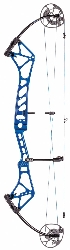

from $500
Pros
- Smooth, easy draw cycle - the HST hybrid cam builds to peak without a hard hump and eases off cleanly at let-down, not jumpy from anchor to hold
- One of the simplest draw-length changes in its class - DrawDial modules retune 26.5-30 inches with a hex key and no bow press
- Adjustable, repeatable back wall - cable stops and limb stops let you set a solid target wall or soften it slightly to taste
- Steady, forgiving hold on the pin - the long 37.5-inch axle-to-axle and tall 7.5-inch brace keep the sight picture calm through a long end
Cons
- Let-off is 70% - a touch firmer to hold than the 80% many target rigs offer, so shooters running long, high-volume sessions may want to factor in the extra holding weight
Video
content from YouTube
Editors' review
Say Bear Archery and most archers picture a treestand, not a target butt. The 2017 LST is the exception - the one member of Bear's dealer-exclusive Legend Series built for the shooting line rather than the woods. LST stands for Legend Series Target, and the whole bow is organized around a single idea: a draw you can repeat all day and a draw length you can change in the driveway without a bow press. At 37 1/2 inches axle-to-axle - the distance between the two cam axles - with a tall 7 1/2-inch brace height, the gap from string to grip that governs how forgiving a bow shoots, it stands still on the aiming line the way a range bow should. It shipped in blue and silver only, no camo - a quiet tell that this one was never meant for the deer stand. What Bear built here is an accessible, forgiving paper-puncher for the archer stepping into target, indoor, or 3D shooting without spending flagship money.
Finish
The LST comes in two finishes, both solid colors: a deep blue and a clean silver. That is a deliberately short list next to the camo-heavy palettes Bear hangs on its hunting bows, and it fits the bow's job - a range rig lives under gym lights and on 3D courses, where a machined solid color reads as purposeful rather than dressed for the woods. Bear's anodized and coated finishes have held up well across its lineup, resisting the handling wear a bow picks up over long practice sessions and travel to shoots. Neither finish carries an upcharge; you pick by taste, then by which of the two draw-weight brackets you need. For a target bow, restraint is the right call - no distraction, no camo you will never use indoors.Riser
The LST is built on an aluminum riser stretched to a 37 1/2-inch axle-to-axle length - long by hunting standards, and exactly standard for a bow meant to stand still on an aiming line. The extra length spreads the shooter's grip and anchor farther apart, which steadies the pin and slows the small tremors that show up during a long end of arrows. Bear runs the riser into its Carbon CrossLock limb pockets, a barrel-nut system that lets the pocket pivot for fully adjustable limb alignment while a carbon element sheds weight out at the ends where it matters for balance. The geometry is set up to carry a static, side-bar target rig - room for a long front stabilizer and a rear bar - rather than a compact hunting build. In my experience a riser this length is exactly what a newer target shooter wants: it forgives a little grip torque and rewards a settled, patient hold. It is not a bow you will want to pack into a tight ground blind, and it was never designed to be.Grip
The grip is a slim Bear compound grip shaped to index the same way shot after shot, which is the whole point on a target bow. A repeatable hand position is what keeps a group tight over a thirty- or sixty-arrow session, and the LST's narrow throat encourages you to load the bow into the web of the hand rather than wrap the fingers and feed in torque. Bear's grips have a mixed reputation across the catalog - some of the hunting models run thick - but the target-oriented shape here sits comfortably and stays neutral in the palm. Owners who took the time to relax the hand and let the bow settle reported that it holds very well on the pin. If you prefer a different feel, the flat sides take aftermarket side plates or a build-up without fuss.Limbs
Power comes from Max-Preload quad limbs - a four-piece split design that Bear pre-loads so the working part of the limb stores energy efficiently through the shot. The LST ships in two peak-weight brackets rather than one wide range: a 45-60 pound version and a 55-70 pound version, and each backs down roughly 15 pounds from its peak on the limb bolts. That means you choose your bracket at purchase - a shooter who tops out at 60 pounds buys the lighter limbs, while someone who wants a full 70-pound peak orders the heavier set. Adjusting draw weight within a bracket is a simple hex-key turn on the limb bolts, no press required. Seated in the Carbon CrossLock pockets, these limbs have proven durable across Bear's lineup; the quad configuration is a known, long-serving design rather than a first-year experiment. The split limbs also help quiet the shot, since there is less limb mass slapping to a stop after release.Eccentric System
The heart of the LST is the HST Hybrid Cam System driven by DrawDial modules. A hybrid cam pairs a control cam with a yoke up top and a power cam on the bottom, a layout chosen for a smooth pull and consistent nock travel rather than raw aggression. Its IBO rating - the industry-standard speed measured at a 30-inch draw, 70 pounds, and a 350-grain arrow - is 320 feet per second, unremarkable next to a hunting flagship but squarely where target bows live, because a target shooter trades top-end speed for a forgiving, drama-free draw. Where this cam genuinely stands out is draw-length adjustment: the DrawDial modules rotate to move draw length across the 26 1/2- to 30-inch span with a hex key and no bow press, and owners consistently call it one of the easiest draw-length changes on the market. That matters more than it sounds - a new target shooter often needs to fine-tune draw length by a quarter inch as form develops, and doing it at home instead of booking a pro-shop appointment removes real friction. Let-off - the percentage of peak weight the cam sheds so you hold less at full draw - is 70 percent, which is the one number owners wish were higher; on a long aiming session a 70-percent hold asks a little more of the front shoulder than the 80-percent bows some target shooters prefer. The cam also carries both cable stops and limb stops, so you can dial a firm, dead back wall or a slightly softer one to taste. There is no independent chronograph data for the LST specifically, so I will not invent a real-world figure - but the hybrid geometry is tuned for repeatability, not headline speed, which is the right priority for this bow.Draw Cycle/Shootability
Drawing the LST, the first thing you notice is how little drama there is. The cam builds to peak weight gradually and rolls over without a hard hump, then eases into the valley instead of dumping into it - pull it back and the weight simply melts off into the hold. Owners describe the let-down as controlled rather than jumpy, and a hands-on range demo of the bow showed the same thing: smooth to the anchor, smooth back off the string. The back wall is where the LST earns its keep as a target bow. With both cable stops and limb stops aboard, you can set a solid wall to lean into with steady back tension, or soften it slightly if you like a touch of give; most target shooters will run the firm limb-stop wall for a repeatable stop. In my experience a bow that holds this steadily on the pin does much of the aiming work for you - the tall brace height and long axle-to-axle keep the sight picture calm, and the shot breaks cleanly. Afterward the split limbs and Bear's SonicStop offset string suppressors keep things civil; it is a quiet, low-vibration bow by target standards, if not flagship-silent. One tuning note owners pass along: adding a cable slide smooths the draw even further, an easy upgrade if you want the last bit of polish.Usage Scenarios
The LST is a range bow first. Picture a new club member showing up for indoor winter league: they need a bow that holds steady at eighteen meters, changes draw length as their form settles, and does not cost flagship money - the LST answers all three, which is why Bear's own rep pitched it as well suited to indoor paper. It handles spot shooting and 3D courses equally well, where the long axle-to-axle and tall brace reward a patient hold over a fast one. It makes a natural first "real" target bow for an archer graduating from a starter rig, and a sensible loaner or backup for a club that needs a forgiving bow anyone can pick up and shoot. The two draw-weight brackets cover most adult target shooters, from a comfortable 45-pound practice weight up to a 70-pound peak for anyone who wants the extra energy at outdoor field distances. What it is not is a hunting bow: at 37 1/2 inches it is long for a treestand, it wears solid target colors instead of camo, and its speed and let-off are tuned for the line, not the woods. Read it for what it is - an accessible, forgiving target and 3D bow - and it fits a clear kind of shooter.Versions
Bear built the LST as a single model offered in a small matrix of SKUs rather than as distinct packages. There are two finishes - blue and silver - and two peak-weight brackets - 45-60 pounds and 55-70 pounds - with each combination available in right- and left-hand. The bow launched at an $899.99 suggested retail price, and neither the finish nor the draw-weight choice changed that number; you simply order the color and the poundage bracket you need. There is no ready-to-shoot accessory package here the way Bear bundles its hunting RTH bows - the LST is sold as a bare bow for a shooter who will build it out with their own target sight, rest, and stabilizers. Choose the bracket carefully at purchase, since moving between the 45-60 and the 55-70 limbs means a limb change, not a bolt turn.Bear LST vs Bowtech Specialist II, Mission Ballistic
| Bow | Bear LST | Bowtech Specialist II | Mission Ballistic |
| Version | 2017 | 2022 | 2015 |
| Picture |  |  |  |
| Brace Height | 7.5 " | 7.125 " | 7 " |
| AtA Length | 37.5 " | 38 " | 30.5 " |
| Draw Length | 26.5 " - 30 " | 23 " - 32.5 " | 26 " - 30 " |
| Draw Weight | 45 lbs - 70 lbs | 30 lbs - 60 lbs | 50 lbs - 70 lbs |
| IBO Speed | 320 fps | 322 fps | 330 fps |
| Weight | 4.5 lbs | 4.5 lbs | 4.18 lbs |
| Let-Off | 70% | 80% | 80% |
| Where to buy Best prices online |
| ||
| compare more bows | |||
At its $899.99 launch price the LST sits among value-minded target bows, and two make natural cross-shops. The Bowtech Specialist II is the closest rival: a dedicated adjustable target bow at a $799 launch MSRP, nearly identical on paper at 322 fps and the same 4.5-pound mass, on a 38-inch riser with a 7.125-inch brace. Two differences matter. The Bowtech Specialist II's draw range runs a much wider 23 to 32.5 inches, so it fits shorter and taller shooters that the LST's 26.5-to-30-inch window leaves out, and it holds at 80-percent let-off against the LST's 70 - the very number LST owners wish were higher. The Mission Ballistic comes at the question from the budget end: roughly half the money at a $499 launch price, with a Mathews-derived dual-cam and 330 fps, but a much shorter 30.5-inch axle-to-axle that trades some of the LST's on-the-line steadiness for compact versatility. The decision comes down to priorities: the Bowtech Specialist II for a shooter who wants the widest draw range and the more relaxed hold, the Mission Ballistic for the archer chasing target-capable performance and easy adjustability at the lowest price, and the Bear LST for the shooter who values its tall-brace hold and the simplest draw-length change of the three.