
Bear Persist Review


from $809.99
Pros
- One of the quietest shots in the class at 89.7 dB, and dead in the hand - the Killer Wave limb and in-riser dampeners kill vibration before you feel it
- Deep tunability from the EKO cam - four-position let-off from 75 to 90 percent plus rotating-module draw length, with a fully adjustable roller cable guard
- Fully integrated riser - IMS rest dovetail, Picatinny sight mount, machined-in sling and pull-up rope loops, and a bubble level, all built into the frame for a clean setup
- Stable and forgiving to shoot thanks to a wide 3-inch limb pocket and 2.75-inch limbs - holds a steady pin well past normal hunting range
- Ships with two interchangeable grips in the box, so most hands find a comfortable, low-torque fit without buying anything extra
Cons
- Physically heavy for a 31-inch bow at 5.6 lb out of the box - steady on aim but something a run-and-gun mobile hunter may want to weigh against an ounce-counting setup
- The EKO draw is a touch stiff over the top and drops in firmly at the 90 percent setting - dialing let-off down to 80 or 85 percent softens that back-end dump
Video
content from YouTube
Editors' review
Bear's 2024 flagship arrived without a single hunting kill in its promo reel and with a spec sheet that reads almost ordinary - 340 fps IBO (the industry-standard speed rating at a fixed 30-inch, 70-pound, 350-grain setup), 31-inch axle-to-axle (ATA, the tip-to-tip length), a middle-of-the-road 6.5-inch brace height. What the numbers hide is how the Persist actually shoots: it is one of the quietest, deadest-in-the-hand bows Bear has ever built, and every part of the riser has been machined to disappear accessories into the frame. This is the bow where Bear stopped bolting features on and started building them in - the rest, the sight rail, the sling, the pull-up rope all live inside the riser. It is a machined-aluminum hunting bow made in Gainesville, Florida, priced a clear step below the Mathews and Hoyt flagship tier but built to the same intent. The EKO cam that carries it has been Bear's best cam for years, and here it comes with a four-position let-off and enough tuning latitude to shape the draw to the shooter. The catch, and there is one, is heft - this is a heavy bow for its length. For the treestand hunter who values a silent, motionless shot over a light pack-in, that trade lands squarely in their favor.
Finish
The Persist launched in five finishes - three camo patterns and two solid colors - a spread wide enough to cover both the traditionalist and the shooter who wants a clean working-tool look. That is a deliberately broader menu than most single-model hunting flagships offer, and it lets a buyer match the bow to the country they hunt rather than settle for one token camo. The coating is the same durable dip finish Bear runs across its hunting line, chosen to take the scrapes a bow absorbs over a season of treestand hangs and pack-ins rather than to look pretty in a shop. Solid options give the low-visibility, no-pattern look a lot of western and late-season hunters now prefer, while the camo patterns serve the whitetail woods. It is a practical palette built around field use, not a fashion statement.Riser
The riser is where the Persist earns its keep: machined aluminum with an aggressive skeletonized cutout, and every accessory point built into the frame rather than bolted to the side. Bear added a dovetail to the back of the riser for the Integrated Mounting System (IMS) rest, so a QAD-style dropaway clamps straight in with nothing hanging off the side, and up front sits a Picatinny sight rail (the same accessory-mounting standard used on AR-platform firearms) that centers the sight on the riser. The sling threads directly through the riser instead of pinching under the stabilizer, and Bear machined pull-up-rope loops into the limb pockets so a treestand hunter never has to wrap a haul line around a cam again. A bubble level is set into the riser to help square up second- and third-axis sight setups. In my experience integrated risers usually give something back in tuning access, but the Persist does not - the roller cable guard is adjustable both laterally and fore-and-aft, so center-shot and cam lean stay in reach. The whole frame reads as a more expensive bow than the price tag suggests.Grip
Bear ships the Persist with two interchangeable grips in the box, and that single decision solves the most personal problem on any bow. One is a rounded, fuller-bellied grip; the other is flatter with a more target-style back, and swapping them takes seconds. Both are a warm, slightly tacky composite rather than bare aluminum, which matters on a cold-morning hunt when a metal grip leaches heat out of your hand. A shallow channel runs down the center of the grip so the hand indexes to the same spot every draw - the quiet foundation of repeatable accuracy at hunting distance. Grip feel is the most subjective thing on a bow, and drawing the Persist I found the flatter option gave me a cleaner, lower-torque hand than the rounded one; another shooter will land on the opposite. Having both in the box means most hands find their fit without spending a dollar on aftermarket.Limbs
The Persist runs a wide limb stance - a 3-inch limb pocket and limbs 2.75 inches across - and that width is the source of the bow's steadiness on aim. A broad limb base resists the small torque that pushes a pin off target, which is why shooters hold this bow so still well past normal hunting range. Draw weight comes in two 15-pound modules, a 45-to-60 and a 55-to-70, so a shooter can back the poundage down to build strength or peak it for maximum energy without changing limbs. Bear kept the threaded axles it introduced on the Execute, which let you swap components without compressing the bearings - a small durability detail that pays off over the life of the cam. The limb pockets are machined aluminum, not molded polymer, keeping the limb-to-riser connection rigid. It is a stable, proven limb setup built for forgiveness rather than raw wrist-flick maneuverability.Eccentric System
The EKO cam is the heart of the Persist, and it has been Bear's strongest cam for several years running. It is a mod-adjustable dual cam: a rotating module sets draw length from 26 to 30 inches in half-inch steps, and a separate draw-stop module sets let-off (the percentage of peak weight your holding weight drops to at full draw) to one of four positions - 75, 80, 85, or 90 percent. That four-way let-off is unusually flexible for a hunting bow: 90 percent gives you the lightest hold for long treestand sits, while dropping to 75 or 80 percent adds holding weight that steadies the shot in wind and firms up the back end. IBO is 340 fps, and real chronograph numbers land where you would expect for a bow of this weight and brace: at a 29-inch draw and 70 pounds, a 350-grain arrow ran 325 fps, and at 30 inches a 350-grain clocked 334 to 335, dropping to 298 with a 450-grain and 271 with a 550-grain hunting shaft. The one honest caveat is setup: the four-position let-off and the module indexing are not obvious from looking at the cam, so the manual is not optional - set the pegs and the module the way Bear specifies and it comes together quickly.Draw Cycle/Shootability
Draw the Persist and the EKO shows its character: a touch stiff coming over the top, then a clean run into a solid, defined back wall. It is not the absolute smoothest cam Bear makes - the Execute target cam draws softer - but it is a genuinely good hunting draw, and the stiffness up top is the price of the speed. At the 90 percent setting the cam drops into the valley a little firmly; back the let-off down to 80 or 85 percent and that dump softens noticeably while you gain holding weight. Where the Persist genuinely separates itself is the shot. It is one of the quietest bows I have measured against, reading 89.7 dB on the meter, and the after-shot is dead - the Killer Wave limb dampeners and the in-riser dampeners soak up vibration before it reaches your hand. Standing at full draw the wide limbs settle the pin and let you hold, and out to 50 yards the bow holds a target with almost no wander. The heft that shows up on a scale works in your favor here: mass steadies aim and absorbs shock, and the result is a bow that shoots calmer than its speed rating implies.Usage Scenarios
The Persist is a treestand hunter's bow first. Picture a whitetail hunter twenty feet up on a cold November morning: the shot has to be silent and motionless, and the Persist delivers both - a 90 percent let-off to hold through a long sit, a machined-in pull-up loop to haul it up without clanking, and a shot quiet enough the deer never places it. Its steadiness on aim suits the hunter who takes measured shots and wants a rock-solid pin, and the wide draw-weight range means a shooter recovering from a shoulder injury can drop to 45 pounds and rebuild. It is equally at home for the western hunter who runs a solid finish and leaves the bow clean and streamlined. Where it asks a question is mobility: at 5.6 pounds out of the box it is not the bow for the run-and-gun public-land hunter counting every ounce on a multi-mile pack-in. If you want the same platform stretched longer and more forgiving for open-country shots, Bear's own Persist 33 takes the 31-inch chassis out to 33 inches. For the sit-and-wait hunter, the Persist's weight is a feature, not a flaw.Versions
The Persist is sold as a single bow-only model with the choice made at two points: finish and draw-weight module. Launch MSRP was $1,249.99, and it shipped in five finishes - three camo patterns and two solids - with two draw-weight modules, a 45-to-60-pound and a 55-to-70-pound, selected at purchase. There is no ready-to-hunt package; this is a dealer-exclusive Legend Series bow aimed at the buyer building a bow up with their own accessories, which is exactly what the integrated rest and sight mounts are designed for. Buyers who want the longer, more forgiving version of the same platform should look at the Persist 33, which carries the identical EKO cam, let-off range and price on a 33-inch axle-to-axle chassis with a 6.25-inch brace.Bear Persist vs Mathews Phase4 29, PSE Mach 30 DS
| Bow | Bear Persist | Mathews Phase4 29 | PSE Mach 30 DS |
| Version | 2025 | 2024 | 2026 FDS |
| Picture | 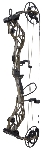 | 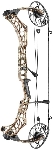 | 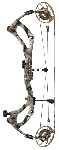 |
| Brace Height | 6.5 " | 6 " | 5.875 " |
| AtA Length | 31 " | 29 " | 30 " |
| Draw Length | 26 " - 30 " | 25.5 " - 30 " | 24.5 " - 30 " |
| Draw Weight | 45 lbs - 70 lbs | 50 lbs - 75 lbs | 40 lbs - 80 lbs |
| IBO Speed | 340 fps | 340 fps | 348 fps |
| Weight | 5.6 lbs | 4.48 lbs | 3.6 lbs |
| Let-Off | 75% - 90% | 80% or 85% | 70% - 85% |
| Where to buy Best prices online | |||
| compare more bows | |||
Against the flagships it undercuts, the Persist makes a clear case for the shooter who cares about a quiet, planted shot more than a badge. The Mathews Phase4 29 is the benchmark for silence in this bracket - its bridged riser and Harmonic Stabilizer damping make it one of the deadest-in-hand bows on the market - but it sits a notch higher in the premium flagship tier and locks its let-off through Switchweight modules rather than a quick four-position stop. The PSE Mach 30 DS chases speed harder and shares the adjustable-let-off philosophy, giving a shooter a fast, tunable 30-inch bow, but it too lands in the pricier flagship money. The Persist's answer is a genuinely quiet, dead shot and a four-position let-off on a machined USA riser for less outlay, with the trade being physical weight - it is heavier than both. The decision comes down to priorities: the Mathews Phase4 29 for the buyer who wants the quietest possible flagship and will pay for it, the PSE Mach 30 DS for the speed-first tuner, and the Persist for the treestand hunter who wants flagship silence and deep tunability without the flagship price.