
Bear Pioneer II Review
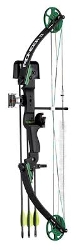

from $180
Pros
- Real adult-bow construction at a beginner's poundage: machined aluminum riser, compression-molded limbs and pivoting limb pockets rather than a cast or plastic starter chassis
- Fifteen draw-length positions from 13 to 27 inches, all set by hand with no bow press, so one bow keeps fitting a child through several seasons of growth
- A true beginner's 15-to-29-pound draw weight lets a small or first-time shooter build clean form without fighting the bow
- Light 2.9-pound mass and a complete ready-to-shoot package option, with Whisker Biscuit rest, 3-pin sight, quiver and arrows, make it easy to pick up and shoot the first day
Cons
- Peak weight tops out at 29 pounds and draw at 27 inches, so this is a backyard-and-beginner bow: a shooter gaining strength or heading toward hunting will outgrow it and step up to a higher-poundage bow like the Bear Apprentice
- No string stop from the factory leaves a little buzz in the bare shot, though the riser carries a rear boss for one and an aftermarket stop around $40 quiets it
Editors' review
How low can the draw weight on a real compound go before the bow stops being a real compound? Bear's answer was the Pioneer II, and it is lower than most parents expect. Where the heavier Odyssey II it shared a platform with was pitched as the intermediate, the Pioneer II is the true entry point: the same machined-aluminum riser, compression-molded limbs and pivoting limb pockets as its twin, sized down to a genuine beginner's draw weight of just 15 to 29 pounds. Bear's catalog called it a bow "built to create good technique and sound habits in the young archer," and the hardware backs the pitch, because these are the same components the company put on the higher-poundage bow, not a downgraded toy version. The single cam carries 15 draw-length positions from 13 to 27 inches, every one changed by hand without a press, so the bow keeps pace with a child who is still growing. It sold across 2007 and 2008 as the lighter, plain-black member of that two-bow platform. The point of the Pioneer II is not speed or power; it is putting real archery hardware in the hands of someone who has never drawn a bow.
Finish
The Pioneer II came one way: a Black Powder Coat over the full riser and limbs, unchanged across both the 2007 and 2008 model years. That is a deliberate contrast with its camo-clad twin, and it fits the mission. A first bow for a young or brand-new archer is a tool for learning, not a hunting piece to blend into a treestand, and the plain matte black keeps the cost down and the look purposeful rather than decorative. There is no camo option, no per-color upcharge and no special edition to weigh, which suits a bow bought to teach form on a backyard target. The powder coat is durable and shrugs off the knocks a beginner's bow inevitably takes early in its life. It is a finish that says practice bow, and on this model that is exactly the right message.Riser
The riser is what separates the Pioneer II from the recreational bows it sits near in price. It is machined aluminum, spelled out as 6061-T6 aircraft aluminum in the 2008 catalog, the same alloy and the same construction language Bear used on its adult risers, rather than the cast metal or reinforced polymer that defines most bows at this draw weight. Pivoting limb pockets seat the limbs and let the weight back down cleanly, and a straight composite rod with a Teflon slide manages the cables off to the side. The 32-inch axle-to-axle length is long relative to the bow's 13-inch minimum draw, and that is on purpose: the extra length keeps the string angle gentle and the bow forgiving for someone still learning where their anchor point is. In my experience that longer, machined riser is the reason a raw beginner on this bow starts grouping arrows rather than scattering them, because the forgiveness is built into the geometry, not asked of the shooter.Grip
Bear used an Elasto-Polymer grip designed to damp vibration as much as to fill the hand. On a beginner's bow the narrow profile matters more than it would on an adult hunter, because the intended shooter usually has a smaller hand and less strength to resist torque. A slim, low-torque grip helps a new archer set the same hand position shot after shot, and that repeatability is the whole foundation of the good habits the Pioneer II is meant to teach. The polymer surface stays kinder to the hand in cold weather than bare aluminum, which keeps a kid comfortable through backyard practice into the colder months. Nothing about the grip is exotic, and nothing needs to be; it does its job and disappears, which is what a learning tool should do.Limbs
The limbs are compression-molded and run flat off the pivoting pockets rather than splitting into a quad, a simple and durable design that tolerates being dropped, leaned on and left in a garage. Bear built the Pioneer II in a single peak-weight configuration that tops out at 29 pounds and backs down to 15 through the limb bolts, and that low, forgiving band is the entire design brief. Fifteen pounds is soft enough that a small child or a first-time adult can draw and hold the bow without their form collapsing under the weight, which is where good technique either takes root or does not. Adjusting the weight needs only an Allen wrench and no press, so a parent can soften or firm the bow at the kitchen table as the shooter gains strength. These are limbs built for gentle, repeatable practice, not for storing the energy a hunting setup demands.Eccentric System
A single rotating-modular cam runs the show, and it is the reason the Pioneer II adjusts the way it does. Bear called it the Inner-Cam Shooting System in 2007 and the Rotating Modular Cam System by 2008, but the mechanism is the same: 15 discrete draw-length positions from 13 to 27 inches, each set by rotating the module rather than swapping parts or pressing the bow. That no-press adjustment is what lets one bow follow a growing archer, and Bear claimed more draw positions than any competing system of the day. Let-off is 70 percent (the share of peak weight that falls away at full draw), so a young shooter holds only a fraction of the already-light poundage while settling the pin, which is a real help for a beginner learning to aim without shaking. One number needs honest handling: Bear's spec chart lists 283 to 287 fps, but for the Pioneer II that figure is explicitly projected at a 27-inch, 50-pound, 250-grain setup, and this bow never reaches 50 pounds because it caps at 29. In other words the speed rating is a chart figure carried over from the identical, heavier chassis, not the bow's real output; at its actual 15-to-29-pound weight the Pioneer II is deliberately slow and soft, which is precisely what a first bow should be.Draw Cycle/Shootability
Drawing the Pioneer II, the cam rolls over its modest peak and settles into a usable valley behind a defined wall, without the abrupt front-end spike that makes cheap starter bows unpleasant. Because it is the same cam and chassis as the higher-poundage twin I have spent time with, the character is familiar: it draws smoothly for the class, and at 2.9 pounds it is light enough that a small shooter can float the pin without the front end nosing down. What is different, and better for a beginner, is the poundage itself. At 15 to 29 pounds there is very little energy to manage, so the shot is gentle and the recoil mild by nature. There is still a little buzz to the bare shot, and the fix is designed in: the riser carries a rear boss for a string stop Bear did not fit, and adding an aftermarket stop for around forty dollars settles the shot noticeably. I keep coming back to how forgiving the low draw weight makes the whole experience: a new shooter is not wrestling the bow, so their attention stays on anchor, aim and release, which is the entire point of a first compound.Usage Scenarios
Picture the first-bow timeline this model was built for. A seven- or eight-year-old, or an adult who has never shot, starts on the Pioneer II set near 15 pounds and short, punching a foam target in the backyard while they learn to anchor and follow through. As their strength and confidence build over a season or two, the limb bolts come up and the cam module rotates out a position or two, and the same bow keeps fitting them. It is equally at home as a low-cost loaner at a club's beginner night, or a camp bow that any first-timer can pick up and shoot safely. What the Pioneer II is not is a hunting bow or a bow a growing teen stays on for long: 29 pounds and a 27-inch draw are a starting line, not a destination. A shooter who catches the archery bug will, within a few seasons, want the reach of a higher-poundage bow, and that is success, not a shortcoming, of a bow whose job is to get someone started right.Versions
The Pioneer II was sold two ways, both in a single 29-pound peak build. The Bow Only SKU is the bare bow, string and cam, for a buyer who already has a rest and sight or wants to add their own. The with-Accessories package (Bear's ready-to-shoot configuration) adds a Whisker Biscuit arrow rest, a 3-pin fiber-optic sight with metal pins, a two-piece quiver and three safety-glass arrows, so a first-time owner can leave the shop able to shoot; the plain quiver and glass arrows are a step below the camo quiver and carbon arrows on the pricier Odyssey II, matching the Pioneer II's entry position. Both the 2007 and 2008 model years are the same bow mechanically, and unlike its twin the finish did not even change across the run: the only differences are the cam's marketing name and the 2008 catalog spelling out the riser alloy. Bear did not publish a launch MSRP that survives in the record, and the bow has been discontinued since 2008; complete used examples typically trade around $40 to $80, which for a genuinely machined-aluminum beginner's bow is a lot of hardware for very little money.Bear Pioneer II vs Bear Apprentice, Diamond Infinite Edge
| Bow | Bear Pioneer II | Bear Apprentice | Diamond Infinite Edge |
| Version | 2008 | 2011 | 2015 |
| Picture |  |  |  |
| Brace Height | 5.5 " | 6 " | 7 " |
| AtA Length | 32 " | 27.5 " | 31 " |
| Draw Length | 13 " - 27 " | 15 " - 27 " | 13 " - 30 " |
| Draw Weight | 15 lbs - 29 lbs | 20 lbs - 50 lbs | 5 lbs - 70 lbs |
| IBO Speed | 283 fps - 287 fps | 265 fps | 310 fps |
| Weight | 2.9 lbs | 2.9 lbs | 3.1 lbs |
| Let-Off | 70% | 70% | 75% |
| Where to buy Best prices online | |||
| compare more bows | |||
Three adjustable grow-with-me bows arranged like rungs on a ladder, and the Pioneer II is the bottom rung by design. It starts the lightest, at 15 to 29 pounds, which makes it the gentlest genuine compound for a raw beginner but also the first to be outgrown. The Bear Apprentice is the natural next step and the closest in-brand cross-shop: a 27.5-inch, 20-to-50-pound single-cam youth hunter Bear sold as a ready-to-hunt package in 2010 and 2011, it shares the Pioneer II's 27-inch draw cap, 2.9-pound mass and 70-percent let-off but reaches a real 50-pound hunting weight the Pioneer II cannot. The Diamond Infinite Edge stretches the same idea to its limit: a dual-cam bow adjustable from 5 to 70 pounds and 13 to 30 inches, it spans a raw beginner all the way to a full adult hunting setup in one bow, at the cost of a more complex cam and a higher price tier. The Pioneer II's advantage is its floor and its simplicity: a soft, forgiving, machined-aluminum bow that asks nothing of a first-timer. The decision comes down to how far ahead a buyer wants to plan: the Pioneer II for the softest possible start and the lowest cost of entry, the Bear Apprentice for a young shooter who will grow into hunting weight, and the Diamond Infinite Edge for a parent who wants one bow that never gets outgrown, all the way to 70 pounds.