
Bear Resilient Review
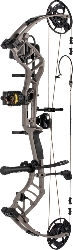

from $493.89
Pros
- Real-world chronograph speed lands within ~5 fps of the 320 fps IBO rating - 314.8 to 321.2 fps measured at 70 lb, 28 inch draw, 350 grain arrow
- The 50-70 lb module reaches full adult hunting weight in a short-draw chassis - the rare short-draw bow that does not cap at 50 or 60 lb
- Tool-free IMS dovetail rest mount and a Picatinny sight rail - mounting hardware usually reserved for pricier bows
- Selectable 80% or 85% let-off by turning the draw stop - no press or new module needed to change holding weight
- Bear Paw rubber grip comes standard - a warm, soft, low-torque hand position straight out of the box
Cons
- Some shooters notice a hump at the top of the draw at the higher 50-70 lb setting - easing into the rollover handles it, and the 30-50 module softens it further
- Draw length tops out at 28 inches - archers who draw longer than that are outside this bow's fit and should look at a full-size hunting platform
Video
content from YouTube
Editors' review
Among the short-draw hunting bows launched for 2026, the Resilient answers a question the others leave open: where does the short-draw shooter who wants a real 70-pound hunting setup actually go? Bear's own Pristine caps at 50 pounds, the premium Bowtech short-draw bows cap at 60, and most "women's and youth" platforms stop well short of full adult draw weight. The Resilient is built on a 30-inch axle-to-axle chassis with a 6-inch brace height, an EKO2 SD (Short Draw) cam, and a draw range of 23.5 to 28 inches - and it ships in two draw-weight builds, a 30-50 pound module and a 50-70 pound module. That second module is the whole point. This is a gender-neutral short-draw bow that a smaller-framed man, a taller adolescent moving into adult hunting, or a woman who hunts with full hunting weight can all set up and grow into. It arrives as a complete Ready-to-Hunt package, and the speed numbers hold up under a chronograph rather than just on the spec sheet.
Finish
The Resilient ships in three finishes that map cleanly to who is buying it. Mossy Oak Bottomland is the traditional whitetail-woods camo for the hunter who wants the bow to disappear in hardwoods and bottomland cover. Emerge 2.0 is Bear's newest 2026 pattern, shared with the flagship Adapt 2 HP, and reads more modern and open-country. Stone is the solid neutral option - a light grey-tan finish for the shooter who would rather skip camo entirely, whether for 3D shooting, backyard practice, or simple personal taste. All three are offered across both hands and both draw-weight modules, so no finish is locked behind a particular configuration. The dip-and-coat camo and the solid Stone finish are applied over the same aluminum riser and limbs, so durability does not change between them. For a bow at this price, three genuinely distinct looks is a wider palette than most short-draw competitors offer.Riser
The riser is machined aluminum with a cutout pattern that keeps mass down without giving up the rigidity a hunting bow needs at full draw. Two features on it normally belong to bows costing more. The first is the Integrate Mounting System (IMS), a dovetail rail machined into the rear shelf that accepts a compatible arrow rest directly - no Berger-hole bolt, automatic centering, and a tool-free install. The second is a Picatinny sight rail (the same accessory-mounting standard used on AR-platform firearms) on the riser face, which lets the bow take any Picatinny-mount sight and swap it in seconds. In hands-on setup, the IMS rest and Picatinny sight cut the fiddly part of a build down to almost nothing - these are the kind of details that separate the Resilient from its lower-tier sibling, the Pristine, which still uses standard mounting. Cable management runs through a roller guide rather than a plastic slide, which lowers friction in the draw and shows up as a smoother pull. A full dampening package is built into the riser itself: in-riser dampeners work alongside in-limb dampeners and a string catch to keep the shot quiet and dead in the hand.Grip
The Resilient comes standard with Bear's Paw rubber grip, and it is one of the small upgrades that makes the bow feel finished out of the box. The rubber compound stays warm against the hand in cold weather, where a bare aluminum or hard-plastic grip goes cold and slick, and it dampens a little of the buzz that would otherwise reach the palm. The profile is moderate - not the razor-thin grip of a dedicated women's or youth bow, which suits the Resilient's gender-neutral, wider-audience positioning. In practice the soft surface encourages a relaxed, repeatable hand position and discourages the torque that throws shots left and right. Shooters who already run an aftermarket Bear Paw grip on their other bows will recognize the feel immediately; everyone else gets it included rather than as an add-on. There is enough material to suit a range of hand sizes, which matters for a bow meant to be shared across a household.Limbs
The Resilient uses Bear's split "Muscle Limb" design seated in the brand's proven limb pocket - the same pocket geometry Bear runs across much of its current lineup, which is a reliability point rather than a marketing one. The two draw-weight builds are not field-swappable poundage on one bow; they are separate factory configurations, a 30-50 pound module and a 50-70 pound module, and the buyer chooses at purchase. That split matters because it lets the limbs be optimized for their range rather than stretched across an extreme 30-to-70 spread. A shooter in the 30-50 build gets a genuine entry-friendly floor; a shooter in the 50-70 build gets full adult hunting energy storage without the limbs working at the bottom of an oversized range. Bear assembles the bow at its Gainesville, Florida facility, pressing the limbs and installing the dampeners as part of the factory build, so the bow that arrives is tuned and ready rather than a kit to sort out. The split-limb layout also keeps the riser-to-limb transition stable, which contributes to how quietly the bow settles after the shot.Eccentric System
The EKO2 SD cam is the engineering story of this bow. SD stands for Short Draw, and it is a purpose-built variant of Bear's EKO2 dual-cam system rather than a shrunken adult cam - the geometry is reworked for the 23.5 to 28 inch range, with all the adjustments placed on one side of the cam for simpler tuning. The headline feature is selectable let-off (the percentage of peak weight the holding weight drops to at full draw): turning the draw stop one way gives 80%, the other way gives 85%, with no press or module change required. That means a shooter can dial a firmer holding wall for target work or a lighter hold for long sits in a treestand, on the same bow, in minutes. The IBO speed is rated up to 320 fps, and unlike a lot of marketing speed claims, this one survives the chronograph. Independent chronograph readings at the IBO-style setup of 70 pounds, 28 inch draw, and a 350 grain arrow came in at 321.2 fps in one session and 316.5 and 314.8 fps in another - all within about five feet per second of the published rating, which is unusually honest for any price tier. That consistency tells you the cam is doing real work, not borrowing speed from an inflated test arrow.Draw Cycle/Shootability
Drawing the Resilient, the SD cam pulls cleanly through most of the stroke and then asks for a little commitment right at the front rollover before it breaks into the valley. At the 50-70 pound module wound up near the top, I felt that rollover hump that hands-on shooters describe - a short surge of effort just before the cam turns over - and it is more noticeable at higher poundage than at the bottom of the range. It is not harsh, and easing into it rather than yanking through it smooths the whole cycle; the 30-50 module softens it further for lighter shooters. Once over the top, the valley settles and the back wall holds - the cam does not want to creep the shooter forward, so anchoring solidly at full draw is easy. Interestingly, the SD cam felt smoother through that front rollover than the standard EKO2 in side-by-side shooting, likely a benefit of the reworked short-draw geometry. The shot itself is quiet and stays dead in the hand: the in-limb and in-riser dampeners plus the string catch take the buzz out, and after a couple of shots the small amount of residual vibration stops registering at all. For a complete RTH bow under the premium tier, the shot signature is genuinely composed.Usage Scenarios
The Resilient is, first and last, a hunting bow for the short-draw shooter - and its sweet spot is the whitetail woods. A hunter walks into the shop on a Saturday, has the RTH package set up and sighted by Sunday afternoon, and is in a treestand by the next pre-dawn; the bow ships ready for exactly that timeline. The 30-50 pound module covers a new or smaller-framed shooter and a teenager learning form, with enough top end for deer-sized game at typical 30-yards-and-in distances. The 50-70 pound module is the one that opens the rest of the season: full hunting weight for whitetail, hogs, and antelope, in a 30-inch package that handles easily from a saddle, a ground blind, or a tight treestand where a longer bow fights the rails. It is also a natural household-share bow - a parent on the 50-70 build and a growing kid on a 30-50 build can run the same model, the same grip, and the same accessory ecosystem. What it is not is a long-draw shooter's bow: the 28-inch draw ceiling is a hard line, and anyone past it belongs on a full-size platform. For target and 3D nights it is perfectly capable within its draw range, especially with the 85% let-off dialed for steadier holding.Versions
The Resilient is sold in a single Ready-to-Hunt package at a launch MSRP of $699.99, with the choice that matters being the draw-weight module:- Resilient RTH, 30-50 lb module - entry-friendly floor for new, smaller-framed, or younger shooters growing into the bow; same chassis, same RTH kit, $699.99 launch MSRP- Resilient RTH, 50-70 lb module - full adult hunting weight in the short-draw chassis; same chassis, same RTH kit, $699.99 launch MSRPBoth modules are offered in all three finishes (Mossy Oak Bottomland, Emerge 2.0, Stone) and in both right and left hand, for a 12-SKU matrix. The modules are separate factory configurations chosen at purchase, not a poundage range adjustable on one bow. Every version ships with the same Trophy Ridge RTH kit - a Picatinny-mount 4-pin sight with built-in light, a Whisker Biscuit IMS rest, a 5-arrow quiver, a stabilizer, a wrist sling, and a pre-installed peep and D-loop.Bear Resilient vs Bear Pristine, Bowtech Eva Shockey Gen 2
| Bow | Bear Resilient | Bear Pristine | Bowtech Eva Shockey Gen 2 |
| Version | 2026 RTH | 2026 RTH | 2023 |
| Picture | 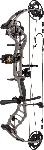 | 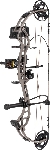 |  |
| Brace Height | 6 " | 6.5 " | 7 " |
| AtA Length | 30 " | 29 " | 30 " |
| Draw Length | 23.5 " - 28 " | 24 " - 28.5 " | 23.5 " - 28.5 " |
| Draw Weight | 30 lbs - 70 lbs | 30 lbs - 50 lbs | 30 lbs - 60 lbs |
| IBO Speed | 320 fps | 305 fps | 323 fps |
| Weight | lbs | 2.8 lbs | 3.9 lbs |
| Let-Off | 85% | 85% | 85 / 87% |
| Where to buy Best prices online | |||
| compare more bows | |||
The clearest comparison starts inside Bear's own lineup. The Bear Pristine, at a $649.99 launch MSRP, shares the EKO2 SD cam and the short-draw mission, but it runs a 29-inch axle-to-axle, a 305 fps rating, and a single 30-50 pound module - it is the lighter, slightly cheaper short-draw bow for shooters who never need more than 50 pounds. The Resilient costs $50 more and adds the 50-70 pound module, the faster 320 fps rating, the Picatinny rail, and the IMS rest mount; if full hunting weight or those mounting features matter, the upcharge is easy to justify. The Bowtech Eva Shockey Gen 2, at a $1,199 MSRP, is the premium cross-brand short-draw bow - it brings DeadLock tuning, a 323 fps rating, and a refined feel, but it still caps at 60 pounds and costs $500 more, so its appeal is tuning precision and brand pedigree rather than reach into 70-pound territory. The decision comes down to priorities: the Bear Pristine for the short-draw shooter who stays at or under 50 pounds and wants to save $50; the Bowtech Eva Shockey Gen 2 for the buyer who wants premium tuning and will pay for it; and the Resilient for the short-draw archer who specifically wants a true 70-pound hunting setup at a mid-tier price.