
Bear Shootout Review
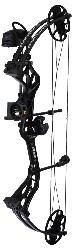

from $249
Pros
- Ships genuinely ready to shoot - includes 3 carbon arrows with field points on top of the 3-pin sight, Whisker Biscuit rest, stabilizer, and 5-arrow quiver
- One chassis spans youth to adult-entry - 14-28 inch draw and 20-50 lb adjust on the same bow with no modules to buy
- Among the most affordable adjustable compounds in Bear's 2026 lineup, and the kit is complete enough to leave the shop and shoot the same day
Cons
- Tops out at 50 lb - a stronger or taller adult who wants full 60-70 lb hunting weight will outgrow it, and buyers who know they want max weight from the start can step up to a 65-70 lb adjustable
- Offered right-hand and in Black only - left-handed shooters and anyone wanting a camo finish will need a different model in the lineup
Video
content from YouTube
Editors' review
The Shootout answers a specific, common problem: a young or new archer has outgrown a starter bow but isn't ready to spend adult-bow money, and the family doesn't want to buy a new bow every time the kid gains an inch of draw or ten pounds of pull. Bear's answer is a single budget chassis that adjusts from a 14-inch draw all the way to 28 inches and from 20 to 50 pounds, so one bow covers years of growth. It rides a compact 28-inch axle-to-axle frame with a 6.25-inch brace height, a dual-cam system rated at 290 fps IBO, and 70% let-off. Bear positions it one step above the beginner-level Frontier - "the next step in your archery journey," in the company's own words - and prices it in the budget category. The detail that separates it from most ready-to-hunt packages is what's in the box: it ships not just with a sight, rest, stabilizer, and quiver, but with three carbon arrows already cut and tipped, so a buyer can leave the shop and put arrows downrange the same afternoon.
Finish
The Shootout is offered in a single finish: a solid matte Black. There is no camo pattern and no alternate color in the lineup, which keeps the cost down and suits the bow's role as a learn-and-grow platform rather than a dedicated woods hunter. Black is the gear-neutral choice - it pairs with any accessory color a young shooter might add later, it doesn't tie the bow to a particular hunting environment, and it hides handling marks better than a gloss or light finish over years of backyard and range use. For a crossover bow that may pass between siblings or get handed down as a first hunting setup, a durable single-tone finish is a sensible fit. Buyers who specifically want a camo dip for the treestand will need to look elsewhere in Bear's range, but for target practice, 3D, and a first season or two in the field, the solid Black does the job without adding to the price.Riser
The riser is machined aluminum on a deliberately compact 28-inch axle-to-axle layout, which is the right call for the audience: a shorter riser-and-limb geometry is easier for a smaller-framed or younger shooter to hold steady and maneuver in tight quarters like a ground blind or a first treestand. The build carries an integrated mount for the Trophy Ridge 3-pin sight that ships with the bow, so sighting hardware seats cleanly without a separate bracket. Bear fits the string with an offset string suppressor, which the company describes as reducing string noise and post-shot vibration; independent noise measurements aren't available for a model this new, so it's best read as a designed-in dampening feature rather than a verified decibel figure. The 6.25-inch brace height is forgiving enough for developing form - a taller brace is more tolerant of small release errors, which matters more for a learning shooter than the last few feet per second a shorter brace would buy. Overall the riser is built to be handled, adjusted, and grown into rather than to chase flagship stiffness.Grip
The grip follows Bear's familiar composite profile, sized to suit the wide range of hands this bow is meant to serve - from a younger shooter starting at the bottom of the draw range to an adult settling in near 28 inches. A moderate, neutral grip shape is the practical choice for a crossover bow, because it has to feel reasonable to a 12-year-old learning hand placement and to a grown adult on the same chassis a few years later. There is enough material to support a relaxed, repeatable hand position, which is exactly what a developing archer needs to build consistency and avoid the torque that pushes shots off line. Shooters who later develop a strong grip preference can fit an aftermarket grip, but most buyers in this bow's audience will be well served by what comes installed.Limbs
The limbs adjust across a wide 20-to-50-pound range using the standard limb-bolt method, so changing draw weight is a simple turn of an Allen wrench rather than a trip to a pro shop for new limbs or modules. That breadth is the heart of the bow's appeal: a parent can set a new shooter at 20 pounds to build form safely, then walk the weight up a few pounds at a time as the archer gains strength, all the way to a 50-pound setting that is legal for deer-sized game in most states. Because the same limbs cover the whole span, there is nothing extra to buy as the shooter grows. The dual-cam system works with these limbs to deliver the 290 fps IBO rating at the top end of the range. For a bow at this price built to be re-tuned repeatedly over years of growth, a straightforward bolt-adjustable limb design is exactly what keeps the long-term cost of ownership low.Eccentric System
The Shootout runs a Bear dual-cam system - Bear does not publish a marketing sub-name for it - and that choice is more meaningful than it sounds on a budget bow, because a dual-cam layout tends to store energy efficiently and produce level nock travel, which helps a developing shooter get clean arrow flight. The headline number is 290 fps IBO (the industry-standard chronograph rating taken at a fixed 30-inch, 70-pound, 350-grain setup); since this bow caps at 28 inches and 50 pounds, a real shooter's arrows will fly slower than that ceiling figure, and no independent chronograph measurement of the Shootout exists yet to put a real-world number on it. What is genuinely useful is the adjustment range: the cams cover the entire 14-to-28-inch draw-length span without swapping modules, so a single bow follows the shooter from a child's short draw to a full adult length. Let-off is 70% - meaning at full draw the shooter holds 30% of peak weight - which is a touch firmer than the 80-85% found on pricier adjustables; that translates to slightly more holding weight at full draw, a fair trade for the price and arguably useful for teaching a shooter to hold steady rather than collapse into a deep valley. Draw weight tops out at 50 pounds, which sets the bow's ceiling for hunting applications.Draw Cycle/Shootability
Honesty matters more than adjectives here: the Shootout is new enough that no independent hands-on draw-cycle or noise testing has been published, so this section describes what the design implies rather than a measured shooting impression. The 70% let-off means the back end of the draw holds more weight than a high-let-off flagship, which tends to encourage active back-tension form - a reasonable thing for a learning shooter to build early. The 6.25-inch brace height is on the forgiving side, which generally makes a bow easier to shoot accurately while form is still developing. Bear's offset string suppressor is intended to take some noise and buzz out of the shot, though how quiet it actually is in the field will have to wait for independent measurement. The compact 28-inch axle-to-axle length keeps the bow light to hold up and easy to maneuver, which is a real advantage for smaller shooters and for the close-quarters shots a first-season hunter is most likely to take. Setting a young shooter up at a 14-inch draw and walking the limb bolts up as they grow is exactly the use case this bow is engineered around, and the wide adjustment range is what makes that possible on a single, affordable platform.Usage Scenarios
The Shootout is built for the transition years, and that is where it shines. Picture a 12- or 13-year-old who has outgrown a true beginner bow: start them at 20 pounds and a 14-inch draw for backyard form work, then over a couple of seasons walk the bow up toward 45-50 pounds and a longer draw as they grow - the same bow, no new purchase. At its 50-pound ceiling it is a legitimate entry-level hunting rig for deer-sized game at the close-to-moderate ranges where most new hunters take their shots, especially from a ground blind or treestand where the compact 28-inch frame is easy to handle. It is equally at home as a target and 3D bow for a developing archer, and because it ships with arrows it works as a complete first setup for someone who has nothing yet. It also makes a sensible shared or hand-me-down bow in a multi-kid household, since the wide adjustment range lets it re-fit a different shooter in minutes. What it is not is a long-term adult hunting bow for someone who wants full 60-70 pound draw weight - the 50-pound cap is a real ceiling, and a shooter who already knows they want maximum hunting power should start higher up the range.Bear Shootout vs Bear Frontier, Diamond Infinite Edge Pro
| Bow | Bear Shootout | Bear Frontier | Diamond Infinite Edge Pro |
| Version | 2026 RTH | 2026 RTS | 2026 Legacy |
| Picture | 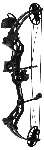 | 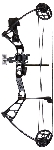 |  |
| Brace Height | 6.25 " | 6 " | 7 " |
| AtA Length | 28 " | 26 " | 31 " |
| Draw Length | 14 " - 28 " | 14 " - 25 " | 13 " - 31 " |
| Draw Weight | 20 lbs - 50 lbs | 15 lbs - 29 lbs | 5 lbs - 65 lbs |
| IBO Speed | 290 fps | 150 fps | 300 fps |
| Weight | lbs | 2.9 lbs | 3.3 lbs |
| Let-Off | 70% | 65% | 80% |
| Where to buy Best prices online | |||
| compare more bows | |||
Within Bear's own 2026 budget tier, the natural step-down is the Bear Frontier at a $219.99 launch MSRP - a smaller, slower true-beginner bow (150 fps, 26.5-inch axle-to-axle, 15-29 pounds, 14-25 inch draw) that Bear itself positions one rung below the Shootout. The Shootout costs $60 more and buys meaningfully more bow: 290 fps versus 150, a higher 50-pound ceiling, and a longer 28-inch draw range, making it the better pick the moment a shooter is past the absolute-beginner stage. The cross-brand benchmark is the Diamond Infinite Edge Pro at a $379 launch MSRP, the long-running standard for adjustable youth-to-adult crossover bows: it reaches a full 70-pound draw weight and a longer 31-inch draw, so it grows further into adult hunting than the Shootout, but it costs roughly $100 more and does not include arrows. The decision comes down to where the shooter is and what they'll need: the Bear Frontier for a true first bow, the Diamond Infinite Edge Pro for a buyer who wants room to grow all the way to full 70-pound adult hunting weight, and the Shootout for the shooter who wants the widest practical growth range and a complete, arrow-included setup at the lowest entry cost.