
PSE Mach 30 DS Review
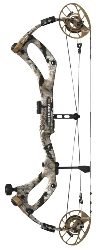

from $1100
Pros
- One of the lightest carbon hunting bows on the market at 3.6 pounds - you feel it the moment you pick it up, and again on hour six of a backcountry pack-in
- Dead in the hand - quiet shot with minimal vibration, closer to a heavier flagship than a sub-4-pound bow has any right to be
- Smooth draw cycle into a rock-solid back wall you cannot flex, with adjustable let-off to tune the valley
- Carbon riser holds a neutral temperature - warm to the touch on a frozen morning, no metal bite through bare fingers
- Tunes without a press for the everyday jobs - half-inch draw changes and let-off swaps at the module, cam lean via the EZ.220 snap spacers
Cons
- The compact 30-inch frame and short brace favor maneuverability and hunting ranges - shooters who live past 50 yards or want a target-length bow's forgiveness can move up to the longer Mach 33 DS or Mach 35 DS on the same platform
- At 3.6 pounds the bow can jump slightly at the shot for shooters used to a planted, heavier feel - a front stabilizer with a little mass settles it right down
Video
content from YouTube
Editors' review
For years the carbon-flagship conversation started and ended with Hoyt, and every other brand's carbon bow was measured against it. The Mach 30 DS is the PSE that finally changed the sentence - shooters coming off Hoyt carbon describe it as dead-even, and in back-to-back handling several give the quiet and low-vibration edge to the PSE. It manages that while weighing 3.6 pounds, among the lightest carbon bows sold, on a compact 30-inch axle-to-axle frame built around a Dead Frequency Carbon riser. For 2026 PSE retired the long-serving EC2 cam and dropped in the new FDS (Force Distribution System) cam, pushing the IBO rating to 348 fps and adding effective brace height for a bit more forgiveness. This is a bow for the hunter who already knows they want carbon - the light carry, the temperature-neutral riser, the stiffness - and wants it without paying past a Hoyt to get it. What follows is who it fits and where the 30-inch frame draws its lines.
Finish
The Mach 30 DS is offered in a broad palette that covers both the blacked-out and the timber-camo camps: Black, Charcoal, and Clay Brown for shooters who want a solid, low-key riser, plus Olive Green, Kuiu Verde, Mossy Oak Bottomland, and Kryptek Skyfall for hunters matching a specific environment. The finish is applied over the carbon weave rather than a painted aluminum extrusion, so the surface reads as a purposeful hunting tool rather than a glossy showpiece. Seven current options is a deep list for a carbon flagship - many competitors limit carbon models to two or three colorways because of the finishing complexity on a woven riser. The camo patterns wrap the riser, limbs, and cams for a consistent look, while the solids lean tactical. It is a finish selection that lets a treestand whitetail hunter and an open-country western hunter buy the same bow and still disappear into very different backgrounds.Riser
The riser is where the Mach 30 DS earns its name and its weight: it is a Dead Frequency Carbon structure - a proprietary foam-cored carbon riser, made in the USA, rather than an aluminum frame wrapped in a carbon skin - which is the reason the bow lands at 3.6 pounds instead of the four-plus of an aluminum flagship. That construction buys three things hunters actually notice: a riser that is stiffer than aluminum, one that stays temperature-neutral so it never burns your hand in summer sun or leaches heat on a January sit, and a mass low enough to matter on a long pack-in. It also buys stability the 30-inch number does not advertise - the long, light riser makes up most of the bow's overall length, so the frame holds on target more like a 33- or 34-inch bow than its compact axle-to-axle suggests. The geometry runs a fairly aggressive reflex - measured at 23/4 inches, among the most reflexed of the current carbon bows - which is part of how a 30-inch bow reaches a 348 IBO rating. Cable containment moved to a solid roller guard, a stiffer, more repeatable setup than the sliding rod designs on PSE's earlier carbons, and the front end is genuinely accessory-ready: a Picatinny rail is built into the riser face for pick-mount sights, a QAD integrated rest plate is fitted, and the sight mount is offset to give center-mount sights extra windage travel. In my experience the biggest practical dividend of a carbon riser like this one is not on the range but on the mountain - the ounces you stop noticing are the ones you were carrying uphill.Grip
PSE builds the grip directly into the riser rather than shipping a thick molded panel, and the carbon riser's throat runs noticeably narrower than the brand's older carbon bows - a change shooters who owned the previous generation single out as an upgrade. The narrow, direct-to-riser profile places the hand low and close to the centerline, which reduces the leverage available to torque the bow off-line. The molded surface carries a light skateboard-tape texture so the hand locks in rather than slips. Hunters who prefer a filled palm are not stuck with the bare shelf: the riser carries threaded bosses on each side for adjustable side-plate grips, letting you dial heel angle and width, and aftermarket options such as UltraView's bolt straight on. The bare-riser feel is a preference divider - some shooters love the direct connection, others want more material - but the option to add a grip means neither camp is locked out. I found the stock throat comfortable and low-torque once my hand learned to sit into it, and the narrow shelf made a repeatable hand position easy to find shot to shot.Limbs
The Mach 30 DS runs PSE's split limbs seated in the brand's limb-vise pocket system, which clamps the pocket centered over the riser regardless of where the limb bolt sits - the kind of detail that keeps a carbon bow shooting straight as you back the weight down. Draw weight comes in 10-pound bands - 50, 60, 70, and 80 pounds - set by the limb, not a module, so a buyer picks the peak weight at purchase and has a full 10 turns of let-down beneath it. That 80-pound ceiling is worth noting: it puts the Mach 30 DS in reach of hunters chasing heavy kinetic energy on elk and larger game, not just the 70-pound norm. The limbs are the same fundamentally reliable design PSE has run across its lineup for years, which is a quiet virtue on a light bow - nothing exotic to second-guess. Adjusting peak weight is a simple bolt turn; only cam-lean and draw-length spacer changes call for a press. For a hunter, that means the everyday weight tweaks happen in the garage without a trip to the shop.Eccentric System
This is the section that changed most for 2026. The long-running EC2 cam - a large, round, famously smooth wheel PSE ran nearly unchanged for years - is gone, replaced by the new FDS (Force Distribution System) cam. The headline is speed: the FDS cam lifts the IBO rating to 348 fps, up 11 from the EC2's 337 on the same chassis, while PSE claims added effective brace height for forgiveness. Real-world numbers from the outgoing EC2 cam set the baseline the new one builds on: on a Garmin chronograph a hunter clocked 331 fps with a 350-grain arrow at a 30-inch draw and a measured 68 pounds, dropping to 305 fps with a heavier 425-grain hunting shaft and 279 fps with a stout 513-grain arrow - genuinely useful hunting velocity from a bow this light, and the FDS cam is rated to sit a step quicker. Let-off is adjustable at the module without a press - the EC2 offered 80, 85, and 90 percent; the FDS cam moves the band to an adjustable 70 to 85 percent, trading a sliver of holding comfort for a crisper, more controllable valley. Draw length spans 24.5 to 30 inches in half-inch steps via the EZ.220 spacer system, which also handles cam-lean tuning in 0.020-inch increments and replaces the old pull-the-axles routine. It is a cam system that now answers the one knock on PSE's smooth carbons - that they left speed on the table - without throwing away the draw feel that made them.Draw Cycle/Shootability
Drawing the Mach 30 DS is the part that converts skeptics. The cam builds to peak without a sharp hump and rolls over into a deep, well-defined valley, and the transition is even enough that the weight seems to melt off your hand at the top, and the back wall behind it is immovable - draw into it and it stops dead. That deep valley is a two-sided trait: at the old 90 percent let-off it held so hard that letting the bow down took deliberate effort, which is exactly why the adjustable let-off matters - dialing it back gives a shorter, more manageable valley without losing the solid wall. Holding on target is the surprise - where a 30-inch bow usually dances on the pin, the reflexed carbon geometry actively fights shooter-induced torque and the long carbon riser steadies the sight picture, so the float stays tight and hunters report accuracy out to 60 yards that belies the short frame. At the shot the bow is genuinely dead in the hand: a KillShock 2.0 riser damper, limb dampeners, a string stop, and a front dampener combine to pull noise and shock near the bottom of the meter, and several shooters put it ahead of the Hoyt carbon they were shooting alongside it. Carbon bows tend to transmit a "thump" of hand shock rather than aluminum's ringing vibration, and the Dead Frequency Carbon knocks most of that thump down - you still feel a hair more than a heavy aluminum bow, but far less than earlier carbons. The one honest caveat is a byproduct of the 3.6-pound mass - the bow can jump slightly at the shot where a heavier bow would sit planted, and a front stabilizer with a bit of weight erases it. The 5-7/8-inch brace height (down from the EC2's six) puts the string close to the hand for speed, which rewards clean, repeatable form. What stays with me after a session is the quiet - the shot is muted enough that on more than one arrow I heard it hit the target before the bow had finished settling.Usage Scenarios
The Mach 30 DS is built for the hunter who moves. The 3.6-pound mass and 30-inch frame make it a natural for the backcountry elk hunter counting every ounce in the pack, the mobile whitetail hunter hanging and stripping sets, and anyone hunting where a bow rides a backpack more than a bow holder. Carbon's temperature neutrality is not a marketing line here - on a sub-freezing morning the riser does not sting bare fingers, which is real to the late-season hunter who hates shooting in gloves. The compact axle-to-axle tucks into a treestand or a ground blind without clipping limbs on the draw, and the 80-pound limb option gives elk and big-game hunters the kinetic-energy headroom the light frame might otherwise seem to lack. Where the 30-inch frame draws its line is precision at distance: the short brace and acute string angle favor hunting ranges inside 40 to 50 yards over long-range target work, where a shooter chasing the smallest possible pin float would be happier on a longer bow. A backcountry hunter who wants one of the lightest serious carbon bows they can carry, shoot quietly, and trust to a heavy-poundage setup will find this one hard to put down; a spot-shooter or 3D competitor who lives at 50-plus yards should look longer in the same family.Versions
The Mach 30 DS is sold as a single bare-bow model - no RTH or package tiers - differentiated only by finish and by year-version of the cam. The current 2026 Mach 30 DS Carbon carries the new FDS cam (348 IBO, 5-7/8-inch brace, adjustable 70-85 percent let-off) at a $1,799 launch MSRP, in seven finishes. The prior 2024-2025 Mach 30 DS Carbon ran the EC2 cam (337 IBO, six-inch brace, 80-90 percent let-off) on the identical Dead Frequency Carbon chassis at the same price - a buyer shopping a used or leftover EC2 example is getting the same riser, grip, limbs, and weight, trading 11 fps of rated speed and a slightly different let-off band for whatever discount the prior year carries. Draw weight is chosen by limb set (50/60/70/80) at purchase in either version.PSE Mach 30 DS vs Hoyt REDWRX Carbon RX-7, Mathews Phase4 29
| Bow | PSE Mach 30 DS | Hoyt REDWRX Carbon RX-7 | Mathews Phase4 29 |
| Version | 2026 FDS | 2023 | 2024 |
| Picture | 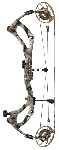 |  | 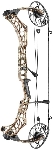 |
| Brace Height | 5.875 " | 6.25 " | 6 " |
| AtA Length | 30 " | 30 " | 29 " |
| Draw Length | 24.5 " - 30 " | 25 " - 30 " | 25.5 " - 30 " |
| Draw Weight | 40 lbs - 80 lbs | 40 lbs - 80 lbs | 50 lbs - 75 lbs |
| IBO Speed | 348 fps | 342 fps | 340 fps |
| Weight | 3.6 lbs | 3.9 lbs | 4.48 lbs |
| Let-Off | 70% - 85% | 80% or 85% | 80% or 85% |
| Where to buy Best prices online |
| ||
| compare more bows | |||
The Mach 30 DS lands in a 30-inch premium bracket with one true carbon rival and one aluminum value alternative. The Hoyt REDWRX Carbon RX-7 is the benchmark it was built to catch - a 30-inch all-carbon flagship with a 6.25-inch brace and a 342 IBO rating, launched at $1,849, and the bow shooters most often set beside the PSE in back-to-back tests. On paper they are twins; in hand the split comes down to the Mach 30 DS's lighter 3.6-pound mass and, by several accounts, a marginally quieter, deader shot, against Hoyt's longer carbon pedigree and its own devoted following - with the FDS cam's 348 rating the PSE now edges it on paper speed too. The Mathews Phase4 29 attacks from the other direction: a 29-inch aluminum flagship with a six-inch brace, a 340 IBO rating, Resistance Phase damping, and a $1,299 launch MSRP that undercuts the carbon bows by $500 to $550. The Phase4 29 answers the question every carbon shopper should ask - do I actually need carbon? - because it delivers flagship silence and near-identical speed in a heavier aluminum package for meaningfully less money. The decision comes down to priorities: the Mach 30 DS for the hunter who specifically wants one of the lightest carbon bows with a temperature-neutral riser, the Hoyt REDWRX Carbon RX-7 for the carbon buyer loyal to Hoyt's feel and heritage, and the Mathews Phase4 29 for the shooter who wants a premium hunting flagship and would rather keep the $500 than carry carbon.