
PSE Mach 35 DS Review
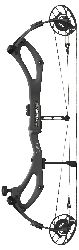
Pros
- Fits long-draw shooters the rest of the line leaves out - the module reaches a true 32.5 inches, so 31- and 32-inch-draw archers finally get a light carbon bow that fits
- The steadiest, most forgiving bow in the DS family - 35 inches of axle-to-axle and a 7-inch brace make it a genuine target and 3D tack driver that still hunts
- Remarkably light for a 35-inch carbon at a measured 3.9 pounds - a lot of bow that carries like a much smaller one
- Smooth draw with no harsh spots in the force curve, and it holds steady on the pin at full hunting weight
- USA-made Dead Frequency Carbon riser - stiff, temperature-neutral, quiet, and dead in the hand at the shot
Cons
- All 35 inches of it are a lot of bow in a tight ground blind or thick timber - hunters who need to maneuver in close quarters are better served by the compact 30 DS on the same platform
- The light 3.9-pound frame likes some help staying planted in wind, which is why target shooters run it with a front bar and side rod - a stabilizer setup steadies it and suits the way most owners shoot it anyway
Video
content from YouTube
Editors' review
The Mach 35 DS is the rare carbon bow built to trade speed on purpose. Stretched to 35 inches axle-to-axle with a 7-inch brace, it is the slowest of PSE's Mach DS carbon line - and, not by coincidence, the steadiest, the most forgiving, and the only one that fits a 32.5-inch draw. PSE built it for two shooters the compact 30 DS and the all-around 33 DS leave behind: the long-draw archer who needs 31 or 32 inches, and the target-minded hunter who wants a genuine 3D and Total Archery Challenge tack driver that can still climb into a treestand. It shares everything else with its siblings - the USA-made Dead Frequency Carbon riser, the quiet, dead-in-the-hand shot, and for 2026 the new FDS (Force Distribution System) cam that replaces the long-serving EC2. The number that stops people is the weight: a 35-inch carbon bow at just 3.9 pounds. This is the DS line's long-range specialist, and it knows exactly who it is for.
Finish
The Mach 35 DS comes in the same seven-finish palette as the rest of the DS carbon line: Black, Charcoal, and Clay Brown for a solid, understated riser, plus Olive Green, Kuiu Verde, Mossy Oak Bottomland, and Kryptek Skyfall for hunters matching a landscape. Because the color is laid over a woven carbon riser rather than a painted aluminum extrusion, it reads as a working tool, and the camo patterns wrap the riser, limbs, and cams for a consistent look. Seven options is a generous list for a carbon flagship, where the woven-riser finishing process often limits competitors to two or three colorways. Some of the two-tone pairings are genuinely sharp - a clay-brown riser against olive limbs, for one - and the solids lean tactical. It is enough range that a Western spot-and-stalk hunter and a 3D-course regular can each find a look that fits how they shoot.Riser
The riser is the reason this bow does what it does. It is a Dead Frequency Carbon structure - a proprietary foam-cored carbon riser, made in the USA, which is rare enough on its own that very few makers build carbon risers domestically at all. On a 35-inch bow the riser is most of the length, and spreading the mass along that long, stable spine is exactly what makes the Mach 35 DS hold like a target bow rather than a hunting bow. Carbon delivers the same dividends here as across the line - a chassis stiffer than aluminum, one that stays temperature-neutral so it never bites a bare hand in the cold, and a low mass that is remarkable on a frame this size. The front end is built for accessories: a Picatinny rail is molded into the riser face for pick-mount sights, a QAD integrated rest plate is fitted, and there are two front-stabilizer positions plus a rear mount for the side rod that a target setup demands. Cable containment runs through a new, rock-solid roller guard that does not flex. In my experience a 35-inch carbon riser like this one is what lets a hunting bow moonlight as a target rig - the length and the stiffness do the aiming work, and the carbon keeps it from ever feeling like the anchor a 35-inch aluminum bow would be.Grip
PSE molds the grip directly into the carbon riser - a moderately wide, fixed shelf that places the hand low and close to the centerline to keep torque leverage down. There is no adjustable grip plate on the hunting line the way there is on PSE's target bows, so shooters who want a narrower throat or a specific heel angle add an aftermarket side plate, with the Nock-On/UltraView plates that bolt to the riser's threaded bosses the common choice, and some owners simply add grip tape for a more secure hold. On a bow that many buyers will shoot at 3D targets for hours at a stretch, that fixed-grip fit matters more than it does on a pure hunting rig, so it is worth handling before you buy. The bare carbon throat is comfortable once your hand settles into it, and the direct-to-riser connection is repeatable shot to shot - the thing target shooters prize most.Limbs
The Mach 35 DS runs PSE's split limbs in the brand's limb-vise pocket system, which clamps the pocket dead-center over the riser regardless of limb-bolt position - the kind of consistency a long target-capable bow lives on. Draw weight is set by the limb in 10-pound peaks - 50, 60, 70, and 80 pounds - chosen at purchase, with a full 10 turns of let-down beneath each peak. The wide-limb geometry is deliberate: a broader limb base widens the working platform and adds to the stability that defines this model, and on the longest bow in the family that platform is at its most planted. The 80-pound option gives Western and big-game hunters real kinetic-energy headroom, which matters more here because the long brace gives up some speed. The limbs are the same proven design PSE runs across its lineup; peak-weight changes are a simple bolt turn, and only cam-lean and draw-length spacer swaps call for a press.Eccentric System
The cam is the 2026 change. The EC2 cam - the big, smooth Evolve-style wheel PSE ran for years - gives way to the new FDS (Force Distribution System) cam. Here is the honest part: on the long 35, the FDS cam does not chase speed. Its IBO rating is 326 fps, actually a hair below the 2025 EC2's 330 - the "faster cam" story that holds on the shorter Mach models simply is not the point on this one. What the cam and the 7-inch brace deliver instead is a draw with no harsh spots in the force curve and a valley you can sit in, which is exactly what a target-minded shooter wants. Real chronograph numbers bear out the modest speed: the outgoing EC2 version clocked 325 fps with a 350-grain arrow at a 30-inch draw and 70 pounds, a few fps under its rating, and the FDS bow sits in the same neighborhood. Let-off is adjustable at the module without a press - the EC2 offered 80, 85, and 90 percent; the FDS cam moves the band to an adjustable 70 to 85 percent for a crisper wall. Draw length is the headline spec, spanning 27 to 32.5 inches in half-inch steps via the EZ.220 spacer system, which also sets cam lean in 0.020-inch increments - the widest and longest draw range in the DS family, and the entire reason this model exists.Draw Cycle/Shootability
Drawing the Mach 35 DS is where the long brace pays off. The cam builds without a sharp hump and rolls into a broad, comfortable valley, and at 70 pounds it comes back smooth enough that it feels lighter than it is - the payoff of a 7-inch brace and a cam tuned for feel over aggression. Then you settle onto the target and understand what the extra axle-to-axle buys: the pin barely floats. PSE's Full Draw Stability system extends the effective brace height at full draw and fights hand torque, and on the longest, biggest-brace bow in the line that effect is at its strongest - this is the DS model people take to 70-yard tack shots and 3D courses and expect to hold. At the shot it is quiet and dead in the hand, the Dead Frequency Carbon soaking up the thump carbon usually transmits, and the included dampener knocks down what is left. The trade-off is the flip side of the light 3.9-pound mass: on a long bow in wind it wants to move, which is why target shooters hang a front bar and side rod on it - weight this bow was clearly designed to wear. What I keep coming back to is how little it asks of a long-draw shooter - for anyone stuck between too-short hunting bows and heavy aluminum target rigs, this is the bow that finally fits.Usage Scenarios
The Mach 35 DS is the DS line's specialist, and it is happiest in two places. The first is the target range and the 3D course: the 35-inch frame, 7-inch brace, and Full Draw Stability hold make it a legitimate tack driver for IBO, ASA, and Total Archery Challenge shooters who want a carbon bow that is easy to carry between stakes. The second is open-country and Western hunting, where the long axle-to-axle steadies a pin across a canyon and the 80-pound limbs deliver the kinetic energy a long-brace bow needs at distance. Most of all it is the long-draw hunter's answer - the 27-to-32.5-inch range fits 31- and 32-inch draws that the Mach 30 and Mach 33 cannot reach, and it does it in a 3.9-pound package instead of a heavy aluminum slab. Where it gives ground is close quarters: in a cramped ground blind or thick timber, 35 inches of bow is a lot to work around, and a treestand hunter threading tight shooting lanes may prefer a shorter model. For the tall archer, the target-hunter crossover, and the Western spot-and-stalk shooter, though, this is the one in the family built for them.Versions
The Mach 35 DS is sold as a single bare-bow model, differentiated by finish and by year-version of the cam. The current 2026 Mach 35 DS Carbon carries the new FDS (Force Distribution System) cam - 326 IBO, 7-inch brace, adjustable 70 to 85 percent let-off - at a $1,999 launch MSRP in seven finishes. The prior 2025 Mach 35 DS Carbon ran the EC2 cam (330 IBO, 7-1/4-inch brace, 80 to 90 percent let-off) on the identical Dead Frequency Carbon chassis at the same price; unusually, the older cam actually carried a slightly higher speed rating, so the 2026 change is about draw feel and let-off tuning rather than velocity. A buyer shopping a leftover or used EC2 example gets the same riser, grip, limbs, and stability. Draw weight is chosen by limb set (50/60/70/80) at purchase in either version.PSE Mach 35 DS vs Hoyt REDWRX Carbon RX-7 Ultra, Mathews V3X 33
| Bow | PSE Mach 35 DS | Hoyt REDWRX Carbon RX-7 Ultra | Mathews V3X 33 |
| Version | 2026 FDS | 2023 | 2023 |
| Picture |  |  |  |
| Brace Height | 7 " | 7 " | 6.5 " |
| AtA Length | 35 " | 34 " | 33 " |
| Draw Length | 27 " - 32.5 " | 27 " - 32 " | 27 " - 31.5 " |
| Draw Weight | 40 lbs - 80 lbs | 40 lbs - 80 lbs | 50 lbs - 75 lbs |
| IBO Speed | 326 fps | 334 fps | 336 fps |
| Weight | 3.9 lbs | 4.3 lbs | 4.67 lbs |
| Let-Off | 70% - 85% | 80% or 85% | 80 or 85% |
| Where to buy Best prices online |
|
| |
| compare more bows | |||
The Mach 35 DS competes in the long-axle-to-axle bracket, where its two closest rivals come at it from different directions. The Hoyt REDWRX Carbon RX-7 Ultra is the natural carbon comparison - a 34-inch, 7-inch-brace all-carbon flagship with a 334 IBO rating, launched at $1,899, aimed at the same long-draw, stability-first shooter. The two are close on geometry; the split is that the Mach 35 DS reaches a full 32.5 inches of draw and weighs less at 3.9 pounds, while the Hoyt brings its own carbon pedigree and a marginally higher speed rating. The Mathews V3X 33 comes from the aluminum side - a 33-inch, 6.5-inch-brace flagship with a 336 IBO rating and Mathews' Switchweight tuning at a $1,299 launch MSRP that undercuts both carbon bows by hundreds. The V3X 33 is the value-and-versatility play, giving up two inches of axle-to-axle and the carbon weight savings for a much friendlier price. The decision comes down to priorities: the Mach 35 DS for the shooter who wants the longest draw and lightest carbon in a target-capable hunter, the Hoyt REDWRX Carbon RX-7 Ultra for the carbon buyer loyal to Hoyt who will trade a little draw length for its pedigree, and the Mathews V3X 33 for the hunter who wants a proven long-ish flagship and would rather keep the money.