
Bowtech Convergence Review


from $300
Pros
- Adjusts from 8 to 70 pounds and 21 to 31 inches of draw, all by hand with no bow press, so one bow fits a short-draw teen, a partner, and a full-weight adult hunter
- Limb-stop back wall gives a defined, rock-solid stop that budget bows almost never deliver, where most cable-stop rivals feel spongy at full draw
- Draw rolls into an unusually clean valley, then settles hard on the wall, one of the smoothest into-the-valley transitions in the budget class
- Quiet on the shot with minimal hand shock, a soft twang rather than a slap even before you hang a stabilizer on it
- Narrow, slightly rounded grip sits low in the hand and aims easily, holding a repeatable position without fighting torque
Cons
- Some shooters note a touch more jump on the shot than a flagship-quiet bow, though it never bucks the hand, and a heavier front stabilizer settles it in practice
- The 8 to 20 pound bottom end is growing room, not a true target weight, the wide limbs are lightly pre-tensioned that low, so plan the real work at 40 pounds and up
Video
content from YouTube
Editors' review
Most budget adjustable bows ask you to accept a spongy, sliding back wall the moment you reach full draw, the price you pay for a bow that a whole household can share. The Bowtech Convergence quietly refuses that trade. It puts a hard limb stop on the cam for a wall that stops like a bow costing twice as much, then wraps it around a draw-weight range that runs from 8 all the way to 70 pounds and a 21-to-31-inch draw span you set by hand without a press. Built for 2019 and 2020 on a chassis derived from Bowtech's sister-brand Diamond Edge platform, then upgraded with split limbs and a synchronized binary cam, it is genuinely one purchase for a whole family, adjustable enough to start a short-draw teenager and still put a full-weight adult on a whitetail. Bowtech discontinued it after 2020 and replaced it in the adjustable-budget slot with the Amplify, but the Convergence remains one of the more shootable bows the brand ever built to a budget. It is the grow-with-me first bow and the budget hunter's Bowtech in a single package, and it earns that on feel rather than any headline number.
Finish
The Convergence shipped in four factory finishes, a solid Black, Flat Dark Earth, and two Mossy Oak Country Roots patterns in Brown and OD Green. The solid Black and Flat Dark Earth suit a first-time owner who wants a clean look for the backyard and the 3D range, while the two Mossy Oak patterns cover the whitetail hunter who wants the bow to disappear against bark and brush. The dip-and-cure coating is standard for the tier and wears the way any budget hunting bow does, durable enough for seasons of stand hunting with the usual edge wear over years of hard use. Because this bow is aimed at a household rather than a collector, the finish menu is a secondary decision, one solid and one camo cover almost every buyer who was cross-shopping it. For a bow this adjustable, the point was always who can shoot it, not what color it wore.Riser
The Convergence is built on a machined aluminum riser that traces its DNA to Bowtech's sister-brand Diamond Edge and Edge SB-1 platform, then upgraded into a Bowtech-badged bow with split limbs and a stouter cam. The geometry is reflexed enough to hold a 7-inch brace height and a 330 fps IBO rating, a forgiving brace for a bow aimed at first-time and growing archers. The standout construction detail is the limb pocket, which seats down inside the riser rather than bolting flat to the outside, and handling the bow that tidy pocket-in-riser design is a real part of why it balances better than its price suggests. Cable containment runs off a carbon cable rod and a simple guard rather than the repositionable, flagship-grade hardware on Bowtech's premium hunters, one of the honest places the budget shows. The riser drills for standard rest, sight, and stabilizer mounting, so it drops straight into a first setup with no proprietary interface to learn, though there is no lower mount position for a back-bar stabilizer. Bowtech even fits a factory D-loop tool to the bow, a small courtesy that tells you the Convergence was meant to be set up and shot rather than fussed over.Grip
The grip is a fixed, narrow molded unit with a slightly rounded back, closer in feel to a slim Hoyt-style grip than the squarer handles on Bowtech's flagship hunters. Wrapping a hand around it the first time, I found the narrow profile easy to index, the hand finds one repeatable spot instead of hunting for center, and that is exactly what builds a consistent anchor. It sits low enough to keep torque out of the shot, and more than one owner comes away describing it as one of the reasons the bow aims so calmly. Because it is fixed rather than the interchangeable, angle-adjustable grip of the top-tier Bowtechs, what ships on the bow is what you shoot, so a buyer with strong preferences carried over from a premium grip should put a hand on it first. For most shooters, and especially for the growing archer this bow targets, the shape settles in within a session and then simply disappears, which is the highest compliment a hunting grip earns.Limbs
The Convergence runs ultra-wide Quad split limbs into composite pockets, with small molded timing-dot indicators that show how far the limb bolts are backed out. That wide-limb design is what lets the bow store energy across an enormous 8-to-70-pound band, a 62-pound span that almost no other single bow covers. Backing weight down is genuinely easy, dropping from 70 to 60 pounds took about two and a half turns on each limb bolt, and the bolts move smoothly under an Allen wrench with no press required. The trade-off lives at the very bottom of that range, where the wide limbs are only lightly pre-tensioned, so the string can feel a little soft and the bow shoots its best from roughly 40 pounds up. That makes the 8-to-20-pound settings honest growing room for a young or new archer rather than a serious target weight, which is the right way to read them. Composite pockets rather than machined ones are the tier-appropriate choice, and across the Diamond and Bowtech budget lineups this limb-and-pocket design has proven durable enough for the hunting the bow is built for.Eccentric System
The Convergence is driven by a synchronized binary cam, a three-track system in which the top and bottom cams are identical and slaved to each other, so timing stays self-correcting and nock travel stays consistent shot to shot. Draw length changes through Bowtech's Rotating Mod System, you rotate the module rather than swapping draw-specific parts, covering 21 to 31 inches in half-inch steps with a 3/32 hex wrench and an A/B hub routing that unlocks the full range, all without a bow press. Bowtech markets this as set-and-forget tuning, and it is the plain binary cam rather than the DeadLock system of the flagship Realm, so lateral tuning happens at the rest rather than at the cam. The published IBO is 330 fps, but the number that matters to a real shooter is what it does off a hunting setup, and on a chronograph the Convergence turned in 285 fps at a 29-inch draw with a 327-grain arrow, the roughly 30-to-45 fps gap under IBO that any bow shows once you leave the 30-inch, 70-pound, 350-grain IBO recipe. What genuinely surprised me was a head-to-head against a Hoyt PowerMax, where the Convergence ran about 5 to 6 fps faster through the chronograph despite trailing on paper, a reminder that stored energy and cam efficiency beat spec-sheet IBO. At 80 percent let-off it holds light at full draw, which suits the long sits and shared use this bow was built for, though it also means staying honest on the back wall rather than leaning into a deeper hold.Draw Cycle/Shootability
Drawing the Convergence, the front end starts solid the way most binary-cam bows do, then the middle gives way into what is, for the money, a remarkably clean valley, one of the smoothest into-the-valley transitions I have felt on a budget bow. Where it separates itself from its price class is the back wall, the limb stops bring the draw to a genuine wall, a hard stop rather than the sliding, spongy feel that cable-stop budget bows hand you at full draw. That firm wall is the single thing owners keep coming back to, and against a Hoyt PowerMax the Convergence clearly owned the wall, though it will let a lazy shooter creep off it, so staying engaged and leaning into the stop is how you get the most out of it. The shot itself is quiet, a soft twang more than a crack, with minimal hand shock even before you add mass, and one owner who set his up carefully reported effectively no felt shock at all. The one honest note is a slight jump on release, a touch more movement than a flagship-quiet hunter, though it never bucks or leaps in the hand and a heavier front stabilizer tames it quickly. Aiming is where the narrow grip and 7-inch brace pay off together, the pin sits calmly and the bow forgives small hand errors, which is exactly what a growing or first-time shooter needs. It is, top to bottom, a genuinely easy bow to shoot well, and that is a harder thing to engineer at this price than raw speed.Usage Scenarios
Picture the most common buyer, a household where one bow has to serve a 13-year-old at a 23-inch draw and 45 pounds and the parent hunting whitetails at 29 inches and 65, and the Convergence quietly covers both by hand between seasons. At a compact 31.5 inches axle-to-axle it swings easily in a treestand or a ground blind, short enough to clear the rails and the shooting window without fighting you. For whitetail and hog at typical bowhunting ranges it carries plenty of energy from about 50 pounds up, and its forgiving brace makes it a sound choice for a hunter still building form. It is equally at home as a first serious bow, the one a new archer buys, has a shop set up in an afternoon, and is hunting with by opening week, or as a backup that lives in the truck ready for a guest or a family member. Where it is not the right tool is the extreme low end, it is not the bow to buy purely as a permanent 15-pound backyard plinker, and it is not a target-flagship for the archer chasing tenths of an inch at 50 yards. Read as what it is, a share-it-around hunting bow with room to grow, it fits more shooters under one roof than almost anything else in its class.Versions
The Convergence was sold two ways under one model name. Bow-only, for the buyer who already owns a rest, sight, and quiver and just wants the bow, and as a ready-to-shoot package, sold under Bowtech's Ready.Aim.Kill. (R.A.K.) name and stocked by some dealers as an RTS bundle, at roughly $679 launch MSRP. The package hangs a full accessory kit on the bow, an Octane Capture containment rest, an Apex three-pin fiber-optic sight, a five-inch Octane stabilizer, an Octane DeadLock Lite five-arrow quiver that locks into the riser, and an Octane wrist sling, so a first-time owner can leave the shop hunting-ready. One small package caveat worth knowing, the peep is supplied but not always served into the string at the factory, so budget a few minutes at a pro shop to have it and the D-loop finished. Both configurations are the same bow mechanically, the choice is only about what you get in the box, and for a first serious purchase the R.A.K. package is usually the better value than assembling the same accessories separately.Bowtech Convergence vs Diamond Edge 320, Bear Legit Maxx
| Bow | Bowtech Convergence | Diamond Edge 320 | Bear Legit Maxx |
| Version | 2020 | 2022 | 2026 |
| Picture |  |  | 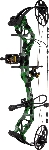 |
| Brace Height | 7 " | 7.25 " | 6.25 " |
| AtA Length | 31.5 " | 32 " | 30 " |
| Draw Length | 21 " - 31 " | 15 " - 31 " | 14 " - 30 " |
| Draw Weight | 8 lbs - 70 lbs | 7 lbs - 70 lbs | 10 lbs - 70 lbs |
| IBO Speed | 330 fps | 320 fps | 315 fps |
| Weight | 4.1 lbs | 3.6 lbs | 4.2 lbs |
| Let-Off | 80% | 85% | 75% |
| Where to buy Best prices online | |||
| compare more bows | |||
The Convergence lands squarely in the highly-adjustable, share-it-around budget class, and its two closest cross-shops come from Bowtech's own sister brand and from Bear. The Diamond Edge 320, at a $449 launch price, is the platform the Convergence is built from, the same synchronized binary cam and Rotating Mod approach, and it actually adjusts lower, reaching down to a 7-pound, 15-inch beginner floor for the smallest new archers. What the Convergence adds over that base is exactly what makes it a Bowtech, split limbs, a firmer limb-stop wall, a slightly quicker 330 fps rating, and a more refined shot for a higher price. The Bear Legit Maxx, at a $499 launch price, comes at the same problem from Bear's side, more compact at 30 inches with a lower 6.25-inch brace and a 14-inch, 10-pound entry point, plus Bear's IMS mounting, so it favors the smallest and shortest-draw shooters while giving up a little of the Convergence's back-wall authority. The decision comes down to priorities, the Diamond Edge 320 for the buyer who wants the lowest entry weight and the lowest price on the shared platform, the Bear Legit Maxx for the most compact, lightest package with the youngest starting point, and the Convergence for the shooter who specifically wants a genuine limb-stop wall and Bowtech shot feel on a grow-with-me chassis. Buyers who like the Convergence but want the current-production version of the idea should also look at its direct successor, the Bowtech Amplify.